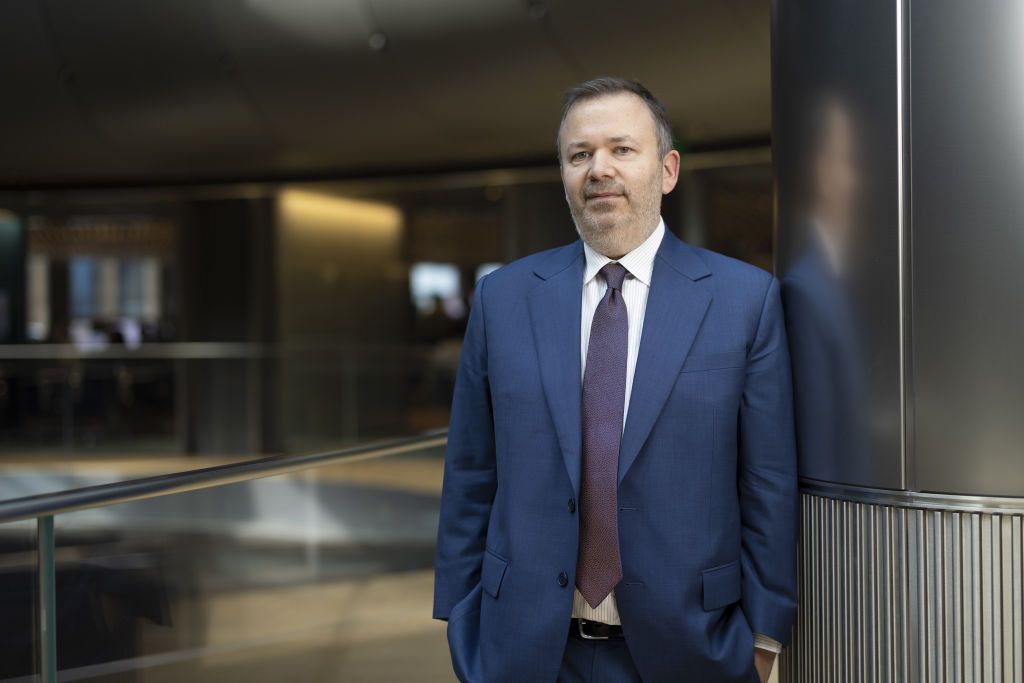

The £18.7 billion Scottish Mortgage Investment Trust has not itself been a target of US hedge fund manager Boaz Weinstein’s Saba Capital Management.
However, two other investment trusts managed by Baillie Gifford, which runs Scottish Mortgage, have been targeted repeatedly by Saba.
Saba on April 30 ousted the entire board of Edinburgh Worldwide Investment Trust and installed three US-based individuals of its choosing.
It did so at its third attempt, having been seen off on two previous occasions by overwhelming opposition from other shareholders. Saba faced very strong resistance from other investors at its third attempt too, but got its way because three other US-based investment fund shareholders did not support the Edinburgh Worldwide board.
More recently, Saba was defeated again in a bid to oust the board of the £1.1bn Baillie Gifford US Growth Trust, in a far more uplifting outcome for anyone who recognises the value of investment trusts in general as long-term savings vehicles.
Thankfully, 99.2% of votes cast by shareholders other than Saba and Sessa Capital IM, which is also based in New York, went with the recommendations of the board of Edinburgh-based Baillie Gifford US Growth.
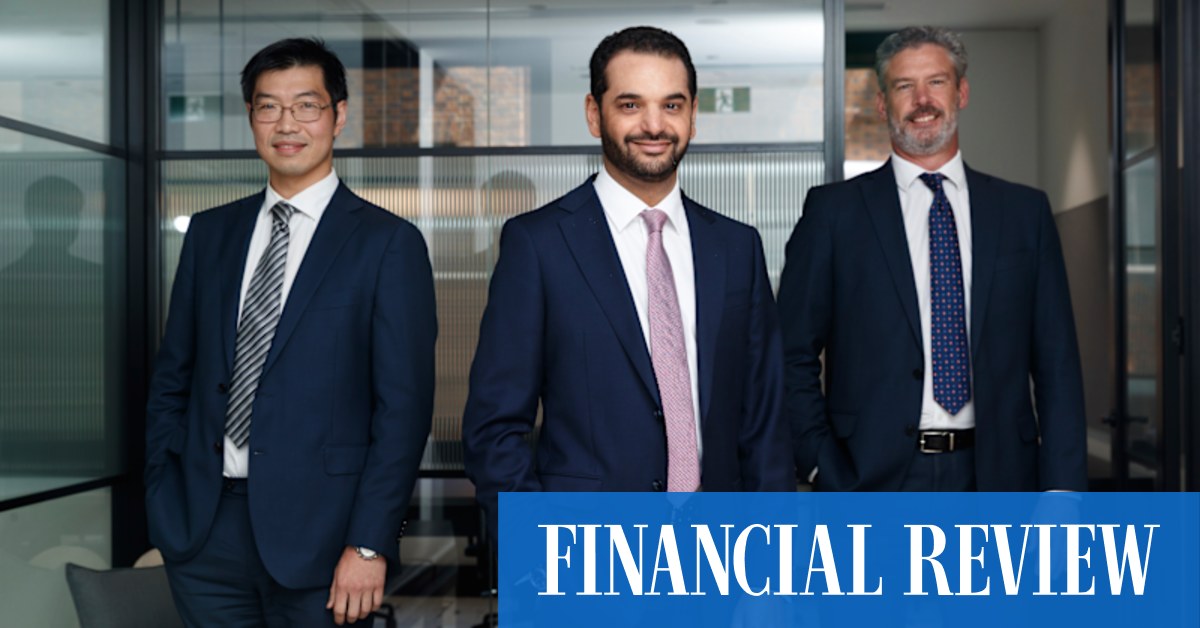
Saba, owner of about 29% of Baillie Gifford US Growth, had tabled resolutions to appoint Jason Chen, James Waterlow and Thomas McGlade as directors at the October 23 AGM of the investment trust.
Baillie Gifford US Growth announced that, overall, investors holding 52.8% of the shares voted had opposed the Saba resolutions.
A high turnout of more than 82% was crucial to the outcome.
And the four Baillie Gifford US Growth directors proposed for re-election to the board were reappointed, with each backed by 52.9% of shares voted.
Interestingly, Scottish Mortgage manager Tom Slater, a partner of Baillie Gifford, had made his opposition to Saba’s move on US Growth crystal clear early last year ahead of the first vote forced by the US hedge fund manager at this American-focused fund.
He did likewise on Edinburgh Worldwide.
Speaking in January last year, Mr Slater noted he had invested in Baillie Gifford US Growth Trust at its initial public offering in 2018 and had, calculating his return at that stage, nearly trebled his money.
Mr Slater had by then worked with Douglas Brodie, manager of Edinburgh Worldwide, for 23 years.
He described Mr Brodie as an “exceptional” investment manager with “great insight”.
And Mr Slater said then of Edinburgh Worldwide: “I believe it will generate strong returns for shareholders in future.”
Summing up, he added: “That is why, from a personal perspective, I will be voting against those [Saba] proposals.”
Both Edinburgh Worldwide and Baillie Gifford US Growth, like Scottish Mortgage, have big holdings in Elon Musk’s SpaceX.
This was one of the standout performers in Scottish Mortgage’s portfolio highlighted by the £18.7bn fund last Friday.
There was no doubting the strength of the Scottish Mortgage results.
And, as it published these, the giant investment trust flagged the importance of its patient capital approach in enabling innovation and breakthroughs.
Scottish Mortgage posted a 31.5% total return on net asset value for the six months to September 30.
This was nearly twice the 16% return on the FTSE All-World Index.
Scottish Mortgage highlighted SpaceX, artificial intelligence company Anthropic, pharmaceutical and biotechnology pioneer Moderna and drone delivery technology group Zipline as among standout holdings in its portfolio in the first half of its financial year.
It observed: “Moderna’s shares nearly tripled in a single day in August after its personalised cancer vaccine succeeded in a late-stage melanoma trial, a decade after development began.”
Scottish Mortgage highlighted its aim “to invest in the world’s most exceptional growth companies, whether public or private, anywhere in the world and patiently own them over long periods of time”.
And it flagged its role in providing “long-term funding and support for companies and entrepreneurs building the future of our economy”.
Lawrence Burns, who is deputy manager of Scottish Mortgage, said the past six months had shown how innovation can produce important breakthroughs.
In June, SpaceX went public, seven-and-a-half years after Scottish Mortgage first invested. In September, SpaceX’s Starship rocket reached orbit for the first time, more than three years after its first launch.
Scottish Mortgage said of SpaceX: “As launch costs fall, the managers expect new business applications to follow Starlink, from connecting mobile phones directly to satellites to providing computing capacity in orbit.”
The investment trust said the valuation of another of its holdings, Zipline, more than doubled following that company’s partnership with Uber, “after a decade spent developing drone delivery”, including deliveries of blood to hospitals in Rwanda.

Referring to Moderna, SpaceX and Zipline, Mr Burns said: “That these developments landed in the same six months was largely chance. The breakthroughs themselves were not; the people at these companies made them happen, through years of dedication and hard work.”
It is easy to see merit in Scottish Mortgage’s argument about the importance of patient capital to breakthroughs by portfolio companies resulting from “years of dedication and hard work”, as Mr Burns put it.
And, importantly from a private investor perspective, Scottish Mortgage also highlighted the relatively low-fee access it provides to private companies. This is, as the investment trust observed, at a time when many major companies are “staying private for longer”.
In the six months to September 30, the investment trust invested £268.7 million in private companies and held 53 private companies, representing 24.9% of total assets.
Scottish Mortgage added nine company holdings during the six-month period, three of them private as opposed to being listed on stock markets.
The investment trust noted it “has been investing in private companies since 2012 to give shareholders low-cost access to the most exciting, transformational growth businesses that are staying private for longer”.
He said: “Scottish Mortgage is our oldest client and we’ve had that for almost 120 years. It’s done a phenomenal job for underlying shareholders.”
Mr Campbell, who was speaking just weeks before the Baillie Gifford US Growth vote, added: “And this is an investment trust sector – that whole sector is under attack by these sort of actors and I think that’s something that we need to be mindful of and we need to resist because, like I say, these vehicles are so good for individual savers. So we should be protecting them.”
He said of Baillie Gifford US Growth: “It is giving underlying shareholders access to things like SpaceX and Anthropic and Stripe and all these wonderful companies that you’d normally be having to pay two and 20 (a 2% management fee plus 20% carry – the general partner’s share of profits above a certain hurdle rate) to a private equity manager, and you’re getting this at 70 basis points (0.7%).”
Mr Campbell added of Scottish Mortgage: “There’s a Scottish-based company that’s in the FTSE 100. It’s done a ferociously good job for decades and decades and decades, and again is incredibly cost-effective as a savings vehicle.”
Referring to the annual fee for Scottish Mortgage investors, Mr Campbell said: “You’re getting access to whether it be SpaceX or Anthropic or any number of other great growth businesses, and it charges you 33 basis points.”
Former UK pensions minister Baroness Ros Altmann has been among many to highlight the value of investment trusts as long-term savings vehicles.
As we await news on changes to the listing rules to protect private investors expected from the Financial Conduct Authority, there was much in Scottish Mortgage’s results statement to highlight the value of investment trusts as such vehicles. If anyone were to need any further convincing on that point, that is.