With more than 2,500 mutual fund schemes available in India, the sheer volume of data can lead to analysis paralysis.
How the fund, route or plan works and where it fits in a portfolio
First, identify the category. If you need stability for a goal three years away, you should be looking at debt or hybrid funds. If you are building wealth for a decade, equity funds are the route. Second, understand the plan. Every fund has a direct and a regular plan. Direct plans have lower costs because you don’t pay a commission to an agent. Finally, check the growth versus income distribution-cum capital withdrawal option. For most young earners, the growth option is superior as it allows the power of compounding to work on the entire corpus rather than paying out occasional dividends.
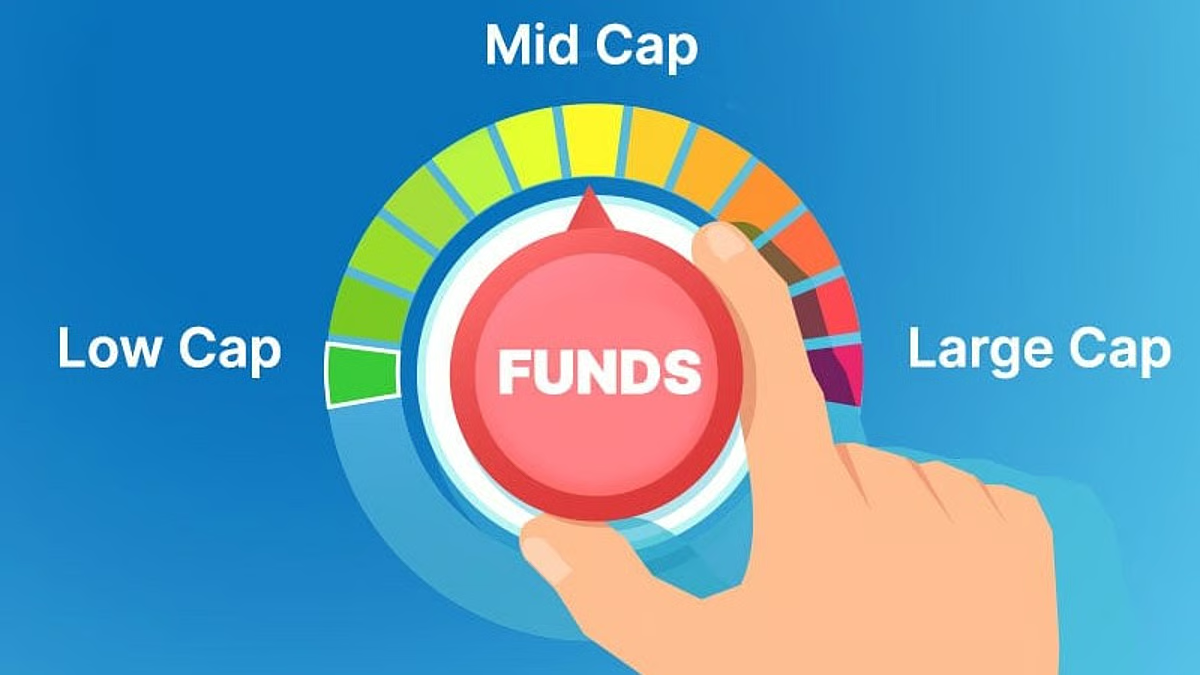
A fund fits into your portfolio based on its core or satellite role. A largecap or index fund is your core: It provides steady, benchmark-linked growth. A sectoral or smallcap fund is satellite, offering higher potential returns but with much higher volatility.
How to compare categories, costs, flows, tax and portfolio overlap
Once you have two funds from the same category, use these four filters to make your choice:
-
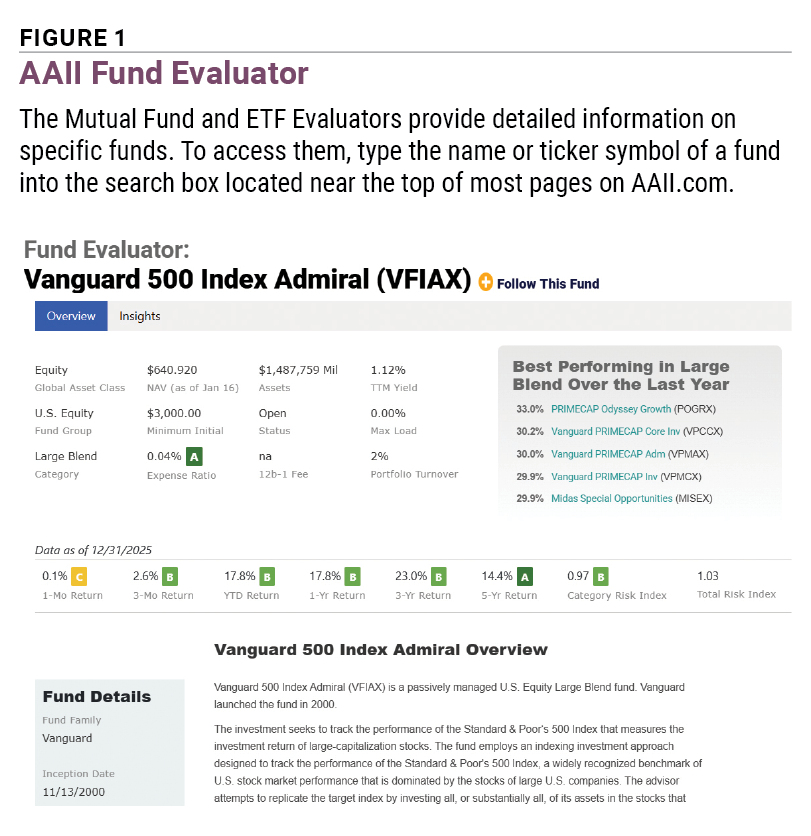
The expense ratio: This is the annual fee the asset management company (AMC) charges to manage your money. This typically ranges from 0.1 per cent for index funds to 2.25 per cent for active equity funds. A difference of 0.5 per cent might seem small, but over 20 years, it can cost you lakhs in lost compounding. Always favour the fund with the lower expense ratio if the performance is similar. -
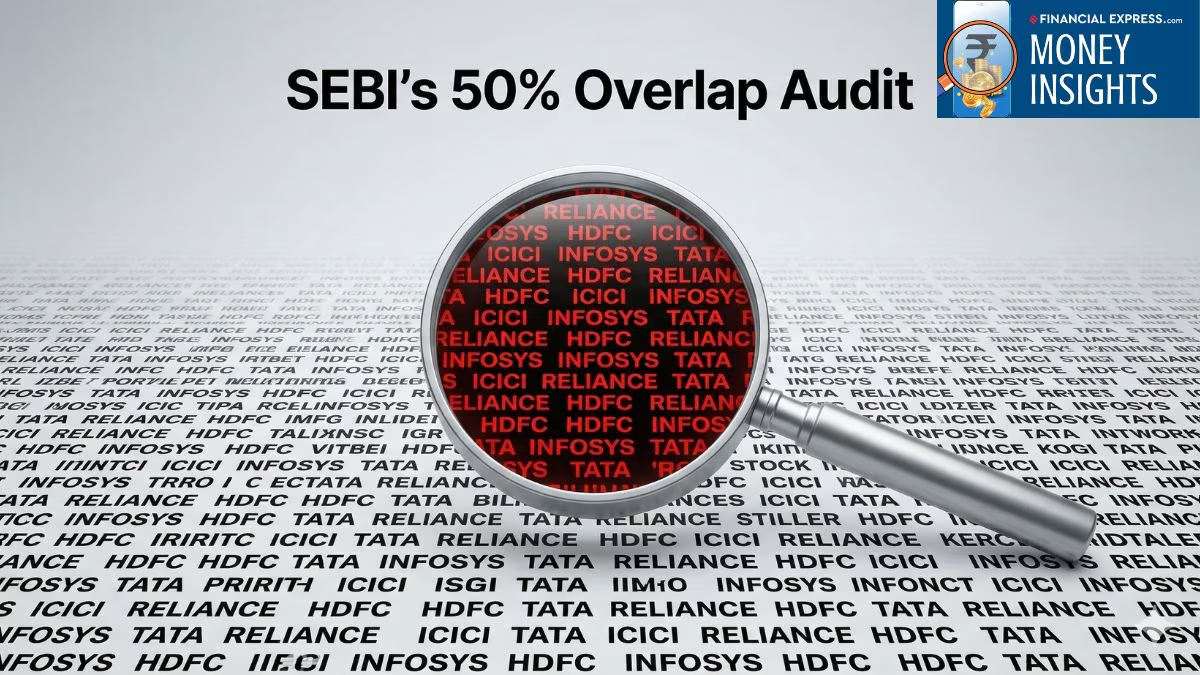
Portfolio overlap: This is where most investors get lost. If you own Fund A and Fund B, but both have 70 per cent of their money in HDFC Bank and Reliance, you aren’t diversified; you are just doubling down on the same stocks. Use online overlap tools to ensure that the two funds actually give you exposure to different companies or sectors. -
Risk-adjusted returns (standard deviation and Sharpe ratio): Don’t just look at the percentage return. Look at the Sharpe ratio, which tells you how much extra return the fund generated for the unit of risk it took. A fund with a higher Sharpe ratio is more efficient because it delivers returns with less heartburn or volatility. -
Assets under management (AUM) and exit load: For smallcap funds, a very large AUM can sometimes be a hindrance as it becomes hard for the manager to move in and out of stocks. Also, check the exit load — most equity funds charge 1 per cent if you withdraw within 365 days.
How to buy, review, redeem or rebalance without overcomplicating
The most efficient way to buy is the direct route via the AMC’s website or platforms such as MF Central. This ensures your expense ratio remains at the absolute minimum. Once you have invested, the key is to stop checking the net asset value every day.
The review process: Review your funds only once a year or when there is a major fundamental change, such as a change in the fund manager or a change in the fund’s category. Do not sell just because the market is down; sell only if the fund has consistently underperformed its benchmark (such as the Nifty 50) for more than 18 to 24 months.
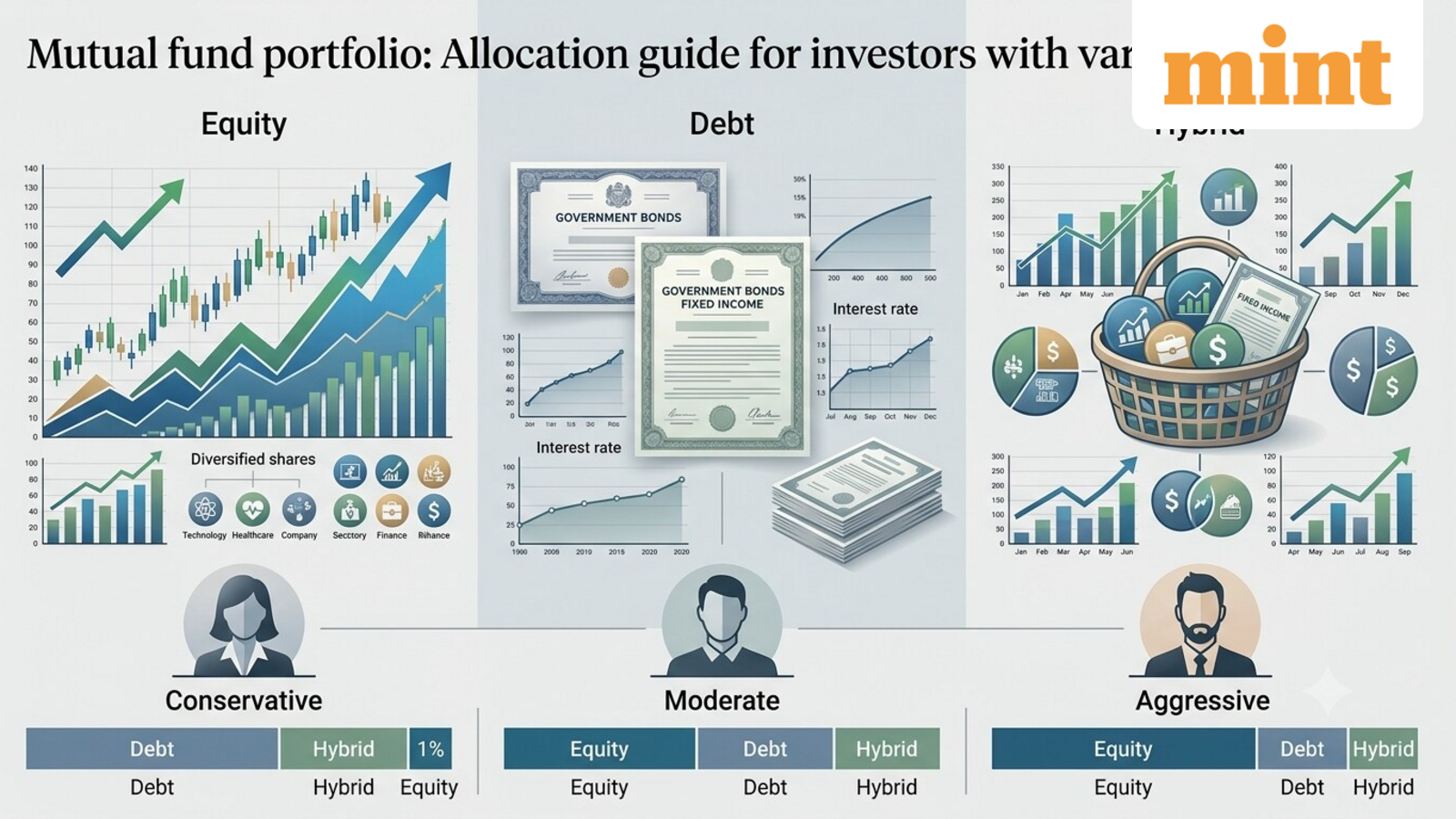
Rebalancing: This is the act of bringing your portfolio back to its original intent. If your target was 60 per cent equity and 40 per cent debt, but a bull market has pushed your equity to 75 per cent, you should rebalance by selling some equity and buying debt. This forces you to buy low and sell high automatically.
Taxation rules (after 2024): In India, long-term capital gains on equity funds (held for more than one year) are taxed at 12.5 per cent for gains exceeding Rs 1.25 lakh in a financial year. Short-term capital gains are taxed at 20 per cent. Debt funds are now taxed as per your income tax slab, regardless of the holding period. Keep these leakages in mind before you decide to switch funds.
Action checklist for comparing funds
-
Check the category: Are both funds in the same Sebi category (for example, both midcap)? -
Compare expense ratios: Is one significantly cheaper than the other? -
Analyse the benchmark: Has the fund consistently beaten its benchmark over three-, five- and seven-year periods? -
Verify portfolio overlap: Will adding the second fund actually diversify your holdings? -
Review fund manager tenure: Has the person responsible for the returns stayed with the fund for at least 3 years?
FAQs
How many funds are enough for most investors?
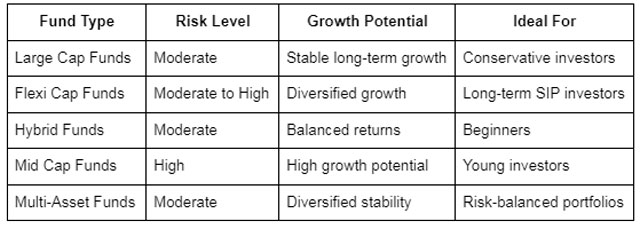
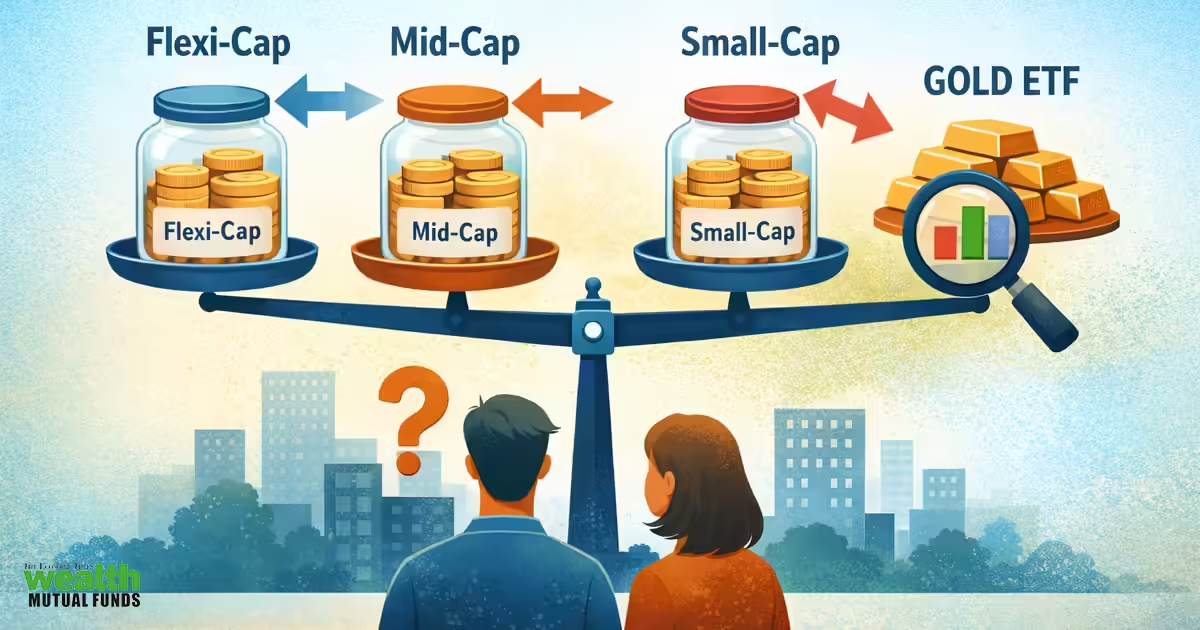
For most retail investors, three to five funds are more than sufficient. A typical lean portfolio might include one index fund (for largecap exposure), one flexicap fund (for flexibility), one mid/smallcap fund (for aggressive growth), and one debt fund (for liquidity/emergency needs). Owning 10 or 20 funds leads to ‘diworsification’, that is, you end up owning the whole market but paying high active management fees.
Should an investor choose direct or regular plans?
Always choose direct plans. In a direct plan, you invest directly with the AMC, bypassing intermediaries. This results in a lower expense ratio (usually 0.5 per cent to 1 per cent lower per year). Over a 20-year horizon, this small difference can increase your final corpus by 10 per cent to 15 per cent due to the effect of compounding on the saved costs.
When does SIP, lump sum, STP or SWP make more sense?
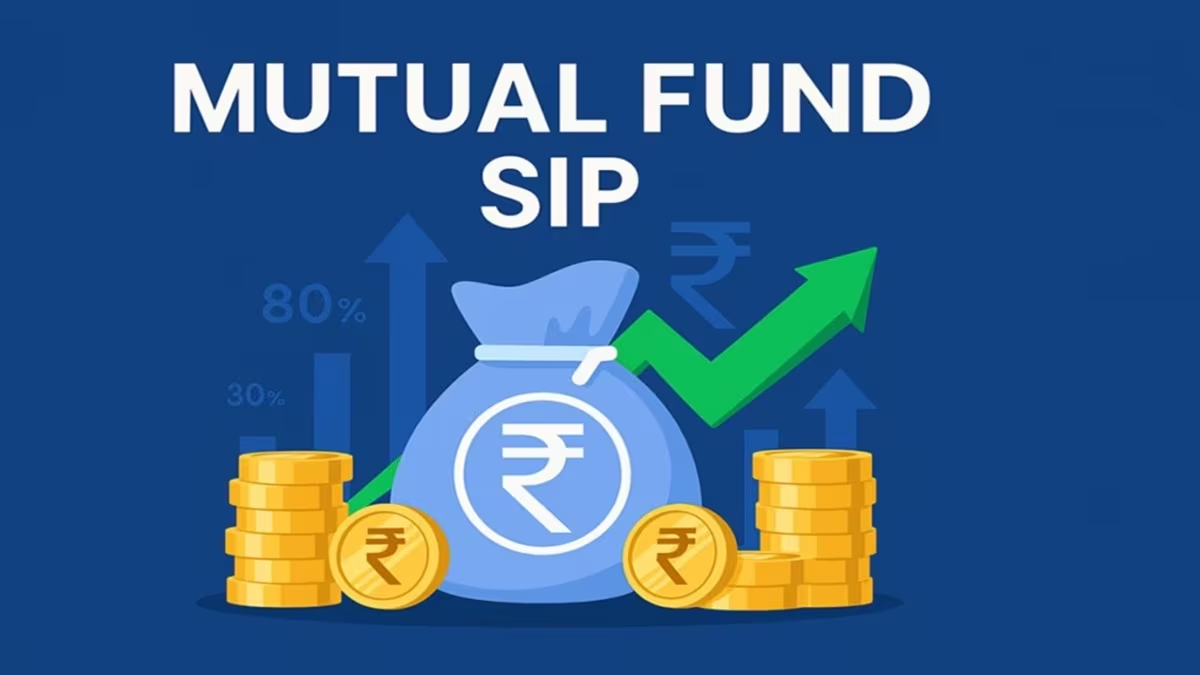
SIP is best for salaried earners to average costs over time. A lump sum is suitable when you have a windfall and the market valuation is attractive. A systematic transfer plan is used to move money from a debt fund to an equity fund gradually to avoid market timing risk. A systematic withdrawal plan is the most tax-efficient way to generate a monthly salary from your corpus during retirement.
What should investors track in factsheets, expense ratios or fund overlap?
In a factsheet, look at the sectoral allocation (to see if the fund is too heavy on one industry) and the portfolio turnover ratio (high turnover means the manager trades frequently, which can increase costs). Monitor the expense ratio annually to ensure it hasn’t crept up significantly. Finally, use an overlap tool every six months to ensure that a new fund hasn’t started buying the same stocks as your existing ones, which defeats the purpose of diversification.