
Quick Read
-
Only 11% of U.S. families own mutual funds or pooled investments outside retirement accounts, versus 55% with retirement accounts, so most rely on workplace plans alone.
-
Owners hold a median $200,000 in these funds, up 22% since 2022, while a few wealthy households push the average above $1 million.
-
Taxable brokerage accounts skip early-withdrawal penalties and required distributions, giving retirees flexibility, though mutual funds can still trigger capital gain taxes without a sale.
For many American families, investing starts and ends with a workplace plan. Money comes out of each paycheck, lands in a 401(k) or an IRA, and that’s the whole portfolio. The Federal Reserve’s 2025 Survey of Consumer Finances shows how few go any further. Just 11.1% of families held mutual funds and other pooled investments outside retirement accounts, down from 11.5% in 2022. Retirement accounts, on the other hand, were far more common, showing up in 54.9% of families.
Families that do invest outside their plans tend to have a lot there. Among them, the median holding rose from $164,200 in 2022 to $200,000 in 2025. That’s a 22% increase, measured in 2025 dollars. So slightly fewer families own these funds, and the ones who do own more of them.
What Counts as a Pooled Investment Fund
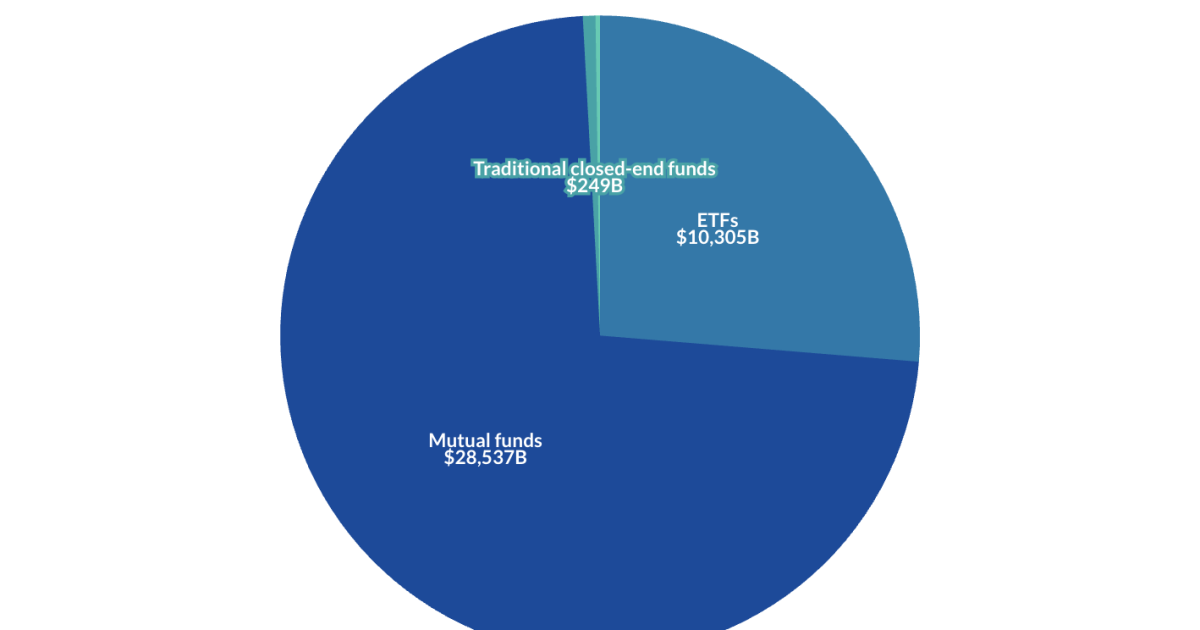
The term sounds technical, but it just means a fund that combines money from many investors and handles it as one pot. The Fed counts stock funds, bond funds, and mixes of the two. That covers traditional mutual funds, exchange-traded funds, real estate investment trusts, and hedge funds.
Money market funds are excluded, as are any mutual funds held inside a retirement account. The target-date fund in a 401(k) doesn’t count. This figure tracks money people chose to invest on their own, in a regular account.
——
Learn 13 Major Retirement Mistakes and Ways To Avoid Them
One investment mistake could create big risks for your retirement. Many investors make the same critical errors: being too conservative, making big bets on “sure things,” or paying excessive fees. Any of those blunders can endanger your hard-earned savings.
Now you can learn the mistakes even experienced investors make (and ways you can sidestep them before it’s too late) with this new guide: 13 Retirement Mistakes and How to Avoid Them from Fisher Investments. Access your complimentary copy here (sponsor)
——
Why the Median Tells the Real Story
A few huge accounts can drag an average way up. The median family is in the middle, where half hold more and half hold less. For pooled funds, the two numbers sit far apart. The Fed puts the average holding among owners at about $1.15 million in 2025, several times the median. That happens when a handful of very wealthy households sit inside an already small group.
The Fed’s Distributional Financial Accounts show the same pattern from a different angle. As of mid-2026, the wealthiest 1% of households held 50.9% of all stocks and mutual fund shares held outside workplace retirement plans. The bottom half of households held 0.6%. For most families, the 401(k) really is the only investment account they have.
By age, Baby Boomers held 54.5% of those assets. Millennials held just 9.3%. Taxable accounts usually build up later in life, once bills ease and the workplace plan is already funded.
Why a Taxable Account Gives Retirees More Room
A regular brokerage account gives up the upfront tax break of a 401(k) in exchange for flexibility. Federal law adds a 10% additional tax to most early withdrawals from qualified retirement plans (26 U.S.C. § 72(t)(1)). The main exception is for withdrawals made at age 59½ or later (26 U.S.C. § 72(t)(2)(A)(i)). A taxable account has no such rule. It also has no required minimum distributions, so the money can stay invested as long as its owner wants.
That’s why a brokerage account is useful for early retirees. It can cover living costs in the years before retirement money is fully available, a gap that otherwise drives people toward taking out Roth money early or working around penalties.
Long-term gains in these accounts get lower tax rates, including a 0% rate on gains that fall within lower taxable-income ranges (26 U.S.C. § 1(h)(1)(B)). A retiree who keeps income in check can sometimes sell shares that have increased in value and owe no federal tax on the profit.
Fund Tax Bills That Arrive Without a Sale
Traditional mutual funds can generate taxable income for shareholders. When the fund manager sells holdings at a profit, the fund returns those gains on to shareholders as capital gain distributions. The IRS says to report capital gain distributions as long-term capital gains, regardless of how long the shares were owned.
That can happen in a year when the investor didn’t sell a single share. Exchange-traded funds tend to be more tax efficient because of how they’re built and how they handle redemptions, so they usually pay out fewer gains. Some still pay out gains, so it’s worth checking a fund’s history.
One Account Most Families Skip
Start with any employer match and keep retirement contributions on track, since those tax breaks are hard to replace. Once that’s done, the account most families skip is a plain brokerage account. Low-cost index funds or ETFs held there can grow with no withdrawal rules attached. In retirement, they give you a second pot to draw from when a bigger 401(k) withdrawal would push up your taxable income. According to the Fed, only 11.1% of families have built that second pot. Those who do usually hold six figures in it.
Help Avoid These 13 Retirement Mistakes Before They Derail Your Future
One investment mistake could create big risks for your retirement. Many investors make the same critical errors: being too conservative, making big bets on “sure things,” or paying excessive fees. Any of those blunders can endanger your hard-earned savings.
Now you can learn the mistakes even experienced investors make (and ways you can sidestep them before it’s too late) with this new guide: 13 Retirement Mistakes and How to Avoid Them from Fisher Investments. (sponsor)
Contact editorial@247wallst.com for any questions or corrections.