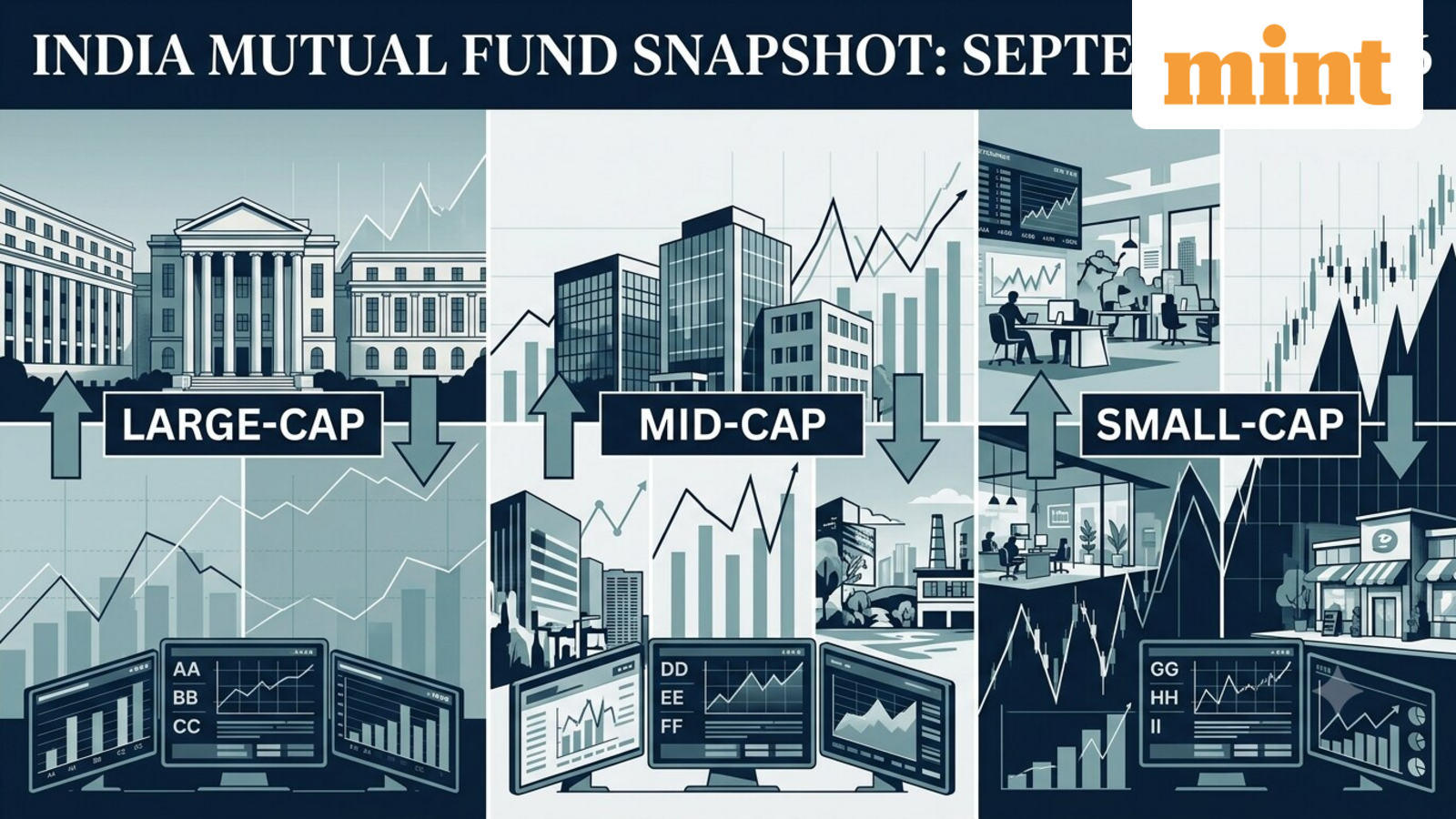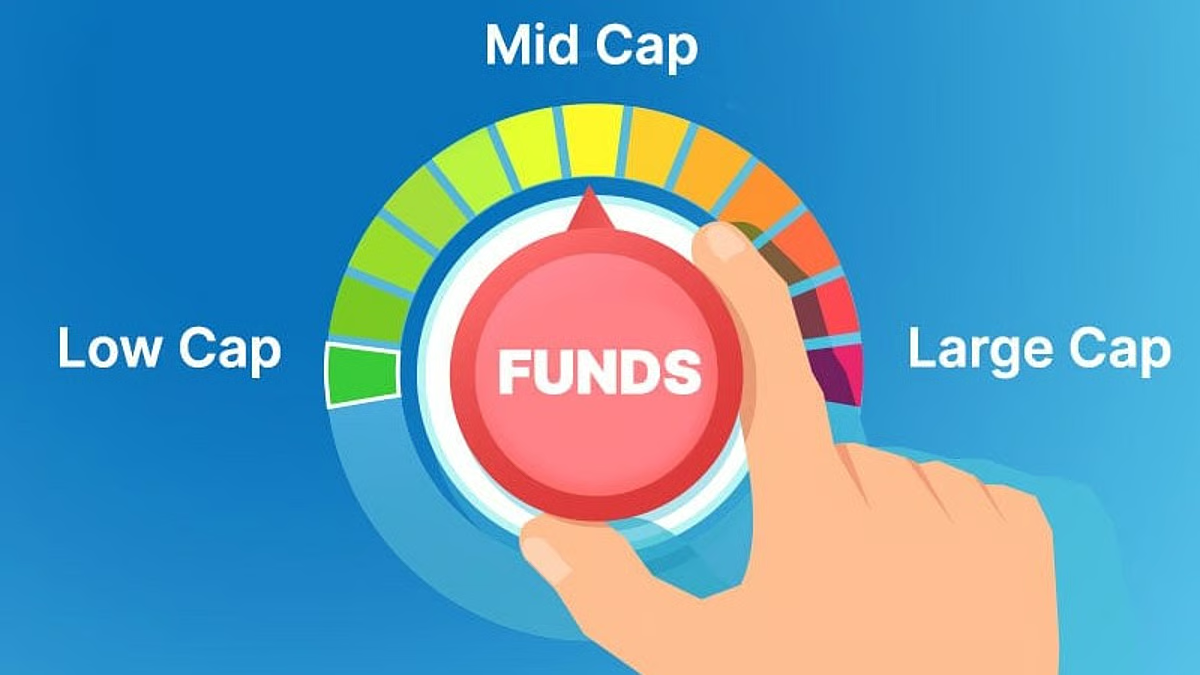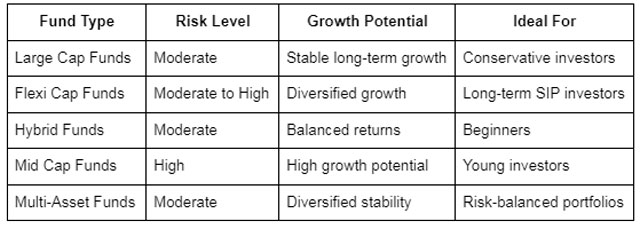
Large- and mid-cap funds can work well for investors who want more growth potential than a large-cap fund without moving entirely into the sharper swings of mid caps. Large companies lend stability; mid-sized businesses add room for faster earnings growth. The real test, though, is whether the fund manager can balance the two, avoid overpaying in buoyant markets and still participate meaningfully when risk appetite returns.
When we recommended Bandhan Core Equity Fund in December 2023 , it was a three-star fund in our bl.portfolio Star Track Ratings. The investment case rested on a marked turnaround, improving return consistency, a diversified portfolio and lower volatility despite meaningful mid- and small-cap exposure. The fund was renamed Bandhan Large & Mid Cap Fund in 2025.
Its rating moved to four stars in the July 2024 refresh and then to five stars from January 2026. That steady climb matters. Among comparable funds in our ratings coverage, several stayed flat or moved unevenly; Bandhan’s progress was cleaner. Returns improved too, not just the badge.
The fund has beaten both category and benchmark SIP returns over three, five, seven and 10 years. Rolling-return data also shows strong average outcomes. That gives the comeback story more depth.
Yet, this is not the same portfolio we wrote about three years ago. Small-cap exposure has risen, financials now dominate, and the fund has become more assertive. The fund merits a fresh look, but investors should enter through SIPs, stay invested for at least five-seven years and be prepared for higher volatility. Here is a lowdown.
Strategy
SEBI defines a large and mid-cap fund as an open-ended equity mutual fund mandated to invest at least 35 per cent of its total assets in large-cap stocks and at least 35 per cent in mid-caps.
Bandhan Large & Mid Cap Fund’s approach is to use small caps judiciously to create reasonable alpha over the large-mid benchmarks.
It follows the broad framework that underpinned our earlier recommendation. The portfolio is built across three buckets: high-growth and quality businesses, thematic or cyclical opportunities, and optional or value ideas. As of June 2026, these accounted for roughly 54 per cent, 31 per cent and 11 per cent of the portfolio, respectively.
The Rs 18,700-crore fund targets an active share of 40-70 per cent and the same figure stood at 57 per cent in June-2026. Active share denotes difference in the stock weights in the fund vis-à-vis the benchmark. Since the Nifty LargeMidcap 250 TRI is reasonably fragmented, the manager expects active share to remain above 50 per cent most of the time. In plain terms, stock and sector weights can differ meaningfully from the benchmark.
Given the sizeable mid-small cap exposure, the fund may have a reasonable amount of cash (up to 10 per cent). That flexibility helps when valuations get stretched or fresh opportunities are scarce. It can also make the fund look rather different from a conventional large-and-mid-cap peer.
Portfolio breadth remains another feature. The latest June 2026 security-wise analysis shows 128 equity holdings, while the top 10 stocks accounted for only 26.7 per cent. So, even with large sector calls, single-stock concentration is kept under check.
The manager also rotates when valuations or business cycles change. Recent moves into banks, insurers, consumer names and selected industrials, alongside cuts in IT and metals, show that process at work.
Performance
Monthly SIP returns as of July 21, 2026, show the fund ahead of both its category and the Nifty LargeMidcap 250 TRI across every period examined.
Over three years, the SIP return was 10.47 per cent XIRR, against 9.09 per cent for the category and 8.70 per cent for the benchmark. The five-year figure was stronger: 16.59 per cent for the fund, beating the category by 3.28 percentage points and the benchmark by 3.09 percentage points. Seven-year SIP returns stood at 19.14 per cent versus 16.43 per cent and 17.09 per cent, respectively. Even over 10 years, where the margin narrowed, the fund delivered 16.71 per cent against 14.85 per cent for peers and 15.95 per cent for the index.

Its category ranks were fifth over three years, third over five and seven years, and fourth over 10 . That is consistent top-quartile territory.
Rolling returns add another layer. Rolling return data has been calculated from the last 7 years NAV history. The Bandhan fund’s mean three-year rolling return was 23.4 per cent, compared with 19.9 per cent for the category and 21.4 per cent for the benchmark. Its weakest three-year rolling return was still 14.8 per cent, the third-best among 26 peer funds.

The five-year record was better still. Mean rolling return for the Bandhan fund came in at 23.5 per cent, while the minimum was 16.2 per cent, second-best in the category. It also beat the benchmark on maximum, minimum and average five-year rolling returns.
Risk ratios support the pattern, though they cover only three years of monthly data. Beta was 0.98, upside capture 1.11 and downside capture 0.92. Put together, the fund participated more in rising markets and lost less in falling ones.
Portfolio
The portfolio has changed materially since our earlier review. According to ACEMF data, large caps made up 38.5 per cent, mid caps 35.6 per cent and small caps 21.4 per cent. Others, largely cash and non-equity assets, accounted for the balance allocation.
That mix is more aggressive than before. Over five years, small-cap exposure has more than doubled, from 9 per cent odd in June 2021. Combined mid- and small-cap holdings now stand at nearly 57.1 per cent, close to the highest level in the nine-year history examined (July 2017 till now).
Financials are the dominant sector. Banks, finance, insurance, fintech and capital-market stocks together made up about 38.1 per cent. HDFC Bank, ICICI Bank, Kotak Mahindra Bank, Axis Bank and SBI were among the leading holdings. The fund sharply raised banking exposure in June while adding to insurers and selected consumer names.
The other side of that rotation also matters. IT software fell to 3.2 per cent from nearly 6.1 per cent in May, while metals and some capital-market positions were cut. Tech Mahindra, Infosys and TCS saw sizeable reductions; Adani Ports, Cipla, Tata Steel and Mankind Pharma were among the complete exits, as per ACEMF data.
Despite these sector bets, stock concentration remains modest. The top 10 holdings formed just over one-fourth of assets. The portfolio is broad. It carries meaningful exposure to pharma, electrical equipment, retail, transport services, industrial products, power and realty. That breadth can cushion stock-specific mistakes. However, it cannot remove the volatility that comes with a 57 per cent mid- and small-cap allocation.

Takeaways
Investors with a minimum five/seven-year horizon can buy the fund through SIPs. The case is not built on one hot year. It rests on stronger long-term SIP returns, high category ranks, favourable rolling-return consistency and a ratings journey from three stars to five stars. Fund’s base expense ratio of regular plan is 1.42 per cent and for direct plan is 0.45 per cent, which are competitive.
Use Bandhan Large & Mid Cap Fund as a core-plus holding, not as your only equity fund. A large-cap or flexi-cap scheme can provide balance because Bandhan now carries heavier mid- and small-cap exposure. Existing investors may continue and add gradually; there is no need to chase with a lump sum.
The fund’s return record is strong, but the ride is not mild. Analysis of drawdown (decline from peak investment value) shows the fund has fallen 18–19 per cent twice and nearly 40 per cent once in the past decade. Thus, a long-term investment horizon and SIP route are essential. For investors willing to ride out those swings, the long-term payoff remains compelling.
Published on July 25, 2026