Equity Mutual Funds: Past returns are often among the first things investors check while selecting an equity mutual fund. However, relying only on historical performance can lead to the wrong investment decision, experts told Zee Business.
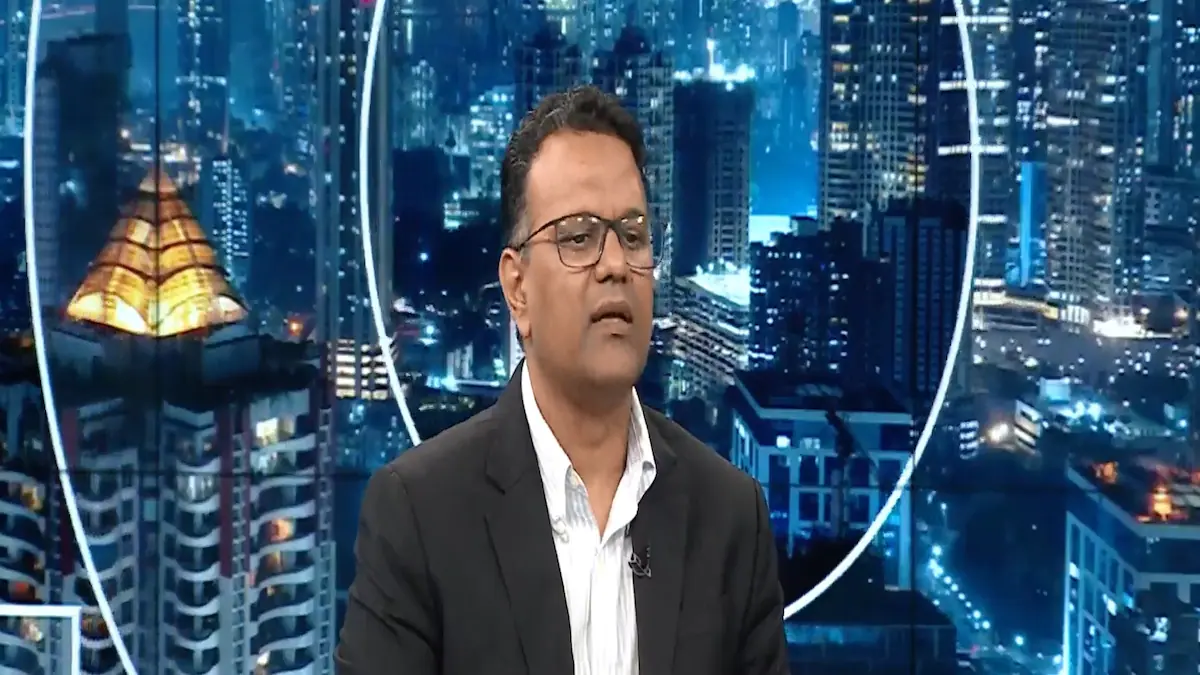
Hrishikesh Palve, Director, Anand Rathi Wealth and Kshitiz Mahajan, Managing Partner and CEO, Complete Circle Wealth, explained why returns can differ across equity categories and between individual funds within the same category.
They also explained what investors should consider beyond past performance while selecting funds.
Here are 7 mistakes investors should avoid when choosing equity mutual funds based on past returns:
1) Choosing a fund solely on the basis of past returns
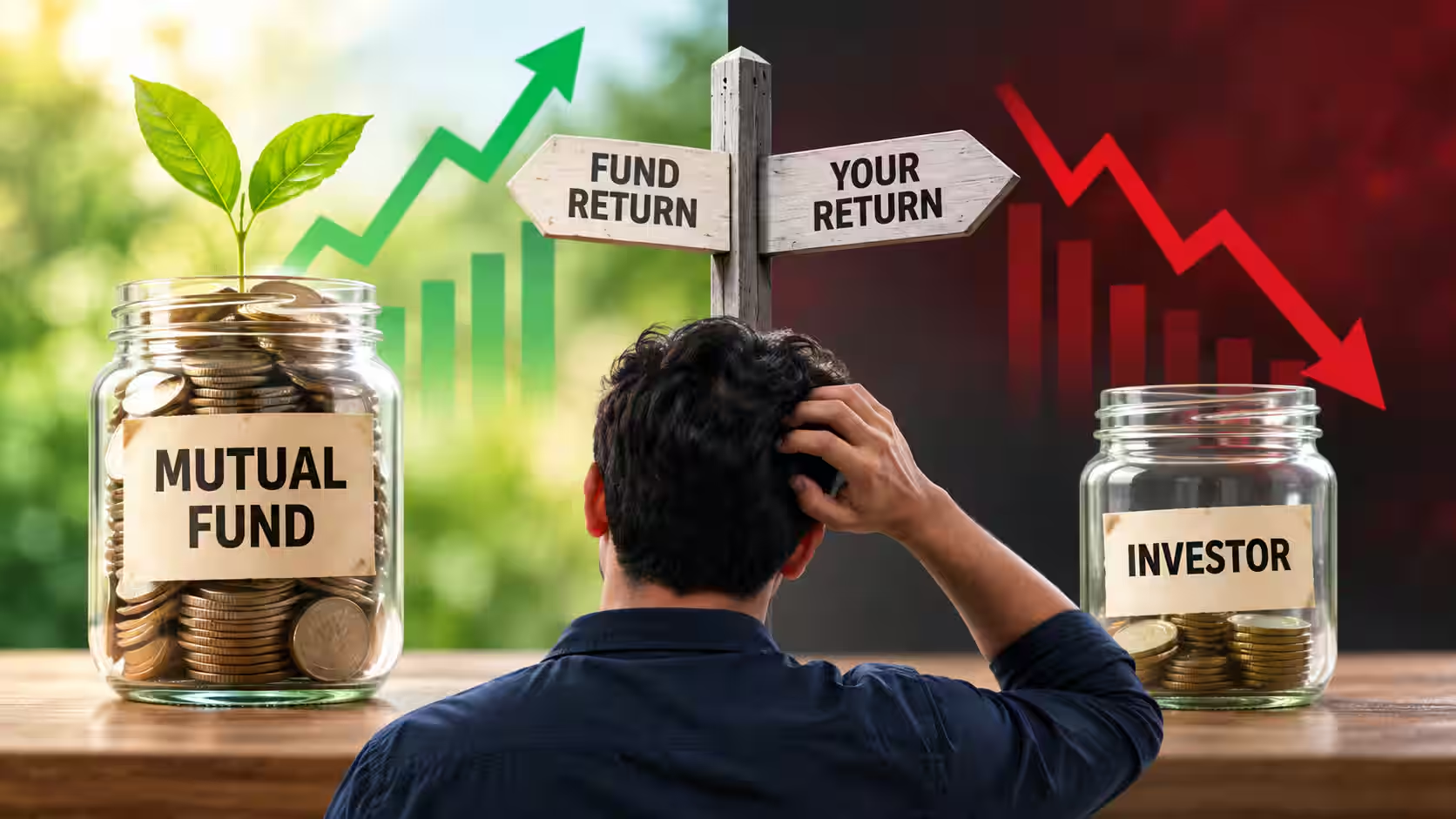
A fund that has delivered strong returns over the past year or a particular period may not necessarily continue to perform in the same way.
Explaining small-cap funds, Palve said investors should not make allocation decisions based on short-term recoveries.
“Short-term recovery-based allocation should not be done. Long-term allocation should be there,” Palve said.
He also stressed that mutual funds should be treated as long-term investment instruments rather than trading instruments.
“Mutual fund is not a trading window. Mutual fund is an investment tool. You should look at it for years,” he said.
2) Chasing a category after a strong recent performance
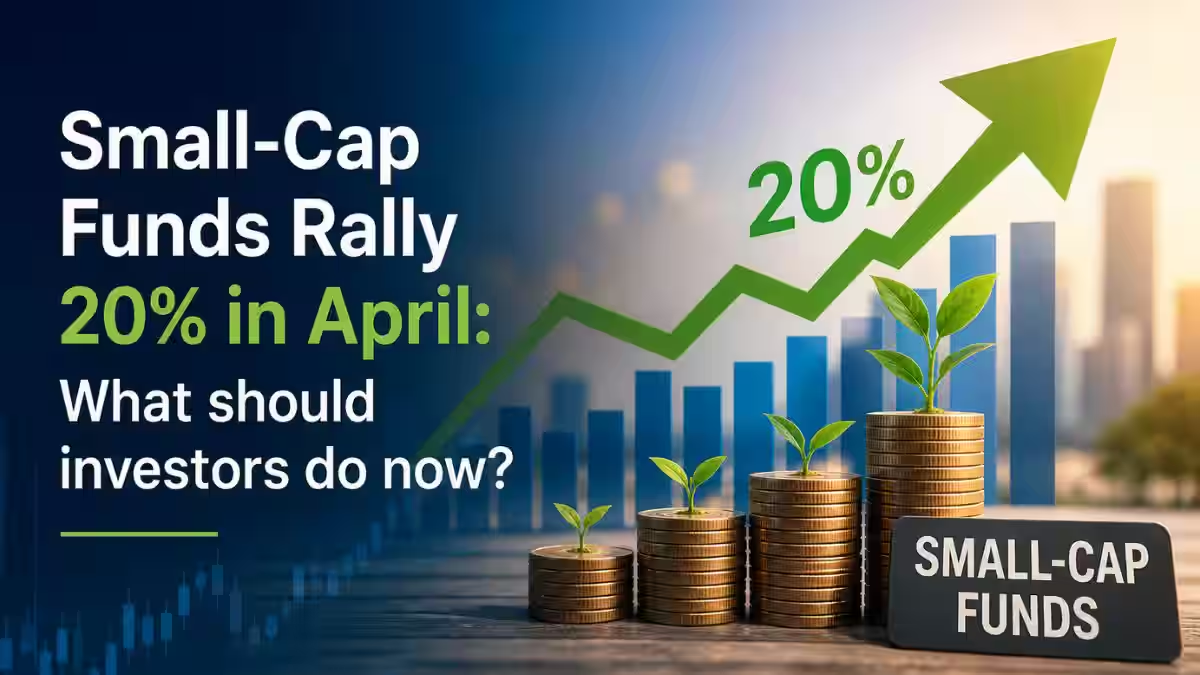
Small-cap funds, for instance, had delivered strong one-year returns in the recent period, according to experts. However, their returns over three and five years were different.
Palve explained that small caps had seen a sharp recovery, particularly after March, which contributed to their strong one-year performance.
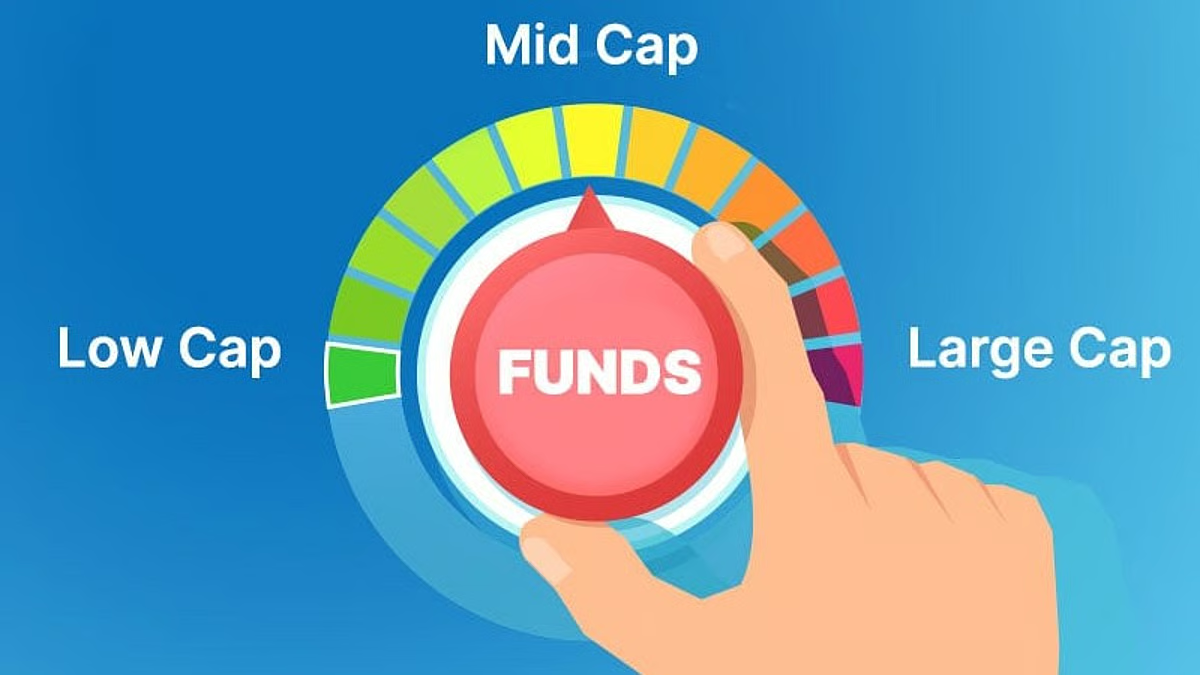
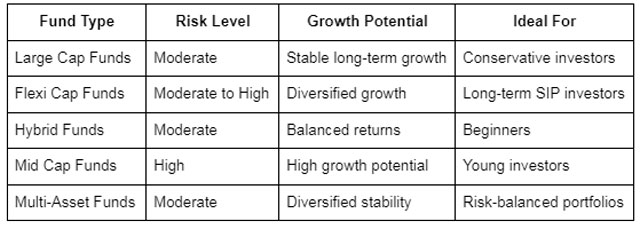
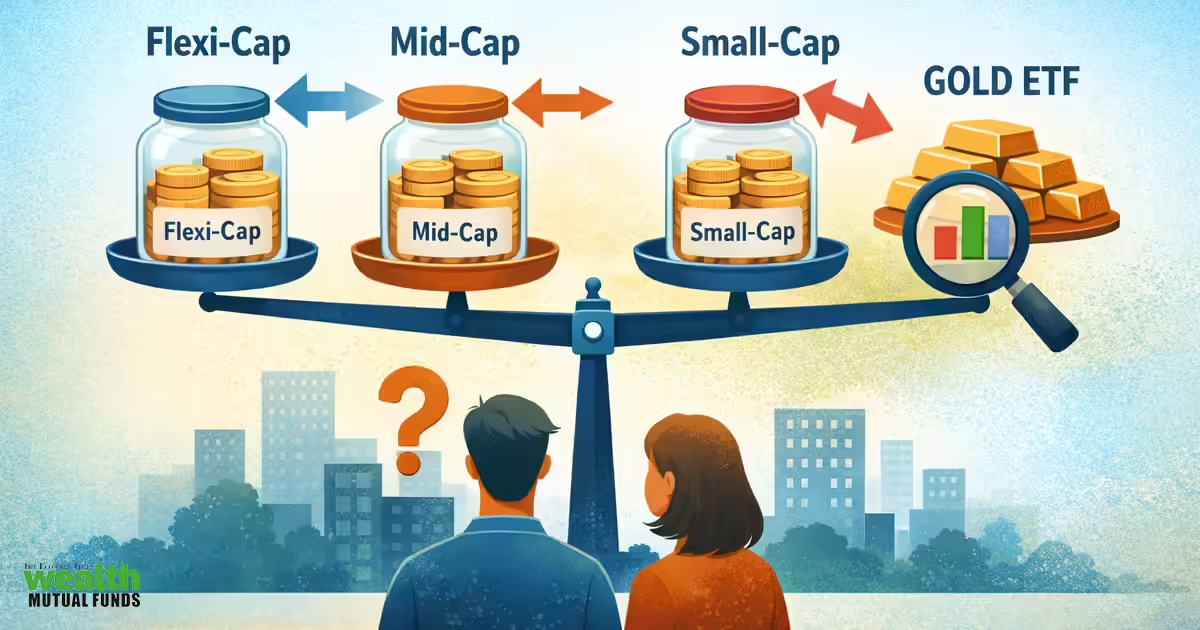
He said the role of large-, mid- and small-cap categories is different in a portfolio. According to him, large caps can provide stability, while mid- and small-cap categories have the potential to generate alpha over their benchmarks.
Therefore, investors should not shift their allocation simply because one category has recently delivered higher returns.
3) Assuming every fund in a category will deliver similar returns
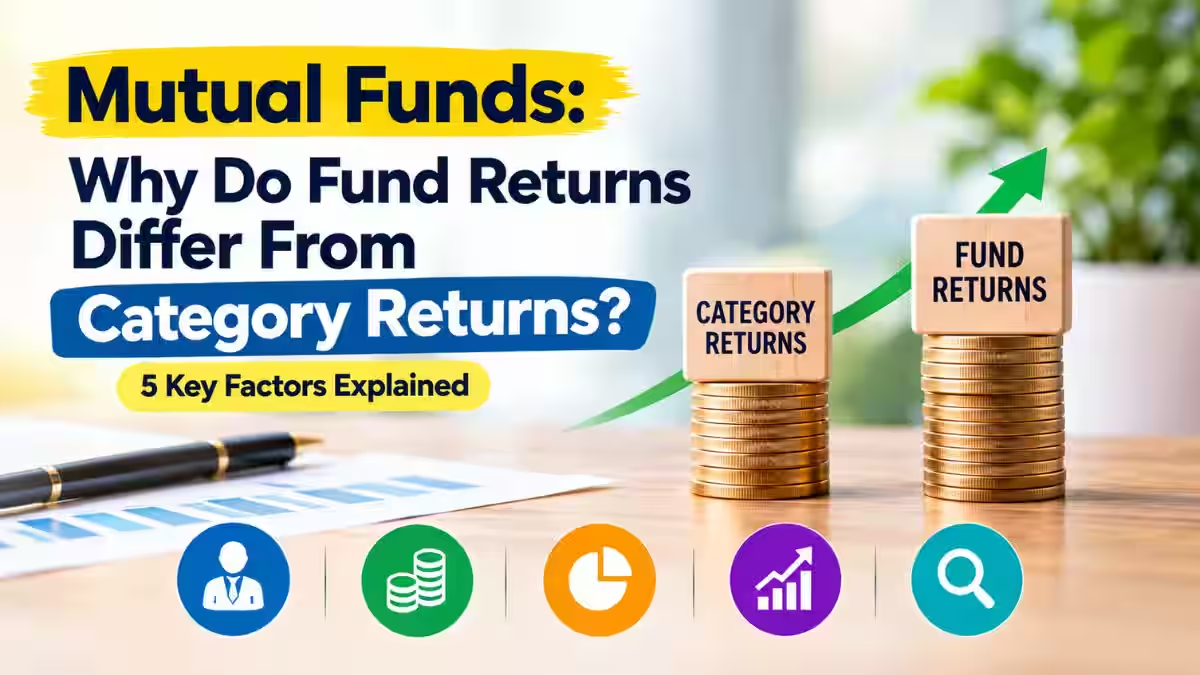
Another mistake is to assume that every fund in a category will deliver returns similar to the category average.
Mahajan explained that there can be a significant difference between the returns of an individual fund and the overall category because fund managers can have different investment styles and portfolio strategies.
He pointed out that while the three-year average return of a flexi-cap category was around 7.78 per cent, an individual fund in the same category had delivered around 12.99 per cent over the same period.
“Every fund manager has his own style of investing,” Mahajan said.
He added that some funds in a category may perform better, some may deliver returns closer to the category and others may underperform. The difference can arise from factors such as investment style, sector allocation, stock selection, fund size and the fund manager’s investment approach.
4) Ignoring the size of the mutual fund
Fund size is another factor investors should consider, particularly when evaluating small-cap funds.
Mahajan explained that managing a very large small-cap fund can make it difficult for the fund manager to take meaningful positions in smaller companies.
“Depending on its category, you have to figure out whether this is the right fund size or not,” he said.
He suggested that investors examine the fund manager’s holdings and top sector allocations along with the size of the fund.
5) Ignoring the fund manager’s investment style and portfolio
Past returns alone do not explain how a fund generated those returns.
“Only past performance should not be looked at,” Palve said, adding that investors should also consider “future-oriented parameters”. He said 50 per cent weightage can be given to past performance, while investors should also assess the fund manager’s ability to generate alpha, investment view, investment style, sector allocation and stock selection.
He also pointed out that the small-cap universe is broad, making it important to understand which sectors and stocks a particular fund is investing in.
6) Churning the portfolio after a short period of underperformance
Weak three-year returns may make investors consider switching funds. However, Mahajan cautioned against making major portfolio changes solely on the basis of a relatively short period.
“Three years otherwise is also a very short period on the basis of which you churn the portfolio,” he said.
He recommended reviewing the portfolio rather than immediately churning it. According to Mahajan, investors can reconsider their allocation, but switching should not be an automatic response to recent underperformance.
He also noted that investors can review their portfolios when valuations and market conditions change and make allocation decisions accordingly.
7) Ignoring overall asset allocation, goals and risk appetite
Selecting individual funds without considering the overall portfolio can also lead to an unsuitable allocation.
Palve suggested a broad allocation framework of around 50-55 per cent in large caps, 20-25 per cent in mid caps and the remaining allocation in small caps for a long-term equity mutual fund portfolio.
This should be viewed as a broad portfolio-level framework rather than a universal rule for every investor.
He described this as a combination for a long-term equity mutual fund portfolio, with each category playing a different role.
However, Mahajan clarified that such allocation is at the overall asset-allocation level, and not necessarily a rule that every investor must follow fund-by-fund.
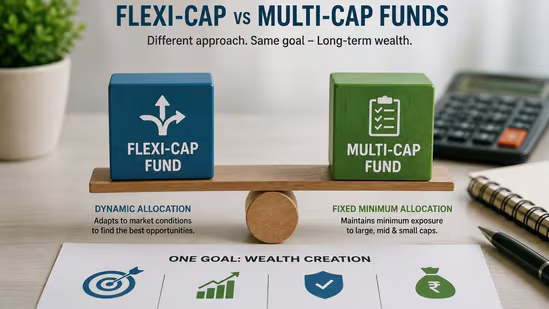
He pointed out that a flexi-cap fund, for example, can itself have exposure to mid- and small-cap stocks.
Therefore, investors should consider their overall asset allocation, investment goals and risk appetite instead of selecting funds solely by looking at which category has delivered the highest recent returns.
What should investors check before choosing an equity mutual fund?
Based on the experts’ insights, investors should look beyond headline returns and examine:
- Long-term performance across different market periods
- Fund manager’s investment style and view
- Fund size, particularly for category-specific funds
- Sector allocation
- Individual stock holdings
- Fund manager’s ability to generate alpha
- Portfolio overlap and correlation with other funds
- Overall asset allocation
- Investment goals and risk appetite
The key point from the experts was that past performance can be an important factor when selecting an equity mutual fund, but it should not be the sole basis for investment decisions. Investors should also assess the fund manager’s investment style and ability to generate alpha, fund size, sector and stock allocation, portfolio overlap and the fund’s role in their overall asset allocation.
As Palve said, “Past performance is a very good indicator,” but investors should look at performance over a longer period and also consider future-oriented parameters before selecting a fund.