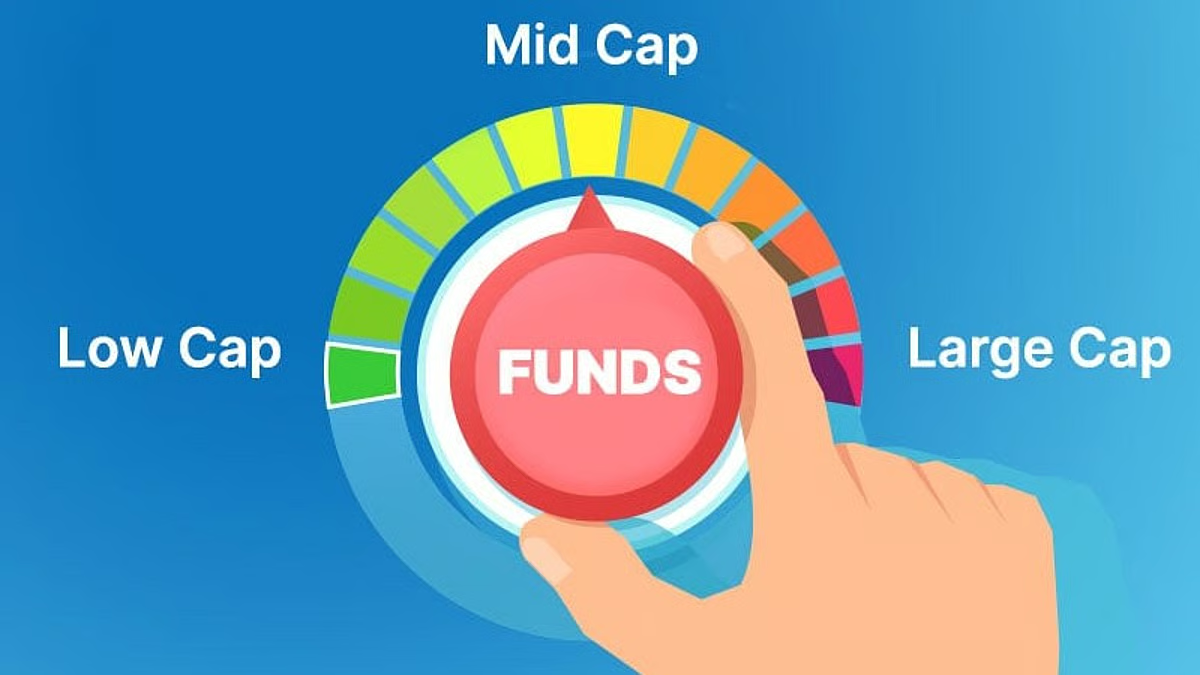
Choosing a mutual fund can seem challenging because different categories are designed to meet different investment objectives. Rather than focusing on which fund is “better,” investors may find it useful to understand how different fund categories work and whether they align with their financial goals, investment horizon, and risk appetite.
Among the commonly considered categories are the large cap fund, growth fund, and hybrid fund (also commonly referred to by some investors as a balanced fund in a broader sense). Each follows a different investment approach and may behave differently under varying market conditions.
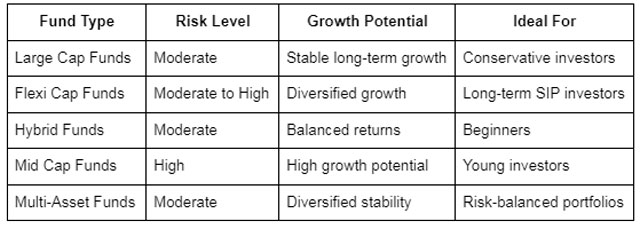
Large Cap Fund: Investing in Established Companies
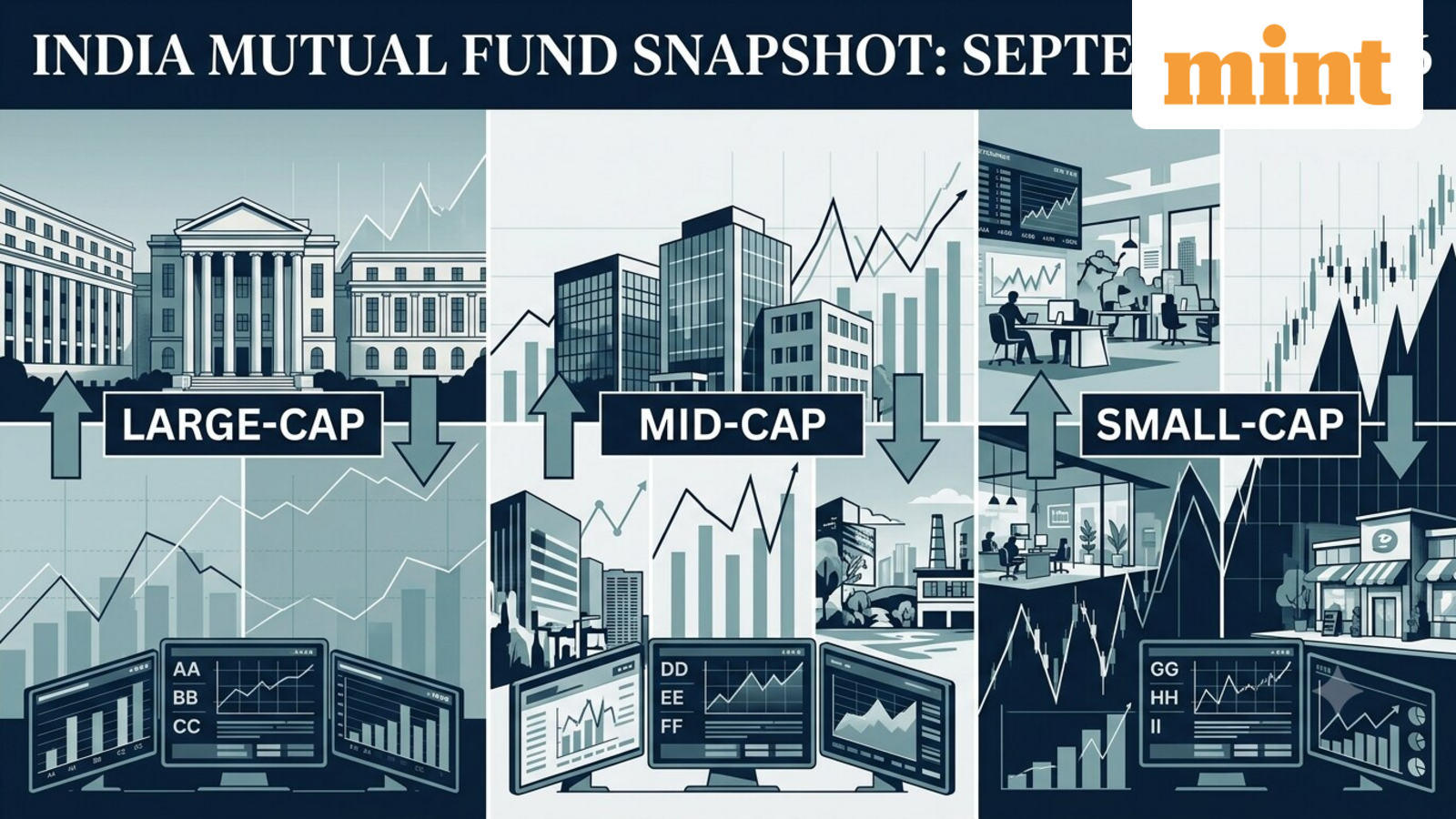
A large cap fund is an equity mutual fund that, as per the Securities and Exchange Board of India (SEBI) classification, invests at least 80% of its assets in the top 100 listed companies by full market capitalisation.
These companies are typically well-established businesses operating across different sectors of the economy. As a result, large-cap funds are generally associated with relatively lower volatility compared to some other equity fund categories. However, like all equity mutual funds, they remain subject to market risks and returns are not guaranteed.
A large cap fund may be considered by investors seeking exposure to established companies as part of a long-term investment strategy, subject to their financial goals and risk profile.
Growth Fund: Focus on Capital Appreciation
A growth fund primarily aims to generate capital appreciation by investing in companies that are expected to have the potential for higher earnings growth over time.
Depending on its investment strategy, a growth fund may invest across large-cap, mid-cap or small-cap companies. Fund managers evaluate businesses based on factors such as growth prospects, earnings potential and business fundamentals.
Since the underlying investments may experience greater price fluctuations, a growth fund can be more volatile than some other fund categories. Investors should consider their investment horizon and ability to withstand market fluctuations before investing.
Hybrid Fund (Balanced Fund): Combining Equity and Debt
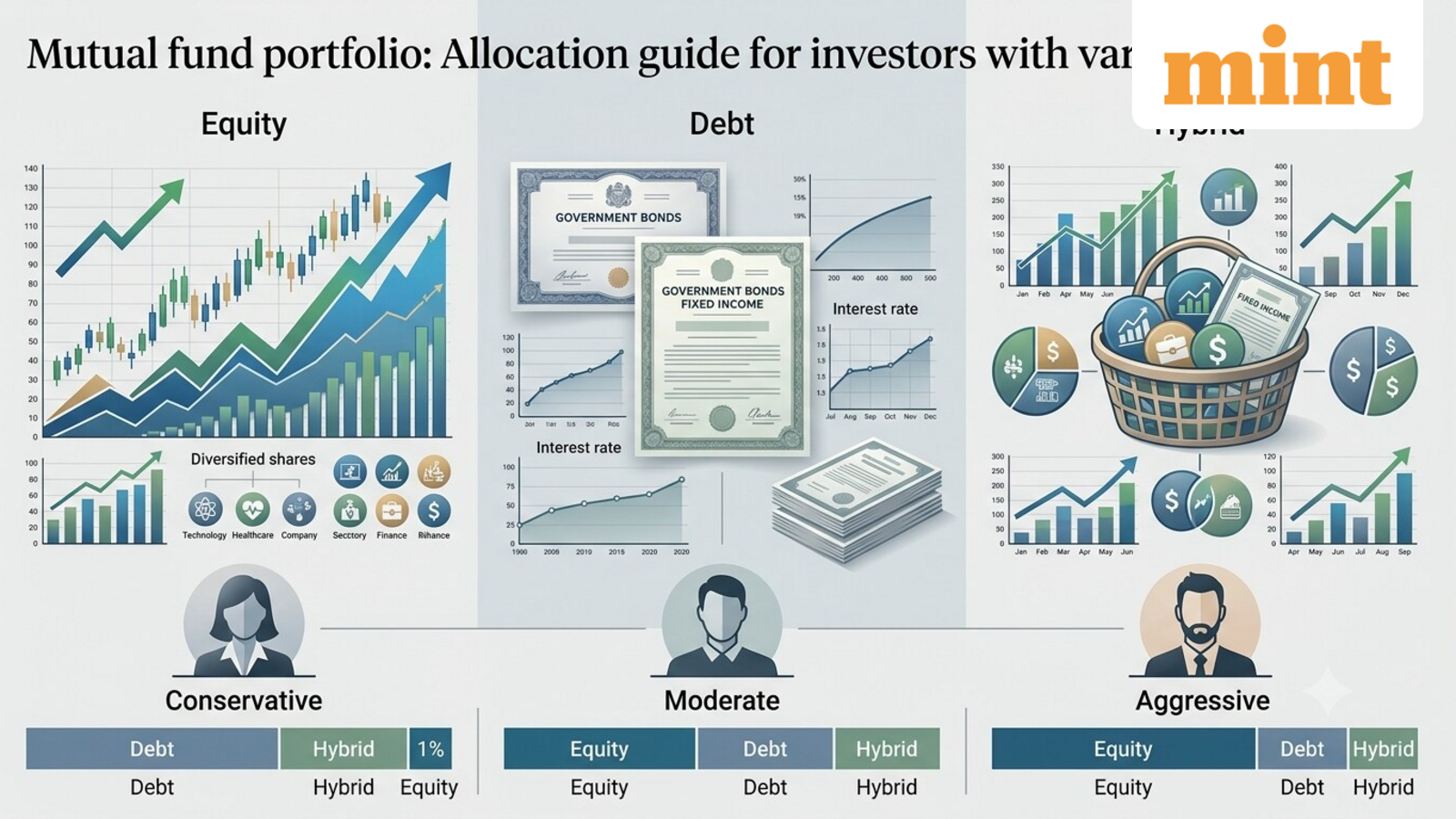
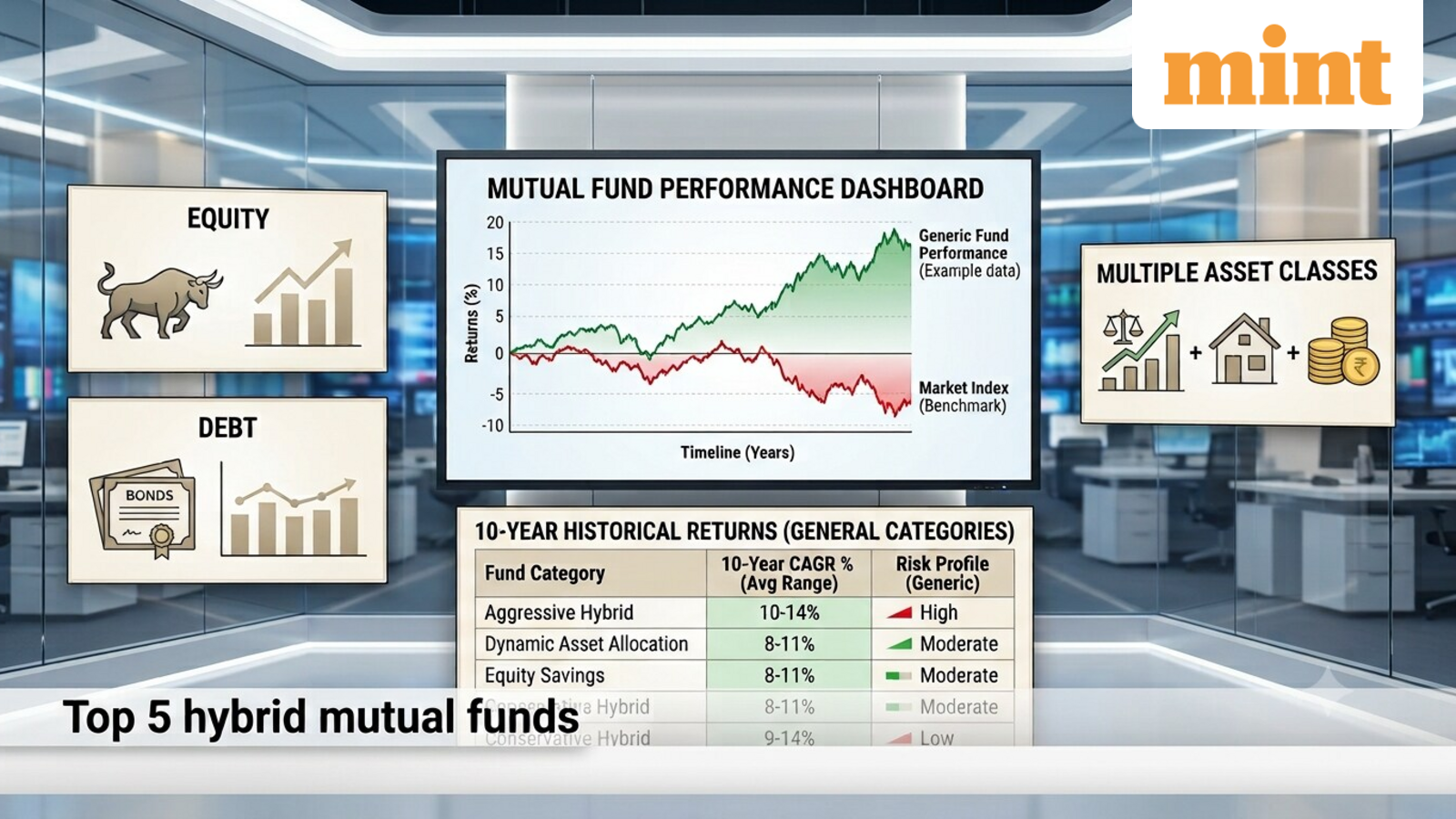
A hybrid fund invests in a combination of equity and debt instruments, with the allocation varying according to the scheme’s investment objective. This diversified approach seeks to provide exposure to equity markets while also including fixed-income investments.
Many investors also use the term balanced fund when referring to certain hybrid-oriented investment approaches, although the actual asset allocation depends on the specific scheme category.
Hybrid funds are available in different variants, including aggressive hybrid funds, conservative hybrid funds and dynamic asset allocation or balanced advantage funds. Each category follows its own investment mandate regarding the proportion invested in equity and debt.
Because these funds invest across multiple asset classes, their risk and return characteristics may differ from pure equity or pure debt funds.
The choice between a large cap fund, growth fund, or hybrid fund depends on several factors, including:
- Financial goals
- Investment horizon
- Risk appetite
- Existing portfolio allocation
For example, investors with a longer investment horizon may consider equity-oriented funds as part of their portfolio, while those seeking exposure to both equity and debt may evaluate a hybrid fund based on its investment objective. Every investment decision should be based on individual financial circumstances rather than market movements alone.
A large cap fund, growth fund, and hybrid fund each serve different investment objectives. Understanding how these categories invest, the level of market risk involved, and their respective investment mandates can help investors make informed decisions.
Before investing, investors should read the Scheme Information Document (SID), Key Information Memorandum (KIM), and other scheme-related documents carefully, and ensure that the selected mutual fund aligns with their financial goals, investment horizon and risk appetite.
Note to the reader: This article has been produced on behalf of the brand by HT Brand Studio and does not have journalistic/editorial involvement of Mint.
The content may be for information and awareness purposes and does not constitute any financial advice.