
Financial firms are reporting growing demand for a product that helps bridge the gap between stopping work and getting your pension.
Sales of retirement annuities have risen sharply during the last couple of years, and now advisers are seeing a fresh surge of interest in what they say is one of the market’s “lesser-known” options.
An annuity is a product that turns an individual’s pension pot into a regular, guaranteed income. The vast majority of people opt for one that provides an income for the rest of their life, called a lifetime annuity.
But more individuals are now buying a version that gives them an income for a set period – such as five or 10 years – and an agreed lump sum at the end. They can then decide what to do with that cash based on their circumstances at the time.
Photograph: De Visu/Alamy
This type of product is called a fixed-term annuity, and the retirement specialist Standard Life says it can be a way to secure a guaranteed income for a set period while giving you the flexibility to review your options later.
After falling out of fashion, annuities have become more popular partly because of higher annuity rates and tax changes, but also because they offer some financial certainty during turbulent times.
On top of that, a fixed-term annuity can give some breathing space if, say, you don’t feel quite ready to sign up to a lifetime annuity or go into drawdown (where you withdraw a portion of your pension savings every year and leave the rest invested).
Standard Life says its data reveals there has been growing customer interest in fixed-term annuities this year, while its rival Canada Life said recently it had experienced a “significant rise in demand” for its version of this product.
So how much income might you get from a fixed-term annuity?
This week Standard Life said a 62-year-old with a £100,000 pension pot could currently get a guaranteed income of about £13,800 a year for five years, and would get a £50,000 lump sum at the end of the term.
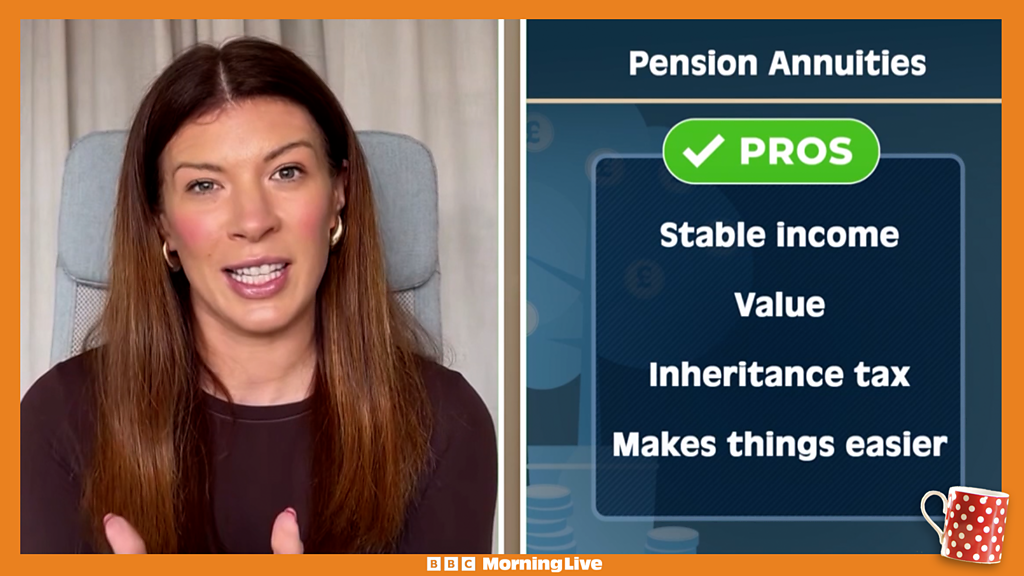
This level of income is higher than the full new state pension of £12,548 a year. You get that when you reach state pension age, which has started to rise from 66 and will hit 67 in April 2028.
According to the latest Standard Life research, 62 is, on average, the age when people would like to retire. So someone could use a fixed-term annuity to fund the period between stopping work and getting their state pension, providing some financial certainty.
Nick Flynn at Canada Life says these types of products are resonating with retirees “because they solve real challenges, helping retirees buy time before committing to drawdown or purchasing a lifetime annuity”.
He adds: “Customers are choosing the product to bridge the gap to state pension or defined benefit pension start dates, help fund specific commitments such as mortgage payments or school fees, or stabilise income in the earlier years of retirement.”
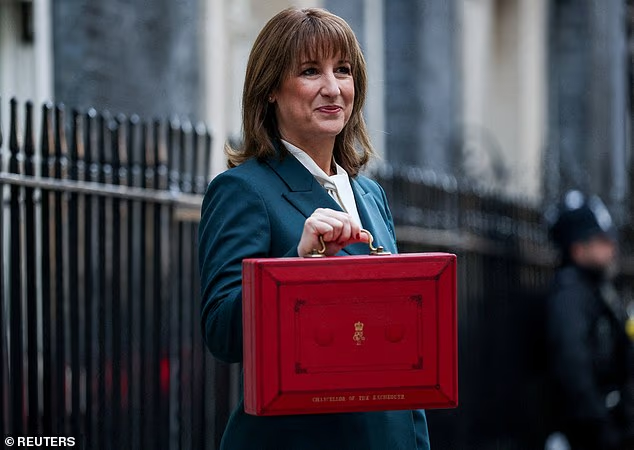
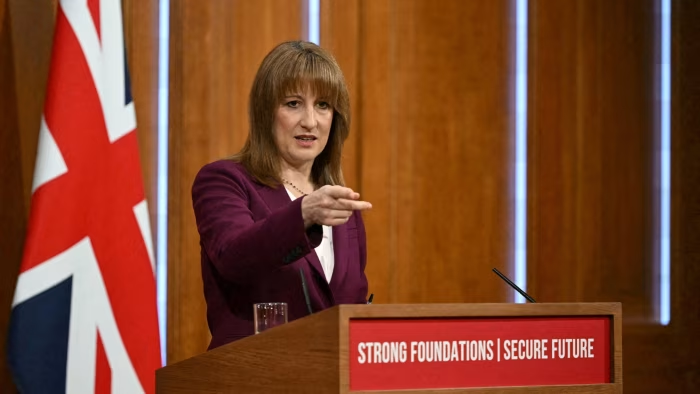
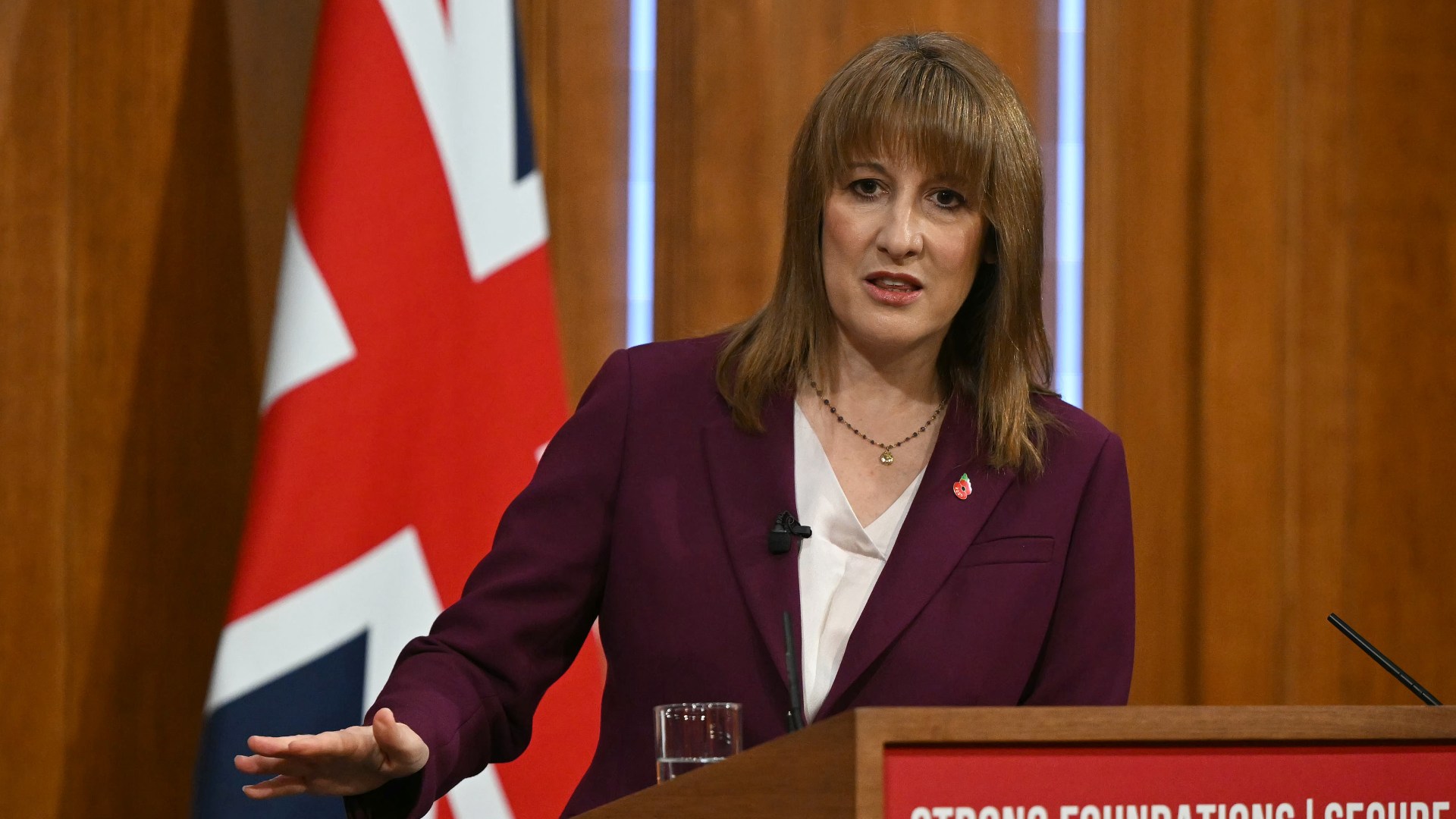
Changes to the inheritance tax (IHT) treatment of pensions, announced by Rachel Reeves in the 2024 autumn budget, have helped give annuities a new lease of life.
The then chancellor announced that from April 2027, money left in a defined contribution (AKA money purchase) pension after someone’s death will no longer be exempt from IHT. All private pensions and most workplace schemes are defined contribution.
The changes mean “unused” pension savings could be taxed as part of someone’s estate if they exceed the IHT threshold. Unused funds are money in a pension pot that has not been used to claim an income, such as buying an annuity.
However, the insurer Legal & General says it surveyed 2,000 UK adults aged 50-plus earlier this year, and found misconceptions and confusion about annuities remained “widespread”.
For example, only 35% of respondents correctly identified a lifetime annuity as the retirement option that guaranteed an income for life. Meanwhile, 30% felt that annuities were too difficult to understand.
But L&G says: “Annuities are actually quite simple. They let you exchange some or all of your pension savings for a guaranteed income.”
However, it adds: “They are not right for everyone. Annuities generally cannot be changed once set up or cancelled after the cooling-off period.”
L&G has a myth-busting guide on its website.