Mutual funds pool money from multiple investors, and the fund manager creates a portfolio in line with a fund’s respective mandate.
On the other hand, Portfolio Management Services (PMS) offers a personalised investment experience where portfolios are tailored to an individual’s financial goals, risk appetite, and preferences. However, this customisation comes with a significantly higher minimum investment requirement.
So, let’s understand the difference between mutual funds and PMS in detail and find out which one is right for you.
What are mutual funds?
A mutual fund is an investment vehicle that pools money from multiple investors and invests it in different instruments such as equities, bonds, or commodities, based on the fund type. The portfolio is managed by a professional fund manager who makes investment decisions according to the fund’s stated objective.
One of the biggest advantages of mutual funds is accessibility. Investors can start with relatively small amounts through lump-sum investments or Systematic Investment Plans (SIPs), making them suitable for beginners.
What are portfolio management services?
PMS is a personalised investment management solution designed primarily for HNIs. As per Sebi regulations, investors must invest at least ₹50 lakh to access PMS offerings. A PMS portfolio may consist of stocks, debt instruments, mutual funds, REITs, InvITs, or other investment opportunities.
Unlike mutual funds, PMS provides customised portfolio management. The investments are held directly in the investor’s demat account, and the portfolio manager manages the assets based on the investor’s risk profile, financial objectives, investment horizon, and preferences.
There are two types of PMS offerings. In a discretionary PMS, the portfolio manager has complete freedom to make investment decisions and execute transactions on the investor’s behalf, based on the agreed investment strategy and objectives.
Second is the non-discretionary PMS. This allows the portfolio manager to provide investment recommendations, but the final decision to buy, sell, or hold securities rests with the investor.
Mutual funds vs PMS: Key differences you should know
Investment amount
Mutual funds are designed for a broad range of investors and allow participation with relatively small amounts, such as ₹100.
On the other hand, PMS is aimed at affluent investors and requires a minimum investment of ₹50 lakh.
Portfolio structure
Every mutual fund type needs to follow a standardised investment strategy where all investors in a particular scheme participate in the same portfolio.
PMS portfolios are customised according to individual investor requirements. The portfolio manager can create a strategy that considers factors such as existing investments, tax considerations, sector preferences, and return expectations.
Investment strategies
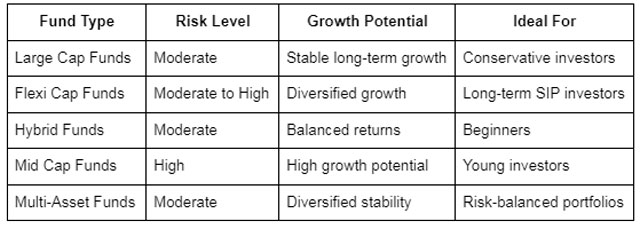
Mutual funds invest according to predefined mandates such as large-cap, mid-cap, small-cap, flexi-cap, sectoral, hybrid, or debt funds.
PMS offers a wider range of specialised and customised investment strategies. Depending on the PMS provider, investors can explore concentrated equity portfolios, tactical asset allocation strategies, debt-focused portfolios, SME-listed companies, REITs, InvITs, ETFs, or other niche opportunities.
Ownership of investments
In mutual funds, investors own units of the scheme rather than the individual securities held by the fund.
Under PMS, investors directly own the stocks and other securities purchased on their behalf. These assets remain in the investor’s demat account, offering greater visibility into portfolio holdings.
Diversification vs concentration
Mutual funds generally maintain diversified portfolios to spread risk across sectors and companies.
PMS portfolios can be more concentrated, often holding a smaller number of carefully selected stocks. This approach may increase the potential for higher returns but also raises portfolio risk if investments underperform. However, PMS can also offer a diversified portfolio as they don’t have any pre-defined investment rules.
Flexibility in investment decisions
Mutual funds operate within regulatory limits and predefined investment mandates.
PMS managers typically enjoy greater flexibility. They may hold higher cash positions during uncertain market conditions, invest in niche opportunities, or take concentrated bets when they identify strong investment prospects.
Transparency
Mutual funds disclose their portfolio holdings every month through fact sheets.
PMS investors can view the securities held in their portfolios directly, making portfolio monitoring more transparent and personalised.
Costs and fees
Mutual funds charge a Total Expense Ratio (TER), which covers fund management and operating expenses.
PMS generally follows a more complex fee structure that may include management fees, performance-linked fees, or a combination of both. As a result, PMS costs are often higher than those of mutual funds.
Taxation
Tax treatment is another important differentiator. In mutual funds, buying and selling decisions within the fund do not create immediate tax implications for investors. Tax liability arises only when units are redeemed by the investor.
In PMS, securities are held directly by investors. Therefore, transactions executed by the portfolio manager may result in capital gains tax obligations depending on the nature and frequency of trades.
Suitability
Mutual funds are suitable for retail investors seeking a diversified and professionally managed portfolio with a low investment requirement.
PMS is better suited for HNIs who can invest at least ₹50 lakh and prefer a customised investment strategy.
Basis |
Mutual Funds |
PMS |
Minimum Investment |
Starts from as low as ₹100 |
Minimum ₹50 lakh |
Portfolio Structure |
Same portfolio for all investors |
Customized portfolio for each investor |
Investment Strategies |
Predefined categories such as large-cap, flexi-cap, hybrid, and debt funds |
Can invest in concentrated portfolios, SMEs, REITs, InvITs, ETFs, and other niche opportunities |
Ownership |
Investors own fund’s units |
Investors directly own securities |
Diversification |
Generally diversified |
Generally more concentrated |
Flexibility |
Limited by scheme mandate |
Greater investment flexibility |
Transparency |
Monthly portfolio disclosures |
Direct visibility of holdings and transactions |
Fees |
Charges expense ratio |
Management or performance-based fees |
Taxation |
Tax applicable mainly on redemption |
Capital gains tax may arise from portfolio transactions |
Suitability |
Suitable for retail investors |
Suitable for HNIs seeking customization |
Disclaimer: This is purely for educational/ informational purposes and should not be taken as any sort of investment advice. Always consult a SEBI-registered advisor before making any investment decisions.