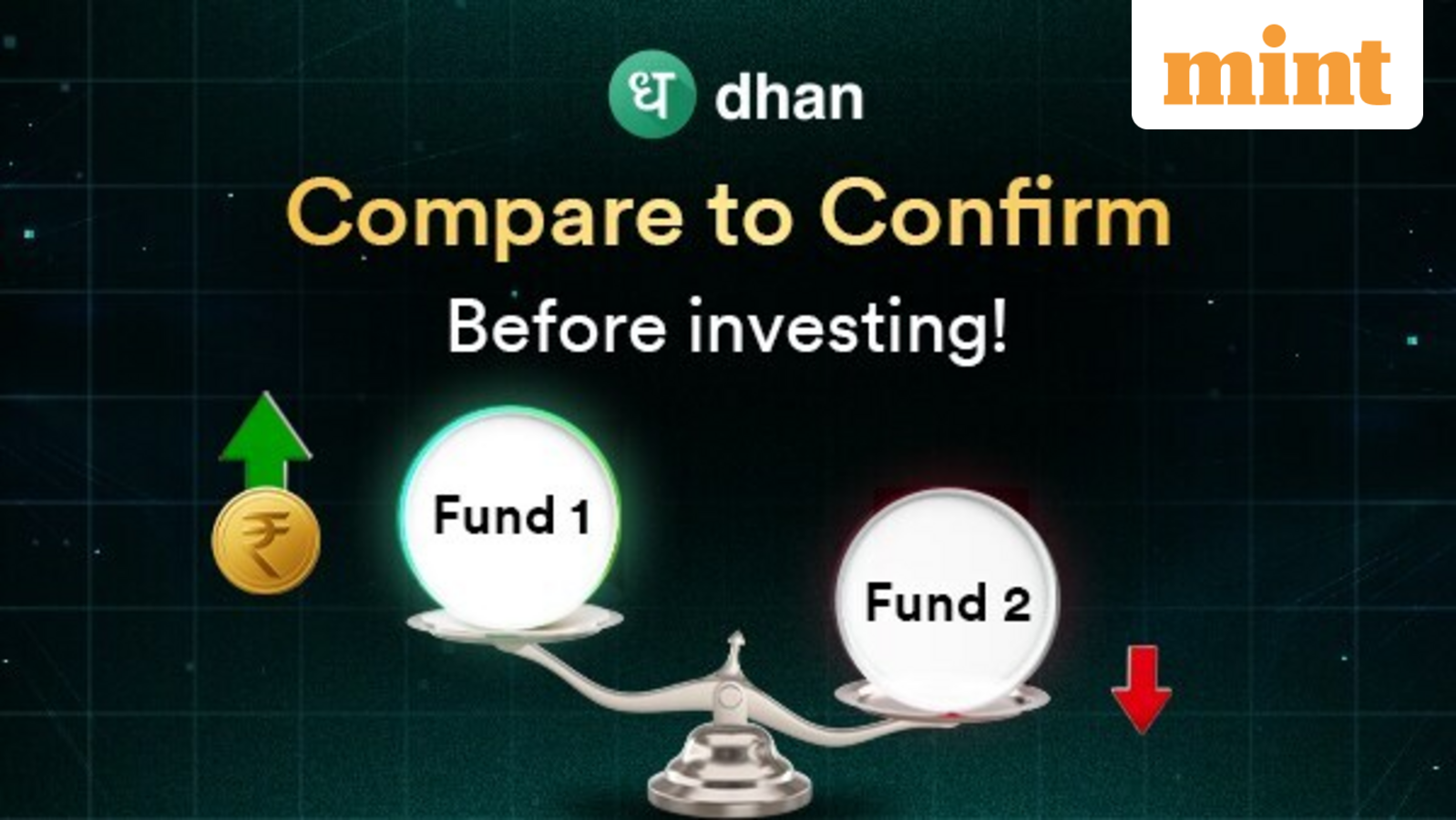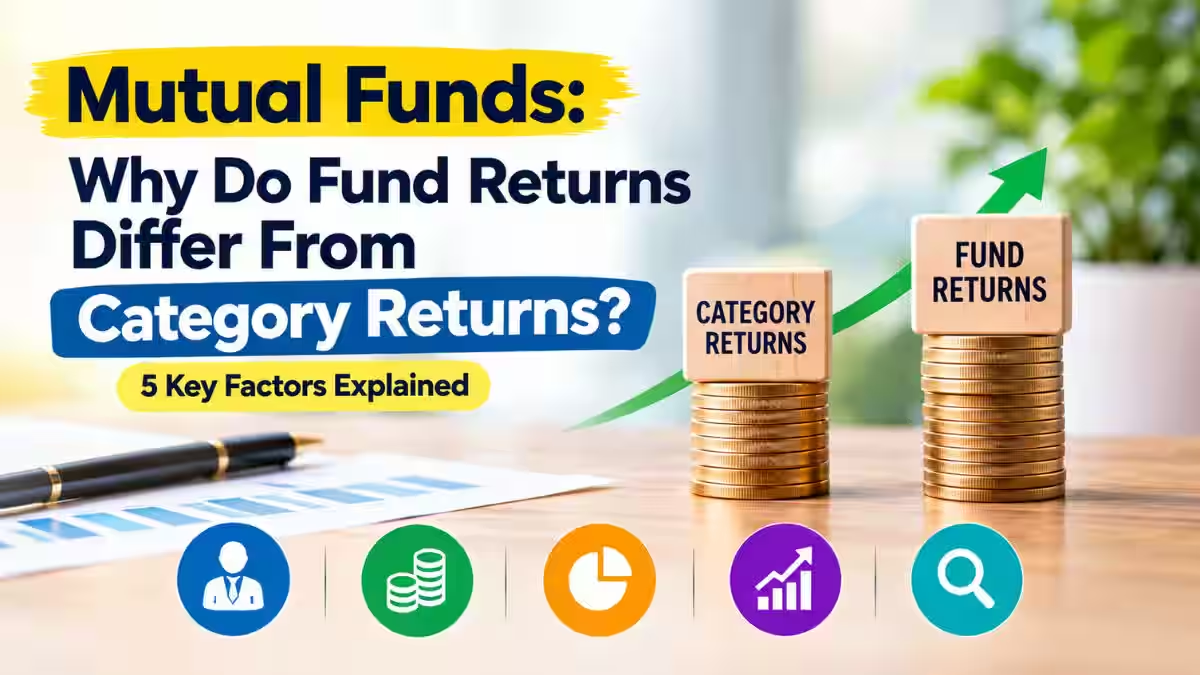
Mutual Funds: Mutual fund investors often compare a scheme’s returns with the average performance of its category. However, funds belonging to the same category can deliver significantly different returns. The reason lies in factors such as the fund manager’s investment style, fund size, sector allocation and stock selection, experts told Zee Business.
Hrishikesh Palve, Director, Anand Rathi Wealth and Kshitiz Mahajan, Managing Partner and CEO, Complete Circle Wealth, explained why returns can differ across equity categories and between individual funds within the same category.
Fund vs category returns: Why is there a difference?
The experts said a category-level return does not mean every fund in that category will deliver the same return.
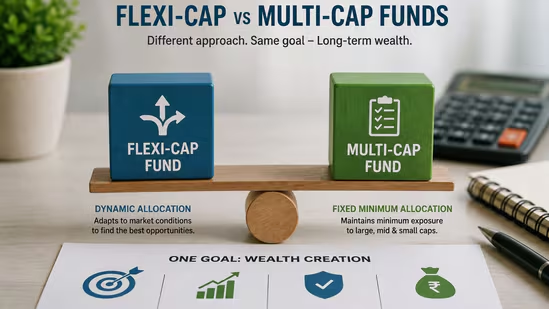
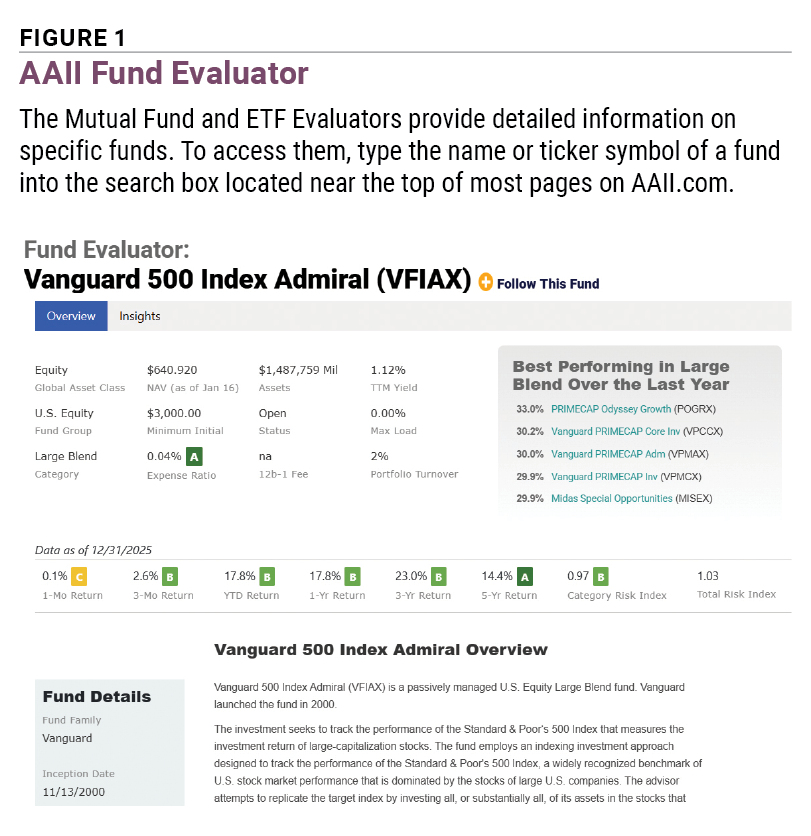
For instance, experts highlighted that the three-year average return of a flexi-cap category was around 7.78 per cent, while an individual fund in the same category had delivered around 12.99 per cent over the same period.
Explaining why such differences occur, Mahajan said that fund managers follow different investment styles.
“Every category has different styles of fund managers.”
According to Mahajan, a fund manager’s investment style, along with the size of the fund, can have a significant bearing on performance.
1) Fund manager’s investment style
Two fund managers operating within the same mutual fund category may take different investment approaches. Their individual decisions on portfolio construction, sectors and stocks can therefore result in different returns.
Mahajan explained that even within the same category, one fund could perform better while another may deliver lower returns because of the investment style and allocation followed by the respective fund manager.
“If we are three fund managers in the same category, our allocation can be different depending on our conviction and what the research team says,” Mahajan said.
2) Fund size
The size of a mutual fund is another factor that investors need to consider. Mahajan explained that the appropriate fund size can vary depending on the category.
For example, deploying money into smaller companies can become more difficult for a very large small-cap fund because taking even a relatively small portfolio allocation in a company can involve a significant amount of capital.
Therefore, investors should examine whether the fund size is appropriate for its category and investment strategy.
3) Sector allocation
Sector allocation can also create a gap between a fund’s returns and the broader category average.
Mahajan said investors should look at where the fund manager has allocated money and whether those sector choices are aligned with the manager’s investment view.
He cited IT and oil-oriented businesses as examples of how sector positioning can affect performance. If a fund has a significant allocation to a sector that does not perform during a particular period, its returns can lag other funds in the same category.
“A lot of things have an impact on what kind of selection a fund manager makes,” Mahajan said.
4) Stock selection
Even within the same category, fund managers can have different convictions and therefore hold different stocks and allocations.
Mahajan said fund managers can have different convictions and consequently build different portfolios. This means the performance of individual schemes can vary even when they operate within the same broad category.
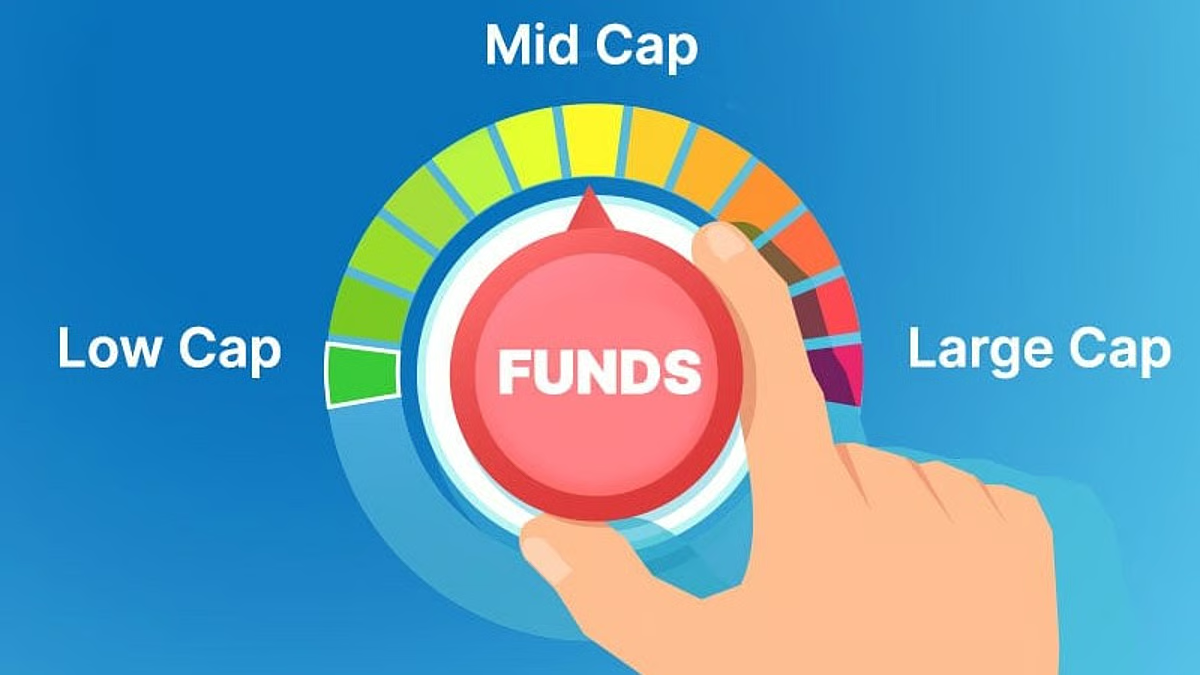
The difference becomes particularly relevant in categories such as small caps, where the investment universe is large.
Palve pointed out that small-cap investing involves a broad universe of companies, making it important to examine which sectors and stocks a particular scheme holds rather than looking at the category label alone.
5) Research, conviction and portfolio positioning
The experts also stressed that investors should look beyond a fund’s past performance when selecting a scheme.
Palve said investors should examine the fund manager’s alpha-generation capability, investment view, investment style, sector allocation and stock allocation before choosing a fund.
“Just only past performance should not be looked at,” Palve said.
He added that investors need to study the fund’s portfolio and understand how the stocks and sectors are positioned.
“Which sectors are being invested in, which stocks are being invested in—studying all these things is very important,” Palve said.
Category performance does not mean every fund will perform the same
The experts stressed that a category return should not be treated as the expected return from every scheme within that category.
Mahajan said some funds in a category may perform well, some may perform in line with the category and others may underperform, depending on their investment approach.
“It’s not necessary that the category’s return is an average return. Some will be good, some will be the same, and some can be lower as well.”
For investors, this means selecting a mutual fund requires more than simply identifying a category that has delivered strong returns.
Don’t select a fund only on past returns
Palve also cautioned investors against treating mutual funds as short-term trading instruments.
“Mutual fund is not a trading window. Mutual fund is an investment tool.”
He said investors should assess how a fund has performed over a longer period rather than focusing only on one-year or three-year returns.
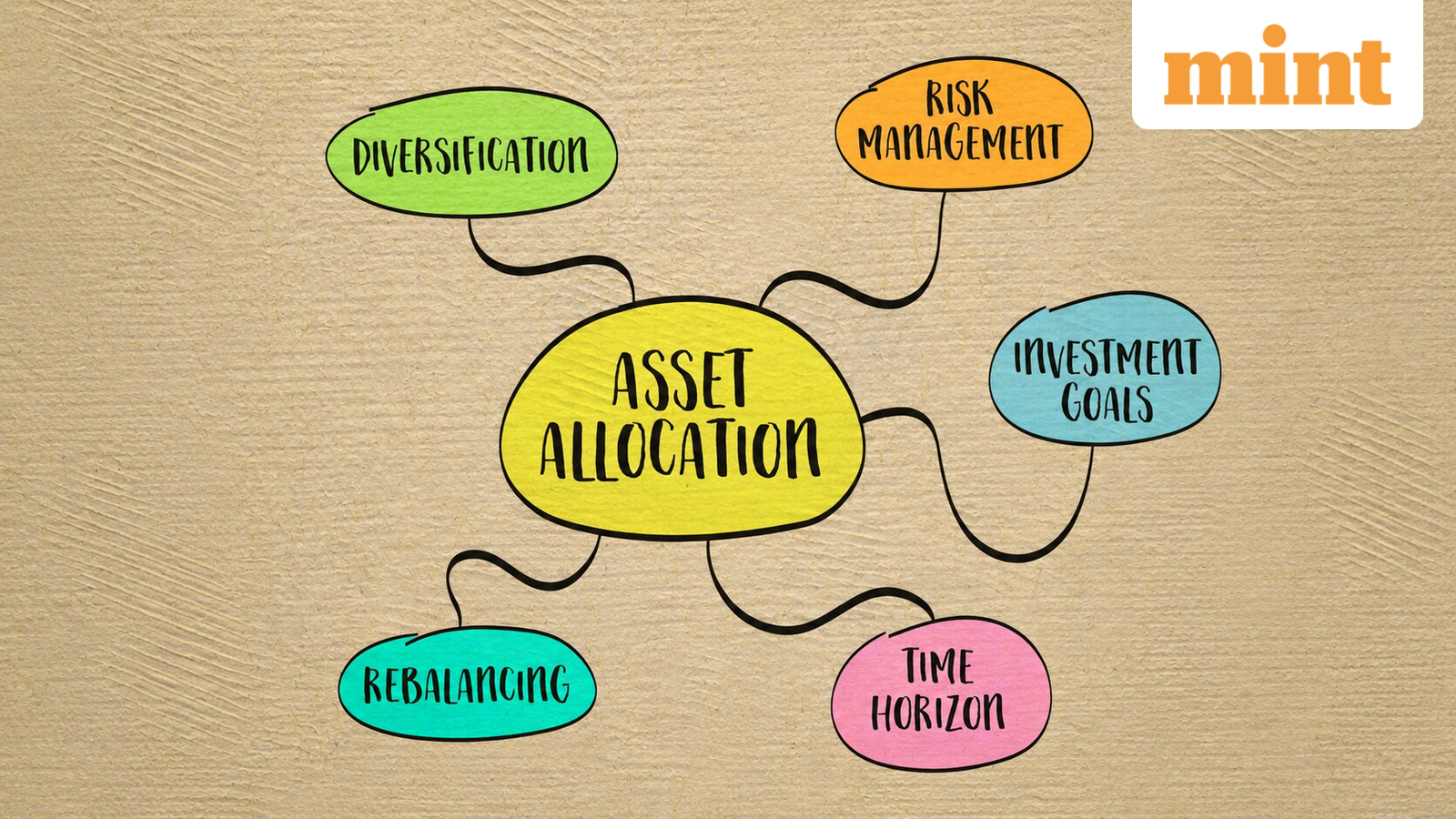
The experts also emphasised that investors should consider the overall portfolio, the correlation between different holdings and the allocation across categories before selecting individual schemes.
What investors should check
Before investing in a mutual fund, the experts suggest looking at:
- Fund manager’s investment style and view
- Fund size
- Sector allocation
- Stock selection
- Research and alpha-generation capability
- Overall portfolio positioning
Thus, two funds belonging to the same mutual fund category can deliver different returns because their portfolios, investment strategies and fund-management decisions are not identical.