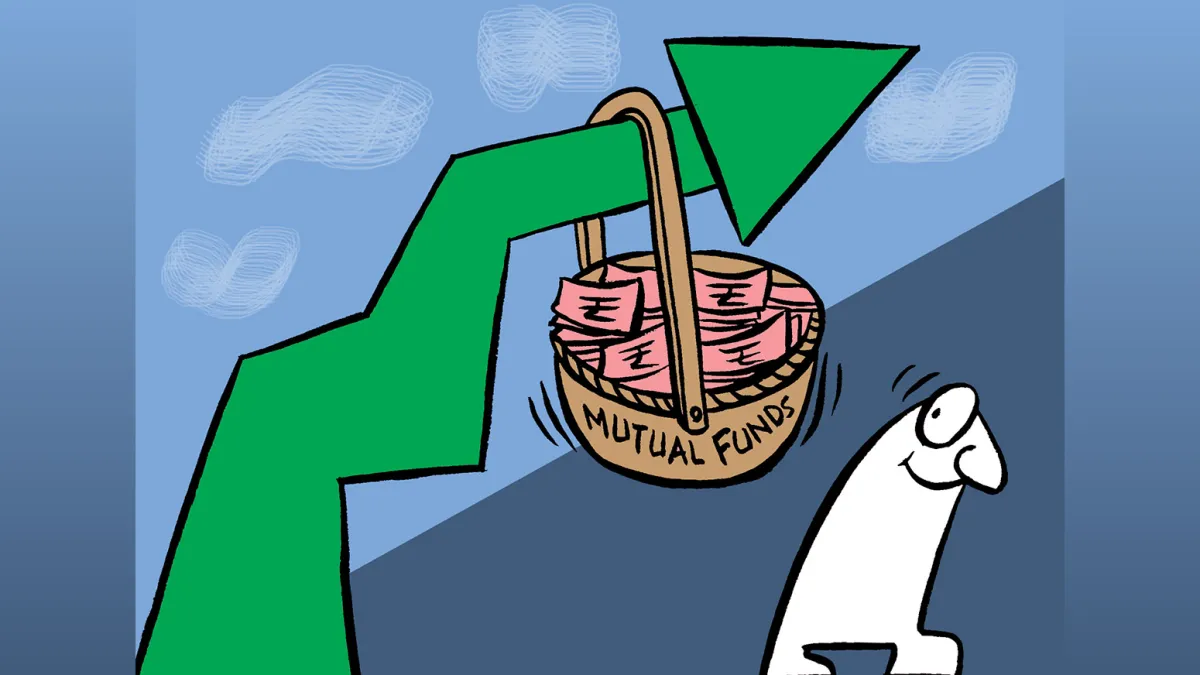
It is a seemingly natural human trait to cheer for the underdog. So, after a week where fixed income portfolios were clearly the underdog, let me offer up encouragement. But with some important caveats.
An allocation to fixed income is unlikely to be your biggest return driver over time, although it will be in certain years and eras, and it deserves a nod for its crucial role in enabling the risk taking that drives return in the balance of the portfolio. Accomplishing that requires more than defaulting to a few bonds or a bond fund. It needs to draw from several sources of return, and avoidance of exposures that don’t meet the mandate.
First and foremost, it’s important to recognize that fixed income is not solely interest rate risk.
Yes, the fixed income index and most bond fund returns are still dominated by the current yield and future path of interest rates. And interest rate exposure has been an underwhelming investment for well over a decade now. It certainly has been this week, as bond yields rose sharply across the globe, and prices – which move inversely – fell.
But an effective fixed income allocation must include more return drivers than interest rates alone – return drivers that have performed in portfolios.
The current yields for most Canadian bonds and bond funds still do not meet the return targets of most portfolios. Maybe equally importantly, after years of paltry returns, the future path for rates doesn’t look promising either.
While the recent focus has been on the trajectory of U.S. Treasuries, it’s highly relevant for Canadian bond portfolios as well.
Canadian and US 5-year yields have moved together through every major cycle this century, as shown in the top panel, below. The bottom panel shows that the current gap between them, at roughly 1.1%, it is sitting near its widest levels, exceeded only briefly in 2002-03 and again in late 2024/early 2025.
Could that gap stretch even further from here? Of course. But betting on that would be betting against this long-term relationship. If US yields keep climbing, due to inflation pressures, strong earnings, and expected Fed hikes, then the relationship to Canadian yields suggests higher yields in Canada too. Not necessarily matching the US move point-for-point, yet dragged along.
Bond holders need to care about that. Rising yields cause bonds and bond-index-funds with duration risk to drop in value, adding to the years of miniscule returns from funds dominated by interest rate exposure.
Despite some worrying headlines, remember that there are still high-quality, valuable private debt and mortgage funds available.
Private debt has been a fast-growing asset class, and when anything grows fast it tends to get loose. Underwriting standards fell at many fund managers, to satisfy the at times insatiable demand, and to grab market share and grow assets under management. Borrower quality decreased. Reporting and realized losses lagged. Liquidity got squeezed.
Some providers have been unwilling to let their standards drop, however, and maybe we’ll only know who has a suit on once the tide goes out.
The promise of interest income from well-underwritten loans and mortgages, based on high quality borrowers and/or low and accurate loan-to-value ratios, are a valuable source of fixed income return, often with little or no meaningful exposure to the future path of interest rates. That differentiation alone is important – in the effort to build a total fixed income portfolio that relies on multiple return drivers, not just interest rates.
Now to the lesser known, often misunderstood but powerful bond return driver: investment grade corporate credit.
Companies borrow money by issuing bonds in a market that happens to be much larger than the stocks. The rate they pay reflects their credit quality, adding additional yield to the government bond yield of the same tenor. Investment grade credit spreads typically range from 25 to 150 basis points, depending on credit quality and tenor.
Higher risk, perhaps. But Canada has not experienced an investment grade credit default, as far as I can find, and while credit spreads do shift, they have experienced much lower volatility than the underlying government bond yields. That is a key distinction when searching for compelling return drivers away from the effect of interest rates that dominates too many fixed income portfolios. Further, fixed income investors collecting credit spreads simply requires the blue-chip corporate to perform as promised. It does not depend on earnings and stock multiple expansion like equities do.
Credit spreads are currently tighter than their long-term averages, meaning spreads are smaller or are paying the investor less of a premium than their average has. Wider spreads are more attractive, sure – but a below the average spread in a safer, less volatile asset class doesn’t render it unattractive – especially when almost everything looks expensive. Those tighter spreads, reflecting both strong company credit fundamentals and relative value among investable assets are still providing coveted, differentiated, low volatility returns. In fact, investment grade credit may be the rare asset class where investors routinely confuse a tight valuation with an absence of return. They underestimate the potential value added by harvesting credit spreads versus relying on interest rate risk. Effective credit spread investing chooses the right issuers, the right part of the curve, and the right part of the capital structure.
The benchmark Canadian and U.S. 10-year bond yields are higher by 40 and 55 basis points, respectively, in the last month alone. At the same time, credit spreads are flat or tighter. That means credit funds that isolate or focus on credit spreads and reduce or even eliminate the interest rate risk had the potential to outperform simple bond indexes.
A multi-driver fixed income allocation is an essential pillar in every portfolio. Don’t let yours be the underdog that the industry feels bad about – optimize it.
The question isn’t whether fixed income still belongs in a portfolio. It is whether the fixed income you own is actually built to do the job you hired it for.
Kevin Foley is managing director of institutional accounts at YTM Capital, a Canadian asset manager specializing in credit and mortgage funds. He spent two decades trading and managing fixed income at a major Canadian bank and serves on several Canadian foundation boards and investment committees.