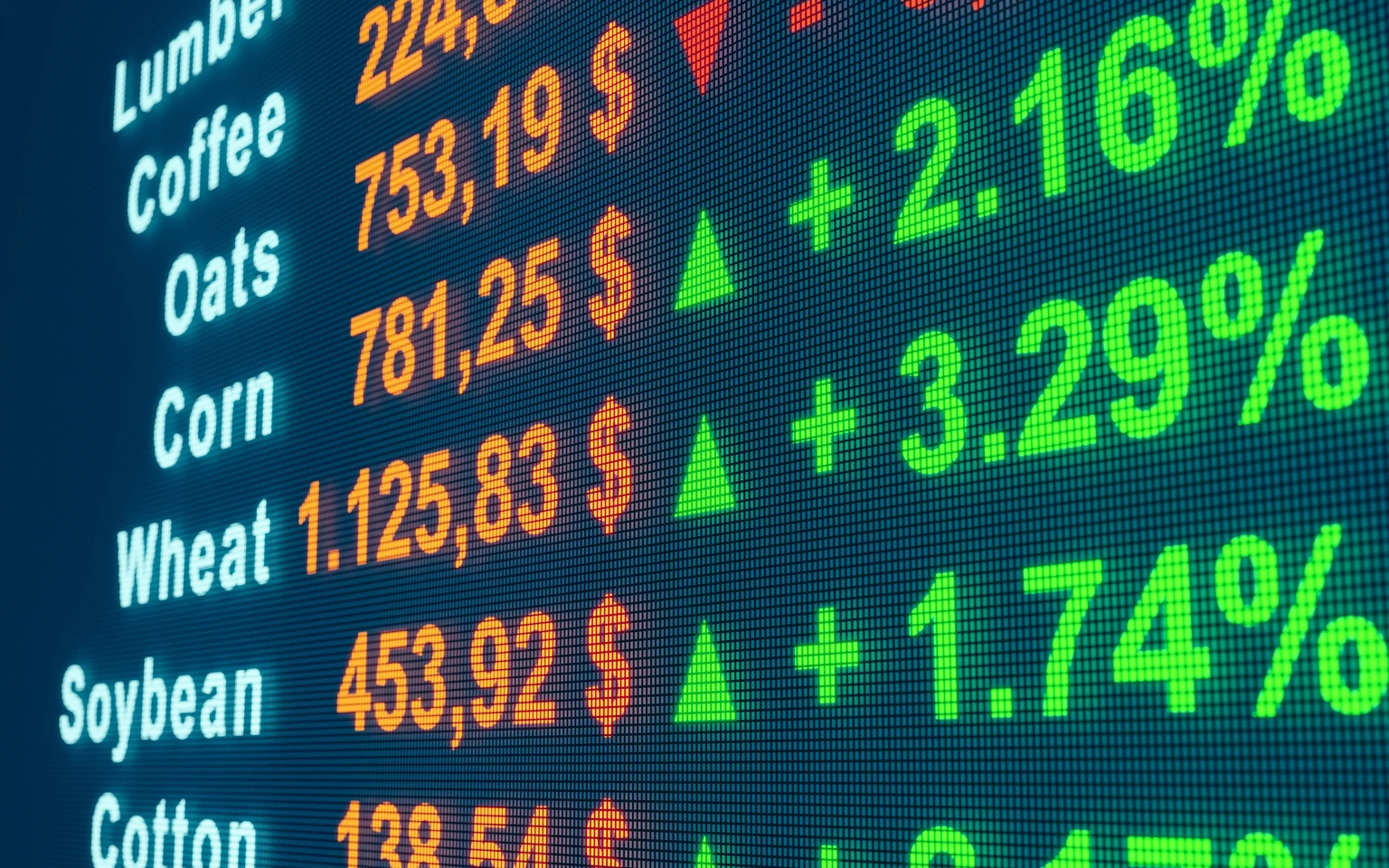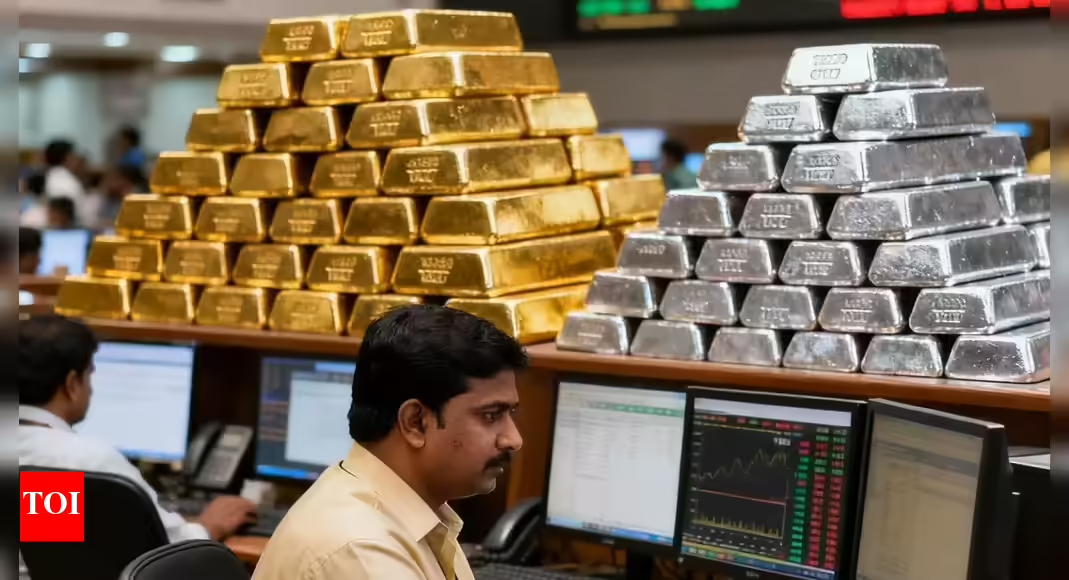
War is hell. Unless you’re a commodity trading house with a fleet of tankers and a tolerance for risk, in which case it’s apparently a record-setting first half.
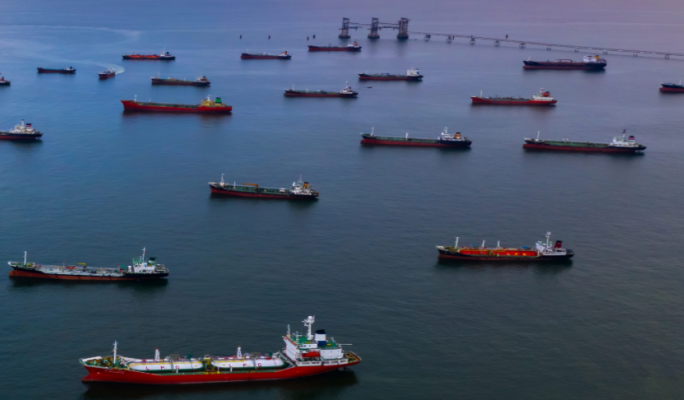
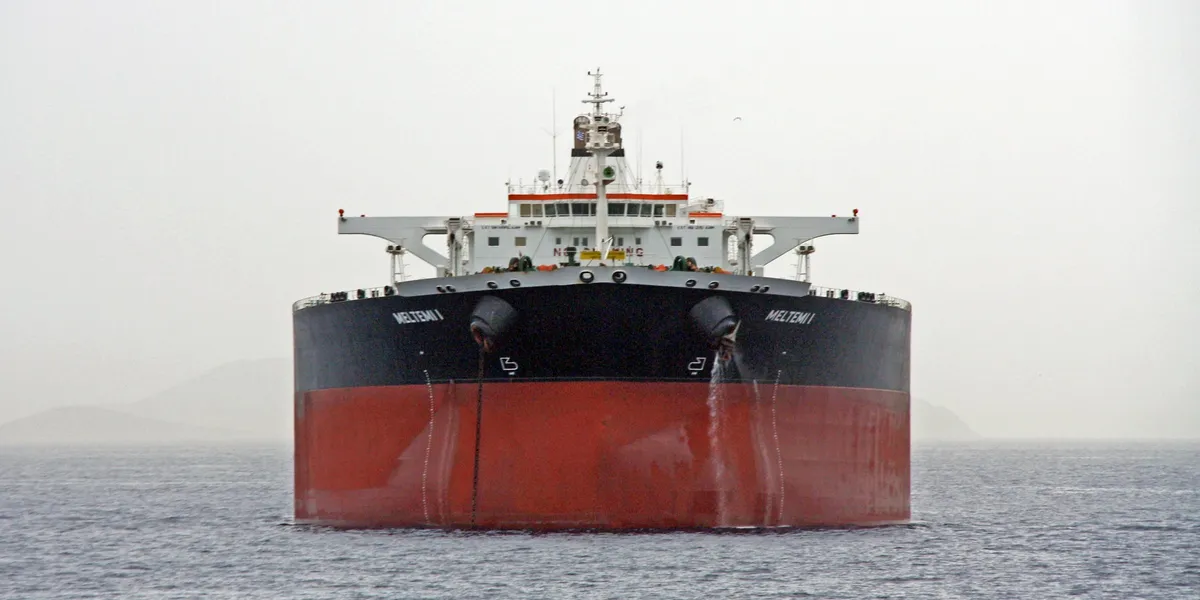
The Iran war that began in late February has turned into a profit engine for the world’s biggest independent commodity traders, with firms like Trafigura, Glencore, and Vitol posting earnings that would make most Fortune 500 CEOs blush. The conflict choked off tanker traffic through the Strait of Hormuz, disrupting roughly one-fifth of global oil supply and creating exactly the kind of price dislocations that trading desks are built to exploit.
The numbers tell the story
Trafigura’s first-half 2026 net profit hit $4.1B, more than double what the firm earned during the same period last year. The Geneva-based giant paid out a record dividend of $3.05B to its roughly 1,400 employee-owners. Quick math: that’s an average of about $2.2 million per person, though the actual distribution skews heavily toward senior partners.
Glencore’s energy trading division might have posted the most jaw-dropping swing of all. Adjusted EBIT came in at $2.66B for the first half. The same division earned $40 million a year earlier. That’s not a modest improvement. That’s a 6,550% increase.
Vitol, the world’s largest independent oil trader, generated approximately $2B in profits during the first quarter alone. Gunvor, another major player, reported earnings that already exceeded its entire full-year 2025 total. Mercuria rounded out the list with substantial gains of its own.
To put these figures in perspective, trading houses collectively arranged $3B in new credit facilities to handle the sheer volume of activity the conflict generated.
How the Strait changed everything
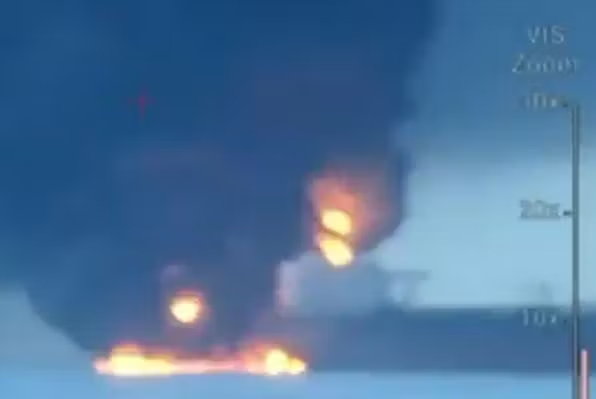
The Strait of Hormuz is a 21-mile-wide chokepoint between Iran and Oman. About one-fifth of the world’s oil passes through it on any given day. When the Iran war erupted, tanker traffic through the strait dropped sharply, creating an immediate supply crunch in global energy markets.
The early days of the conflict weren’t all smooth sailing. Several trading houses reportedly took billion-dollar hits as markets whipsawed in the initial chaos. Positions that looked smart on a Monday looked catastrophic by Wednesday. But as the market found its footing and traders adapted to the new reality, those losses were largely recovered and then some.
This pattern echoes what happened after Russia’s invasion of Ukraine. The first weeks of that conflict caught some traders offside, but the prolonged disruption to energy flows ultimately delivered multi-year windfalls. Trafigura, Vitol, and their peers posted record profits in 2022 and continued earning at elevated levels through 2023.
The geopolitical profit playbook
Independent trading houses occupy a unique niche in global markets. They’re not oil producers like Saudi Aramco or ExxonMobil. They’re not refiners or retailers. They sit in the middle, connecting supply and demand across geographies. When everything is calm and supply flows predictably, their margins are thin. When a war closes off a critical shipping lane, their entire business model becomes vastly more valuable.
For publicly traded Glencore, the energy trading surge provides a cushion that offsets weakness in other parts of its diversified mining and commodities portfolio. For privately held firms like Trafigura, Vitol, and Gunvor, the profits translate directly into partner payouts and reinvestment capital.