Every time you open a trade, someone on the other side of the transaction is earning from it. That someone is usually your broker, and understanding exactly how brokers make money from spreads and other revenue sources tells you something important: whether the broker’s interests align with yours, diverge from them, or actively conflict. The business model is not complicated once you see it clearly, and knowing it helps you read broker marketing, compare account types, and notice when something in your execution does not add up.
The Spread Is the Core Revenue Mechanism
The interbank market, where currencies actually trade between large financial institutions, prices EUR/USD in fractions of a pip. A bank might see a quote of 1.10010 bid and 1.10012 ask, a gap of 0.2 pips. By the time that price reaches a retail trader, it reads 1.10008 bid and 1.10014 ask. The spread has widened to 0.6 pips, and the additional 0.4 pips stays with the broker.
This markup is not listed as a fee. It does not appear on a trade confirmation. It is embedded in the price itself, collected automatically on every single trade, and it is the primary revenue source for the majority of retail forex and CFD brokers. On a “zero commission” account this is the entire business model: the broker earns from volume multiplied by spread markup, invisibly, on every open and close across every client account simultaneously.
Author:
The raw interbank spread exists because market makers in the interbank system take the risk of holding currency inventory between buyers and sellers. The retail broker’s additional markup exists because the broker also takes on some form of risk or provides a service in routing or warehousing that trade. The size of the markup depends heavily on which business model the broker runs.
Market Makers vs ECN Brokers: Two Different Ways to Earn
The forex broker industry splits into two fundamentally different structures, and the difference determines both how the broker earns and what execution quality you receive.
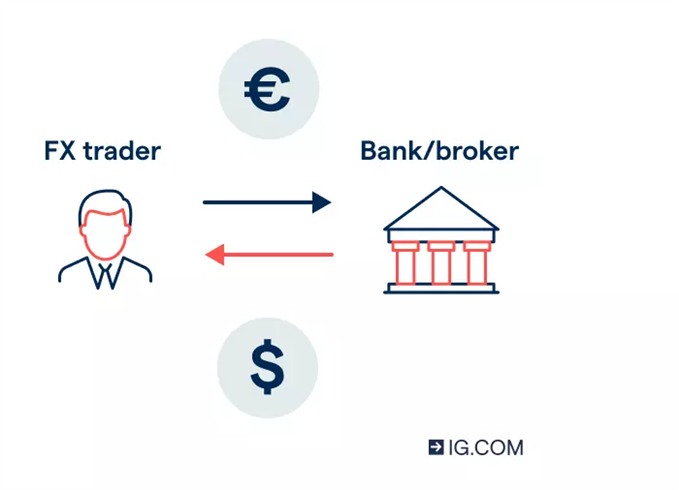
A market maker, sometimes called a dealing-desk broker, builds its own internal market on top of the raw interbank price. It quotes you a price, typically with a fixed or controlled spread, and often takes the opposite side of your trade itself rather than routing it to external liquidity. The broker is the counterparty. It earns when the spread markup exceeds any losses it incurs from holding the position, and it manages its net exposure by netting client orders against each other and hedging what remains externally.
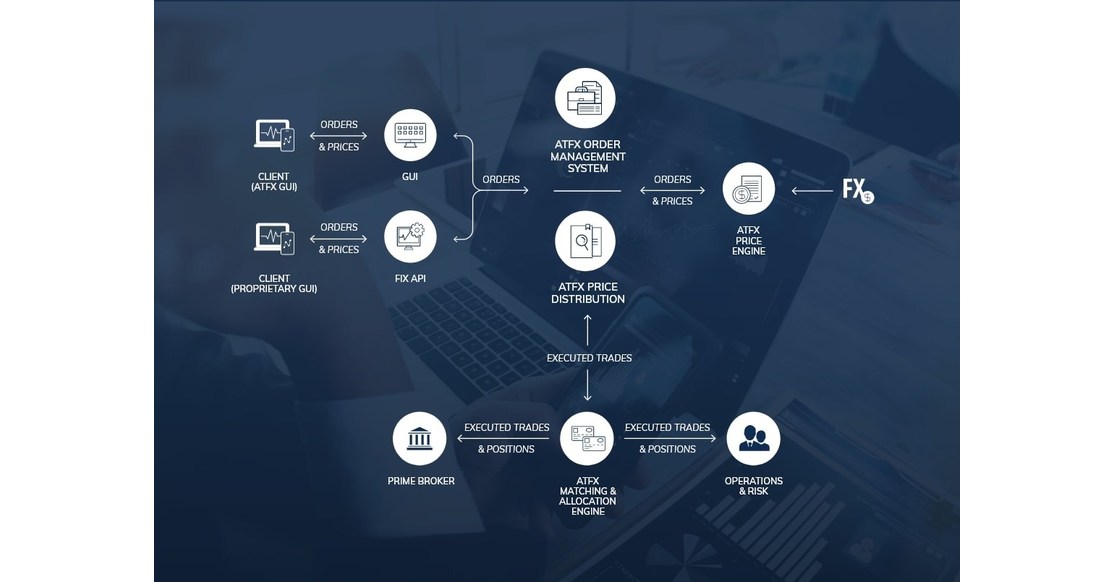
An ECN or STP broker (Electronic Communications Network or Straight Through Processing) routes your order directly to a network of external liquidity providers: banks, institutions, and other market participants. It passes their raw, variable spread through to you and charges a separate per-lot commission instead of building a markup into the price. The broker earns from the commission volume rather than from spread markup. Its revenue is the same whether you win or lose on any given trade.
| Model | Spread type | Commission | Earns from |
| Market maker | Fixed or controlled | Usually none | Spread markup on every trade |
| ECN / STP | Variable (raw) | Yes, per lot | Commission on trade volume |
| Hybrid | Mixed | Depends on account | Both, routed by client tier |
Most large brokers today run a hybrid: some clients are routed through one model, others through the other, depending on account size, trading style, and profitability to the broker.
The A-Book and B-Book: What Happens to Your Trade
Behind the marketing labels sits a more specific distinction that matters directly to how the broker’s interests relate to yours.
When a broker A-books a trade, it passes that trade to the real market and hedges it externally. The broker earns its spread markup or commission regardless of whether you profit or lose. Its interest is simple: keep you trading as long as possible, because volume is what generates revenue. A broker running a pure A-book has no financial incentive for your positions to fail.
When a broker B-books a trade, it keeps the position in-house and becomes your direct counterparty. If you lose on the trade, that loss can be the broker’s gain. Since the statistical reality is that most retail traders lose money over time, running a B-book is a reliable revenue source. The conflict of interest is real and structural: a pure B-book broker profits most when its clients lose.
This framing sounds damning, but the full picture is more nuanced. Legitimate, regulated B-book brokers manage their net client exposure as a book, not as a series of individual trades they are rooting against. When many clients hold opposite positions, the net exposure is small and both sides largely cancel out. The broker hedges the residual risk externally. The profit comes from the statistical edge of having more losing clients than winning ones across the book as a whole, not from any single client’s loss. This is legal, common, and explicitly disclosed in regulatory filings.
The practical consequence is that a hybrid model works as follows: profitable traders who consistently win generate losses for a B-book broker over time, so they get routed to the A-book where the broker earns commissions on their volume instead of taking their counterparty risk. Less profitable or smaller traders remain in the B-book where the statistical edge holds. The routing decision is invisible to the trader.
Commissions, Swap, and Secondary Revenue
The spread is the headline cost but not the complete picture of what a broker earns.
Commissions on ECN-style accounts are the explicit version of spread revenue: a flat fee per standard lot, charged on both entry and exit. A $7 per lot commission on a $100,000 EUR/USD position represents 0.7 pips of effective cost, similar to the markup embedded in a standard account’s wider spread. The arithmetic works out roughly the same; the difference is transparency and whether the spread widens variably.
Swap charges on positions held overnight carry a broker markup embedded in the calculation. The theoretical swap rate reflects the interest rate differential between the two currencies in a pair. Brokers add a small margin to this rate, typically a few basis points, which accrues silently on every position held past the daily rollover. On a large position held for several weeks, the aggregate swap markup can exceed the entry spread many times over.
Some brokers add secondary revenue streams: currency conversion fees when account currency differs from trade currency, inactivity fees on dormant accounts, withdrawal fees, or fees for specific payment methods. These vary by broker and are disclosed in terms and conditions, but they often go unread until they appear on a statement.
Reading What the Broker’s Model Tells You
The business model reveals itself in several observable ways once you know what to look for.
A “spreads from 0.0 pips” headline with a commission on the same account is almost certainly an ECN or raw model. Fixed spreads that hold steady through news events suggest a market maker maintaining its internal price. Spreads that advertise tight but widen significantly around major data releases are variable spreads from either model under stress.
Execution quality provides the most diagnostic signal over time. A broker with genuine market execution will show slippage that falls roughly symmetrically: sometimes you get a better fill than quoted, sometimes worse. A broker whose slippage consistently favours the house, fills worse than quoted when you enter and better than quoted when you exit at a loss, may be managing execution against client interests. This is harder to detect on individual trades but becomes statistically visible over a large enough sample.
Regulatory filings from licensed brokers often state whether the broker acts as principal in transactions, which is the formal disclosure that it deals from its own book, the B-book structure. Reading this section of a broker’s regulatory documentation, usually available on the relevant regulator’s website, is more informative than any marketing material the broker produces about itself.
What This Means for Choosing an Account
The business model comparison has practical implications for different trading styles.
A scalper or high-frequency day trader needs raw spreads and commission pricing, because the number of trades executed makes spread markup per trade the dominant cost. An account that routes orders to genuine external liquidity and charges commission is structurally better for this style than a market maker account with wider fixed spreads. The total cost per trade is often similar, but commission pricing does not widen during busy sessions the way a variable marked-up spread can.
A swing trader holding for days or weeks cares more about swap rates and execution consistency on entry than about fractions of a pip on the spread. A market maker account with predictable fixed spreads and competitive swap rates can serve this style adequately, even if an ECN account would provide marginally cheaper entry cost.
A beginner trading small sizes benefits from the predictability of a fixed-spread market maker account: knowing the exact cost before entering eliminates one variable while learning. The conflict of interest on a B-book is less material at small trade sizes where the broker’s statistical edge is modest.
Conclusion
Forex brokers earn primarily from the spread: a markup between the raw interbank price and the price shown to the client, collected on every trade without appearing as a line-item fee. The business model splits between market makers who build their own internal market and take counterparty risk, and ECN brokers who route orders externally and charge transparent commissions. Most large brokers run a hybrid. The A-book and B-book distinction determines whether a broker’s revenue comes from your trading volume alone or can also benefit from your losses. Knowing which model you are trading on does not guarantee better outcomes, but it gives you an accurate picture of the relationship, and that accuracy is the first step to using the broker correctly rather than being surprised by what it earns from your account.
Author:
Usman Munawar
Disclaimer: The information and opinions expressed in this article are those of the author and are provided for informational and educational purposes only. The author remains solely responsible for the accuracy, completeness and content of the article.