-
Learn why investors use multiple brokers and the different factors that influence their choice -
See how investors rate their satisfaction with the major online brokers, including common complaints -
Discover ways to evaluate a broker before transferring assets or opening an account
Today’s online brokers offer far more information at much lower prices than many full-service firms do. They also continually seek to innovate while adding features that are popular with clients at other firms. With online brokers providing zero-cost commissions and an ever-expanding list of virtually free services, it’s a good time to be an individual investor. It could also be the right time to see how your current firm stacks up against its hard-charging competition.
Some firms, such as Interactive Brokers and TradeStation, are innovative technology powerhouses. Others, like J.P. Morgan Self-Directed Investing and Vanguard, keep things simple and convenient. Then there are the young upstarts: Tastytrade, Robinhood and Moomoo, among many others. Lastly, there are the juggernaut firms that seek to do it all: Charles Schwab and Fidelity Investments.
Our latest Big Question survey asked AAII members which broker they use, why they use that broker, and what they like and dislike about their broker. Approximately 360 members responded, many with very insightful comments.
The Big Question survey is part of a periodic initiative to give AAII members a chance to talk about their investment decisions and challenges. Each survey asks what we describe as a “big question” about a subject of interest to many individual investors. A randomly selected group of AAII members is asked a specific question, as well as follow-up questions intended to provide more clarity and background.
Why AAII Members Use More Than One Broker
Close to half (48%) of the survey respondents use more than one broker. These respondents were primarily driven to do so by the different brokers’ capabilities (43%), followed by their preference for having a backup broker (25%). Some also mentioned employers using different brokers (15%) and convenience (14%)—which includes being unmotivated to consolidate—as driving factors for using multiple brokers. Only 3% mentioned account incentives, an unexpectedly low figure considering that brokers often offer sweet deals to attract assets.
Though extended service outages are rare and systemic fraud along the lines of a Madoff Ponzi scheme seems unlikely, these are real risks. There is also the possibility of your accounts being frozen if you are the victim of identity theft. Securities Investor Protection Corp. (SIPC) insurance protects securities and cash in your brokerage account up to $500,000 ($250,000 maximum for cash), but it can take one to three months, if not longer, to recover at least some of your property. Diversifying your assets between two brokerages could help you avoid being completely illiquid if one of those unlikely events occurs.
Charles Schwab and Fidelity Dominate
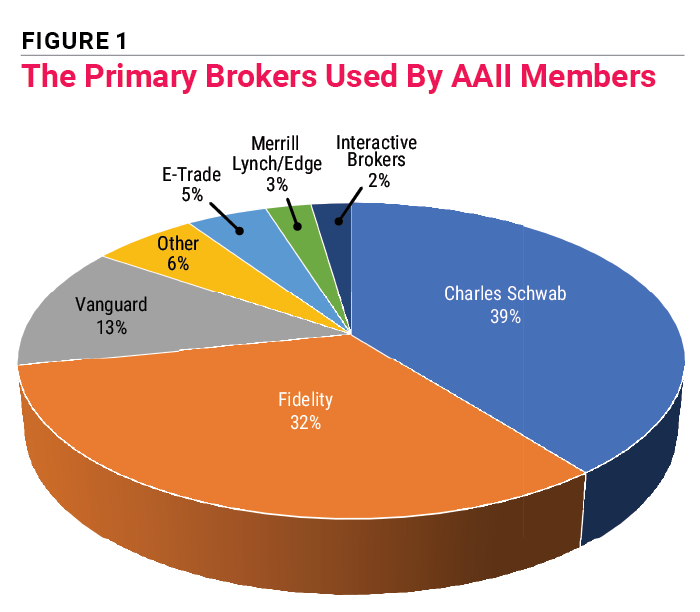
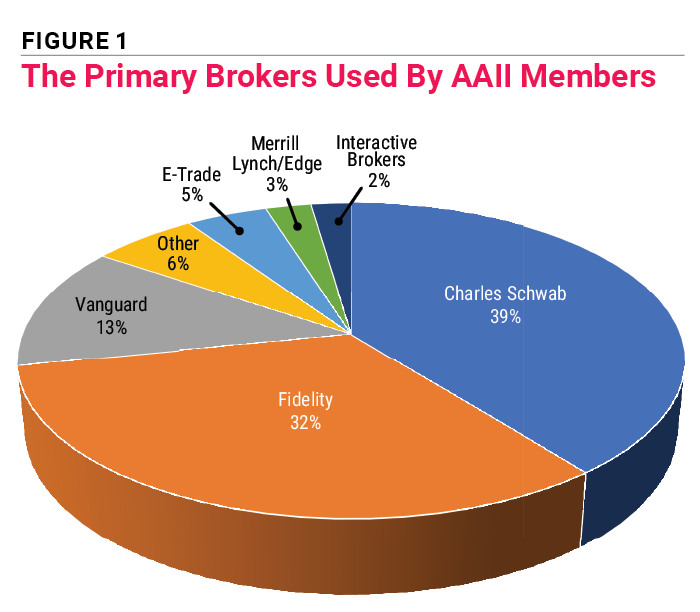
Nearly three-quarters of respondents use either Charles Schwab (39%) or Fidelity (32%) as their primary broker, followed by Vanguard (13%) and E-Trade (5%), as shown in Figure 1. Though it was no surprise that Charles Schwab and Fidelity were the most popular firms, it was surprising that Merrill Lynch’s compelling Edge offering got the nod from only nine respondents (3%). However, that result should be taken with a grain of salt because of potential confusion between Merrill Lynch’s full-service offering and the online brokerage Merrill Edge, both of which are owned by Bank of America.
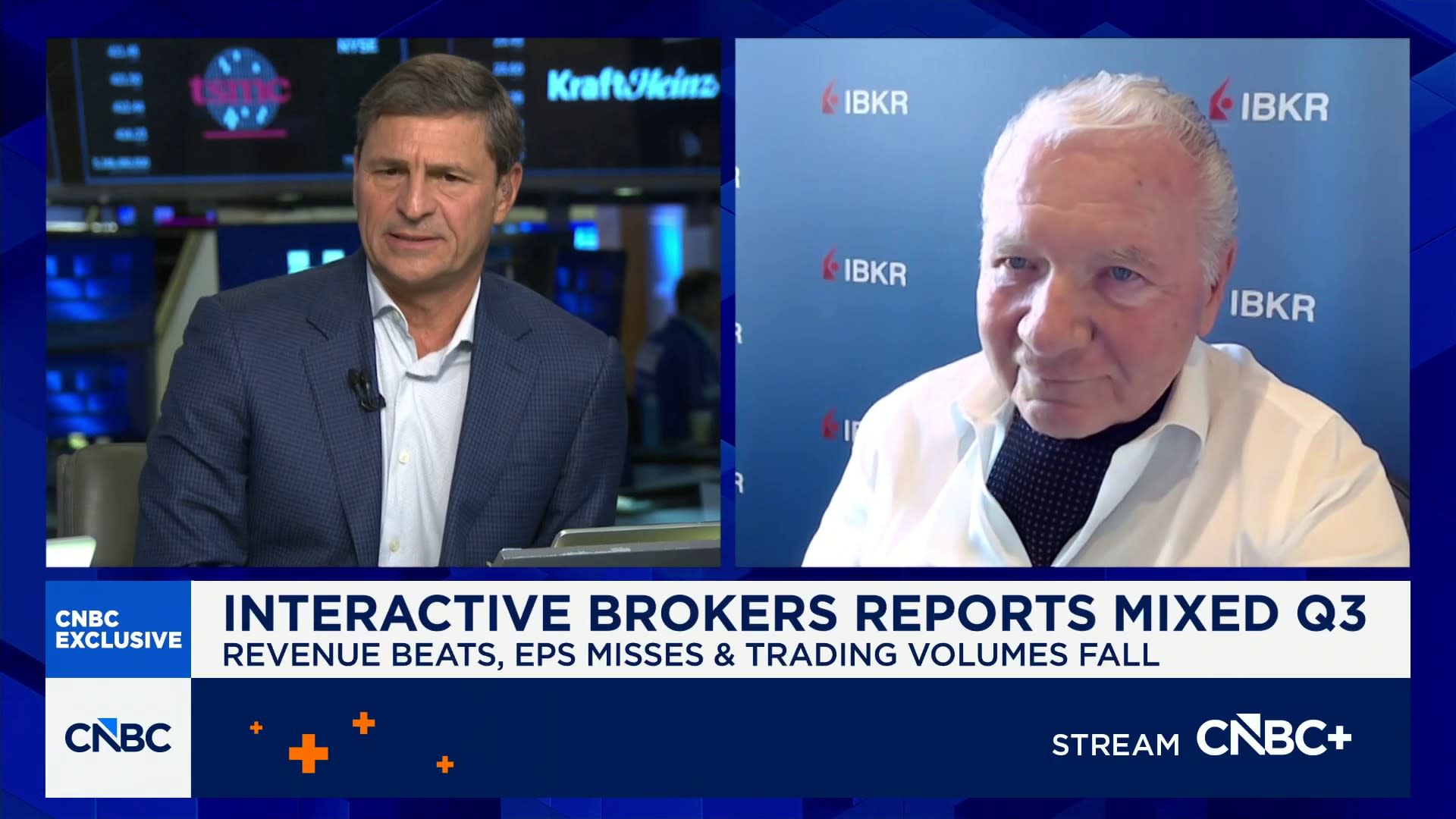
The low usage of Interactive Brokers is also surprising. After years of work modernizing its platforms and rolling out easy-to-use desktop and phone applications, only eight respondents (2%) named Interactive Brokers as their No. 1 brokerage.
Since Robinhood came on the scene in March 2015, one of the biggest trends in online brokerages has been turning investing into a video game–like experience with flashy graphics and online communities. Paul, an AAII member from Minnesota, said that financial incentives lured him to open a Robinhood account. He uses Robinhood to trade stocks and exchange-traded funds (ETFs). Only one other survey respondent mentioned Robinhood as their primary broker. And Robinhood’s mobile-first competitors Moomoo and Public were left in the cold.
Two respondents mentioned Tastytrade, which has a novel user interface, lightning-fast responses and strong options analytics.
Broker Satisfaction Is High Overall, Though Some Have Gripes
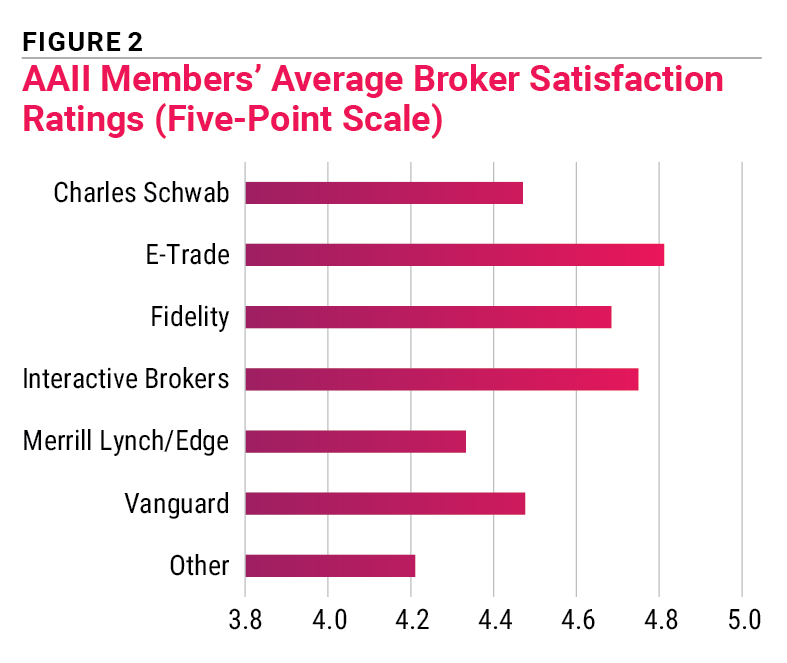
Most respondents are generally satisfied with their brokers, with a whopping 96% of respondents awarding their broker a rating of 4 or 5 on a five-point scale. E-Trade took the top spot with an average satisfaction rating of 4.81, followed by Interactive Brokers with an average of 4.75. Between the two largest brokerages, Fidelity’s 4.68 average rating beat Charles Schwab’s 4.47. Figure 2 shows the average ratings for the six brokers with eight or more responses, plus an average rating for all other brokers mentioned by respondents.
Respondents are largely content with and even enthusiastic about their interactions with their brokers’ customer service or live registered representatives. In particular, praise was often given to Charles Schwab and Fidelity’s representatives, who are assigned books of clients to cover. Though these brokers don’t provide specific investing advice as part of their basic service, respondents view them as proactive and responsive to issues and concerns. One respondent pointed to Charles Schwab’s personal coaching services for active traders.
With some exceptions, most brokers’ customer support and licensed personnel came across as knowledgeable and motivated to resolve issues. One pleasant surprise was the scarcity of complaints about waiting on hold for an extended time, something I experienced frequently when reviewing brokers only a couple years ago.
A few respondents noted that they suspect they receive a higher level of service because they have a substantial amount of assets. That’s likely. Charles Schwab and Fidelity do provide differentiated services according to household assets placed with the firm. Clients in the highest asset tiers receive discounted loan rates, phone support with shorter hold times and invitations to private events. Most importantly, clients are proactively contacted by their assigned registered representatives. Anecdotally, we have not heard of any Charles Schwab or Fidelity high-net-worth clients reporting high-pressure sales tactics from representatives.
One respondent raised an issue about transfers from Charles Schwab accounts. The member expressed a desire for a direct notification whenever a transfer out of their account occurred, believing it would be a valuable security check. I agree and will look into this as part of my deeper dive into the top brokerages in the November 2026 AAII Journal.
AAII member Jocelyn called Vanguard’s website “cumbersome” but noted, along with four other respondents, that the firm is updating its website. This is exciting news, as Vanguard has been known for a bare-bones broker experience. Vanguard is likely rolling out its new site to groups of clients at a time—as Charles Schwab did when it purchased TD Ameritrade. Two survey respondents were complimentary of Vanguard’s upgrades, while others expressed interest in what’s coming.
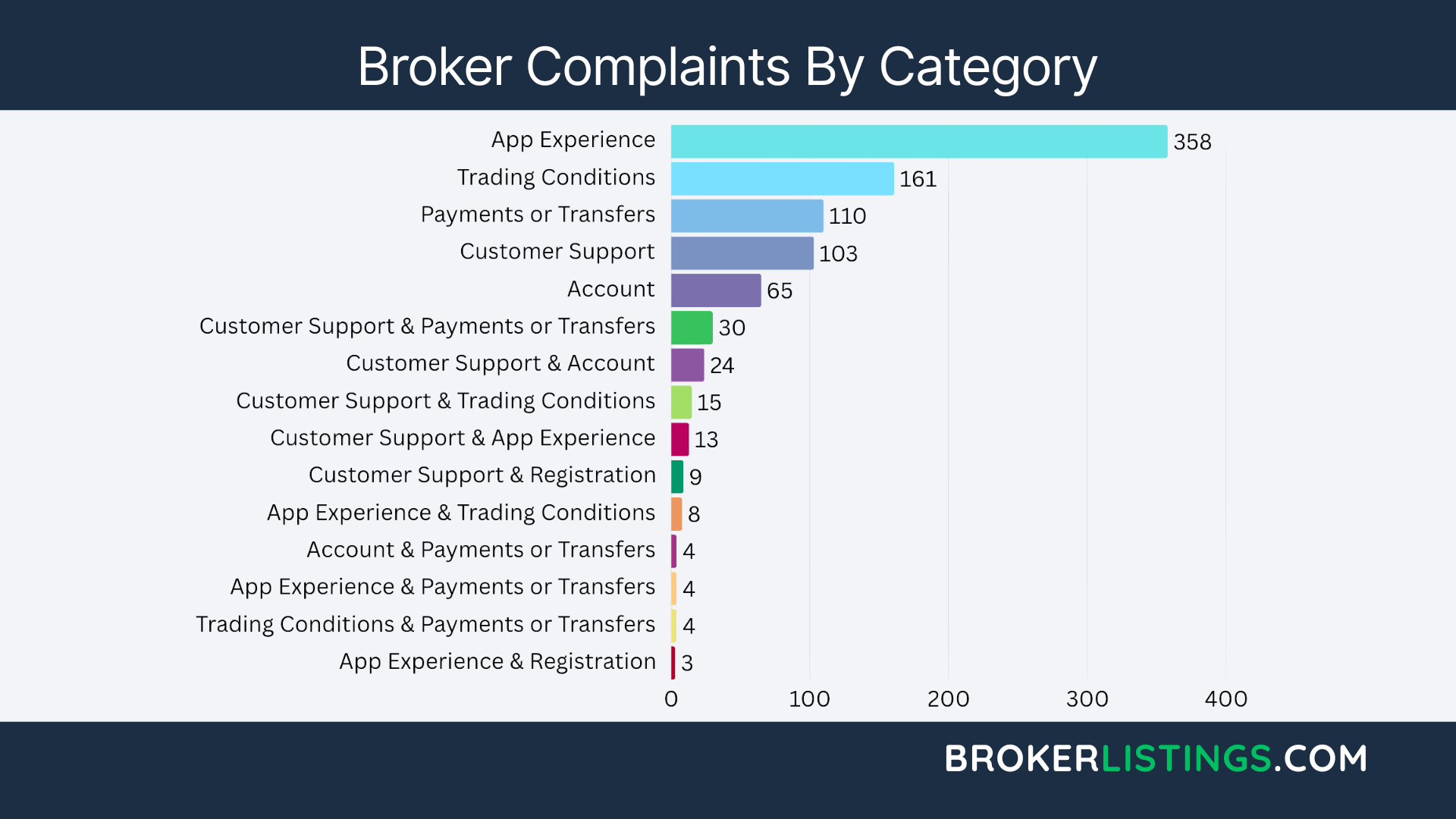
Most of the problems cited by survey respondents centered around temporary site outages, which is one reason some (usually the more active) investors choose to use more than one broker. Respondents associated many of the outages with system upgrades or high-volume days. One respondent called out Fidelity’s Android app for bugs and slow responses from the firm’s developers. Several mentioned issues with policies related to money transfers or the ability to trade certain securities. Brokers have differing practices for money transfers and how some securities are traded, which is why it’s important to select a broker that suits your needs.
There were some complaints about bugs in brokers’ active trading platforms, such as Charles Schwab’s Thinkorswim and Fidelity’s Trader+ desktop applications. These are feature-laden behemoths designed for highly active and demanding institutional and individual users. Given the complexity of the analytics and instruments traded on those platforms, the reports of bugs are not surprising. Active traders who use trading platforms require reliable tools that come as close to perfection as they can get. Happily for them, the top firms direct substantial resources toward attracting and keeping revenue-generating clients.
Respondents rarely mentioned trade errors. When errors did occur, brokers generally worked to address the issue, with only a couple respondents reporting unsatisfactory outcomes.
What Members Value About Their Brokers
Responses to our question “What is your favorite feature/tool/page of your primary broker?” were divided into eight overarching types of answers. More detailed responses will be used for next month’s broker review in the AAII Journal. Responses that couldn’t be easily grouped were omitted.
The top answers to this question are reporting (34%), features (28%), research (19%), ease of use (14%) and personal contact (3%). Pricing was only mentioned by a few respondents; perhaps Vanguard clients (correctly) assume that one of the firm’s primary appeals is its low costs.
On average, the 16 respondents who named E-Trade as their primary broker cited ease of use as their favorite aspect of the firm, followed by reporting—something I agree with wholeheartedly from experience. The over 100 members who named Fidelity as their primary broker cited reporting as their favorite aspect of the firm, on average, followed closely by features. Answers from respondents who use Charles Schwab as their primary broker followed the same schema, with reporting and features mentioned the most.
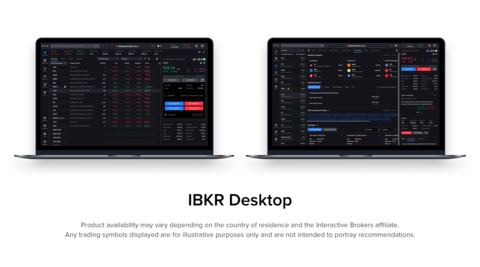
Sixteen of the 137 respondents who use Charles Schwab specifically mentioned its advanced Thinkorswim trading platform, which is easily understandable. It was surprising that Interactive Brokers’ relatively new desktop trading application, aptly named IBKR Desktop, didn’t receive similar recognition. IBKR Desktop is a big upgrade in usability compared to its older sibling, Trader Workstation.
Only one person brought up investor education as a favorite brokerage feature, which may suggest that AAII is meeting members’ needs in this area. That said, broker websites often have articles and calculators that go in depth into niche topics that only a sliver of our membership would find relevant.
Exploring Your Broker Options
It’s not an understatement to say that there’s been a revolution in online trading and research over the past several years. The user experience is friendlier, the tools are more sophisticated and applications enabled by artificial intelligence (AI) can speed up your research, or at least offer a glimpse of what’s just over the horizon.
Brokerage firms invest millions of marketing dollars to attract investors and assets because it’s what’s known as “sticky money.” Once investors make a switch, they tend to stay until there is a problem. Account transfers can be inconvenient.
It’s not necessary to transfer all your assets to try a new firm. Many brokers have free trials or allow full or almost complete access to their platforms without a deposit. The major brokerages have paper trading accounts that permit potential clients to try out the firm before initiating a transfer. Individual investors can avoid receiving a new Form 1099 by using paper-traded accounts until they are certain they want to bring assets to the new firm.
Detailed Broker Reviews Are Coming
We gratefully thank all the AAII members who took the time to share their opinions and experience for this month’s Big Question.
Your responses are already guiding the direction of next month’s detailed brokerage guide, which will include first-person reviews and screenshots of five major online brokers: Charles Schwab, Fidelity, E-Trade, Interactive Brokers and TradeStation. A review of Vanguard’s broker service will be planned for a later issue once the website update is fully rolled out.