
Invesco India Large- & Mid-Cap Fund (ILMF) is among the few schemes to be upgraded from three stars to four stars in the latest bl.portfolio mutual fund star rating framework. The upgrade reflects the fund’s improvement in delivering risk-adjusted returns over the past 6 to 12 months.
Over a 10-year period, the fund topped the category with a compound annual growth rate (CAGR) of 17 per cent, compared with 14 per cent each for the Large- & Mid-Cap category and its benchmark, the NIFTY LargeMidcap 250 TRI.
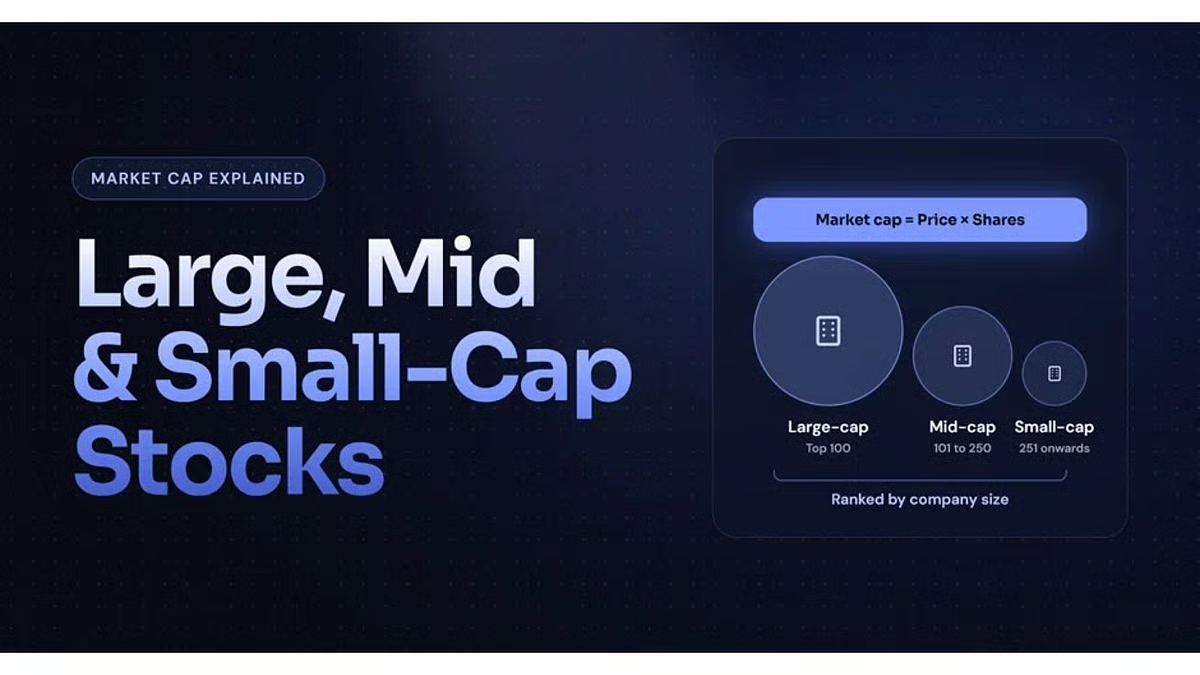
Funds in the Large- & Mid-Cap category must invest at least 35 per cent of their total assets each in large-cap and mid-cap stocks, as per SEBI’s categorisation framework. This leaves up to 30 per cent for other permitted investments, giving fund managers some flexibility while maintaining meaningful exposure to both segments.
ILMF differentiates itself from peers through its relatively concentrated portfolio, low-churn approach and multi-cap flavour. It has notable exposure to small-caps alongside large- and mid-cap holdings.
The scheme was initially launched as Lotus India Growth Fund in August 2007 and recategorised in May 2018. It currently manages assets under management (AUM) of ₹12,178 crore.
Growth-focussed approach
The fund follows a predominantly bottom-up investment approach. Rather than making broad macro calls, it focuses on identifying companies that can compound earnings over the next three to five years.
The fund targets companies capable of delivering more than 15 per cent earnings growth, supported by healthy return on invested capital and cash-flow conversion.
The fund manager also evaluates management quality, addressable market and a company’s ability to sustain growth. Valuation is considered alongside business quality and growth potential rather than in isolation.
The portfolio is relatively concentrated, with around 40-45 stocks over the past two years, aiming to be meaningfully different from the benchmark. As of September 2026, the portfolio comprised 44 stocks, compared with 74 for the category average.
The fund also follows a low-churn approach, with portfolio turnover below 30 per cent most of the time, placing it among the top three funds in the category on this metric.
As of September 2026, the fund had a portfolio turnover ratio of 27 per cent, compared with 137 per cent for the category average. This reflects its preference for holding businesses through cycles rather than reacting to short-term earnings or price movements.
Market-cap strategy
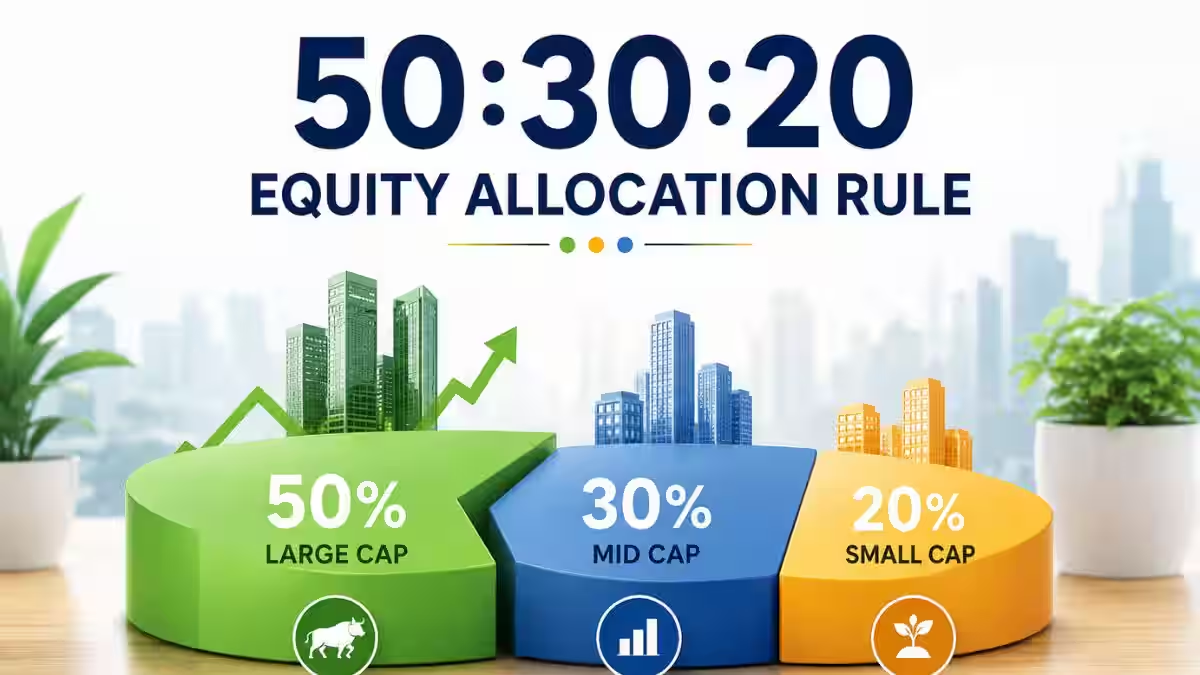
Although the scheme belongs to the Large- & Mid-Cap category, the fund is managed with a multi-cap flavour. The manager says the portfolio has broadly remained allocated at 40 per cent large-cap, 40 per cent mid-cap and 20 per cent small-cap over the past three years.
The allocation within these segments is driven by where the fund sees the strongest growth opportunities rather than market-cap classifications.
Within the large-cap universe, the fund prefers the next 50 stocks over the top 50, as they offer a larger pool of relatively faster-growing businesses. This allows the fund to retain large-cap exposure while avoiding slower-growing companies simply because of their size.
Sector positioning
Healthcare is a key overweight, with exposure to hospitals and CDMO (Contract Development and Manufacturing Organization) businesses. The fund is also overweight consumer discretionary, particularly through selected platform companies, and maintains an overweight position in banking.
The fund is currently underweight industrials and IT, although the manager indicated that the team is positive on both sectors and would like to increase exposure over time.
The fund has no exposure to metals, reflecting its preference to avoid highly cyclical businesses where earnings are more dependent on macroeconomic variables and can be volatile.
More broadly, the strategy favours structurally growing businesses with relatively predictable earnings rather than attempting to time cyclical upswings. The portfolio also avoids companies with promoter or corporate governance concerns.
The three largest sector exposures in the latest portfolio are banking, retailing and healthcare services. Over the past year, the fund increased its allocation to banks, transport services and auto components, while reducing its allocation to finance, capital markets and IT-software.
Overall, the strategy combines high-growth stock selection, flexible market-cap allocation and concentrated stock and sector bets, while avoiding excessive dependence on short-term macro calls or market momentum.
However, a concentrated portfolio can magnify the impact of poor stock selection, while a bottom-up strategy may lag during broad-based rallies involving a broader range of stocks. Its preference for quality businesses and avoidance of highly cyclical sectors could also result in periods of relative underperformance when market leadership shifts towards those areas.
Performance
The fund’s long-term track record has been strong. Over the past seven years, its five-year rolling returns averaged 20.5 per cent CAGR, compared with 19 per cent for the category. During this period, its five-year rolling returns ranged from 14 per cent to 29 per cent.
On a three-year rolling-return basis, the fund delivered a CAGR of 21 per cent, compared with 19.6 per cent for the category average.
Its 131 per cent upside capture shows that it participated strongly during market rallies, while its 98 per cent downside capture indicates that it experienced about 98 per cent of the benchmark’s decline during weak market periods.
The regular plan has a base expense ratio of 1.47 per cent, lower than the category average of 1.67 per cent. The direct plan’s expense ratio is 0.54 per cent, also lower than the category average of 0.64 per cent.
The fund can complement a predominantly large-cap equity portfolio by adding exposure to growth-oriented mid- and small-cap stocks. However, it may be less suitable for investors already heavily invested in these segments.
Published on October 17, 2026