Conveyancing instructions rose sharply following widespread withdrawal of mortgage products earlier this month, with brokers rushing to secure deals.
Conveybuddy recorded a 26 per cent week-on-week increase in total instructions which, it suggested, pointed to a “clear shift” in broker behaviour as lenders pulled a wide range of products and adjusted pricing.
The uplift was most pronounced in the remortgage space in which instructions rose by 32 per cent week-on-week, while purchase cases saw a “notable” increase of 21 per cent.
The data suggests this surge was not driven by new demand entering the market, but by existing business being brought forward to meet lender deadlines.
The platform suggested that brokers ensured mortgage applications were submitted before products were withdrawn or rates increased, creating a short-term increase in activity.
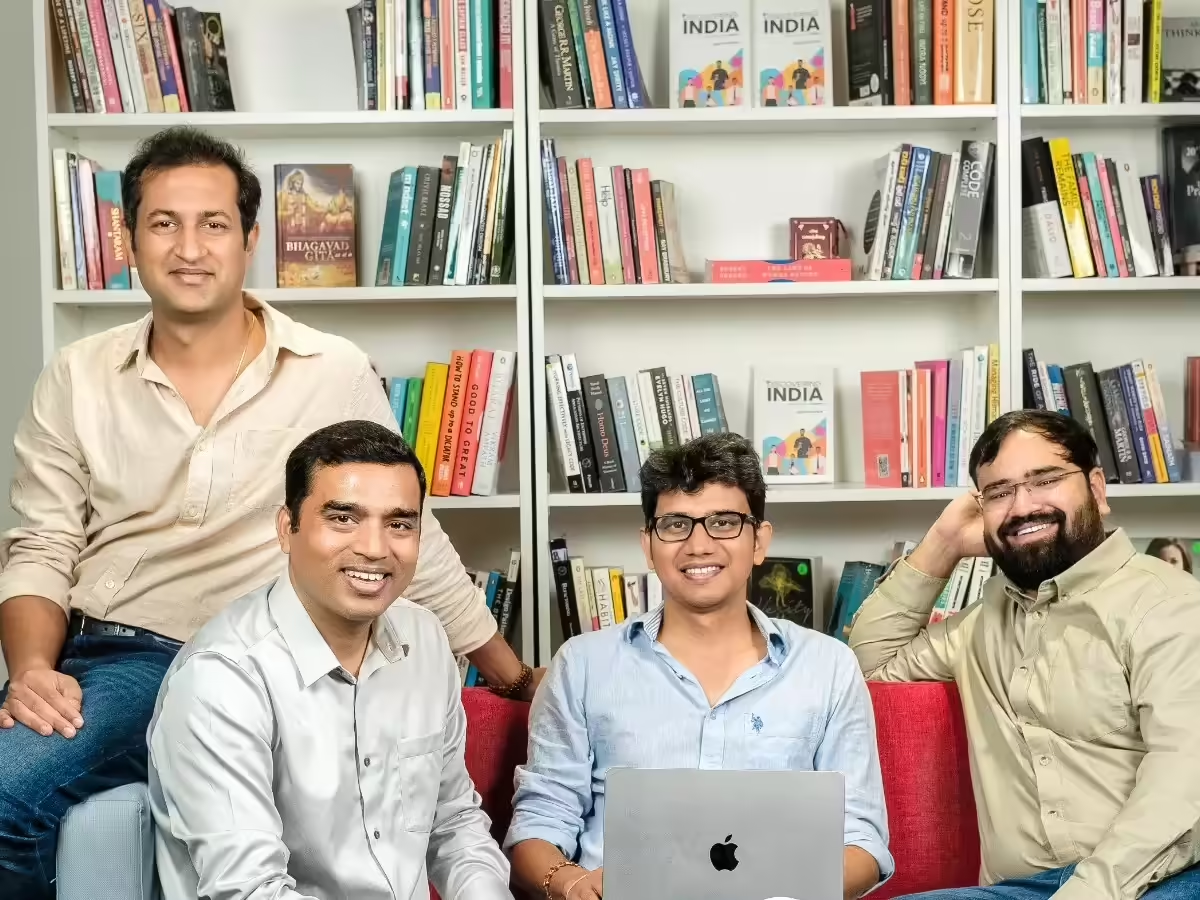
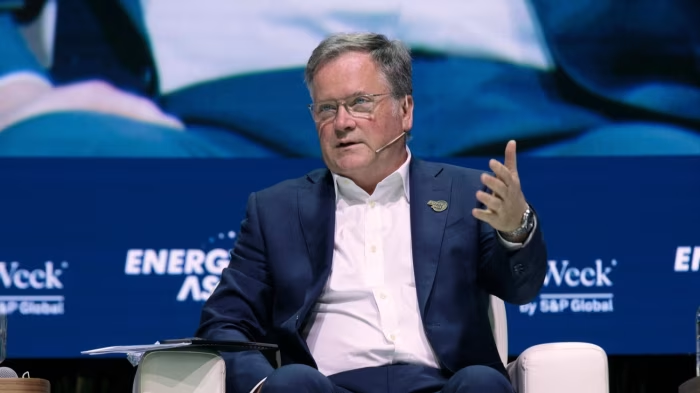
Conveybuddy CEO, Harpal Singh, said: “Advisers quite rightly focused on getting mortgage applications submitted in a very short period of time, but what was equally noticeable was the immediate follow-through into conveyancing instructions.
“What this shows is that when brokers move, the rest of the process moves with them. Conveyancing isn’t an afterthought in these moments, it becomes part of the same urgency to protect the client’s position.”
Singh added that this does not represent “organic” growth in the market, instead being a reaction to a closing window.
“Brokers were effectively accelerating decisions, particularly on remortgage cases where they had more control over timing,” he continued.
“That kind of ‘now or never’ moment creates immediate pressure not just on advisers, but across the entire transaction chain, including conveyancers.”
The data highlighted where activity was most concentrated at lender level, with cases linked to Santander rising by 156 per cent week-on-week, while Barclays saw a 61 per cent increase and Accord 56 per cent.
According to conveybuddy, this indicates that Santander, Barclays, and Accord are some of the lenders where brokers were most actively placing business during the period.
The platform suggested the figures demonstrate how quickly lender actions impacted the wider transaction chain, with conveyancing demand closely following mortgage application trends.
It added that it now expects activity to stabilise in the coming weeks as the pipeline normalises, although further lender movements may continue to influence instruction levels in the short term.
“Short-term market shocks like this appear to be an increasingly ‘normal’ part of our marketplace,” Singh continued.
“The key is how well the wider process stands up to it. Brokers need confidence that once they’ve secured a rate for their client, the legal side can keep pace. By using our platform, they’re able to ensure that certainty for their clients.”
tom.dunstan@ft.com
What’s your view?
Have your say in the comments section below or email us: ftadviser.newsdesk@ft.com