On a recent episode of The Long View, I talked with statistician Stefan Sharkansky about retirement spending strategies. Stefan wrote a paper titled “The Only Other Spending Rule Article You Will Ever Need” that was published in the Financial Analyst Journal.
One part of our conversation on the podcast focused on Treasury Inflation-Protected Securities ladders and annuities, and I wanted to highlight that discussion today in this excerpt.
Why Sharkansky Prefers TIPS Ladders to Annuities
Benz: Why TIPS versus an annuity? Just a simple income annuity that will last throughout someone’s lifetime. Can you compare and contrast those two different tools, which would seem to serve a similar function?
Sharkansky: They aim to serve a similar function, and an annuity has the advantage that it is guaranteed to last your lifetime. And you also benefit from the longevity risk pooling, sometimes called “mortality credits,” because people live different lifespans. And so the withdrawals that you can take as an individual kind of average out. And so for many people, you can take a larger withdrawal while you’re alive than you would if you set aside all the assets you needed to plan for a long lifespan. But that comes with a very big cost, which is inflation risk. And there are not on the market today any annuities that are truly indexed for inflation. And inflation is a big risk in retirement, especially if you’re trying to plan for a very long lifespan, which is why you would have an annuity in the first place. And so, your purchasing power from your annuity payouts will decline pretty precipitously toward the end of your life.
Allan Roth had a really nice article about this on Morningstar last month where he compared annuities, which don’t have the inflation protection, with a TIPS ladder, which does have inflation protection. And he concluded pretty decisively in favor of the TIPS ladder.
Choosing Your Guaranteed Income Floor
Benz: You thought to address a couple of issues … And one was this idea of, if I’m allocating to TIPS for those fixed expenses and to stocks for everything else, how to set that allocation. Can you talk about how you approached that?
Sharkansky: In practice, what I would say is you start with just what level of secure, guaranteed income do you want? And you create the TIPS ladder to provide that level of income, and it just follows from there. The allocation just follows from there. You can specify with the TIPS ladder what spending you want in each year. And you could say, “Well, I just want a constant level of real income of, say, $100,000 every year, including TIPS and Social Security.” And then you would match the TIPS ladder to provide the total cash flows from interest payments and bond principal repayments upon maturity to match that level of income.
And different people will have different comfort levels. Some people will want to have that secure income cover what they believe to be their fixed needs. And others will say, “I just want some reasonable floor,” and you know you’re going to get additional income from the stock portion of the portfolio. And some people would be more comfortable having the more upside from the stock portfolio at the cost of a little less certainty.
Why He Prefers Individual TIPS Over TIPS Funds
Benz: In the paper, you discuss using individual TIPS bonds, the laddered TIPS portfolio, which is what you prefer versus using TIPS funds, so bundles of TIPS that are managed either in an ETF or mutual fund. You favor the individual bond portfolio. Can you talk about that?
Sharkansky: You have the individual TIPS bonds, and the important thing is that you hold them to maturity. Because when you hold a TIPS to maturity, you know pretty exactly, with as much certainty as anybody can have with anything in the stock market, that when those bonds mature, you are going to get a known quantity of funds returned to you in cash that is adjusted for inflation. But with the individual bonds, you can know with high certainty exactly what you’re going to be getting in terms of spendable income over the next 30 years.
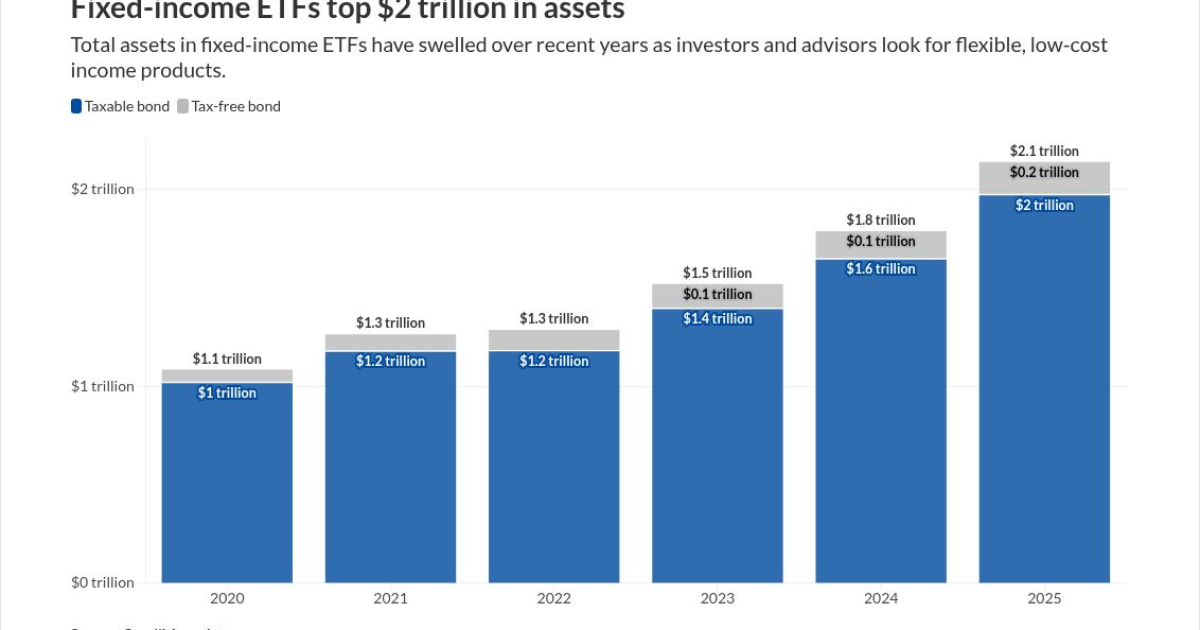
But with TIPS, ETFs, or funds, you don’t have that same certainty. Those are volatile assets that fluctuate. As interest rates change, the value of those funds will go up and down just like any other bond fund. And if interest rates go up, then the value of the bond funds, the TIPS funds that you own, will decline, and therefore, you cannot get certain withdrawals from those funds.
Why TIPS Yields Matter
Benz: Following up on that, in the paper, you take pains to note that TIPS yields will be ephemeral, that the real yield that you receive over your particular drawdown period will be kind of luck of the draw depending on the interest rate environment. Does right now—and not wanting you to be a market-timer—but does it seem like an especially lucrative or opportune time to buy TIPS right now? One of our guests recently made that point that he felt like TIPS were being woefully underrecognized.
Sharkansky: I agree with your guest’s point. And just to clarify, the yield on your TIPS ladder is ephemeral, but it is locked in at the outset. Once you buy your TIPS ladder at a particular yield, it’s fixed for you for the next 30 years. You’re immune from changes in that real yield once you’ve bought your ladder. And yes, now is a particularly favorable time to buy a TIPS ladder. The real yields on the long-term bonds are about 2.8%, which is historically quite high, and it is a favorable time to be buying those TIPS.
Valentina Djeljosevic contributed to this article.