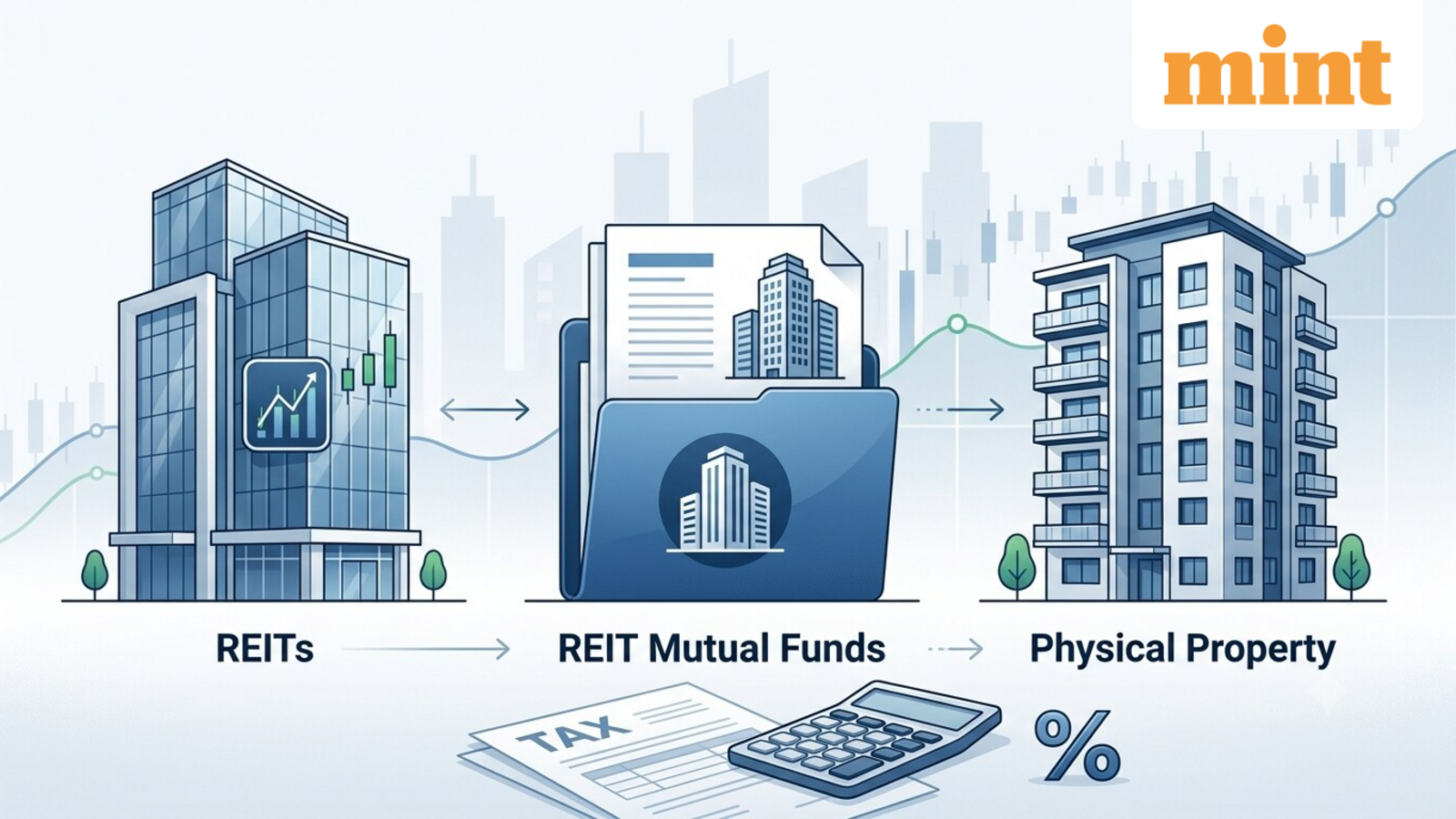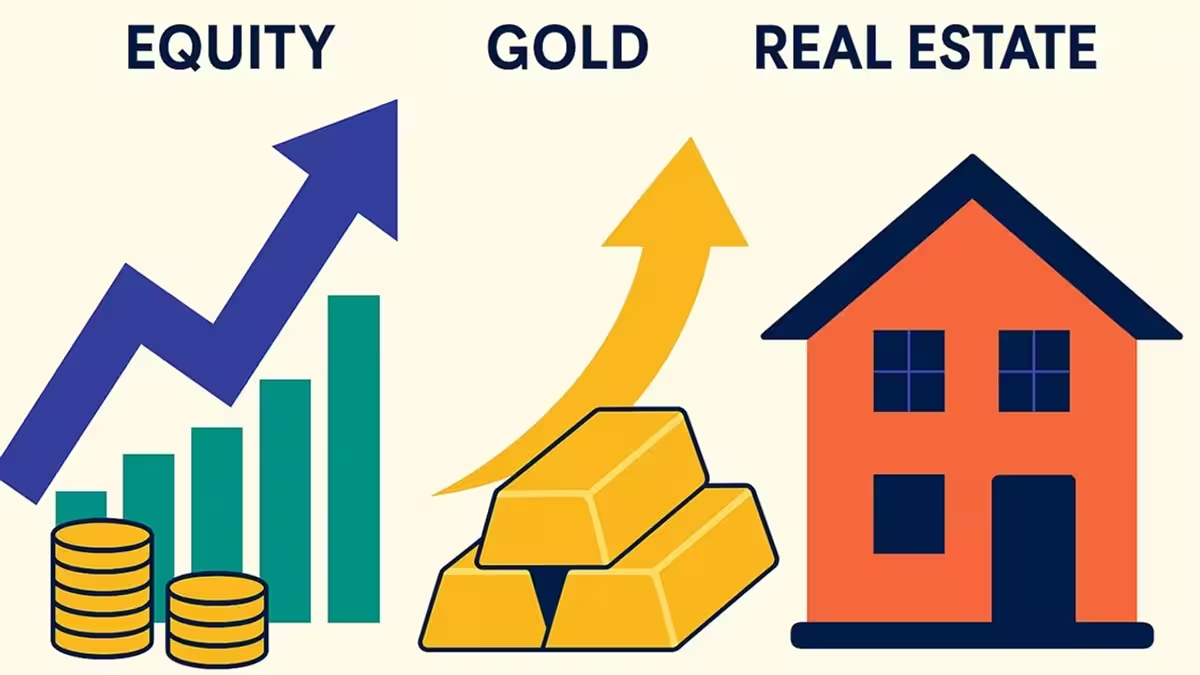
Many investors mistake Real Estate Investment Trusts (REITs) for fixed-income investments because they pay regular distributions.
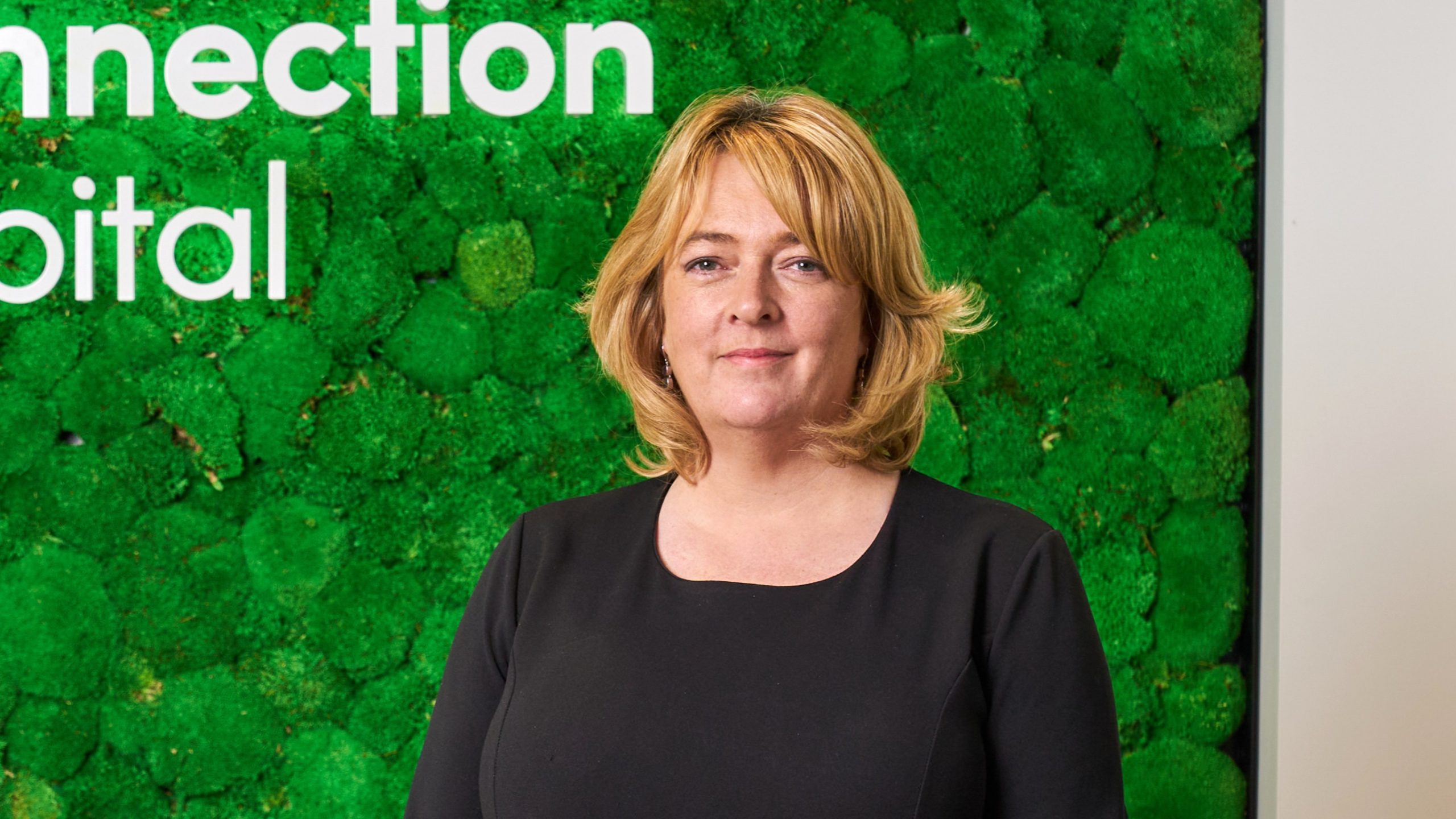
Edelweiss Mutual Fund MD & CEO Radhika Gupta mentioned that this is a myth. “Too many investors still think of REITs as fixed income. They aren’t. They’re an equity asset class with cash flow-generating real estate underneath,” she wrote in a post on X.
While Gupta explains why REITs should not be viewed as debt, Vaibhav Porwal, Co-founder of Dezerv, elaborates on the structural and regulatory differences that separate REITs from both equities and fixed-income products.
How are REITs different from equities?
Gupta says the biggest difference lies in the source of returns. “A larger share of REIT returns comes from regular income and cash flows, whereas equities rely more heavily on earnings growth.”
She noted that REIT yields are typically around 5-6%, materially higher than the broader equity market’s dividend yield.
Porwal says the distinction goes beyond income. A REIT is a listed trust that owns income-generating commercial real estate, whereas listed companies operate businesses across sectors.
“SEBI requires REITs to distribute at least 90% of their net distributable cash flows, invest at least 80% of assets in completed rent-yielding properties and keep leverage below 49%. Ordinary companies have no payout mandates and can retain 100% of profits,” he explained.
He adds that REITs are primarily driven by occupancy, rental growth, interest rates and commercial property cycles, while equities largely track corporate earnings and valuation multiples.
Why does SEBI classify REITs as equity?
“There is a reason SEBI classifies them as equity,” Gupta wrote. She noted that while equity market volatility in India has typically been around 14-16%, a pure-play REIT index has exhibited lower volatility of roughly 10-11%.
Although REITs are less volatile than stocks, they are “nowhere close to fixed income, arbitrage funds or even many hybrid funds.”
Porwal says the classification reflects economic reality rather than investor perception. “Debt has three defining features: a fixed maturity, a promised coupon, and repayment of principal. A REIT has none of them.”
“In REIT, you own a slice of operating real-estate businesses; the distribution rises and falls with rent and occupancy, and the unit price floats on the exchange every day. That is equity risk,” he explained.
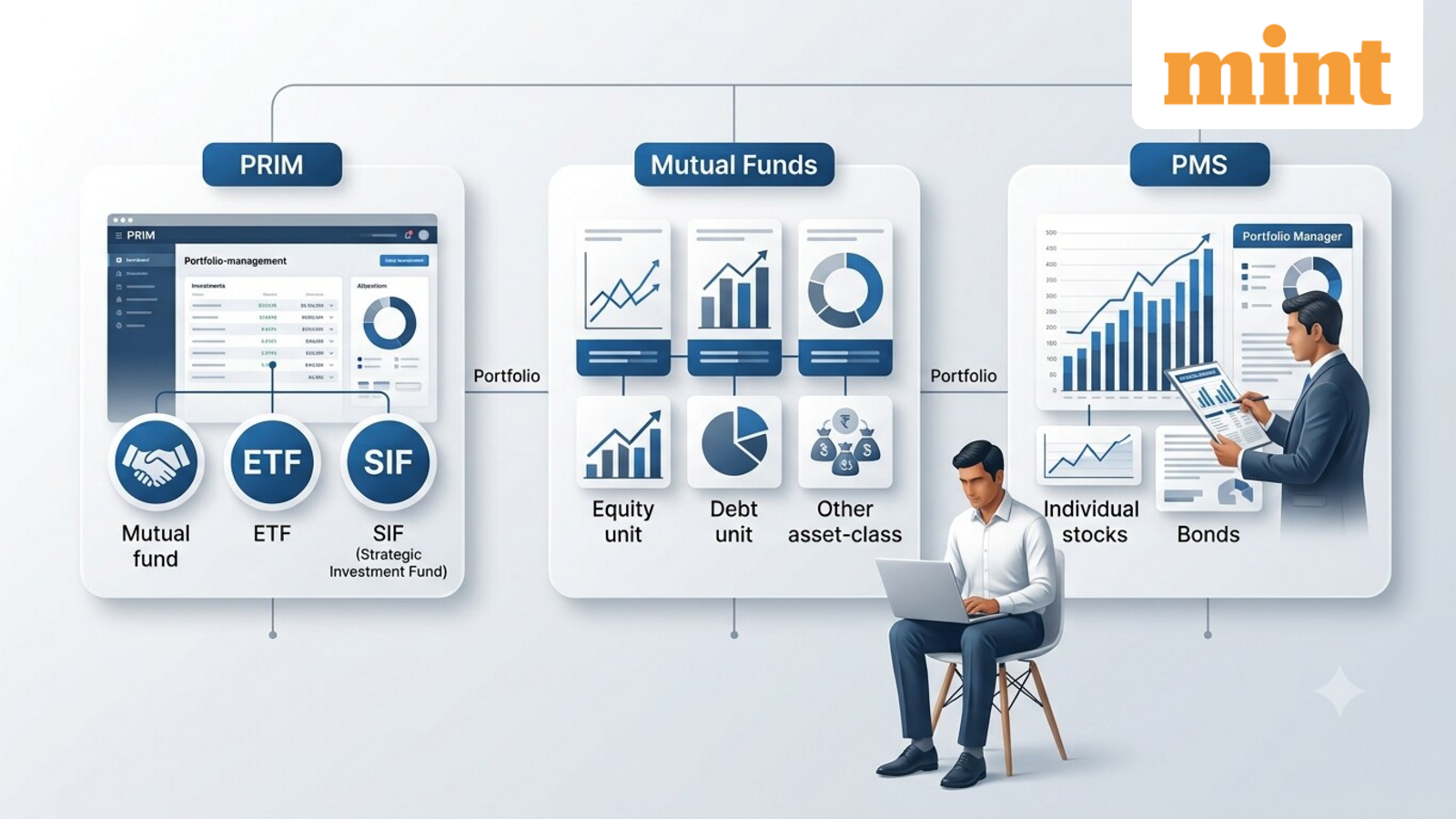
He adds that SEBI’s November 2025 circular recognised this. From 1 January 2026, REIT investments by mutual funds and SIFs have been treated as equity-related instruments. From 1 July 2026, REITs became eligible for inclusion in equity indices.
“SEBI is not claiming a REIT is identical to a stock. It is placing it in the right risk family,” Porwal noted.
Why should investors consider REITs?
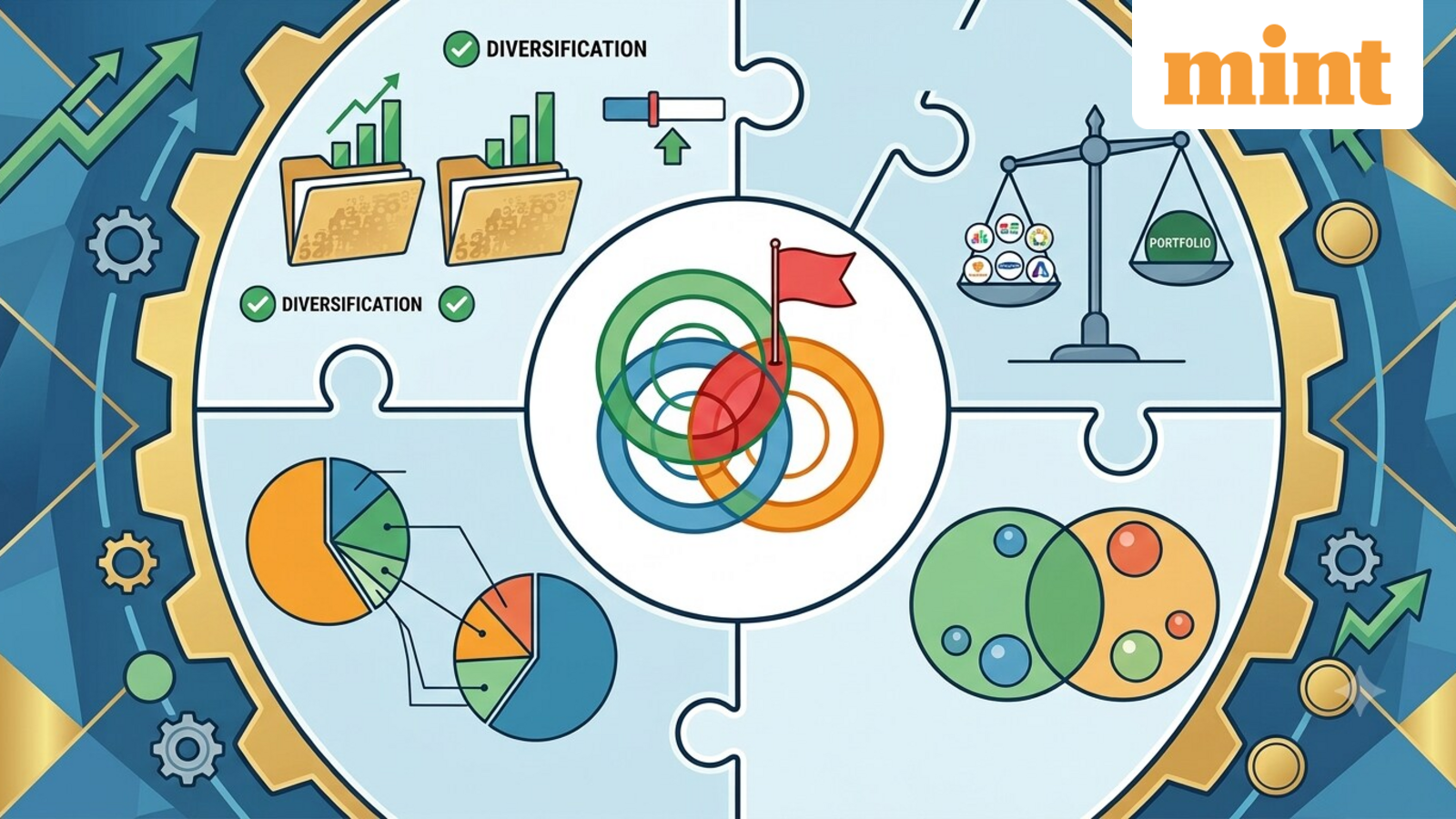
“The case for REITs is diversification. Not because they are a debt substitute—they clearly are not,” Gupta noted.
She believes REITs provide exposure to cash flow-generating commercial real estate in a liquid, listed format, much like Gold ETFs, by adding exposure to another asset class in a portfolio.
Porwal agrees, saying REITs offer a return stream linked to commercial rents, occupancy and interest rates rather than corporate earnings. They also provide access to Grade-A commercial real estate without the high capital requirement, illiquidity or tenant-management challenges of owning property directly.
However, he cautioned against chasing yield alone. “The highest-yielding REIT is rarely the best one.” Investors should instead focus on sponsor quality, governance, occupancy, lease expiries and sustainable, growing distributions.
Why are REITs often mistaken for fixed income?
Porwal says the 5-6% distribution yield often makes REITs look like FDs or debt funds. But unlike bonds, they do not guarantee returns or capital repayment.
“REITs are also interest-rate sensitive, and bonds move with rates too,” he adds. When rates rise, future rental income is discounted at a higher rate, property yields (cap rates) increase, borrowing becomes more expensive, and fixed-income products become more attractive. REIT prices fell through 2022 and 2023 due to these reasons.
“However, rate sensitivity does not make REITs fixed-income products. Bonds have contractually fixed cash flows, while REIT income depends on rents, occupancy, and the property cycle,” he concluded.
Disclaimer: This story is for educational purposes only. The views and recommendations made above are those of individual analysts or broking companies, and not of Mint. We advise investors to check with certified experts before making any investment decisions.
About the Author
Sheetal Goel is a Content Producer at Livemint, where she covers corporate developments, personal finance, business trends, markets, and SEBI-related updates. She focuses on simplifying complex financial concepts and presenting them in a clear, reader-friendly manner, thereby helping audiences better understand investment trends, personal finance, and market developments. Her writing focuses on making finance more accessible to everyday readers while maintaining clarity, accuracy, and relevance.
She holds a degree in Economics (Hons.) along with an MBA in Finance, which has helped her develop a strong foundation in financial analysis, market understanding, and business reporting. Before joining journalism, she worked with finance and broking firms, where she closely followed market developments, investment strategies, and evolving industry trends. This practical exposure strengthened her understanding of financial markets. She has also written content across multiple formats and platforms, including YouTube, LinkedIn, and Instagram.
Over time, she has developed expertise in covering market-linked stories, investor-focused topics, and regulatory updates in a simplified yet informative style. She also enjoys reading and listening to Hindi poetry, reflecting her appreciation for literature and creative expression beyond the world of markets and numbers.