The cryptocurrency industry has changed dramatically over the last few years. What was once largely associated with technology enthusiasts and speculative trading has become a serious financial sector involving exchanges, payment platforms, custodial services, investment businesses, and blockchain-based financial products.
With that growth has come something that many entrepreneurs initially underestimate: regulation.
If you are planning to launch a crypto exchange, provide custody services, operate a crypto payment platform, or offer other virtual asset services, obtaining the right cryptocurrency license may be one of the most important steps in building a sustainable business.
As someone who has worked with crypto-related regulatory projects, I would advise entrepreneurs to stop thinking about licensing as simply a document they need to obtain. A license is better understood as part of the entire business infrastructure.
What is a cryptocurrency license?
A cryptocurrency license is a regulatory authorisation that allows a company to legally provide specific services involving cryptocurrencies or other virtual assets within a particular jurisdiction.
The exact terminology varies from country to country. You may encounter terms such as:
- Crypto license
- VASP license
- Virtual Asset Service Provider registration
- CASP authorization
- Digital asset license
- Cryptocurrency exchange license
- Virtual currency license
These terms are not always interchangeable. One of the first mistakes I see is when entrepreneurs choose a jurisdiction based solely on the phrase “crypto license” without examining what activities the authorisation actually covers.
For example, a license that permits cryptocurrency exchange services may not automatically allow custody of client assets, brokerage, crypto-to-fiat transactions, or payment services.
The business model should therefore come first. The license should be selected around it.
Which crypto businesses usually need authorisation?
The answer depends heavily on the jurisdiction and the exact services offered.
Typical regulated activities can include cryptocurrency exchange, brokerage, custody, transfer of virtual assets, operation of trading platforms, and certain crypto-related payment services.
A company that simply develops blockchain software may have very different regulatory obligations from a business that holds customers’ digital assets.
This distinction is extremely important.
Imagine two companies. The first develops non-custodial wallet software and never controls users’ assets. The second operates a centralised platform where customers deposit cryptocurrency, and the company controls the wallets.
From a technical perspective, both businesses may describe themselves as blockchain companies. From a regulatory perspective, they can be completely different.
That is why I always recommend conducting a regulatory classification of the business model before incorporating the company or investing heavily in infrastructure.
Why jurisdiction matters
There is no universal cryptocurrency license that allows a company to operate everywhere in the world.
Each jurisdiction establishes its own regulatory framework, application procedure, capital requirements, compliance obligations, and restrictions.
Some countries have developed dedicated frameworks for virtual asset businesses. Others regulate crypto activities under existing financial services legislation. Some jurisdictions use registration rather than a traditional licensing model.
Choosing a jurisdiction should therefore involve much more than comparing government fees.
A jurisdiction might appear inexpensive on paper but become expensive once you consider banking, compliance personnel, audits, reporting requirements, local substance, and ongoing regulatory costs.
The real question is not:
“Where can I get the cheapest crypto license?”
A better question is:
“Which jurisdiction provides a regulatory framework that fits my business and long-term expansion plans?”
That change in perspective can save entrepreneurs a significant amount of money.
The role of AML and KYC
One of the biggest areas of focus for regulators is anti-money laundering.
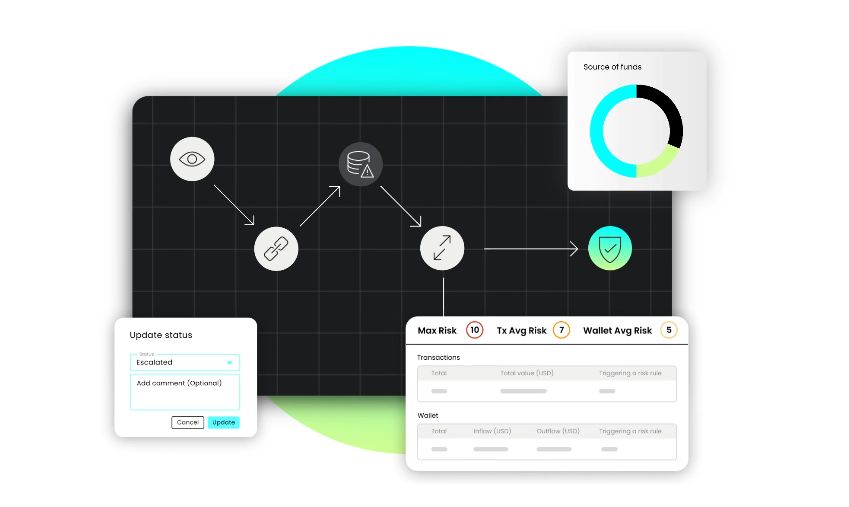
A professional cryptocurrency business is expected to understand who its customers are, assess the risks associated with those customers, monitor transactions, and identify potentially suspicious activity.
This is where KYC (know your customer) and AML (anti-money laundering) procedures become essential.
Depending on the jurisdiction and business model, a crypto company may need policies covering customer identification, enhanced due diligence, sanctions screening, transaction monitoring, suspicious activity reporting, risk assessment, record keeping, and ongoing customer monitoring.
In practice, this means that compliance cannot be added at the very end of the licensing process.
If the business model, technology, customer onboarding process, and compliance framework contradict one another, regulators are likely to notice.
What does the application process look like?
Although requirements differ between jurisdictions, a cryptocurrency license application commonly involves several stages.
The company may need to prepare corporate documents, describe its business model, provide information about shareholders and directors, demonstrate the origin of funds, submit a detailed business plan, prepare AML/KYC policies, present information about the technology infrastructure, and demonstrate that the management team is competent to operate the business.
Regulators can also examine the individuals behind the company.
This means that licensing is not necessarily just a corporate exercise. The background, experience, reputation, and financial history of directors and beneficial owners can become relevant.
For some businesses, the technology will receive considerable attention as well. Regulators may want to understand how customer assets are protected, how wallets are managed, how transactions are monitored, and how the company handles security incidents.
The most common mistake: Choosing the license first
I often see entrepreneurs approach the process backwards.
They find an advertisement promising a “fast crypto license,” incorporate a company, pay various fees, and only afterwards discover that the license does not cover the activities they actually want to conduct.
This can create serious problems.
A better approach is to map the business model first.
Ask:
- Which services will the company provide?
- Will it hold customer assets?
- Will customers exchange crypto for fiat?
- Which countries will customers come from?
- Will the company target retail clients, businesses, or both?
- What payment methods will be used?
- Which blockchain networks and assets will be supported?
- Where will the company maintain its operational presence?
- What compliance infrastructure is required?
Once these questions are answered, it becomes much easier to compare jurisdictions.
Licensing is not the end of the process
Another misconception is that receiving a cryptocurrency license means the regulatory work is finished.
In reality, licensing is usually the beginning of an ongoing compliance relationship.
A regulated company may have continuing obligations related to reporting, AML monitoring, record keeping, audits, compliance reviews, regulatory notifications, and maintenance of appropriate governance procedures.
The company may also need to update its policies as the business grows.
For example, a startup initially serving a few hundred customers may eventually expand into multiple markets, add new digital assets, introduce institutional services, or launch a custodial product. Each of these changes can affect its regulatory profile.
A good compliance framework should therefore be designed to scale.
How much does a cryptocurrency license cost?
There is no universal price.
The total cost can include government application fees, incorporation, legal services, compliance preparation, AML systems, KYC providers, technology, audits, local staff, office requirements, and ongoing regulatory expenses.
The official license fee can sometimes represent only a small part of the actual investment required to operate a compliant crypto business.
This is why comparing jurisdictions exclusively by the published government fee can be misleading.
A seemingly inexpensive jurisdiction may ultimately be more expensive if it requires significant local substance or has limited access to banking and payment infrastructure.
The future of crypto regulation
I believe regulation will continue to become more sophisticated rather than disappear.
That is not necessarily bad news for legitimate cryptocurrency businesses.
Clear regulation can create barriers to entry, but it can also increase customer confidence, improve relationships with banks and financial institutions, and separate professional operators from poorly managed projects.
The companies that treat compliance as a competitive advantage rather than an administrative burden are likely to be better positioned for long-term growth.
The crypto industry is maturing. Investors, customers, banks, and regulators increasingly expect businesses operating in this space to have professional governance and transparent compliance structures.
Obtaining a cryptocurrency license is not simply about finding a country with an attractive regulatory regime and submitting an application.
It is about creating a business that can satisfy regulatory requirements while remaining commercially viable.
The right approach is to start with the business model, identify the regulated activities, compare suitable jurisdictions, understand AML and KYC obligations, assess operational requirements, and only then move forward with the licensing strategy.
For entrepreneurs entering the cryptocurrency industry, this preparation can make the difference between a business that merely obtains authorisation and one that is genuinely prepared to operate and grow in the regulated digital-asset market.
Get professional help with your cryptocurrency license
For entrepreneurs, one of the most practical ways to simplify the licensing process is to work with professionals who understand both the regulatory requirements and the commercial side of launching a crypto business.
Fintech Harbor helps cryptocurrency and fintech companies navigate licensing and regulatory requirements in different jurisdictions. The team can assist with selecting a suitable jurisdiction, preparing the required documentation, developing compliance frameworks, and coordinating the licensing process.
Instead of choosing a jurisdiction simply because it appears inexpensive or easy to enter, entrepreneurs can receive a structured assessment based on their actual business model and expansion plans.
For a company entering the regulated cryptocurrency market, this kind of preparation can save significant time, reduce unnecessary costs, and help avoid mistakes that may become difficult to correct later.
Ultimately, obtaining a cryptocurrency license is not just about satisfying a regulator. It is about building a business that customers, banking partners, investors, and regulators can trust. With the right strategy and professional guidance, licensing can become a foundation for sustainable growth rather than an obstacle to launching your crypto project.
Disclaimer: Players must be 18 years + to partake in any gambling, betting or casino activity. Players are urged to seek help if they require it. Players play at their own risk.