For those who have just started with cryptocurrency (virtual currency), isn’t “taxes” particularly confusing?
“Do I have to pay taxes just by buying Bitcoin?”
“What happens if I sell it and make a profit?”
“Is it okay if I just exchanged Bitcoin for Ethereum?”
“Do I not need to file a tax return if the profit is small?”
I think many people have these questions.
With cryptocurrency,
it is not the case that “you only need to think about taxes when you convert to Japanese yen.”
It is not that simple.
You may need to calculate your income not only when you sell, but also when you use cryptocurrency to purchase goods or services, or when you exchange it for another cryptocurrency.
In this article, we will explain the basic concepts of cryptocurrency and taxes as simply as possible for cryptocurrency beginners.
*This article is based on information published by the National Tax Agency as of September 2026. Tax systems and tax treatments are subject to change. For actual tax filings, please check the latest information with the National Tax Agency, your local tax office, or a tax accountant.
First thing to remember | What if I “just buy and hold”?
The first thing beginners should know is that,
if you just buy and hold cryptocurrency, you do not immediately calculate the unrealized gain as income just because the price has risen.
that is.
For example,
Bought Bitcoin for 100,000 yen
↓
Price increased
↓
The market value of the Bitcoin held became 150,000 yen
Suppose.
At this point,
150,000 yen – 100,000 yen = 50,000 yen
is the price increase.
This increase in value while you have not yet sold the asset is called an **”unrealized gain.”**
If you are simply holding the asset, you generally do not calculate income tax based on this unrealized gain alone.
So, when do you need to think about taxes?
The three things beginners should especially keep in mind are:
selling
using
exchanging
these three actions.
Cryptocurrency profits are generally classified as “miscellaneous income”
When an individual generates a profit by selling or using cryptocurrency, that profit is, as a general rule, classified as miscellaneous income, except in cases where it arises in connection with activities that generate business income or similar.
Miscellaneous income is a category for income that does not fall under other income classifications defined by the Income Tax Act, such as employment income or business income.
What you should remember here is that
cryptocurrency taxes do not work the same way as stock investment taxes
.
Do not assume that “because it is an investment, it must be taxed the same as stocks.”
Instead, confirm the tax treatment specifically for cryptocurrency.
Note that income classification may vary depending on the scale of transactions, the status of bookkeeping, and the nature of the transactions.
This article focuses on the basics, assuming a general individual beginner, where profits are **”generally classified as miscellaneous income.”**
When do you calculate profits?
The three representative cases that beginners should especially remember are as follows.
1. You sold crypto assets for Japanese yen
This is the easiest case to visualize.
For example,
suppose you bought crypto assets for 100,000 yen and sold them for 150,000 yen.
Let’s assume this.
To simplify,
150,000 yen – 100,000 yen = 50,000 yen
This is the result.
In this example, 50,000 yen is your profit.
However, in actual income calculations, you must also consider the acquisition cost of the crypto assets and any fees incurred at the time of sale.
In other words,
it is not just about “how much you sold it for,” but also “how much you acquired it for” that matters
That is what it means.
2. You used crypto assets to purchase goods or services
This is a point that beginners often overlook.
For example,
suppose crypto assets you acquired for 100,000 yen increased in value, and you used those assets to purchase a product worth 150,000 yen.
You might think,
“Since I haven’t converted it to Japanese yen, I haven’t realized a profit, right?”
However, when you use crypto assets to purchase goods or services, you are required to calculate income based on the difference between the value of the crypto assets at the time of use and their acquisition cost.
In other words,
using crypto can also be a time to consider taxes
.
3. Exchanging crypto for another crypto
Another point to be aware of is
exchanging one crypto for another
.
For example,
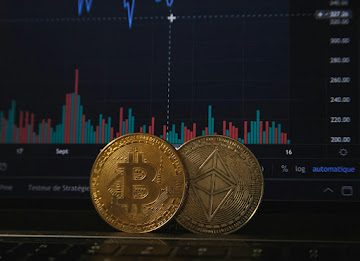
Bitcoin (BTC)
to
Ethereum (ETH)
suppose you exchange it.
Since you did not receive Japanese yen,
you might feel that
“you haven’t realized a profit yet.”
However, for tax purposes, you are required to calculate your income as if you used the crypto you held to acquire another crypto asset.
In short,
it is not necessarily true that “taxes don’t apply unless you convert to Japanese yen”
.
This is a point that beginners should especially keep in mind.
What if you just bought crypto?
So,
“I bought Bitcoin for 100,000 yen.”
What if that is all you did?
Normally, simply purchasing crypto assets with Japanese yen does not result in a capital gain.
Even if the price rises after purchase, it remains an “unrealized gain” as long as you are just holding it.
After that, when you:
・Sell it
・Use it to purchase goods or services
・Exchange it for another crypto asset
you may need to calculate your income.
For beginners, it is easiest to organize it as follows:
Just buying
→ Usually not a realized profit
Selling, using, or exchanging
→ Check for taxes
It is helpful to think of it this way.
How do you calculate profit?
To simplify the basic concept:
Amount obtained from sale, etc.
−
Acquisition cost of crypto assets, etc.
=
Profit
is the result.
For example,
Acquisition cost: 300,000 yen
Sale price: 500,000 yen
in that case,
500,000 yen – 300,000 yen = 200,000 yen
is the result.
However, in reality, you may buy and sell the same cryptocurrency multiple times in a single year.
For example,
January: Bought BTC
March: Bought additional BTC
June: Sold some BTC
August: Bought additional BTC
December: Sold some BTC
In this case,
“At what acquisition cost should I calculate the Bitcoin I sold?”
This question arises.
That is where
the periodic average method
the moving average method
come in.
What are the “periodic average method” and the “moving average method”?
These are representative methods for calculating the acquisition cost of cryptocurrencies.
Periodic Average Method
A method of calculating the average unit price based on the acquisition costs over a certain period for the same type of cryptocurrency.
Moving Average Method
A method of calculating the average unit price by combining the amount held until that point with the newly acquired amount each time a cryptocurrency is acquired.
“This suddenly got difficult…”
Some people might think that.
Here,
it is enough to remember that once you start buying and selling cryptocurrency frequently, you cannot calculate it simply by subtracting the “initial purchase price”
and you will be fine.
The National Tax Agency also provides
the “Cryptocurrency Calculation Sheet (for Total Average Method)”
and the “Cryptocurrency Calculation Sheet (for Moving Average Method)”.
Additionally, you may be able to obtain an annual transaction report from your cryptocurrency exchange.
As your number of transactions increases, do not rely solely on your memory; use your transaction history and annual transaction reports to organize your records.
Be careful with the idea that “you don’t need to do anything if it’s under 200,000 yen”
If you are a salaried employee,
you may have heard that “you don’t need to file a tax return if your side income is 200,000 yen or less.”
For certain salaried employees, there are cases where filing an income tax return is not required if the total amount of income other than salary and retirement income is 200,000 yen or less.
However, this does not mean
“anyone can do nothing if their cryptocurrency profit is 200,000 yen or less.”
For example, it depends on:
・Your salary situation
・Income other than cryptocurrency
・Whether there are other circumstances requiring a tax return
Also, even if you do not need to file an income tax return, you may still need to file a resident tax return.
Therefore,
do not make the self-judgment that “it’s under 200,000 yen, so I definitely don’t need to file!”
What if you incur a loss with cryptocurrency?
Cryptocurrency prices can also fall.
Because of this,
you might think, “I lost 500,000 yen on cryptocurrency, so can I deduct 500,000 yen from my salary income?”
You might think so.
However, as a general rule, losses from cryptocurrency transactions, which are classified as miscellaneous income, cannot be freely deducted from other income such as salary income.
It is important not to confuse this with the tax system for stock investments and the like.
If your transaction details are complex or your losses are significant, please check with the tax office or a tax accountant.
What can be considered a deductible expense?
When calculating income from cryptocurrency, expenses directly necessary to earn that income may be recognized as deductible expenses.
The National Tax Agency’s FAQ lists examples such as:
・The cost of acquiring the cryptocurrency
・Fees paid at the time of sale
and so on.
Internet connection fees and computers may also be considered deductible expenses for the portion recognized as directly necessary for the sale of cryptocurrency.
However,
“It’s all an expense because it’s related to cryptocurrency”
is not necessarily the case.
Since the treatment varies depending on usage and amount, please consult a professional for items that are difficult to judge.
Keep your transaction history from the start
When it comes to cryptocurrency taxes, what is very important is
Keep a record of your transactions
.
At first, you may not have many transactions, so
“I’ll just check them later”
is what you might think.
However,
・Using multiple exchanges
・Trading frequently
・Exchanging cryptocurrencies with each other
・Sending funds to a wallet
once you start doing these things, it becomes difficult to organize them later.
Information you should save includes:
・Transaction date
・Type of cryptocurrency
・Purchase quantity and amount
・Sale quantity and amount
・Fees
・History of exchanges between cryptocurrencies
and so on.
If you can obtain an annual transaction report, be sure to save that as well.
Are there taxes on staking and lending too?
With cryptocurrencies, you may receive assets through methods other than buying and selling.
For example,
staking
lending
mining
and so on.
The National Tax Agency’s FAQ indicates that if you acquire cryptocurrency through these methods, the profit generated from the acquisition is subject to income tax, and the market value at the time of acquisition should be included in your income.
In other words,
“I haven’t bought or sold anything, so taxes don’t apply to me”
That is not necessarily the case.
If your transaction details become complex, including DeFi or NFTs, check the tax treatment early on.
Do not spend the money set aside for taxes
When you make a large profit from cryptocurrency,
you might think,
“I made 1 million yen! I can spend 1 million yen!”
However, taxes may be incurred on that profit.
Be especially careful about
spending all that money after realizing your profit.
When the time comes for filing your tax return and paying taxes the following year,
you will want to avoid finding yourself in a situation where
“I don’t have the cash to pay my taxes!”
When you make a profit,
keeping in mind and setting aside money that may need to be paid as taxes
is also a part of fund management.
Tax Checklist for Beginners
Check these items at the end of the year or before filing your tax return.
□ Did you sell cryptocurrency?
□ Did you purchase goods or services with cryptocurrency?
□ Did you exchange one cryptocurrency for another?
□ Did you receive cryptocurrency through staking or similar methods?
□ Have you checked your annual profit and loss?
□ Have you checked the history of multiple exchanges?
□ Have you saved your annual transaction reports, etc.?
□ Have you kept records of fees and other costs?
□ Have you checked if you need to file an income tax return?
□ Have you also checked regarding resident tax?
Especially if you use multiple exchanges, it is important to check all transactions together, not just those from one company.
Consult a professional if you are unsure
Cryptocurrency taxes are,
・You trade frequently
・You use multiple exchanges
・You use overseas exchanges
・You use DeFi
・You receive staking or lending rewards
・You buy and sell NFTs
and as your trading activities become more complex, the calculations become more difficult.
In such cases, do not rely solely on online articles; instead,
the tax office
a tax accountant
the latest information from the National Tax Agency
and other resources to verify your situation.
Summary|It is not just when you convert to Japanese yen
Regarding cryptocurrency taxes, the first things beginners should keep in mind are:
・If you only buy and hold, you generally do not need to calculate income tax on unrealized gains immediately
・If you sell and make a profit, you must calculate your income
・Income may also be generated when you purchase goods or services with cryptocurrency
・Income calculation may also be required when exchanging one cryptocurrency for another
・Profits from individual cryptocurrency trading are generally classified as miscellaneous income
・It is not true that everyone is exempt from filing if their profit is 200,000 yen or less
・Keep your transaction history from the very beginning
that is the case.
What you should especially remember is,
it is not necessarily true that taxes do not apply unless you convert to Japanese yen
this point.
Taxes may feel difficult at first, but
buying
selling
using
exchanging
receiving
if you organize them by these transaction types, they become easier to understand little by little.
It is difficult to gather past records once your trading volume increases.
That is why,
you should keep records from the moment you start trading cryptocurrency.
This is also an important habit for continuing to trade cryptocurrency safely.
In the next article,
“Cryptocurrency Accumulation Investment”
will be explained.
“I don’t know when to buy”
“I’m afraid to invest a large amount of money at once”
Let’s look at what kind of features this method has for people who feel this way.
Learning, little by little.
Let’s build up our knowledge, one step at a time.🌱
Reference Information/Sources
・National Tax Agency “Regarding Tax Treatment and Calculation Statements for Cryptocurrency, etc.”
・National Tax Agency “Regarding Tax Treatment for Cryptocurrency, etc. (FAQ)”
・National Tax Agency “Cryptocurrency Calculation Statement (for Total Average Method/Moving Average Method)”
・National Tax Agency “Tax Return Preparation Corner”
*Tax systems and tax treatment of cryptocurrencies are subject to change. Please check the latest information from the National Tax Agency when filing your tax return.
Please Note
This article is intended to introduce general tax information regarding cryptocurrencies to beginners and does not provide specific tax or legal advice.
Tax treatment may vary depending on the details of the transaction and individual circumstances.
For actual tax filings or tax-related decisions, please consult the National Tax Agency, your local tax office, or a tax professional such as a certified public tax accountant.