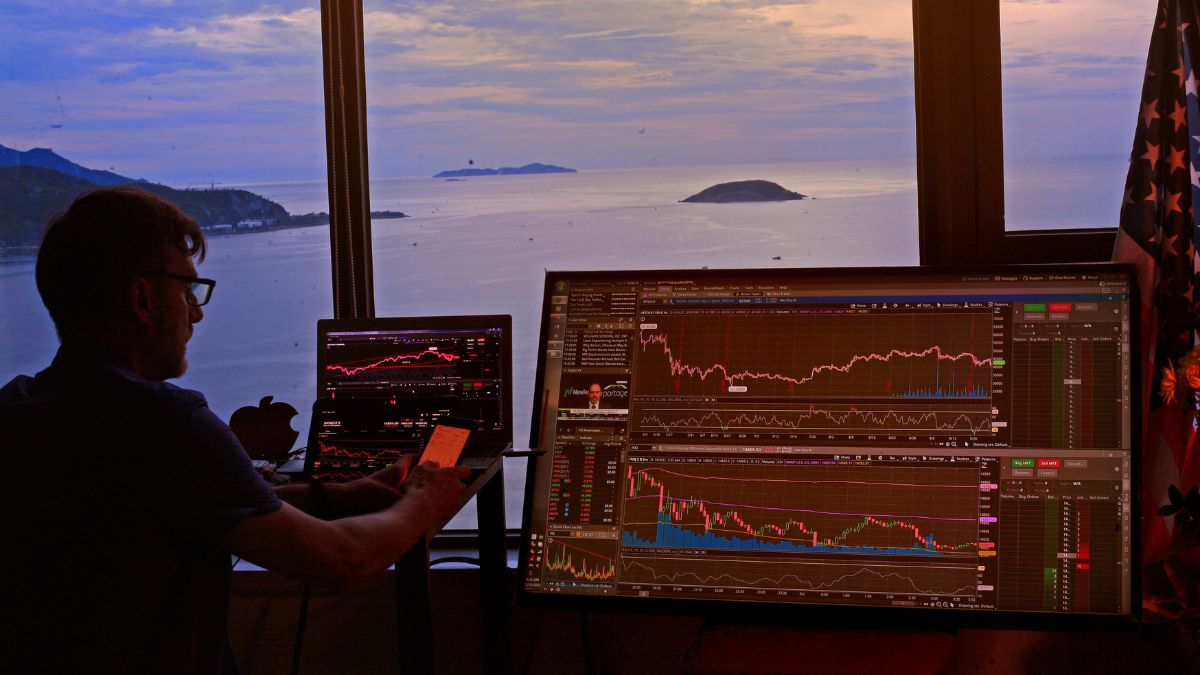

The more you study cryptocurrency, the more difficult investment decisions can become.
‘I’ll buy after I study cryptocurrency more.’
This seems like a cautious and correct way of thinking.
However, the more you watch YouTube, check X, read blogs, and research recommended coins, the more some people find themselves unable to decide compared to before.
Yesterday, I heard that ‘Bitcoin will continue to grow.’
Today, I saw someone say ‘It’s too late to buy now.’
In another video, it was said that Ethereum is promising, and if I open X, names of Solana and other coins I don’t know keep flowing in.
My knowledge is definitely increasing.
And yet,
‘So, how much should I buy?’
‘What should I do if it drops by X percent?’
‘How many years do I intend to hold it?’
When asked these questions, I cannot answer.
Here lies a strange pitfall that cryptocurrency beginners easily fall into.
It is a case where you thought increasing the information you lack would eliminate your hesitation, but the information itself is increasing your hesitation.
Moreover, the cause is not necessarily a lack of study.
There is a possibility that the order in which you look at things is reversed.
Why do those who research seriously become unable to act?
When people become interested in cryptocurrency, the first thing many of them research is the coins.
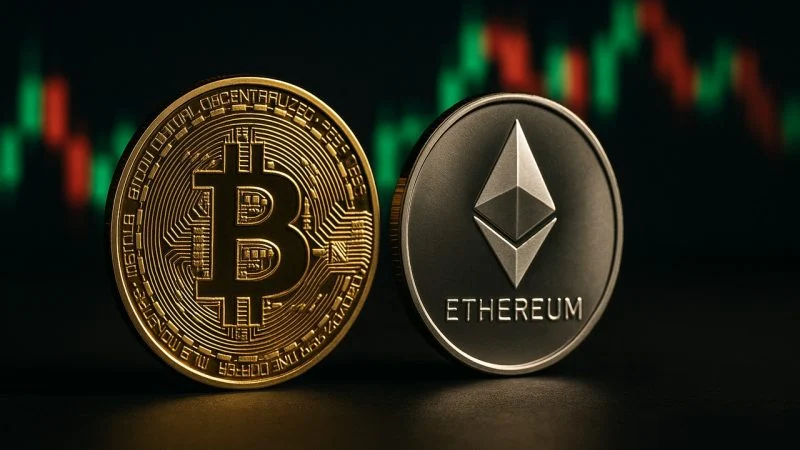
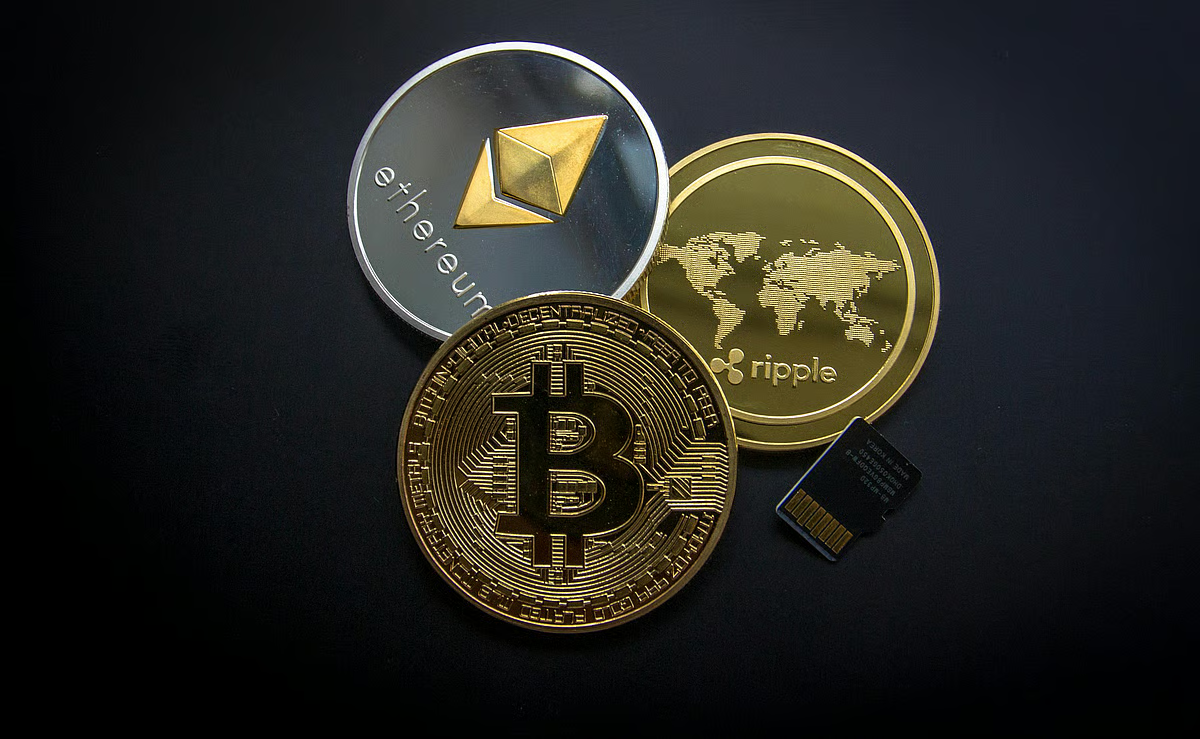
Is it Bitcoin?
Ethereum, perhaps?
Or maybe another currency?
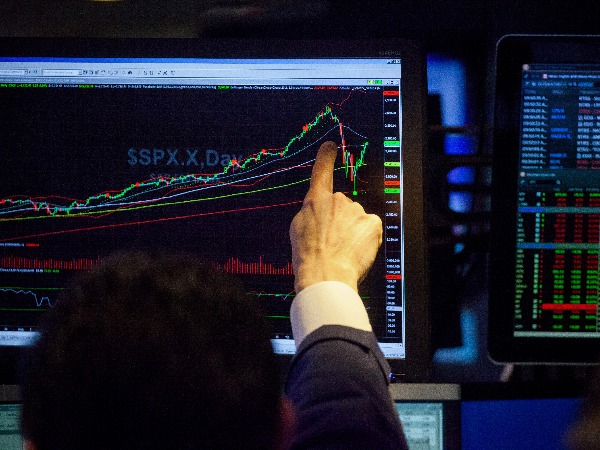
Next, you look at the charts.
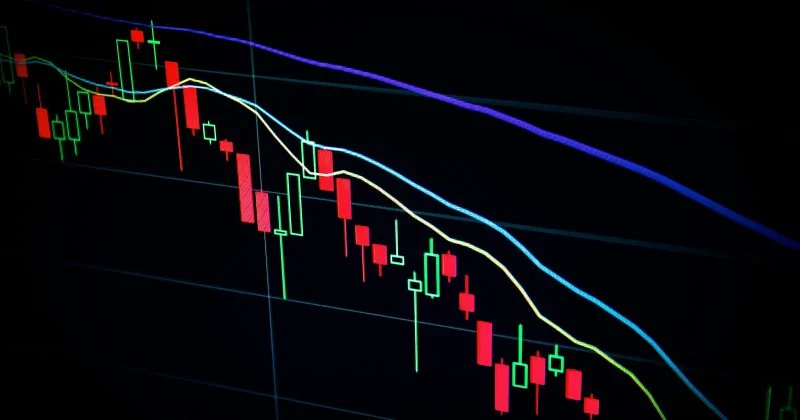
Once you learn about moving averages, RSI, MACD, and the like, you might feel a bit more like an investor.
That in itself is not a bad thing.
The problem is moving forward while leaving the more fundamental things blank.
You have a ‘reason to buy’ but no ‘reason to sell’
For example, suppose you watch a video and buy 30,000 yen worth of Bitcoin.
It goes up by 5%.
You think, ‘I should have bought more.’
Conversely, it drops by 5%.
You get scared, thinking, ‘It might crash from here.’
If you have nothing to support your judgment at this point, the next thing you do is search again.
If you watch a bullish video, you feel relieved; if you see a bearish post, you become anxious again.
It is easy to end up in a state where you think you are watching the market, but in reality, you are just oscillating between the opinions of others.
Seeing the opinions of 10 people does not mean your decision-making material increases tenfold
It seems like you would become more knowledgeable by watching 10 people instead of just one on YouTube.
But without your own criteria for judgment, it is a bit different.
Rather than gaining the knowledge of 10 people, you end up holding 10 different market perspectives.
The person who says it will go up.
People who say it will go down.
People who say you should just use dollar-cost averaging.
People who say you should wait for a crash.
People who say you should buy a different currency.
If you listen to everyone, you may end up unable to choose anything at all.
(I thought the more I researched, the more at ease I would feel, but it was the opposite.)
So, where should you start rethinking?
There are things you must decide before looking at specific coins.
Starting with ‘Coin -> Chart -> Trade’ causes you to miss important numbers
Usually, people tend to imagine the flow of:
Find a coin
↓
Buy
↓
Wait for the price to rise
as the process.
When viewed as asset formation, the order changes significantly.
Life planning
↓
Monthly cash flow
↓
Amount available for investment
↓
How much of a decline you can accept
↓
Investment duration
↓
Your own investment rules
↓
Finally, the coin
What you decide first is not ‘what to buy,’ but ‘under what conditions can I continue to invest.’
For example, even if you have 2.2 million yen in a savings account, that entire 2.2 million yen is not necessarily investment capital.
There is money to prepare for sudden expenses.
There is also money you plan to use within a few years.
How much you can add each month also differs from person to person.
If you skip this and only look for currencies that seem likely to rise in value, you will only encounter conflicts with your daily life after you have already bought them.
The Cryptocurrency Master Course provides an ‘Asset Management Plan Sheet,’ a ‘Concrete To-Do List for Cash Flow Improvement,’ and a ‘Checklist for Improving Investment Performance.’
When you hear ‘cryptocurrency educational materials,’ you tend to imagine talk of specific coins or charts first.
But what you should focus on is the design of quantifying your money before proceeding to investment decisions.
This difference becomes apparent when price volatility increases.
It is not just ‘market crashes’ that beginners should fear.
It is scary when prices drop.
However, what is even harder to handle is staying in the market without having any criteria for judgment.
Imagine two people who each have 1 million yen in surplus funds.
Person A invests 300,000 yen simply because
‘it looks like Bitcoin is going to go up.’
Person B decides the following beforehand:
Person B decides the following beforehand:
-
How much money will not be needed for the time being
-
How much to add each month
-
How many years to invest
-
What level of price decline to accept
-
Under what conditions not to buy
has been decided.
Even if they buy the same currency, the outlook on a day when it drops 10% is quite different.
Person A might start searching for answers.
‘Bitcoin crash should I sell’
‘Will cryptocurrency drop further?’
‘Should I cut losses now?’
Person B can think by comparing the situation against the conditions they decided on at the beginning.
It is not that they know the future price.
Even so, they can have criteria for judgment other than ‘selling because I’m scared’ or ‘buying because it’s going up’.
This is where the meaning of studying cryptocurrency changes.
You learn not just to guess which currency will rise in value, but to ensure you don’t lose your judgment when price movements occur.
There are numbers you stop seeing when you only chase yields
The more of a beginner you are, the more your eyes focus on ‘what percentage it will increase’.
What percentage per year.
How many times over.
How much it will be worth in the future.
However, at the stage where you have started building assets, there are other numbers you cannot overlook.
There are times when it is easier to increase the principal available for investment than to chase yields
Suppose a person who invests 30,000 yen every month reviews their fixed costs and becomes able to allocate an additional 20,000 yen.
Before making an investment decision, the principal available every month itself changes.
Therefore, improving cash flow is not a household budget matter unrelated to cryptocurrency.
It is directly linked to the foundation for continuing to invest.
Create ‘conditions for not buying’ before deciding how to buy
“What should I buy next?”
This question is exciting.
Conversely,
“Under what circumstances should I not buy?”
is plain.
However, this plain rule is most useful when the market surges.
This is because even if an unknown coin suddenly becomes a hot topic on social media, you won’t have to struggle from scratch every time.
There are times when the ability to filter out information is more useful than the ability to gather it
Open X and there’s a new coin.
Open YouTube and there’s a new prediction.
You cannot watch it all.
Beyond just increasing the information you consume,
“I will not use this for my investment decisions”
the ability to decide this also becomes necessary.
You might have thought this was about increasing knowledge, but in reality, it also involves deciding what you don’t need to look at.
This is the interesting part.
The fact that there are 55 videos is not the definitive value in itself
The Cryptocurrency Master Course consists of 55 videos, about 6 hours of content, and over 800 slides.
Looking at the numbers alone, it is a significant amount of information.
However, thinking that it has value just because there are 55 videos is slightly off.
Watching 55 free videos on YouTube itself is not difficult.
If you spend 3 hours every week researching on YouTube, X, and blogs, that adds up to 156 hours in a year.
Over three years, that becomes 468 hours.
What makes the difference here is not the amount of information, but the order in which you consume it.
Free information tends to be arranged in the order you happen to find it:
‘Taxes today’
‘Charts tomorrow’
‘Recommended coins next’
‘Market crash predictions after that’
It is just a random sequence based on your own searches.
On the other hand, with structured educational material, you can follow a single, coherent path of what to think about, what to decide, and what to look at next.
Some people might feel that the number ‘6 hours’ sounds long.
But if you compare that to the state of spending dozens of hours searching all over the internet, your perspective will change.
Whether you find value in it depends not on ‘whether there are 55 videos,’ but on ‘how much time you want to save from searching for information, comparing it, and feeling lost on your own.’
Looking at the publicly available history instead of creating experimental data
There is no need to fabricate a story for this course like ‘I used this and made tens of thousands of yen.’
The history disclosed by the seller, Shorty-san himself, is more useful as a reference.
It is said that he started cryptocurrency in 2017 while he was a university student, using about 200,000 yen as capital with a friend.
He explains that at the time, it was ‘gambling investment’ where he would gather information on social media and buy coins that looked promising.
Although his 200,000 yen grew to 400,000 or 500,000 yen when the market rose, the market subsequently collapsed, and his friend lost most of their assets and withdrew.
Shorty-san reflects that he continued to study after that, and in 2021, he realized a profit of 5 million yen.
What is interesting here is that he is not someone who ‘knew the correct method from the start’.
Rather, at first, he was on the side of buying because prices were going up.
If the market is good, you can still make money that way.
The scary part is thinking ‘this method is correct’ because of the experience of making money.
Making a profit and having a correct decision-making method are not the same thing.
If you don’t realize this difference, you will be in trouble the moment the market environment changes.
If five years pass without any criteria for judgment, what will be left?
I don’t mean to say that you will suffer a huge loss right now.
No one can definitively predict the future price of cryptocurrency.
What I want to think about more realistically is what happens if you continue your current method of gathering information as it is.
One year from now.
You might be in the search bar again,
‘Is it too late for Bitcoin now?’
typing that in.
Three years from now.
You have become knowledgeable about coin names and market terminology.
But,
‘How much will you invest per year?’
‘How many years will you hold?’
If asked, “What is your plan if it drops by X percent?”
you are still vague.
Five years later.
Even after seeing many rises and falls, you still have no investment rules of your own.
When this happens, it is not just the chance for price appreciation that you have lost.
You have also lost the time spent researching.
You have also lost the time spent feeling anxious while looking at charts every night.
You are also left with the time spent postponing decisions by saying, “I need to study more first.”
The reason to start early is not to buy some currency right away.
The work of creating your own criteria for judgment can be refined within the actual market the earlier you start.
What changes the results is not the “amount of information,” but the “order of judgment.”
To summarize this into one sentence, it would be this:
The key to reducing hesitation in cryptocurrency is not to increase information, but to establish the order of judgment first.
What to buy.
When it will rise.
Which coin will grow next.
If you start from there, your answers will change every time the market moves.
Your own capital.
Your monthly surplus.
Your investment period.
The decline you can tolerate.
Conditions for not buying.
Conditions for re-evaluating.
If you decide these things first, you won’t need to change your core judgment criteria every day, even if the news or price movements change.
So, should you build that core from scratch on your own?
That is the next choice.
What you need is not ‘accurate information,’ but a system that allows you to decide for yourself.
When you start with cryptocurrency, you tend to want to look for the ‘correct coin’.
But try to imagine the state you truly want to be in.
You wake up in the morning and the price has dropped by 10%.
In the past, you would have opened X immediately.
You would read dozens of bullish and bearish posts, becoming even more anxious.
The state you aim for after establishing your judgment criteria is different.
First, look at your investment horizon.
Look at the amount you can invest.
Compare it with the conditions you decided on initially.
Re-evaluate if necessary.
This doesn’t mean you won’t be afraid when the price drops.
It means you will be in a state where you know ‘what to check next’ when you feel afraid.
This is a very realistic change.
This is not a story about dreaming of making hundreds of millions in profit.
You will have a foundation to think for yourself, without having to look for other people’s predictions every time.
That is where it begins.
The way you see ‘cryptocurrency = price movement’ will change
Before you learn, your mind tends to work like this:
Will Bitcoin go up?
Is it still okay to buy Ethereum?
Should I buy now?
Should I wait for a crash?
Which coin will grow next?
In other words, every time you look at cryptocurrency, ‘price’ becomes the focus.
What you aim for after learning is:
How much will you invest per year?
How many years will you manage it?
What percentage of your assets will be in cryptocurrency?
What level of decline are you willing to accept?
Under what conditions will you not buy?
When will you review your plan?
This is the state of being able to think this way.
Cryptocurrency changes from ‘something to guess price movements with’ to ‘something to handle within your own asset plan’.
This difference is significant.
Checking prices during your lunch break and feeling unsettled.
Watching three videos after getting home.
Checking charts right until you go to sleep.
If you can change from those days to a state where you can narrow down what you look at and the order in which you make decisions, your distance from the market will also change.
There are also people for whom the Cryptocurrency Master Course may not be a good fit
This content is not for everyone.
People who only want to know which coin will go up tomorrow.
People who only want trading signals.
People who do not want to think for themselves and want to trade according to someone else’s instructions.
People who want a guarantee of large profits in a short period of time.
People who do not want to spend time on 6 hours of study.
People who cannot separate their investment funds from their living expenses.
People whose lives would be hindered by paying 49,800 yen.
In these cases, this is not something you should choose.
The seller does not intend this for people aiming for hundreds of millions in a short period, and no results are guaranteed.
Conversely,
Those who have been involved in cryptocurrency for about 0 to 2 years.
Those who know about Bitcoin and Ethereum.
Those who have already opened an account.
You have even bought a small amount before.
You have watched many YouTube videos, yet your confidence does not grow.
You get anxious as soon as the price drops.
You cannot answer when asked, ‘How many years will you be investing?’
You have never calculated how much you need to invest monthly to reach your goals.
For people like this, it is worth checking if your ‘investment plan is missing’ before adding more knowledge.
If you are looking at 668 reviews, you want to see more than just the star rating
On Brain, 668 reviews and a 5-star rating are displayed.
The numbers alone are eye-catching.
However, what you really want to see is the content of the feedback.
In the testimonials shared by the seller, there are comments such as:
‘I wish I had bought this sooner’
‘What I need to do each day and each month has become clear’
‘My misconceptions were brought to light’
‘I was able to continue even though I am not good at studying’
These are the kinds of things mentioned.
What we want to focus on here is not just ‘how much money was made’.
Profits are also influenced by market conditions.
In contrast,
I understood what to do.
I realized my mistake.
I was able to create an investment plan.
I was able to continue learning.
These kinds of changes serve as material for looking at the design of the teaching materials themselves.
For those who have only been chasing flashy profit reports when choosing cryptocurrency materials, this perspective is worth trying at least once.
If it were me, I wouldn’t try to watch 6 hours all at once
When I hear there are 55 videos, I want to consume them all from the start.
But, I would think of a different way to use them.
DAY 1: Create an asset management plan first
I wouldn’t watch all the videos right away.
First, I would put into numbers what I want to build assets for and over what period of time.
DAY 2: Check your monthly cash flow
Instead of looking at how much you think you can invest, look at how much you can allocate each month without disrupting your life.
If this part is vague, there is something to fix before choosing coins.
DAY 3: Determine your investable amount
Don’t add too much even if the price goes up.
Don’t put in money meant for living expenses even if the price goes down.
Set boundaries.
DAY 4: Create conditions for buying and not buying
Instead of buying when you feel like you ‘want’ to, look at the conditions you decided on yourself.
Even just this small change will make your situation different from jumping on every coin that becomes a hot topic on social media.
From the second week onwards, only return to the necessary videos where you feel uncertain in your judgment.
This course is advertised as having permanent access, with additional content provided at no extra cost.
Therefore, rather than thinking of it as ‘material to watch once for 6 hours and be done with,’ you can also use it as a reference to return to when you are unsure about investment decisions.
If you have been repeating ‘I need to study more’ for over half a year,
Even after reading this far, I will not say that you ‘absolutely must buy it.’
49,800 yen is not a small amount of money.
There is also the option of gathering free information yourself, organizing your household finances, creating an investment plan, and building your own trading rules from scratch.
However, if for over half a year,
‘I want to start cryptocurrency’
‘But I don’t know what to study first’
you have been repeating these thoughts, there is something I want you to reconsider.
What you were missing might not have been information on new coins.
Organize your own money, decide on an investable amount, determine your investment period, and establish your criteria before looking at specific coins.
The option to learn that order from the beginning is the Cryptocurrency Master Course.
What are the specific contents of the 55 videos?
What do you organize in the asset management plan sheet?
How do you connect cash flow improvement to investment?
Where are the gaps in your own knowledge?
It is sufficient to check those things before deciding if it is right for you.
If you have been starting by asking ‘Which coin should I buy?’ and getting lost, try starting with a different question next time.
‘What kind of rules would allow me to keep investing even when the market fluctuates?’
Once you can answer this, your perspective on cryptocurrency will change significantly.
#AD #Cryptocurrency #Crypto #Bitcoin #CryptoInvestment #Investment #SideHustle