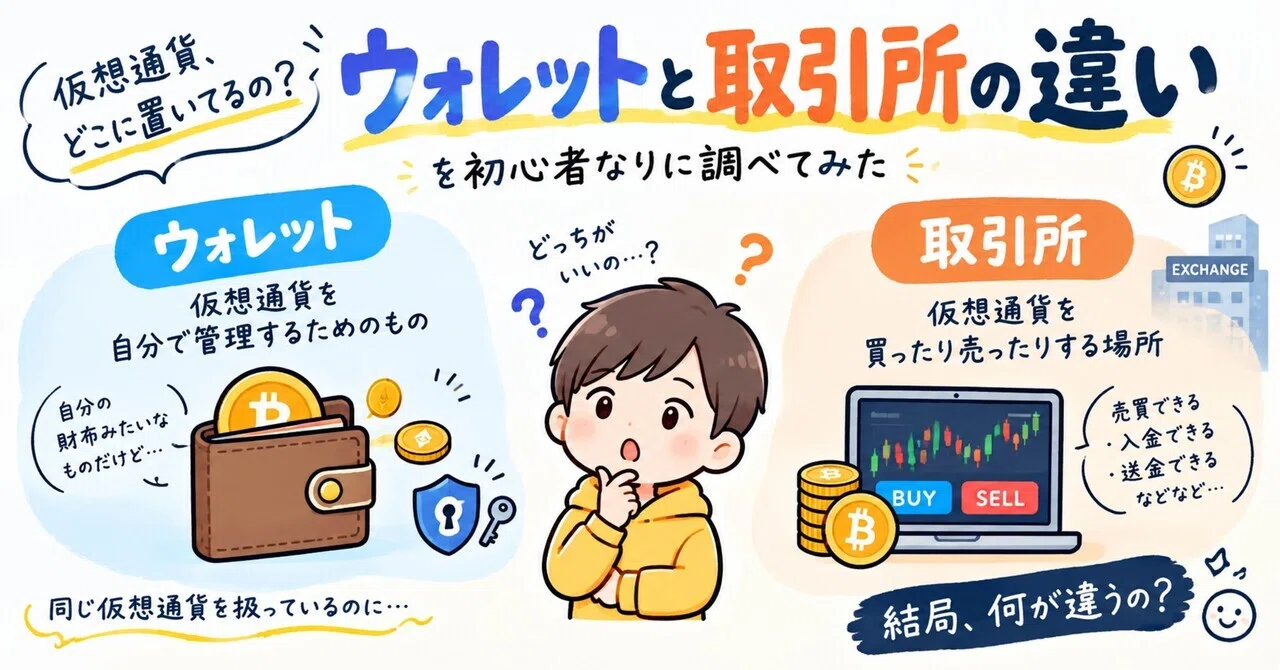
When you start researching cryptocurrency, these kinds of questions come up.
“A wallet is just a wallet, right?”
“But you also keep cryptocurrency on an exchange, don’t you?”
“So… what’s the difference?”
Yes.
Once you get to this point, new terms keep popping up in a beginner’s head:
Wallet
Exchange
Brokerage
And they all relate to cryptocurrency.
“I don’t know who is who anymore…”
is how it feels.
This time, to organize my own questions, I researched the difference between a “wallet” and a “cryptocurrency exchange” from a beginner’s perspective.
There is some overlap with the previous article, but this time I will focus on the “differences.”
—
First, let’s keep it super simple
To explain it very simply at first:
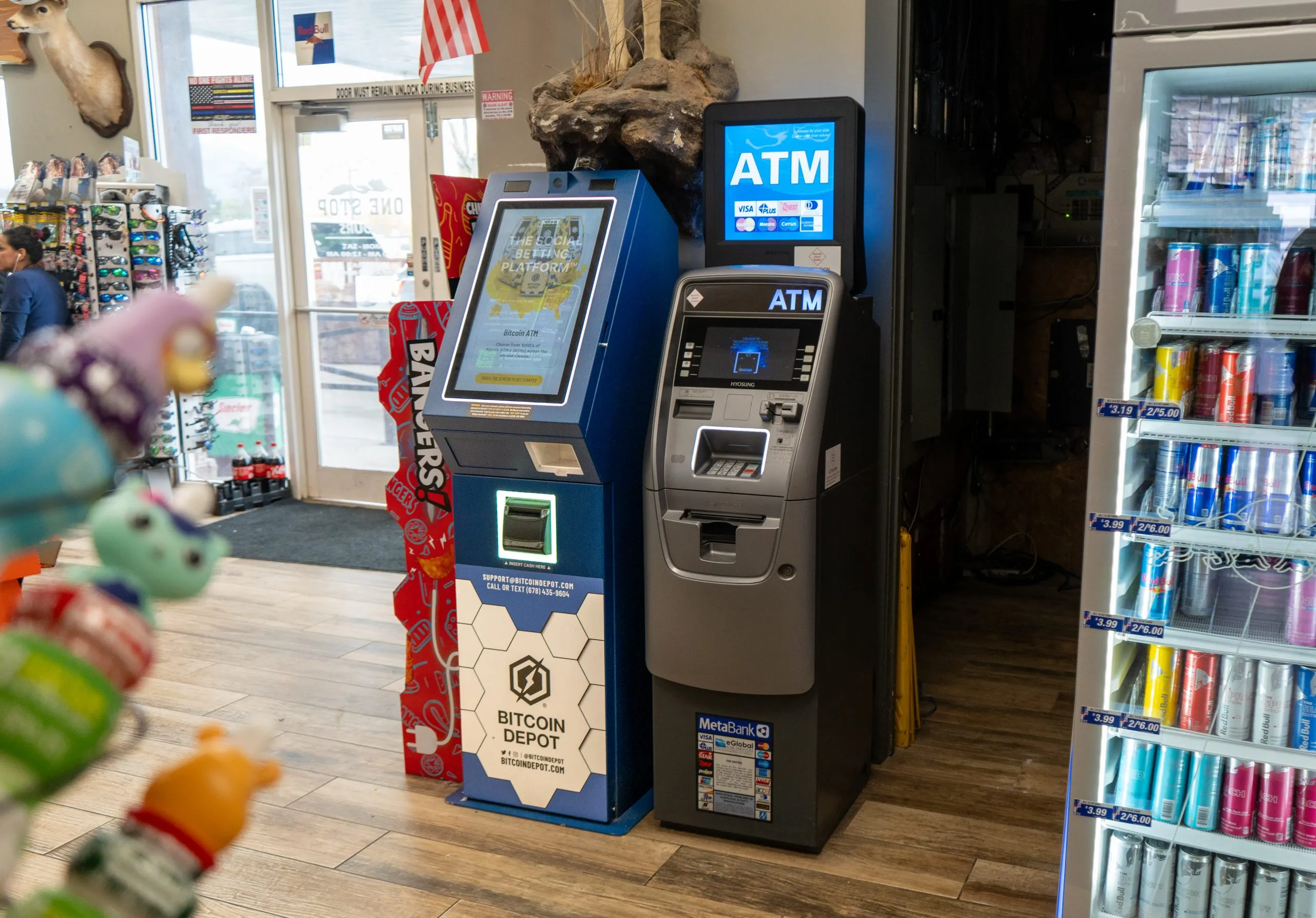
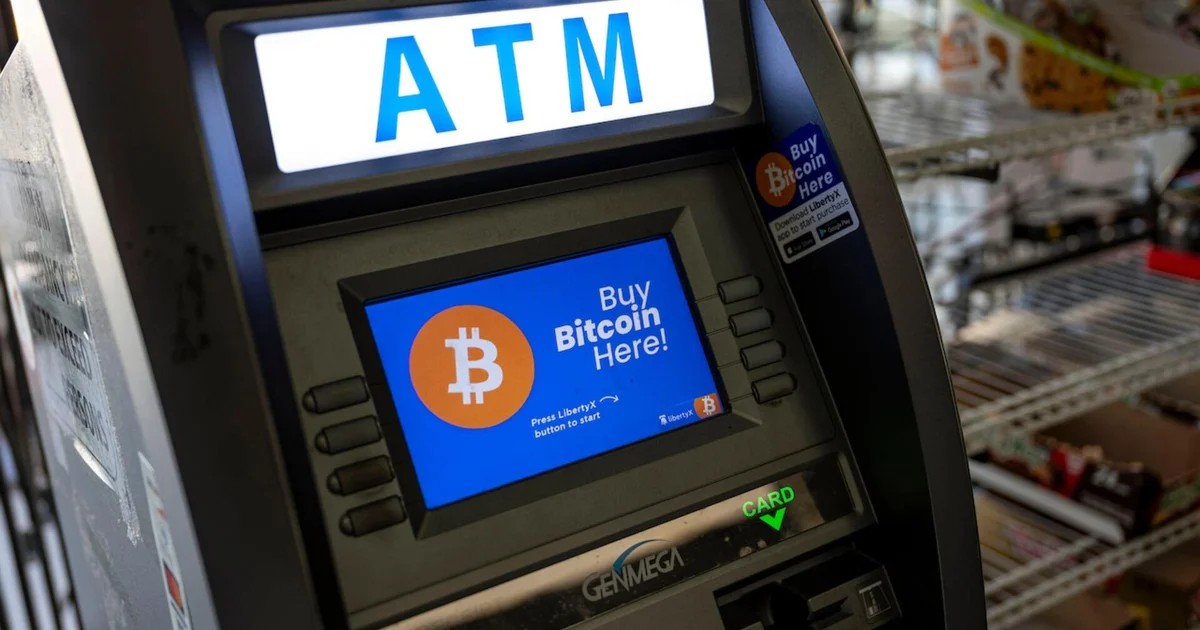
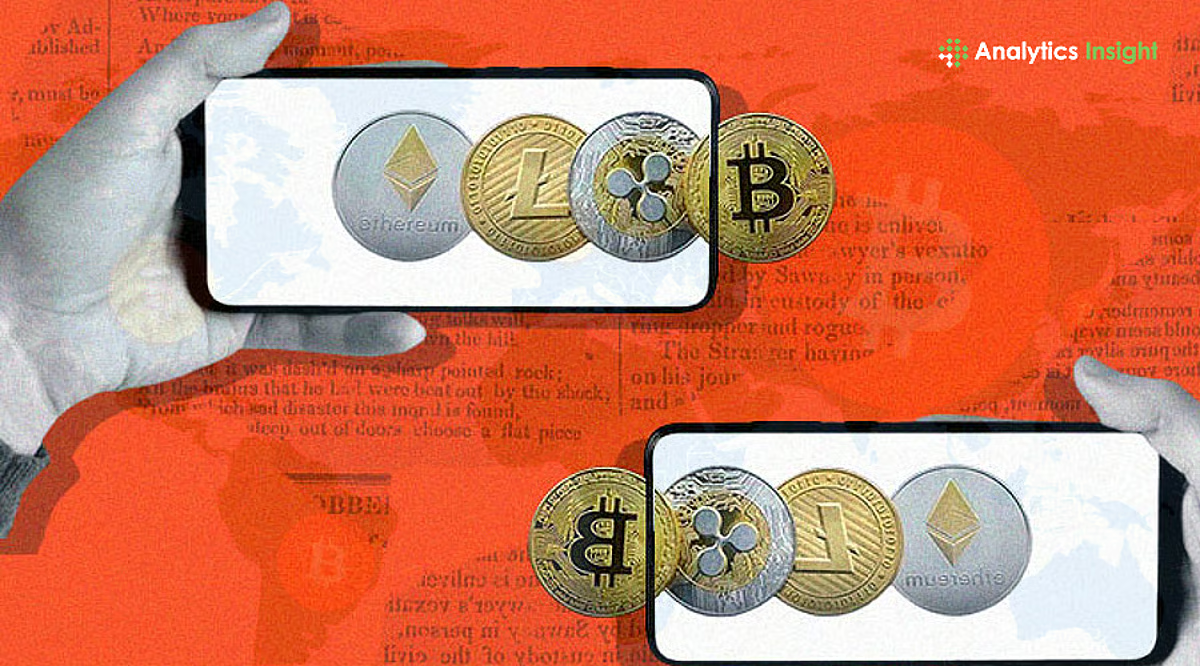
Exchange = A place to buy and sell cryptocurrency
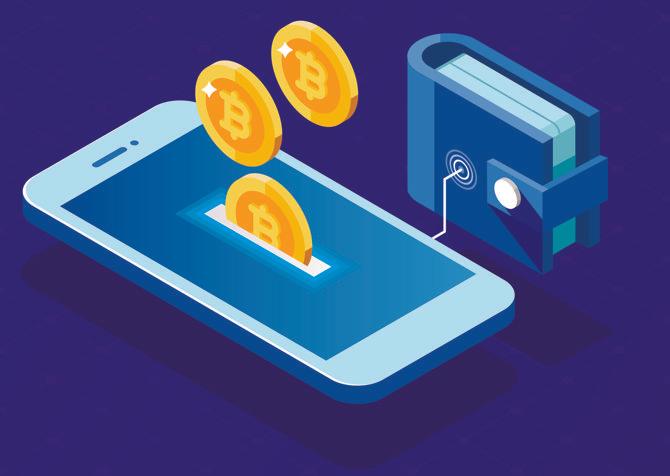
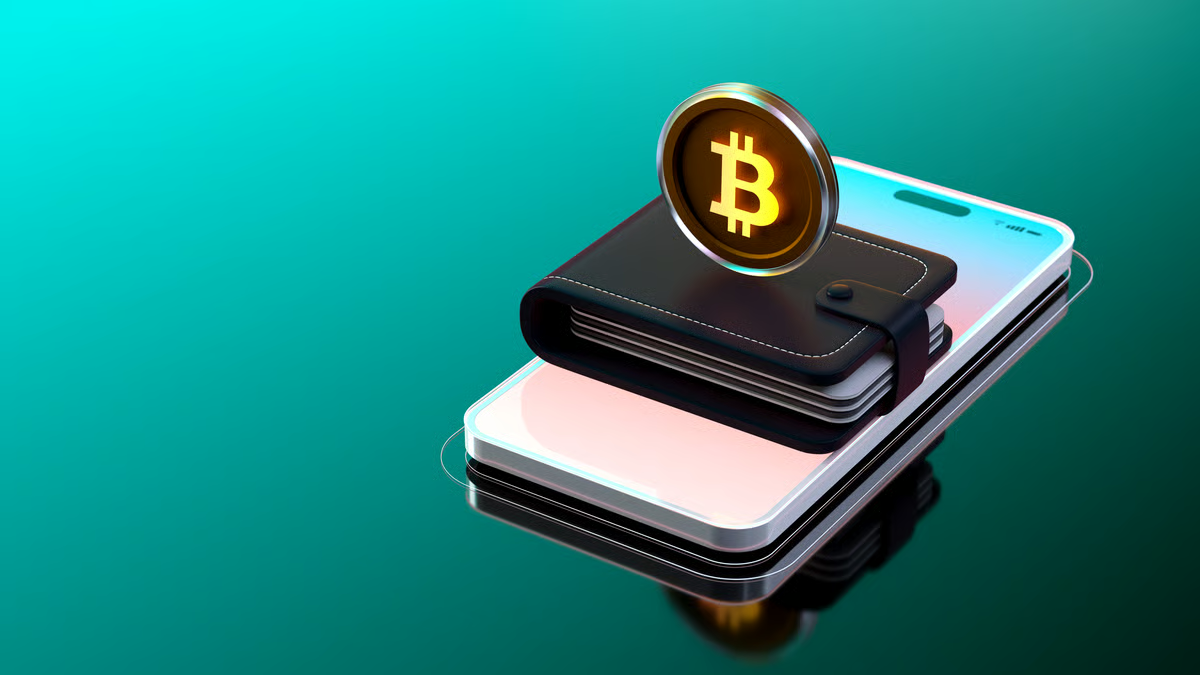
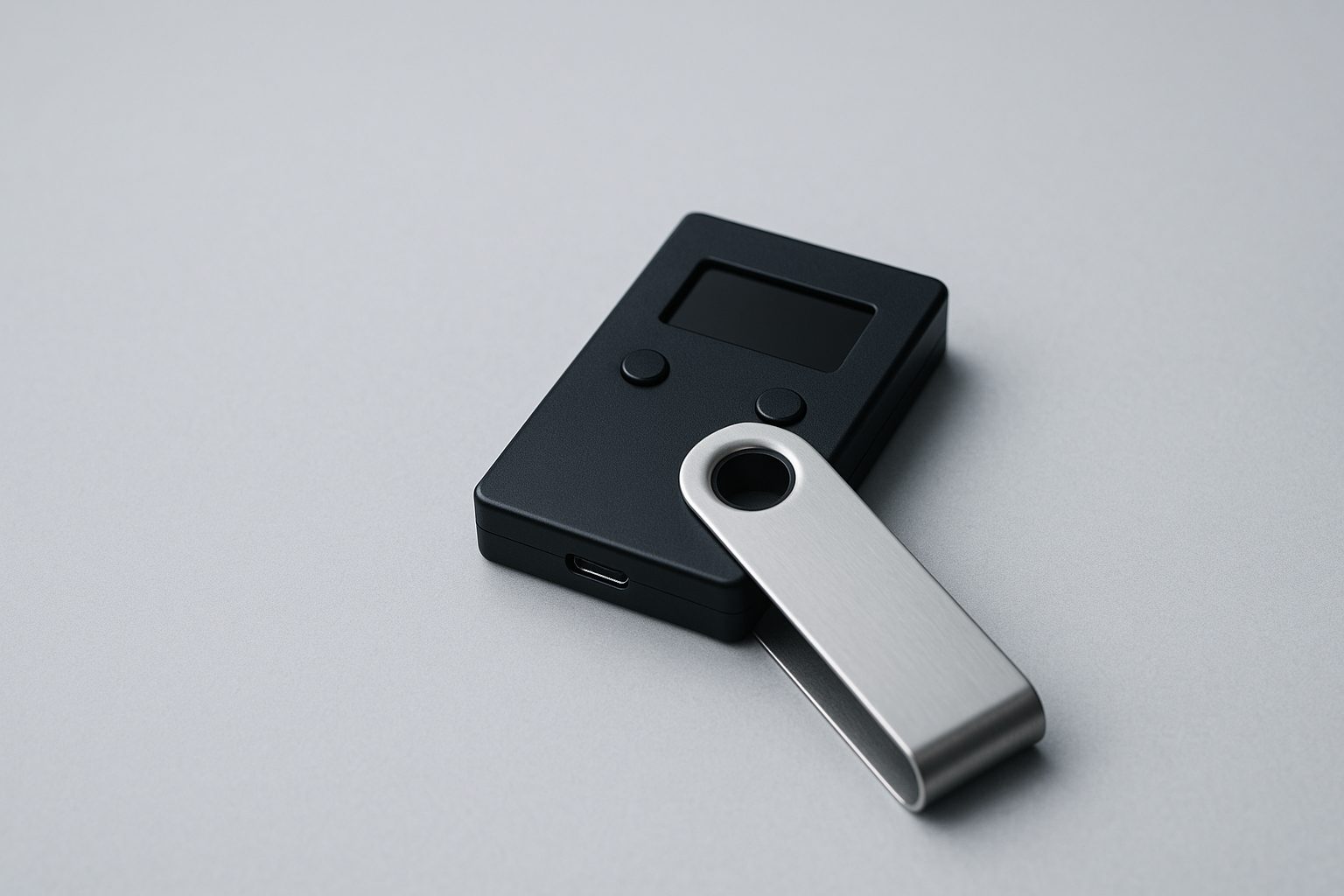
Wallet = Something for managing cryptocurrency yourself
That’s the general idea.
Of course, the actual mechanism is a bit more complex, but for a beginner’s initial understanding, I think this is enough.
For example,
“I want to buy Bitcoin!”
If you think that, you use a service like an exchange.
And then,
“I want to manage the Bitcoin I bought myself”
If you think that, you can send it to a wallet.
In other words,
Buy/Sell → Exchange
Manage yourself → Wallet
That’s how it feels.
…Writing it like this, it’s actually quite simple.
Even though it’s an article about cryptocurrency, it’s unusually peaceful.
—
An exchange is the “entrance to buying cryptocurrency”
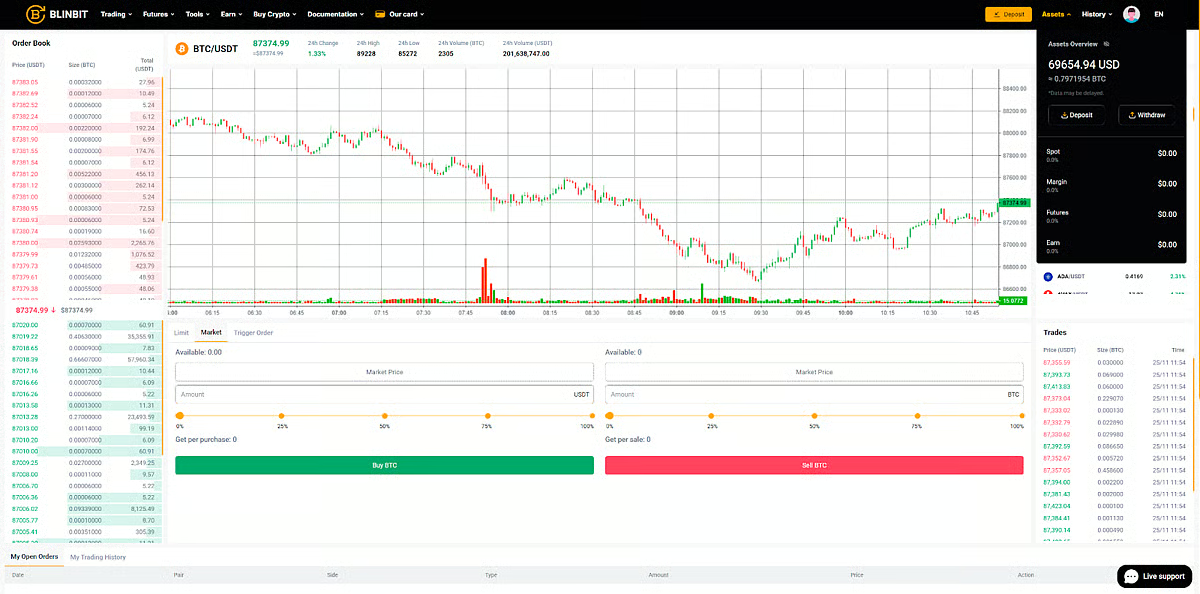
If you have just started with cryptocurrency, the first thing you will often use is a cryptocurrency exchange.
For example,
Deposit Japanese yen
↓
Buy Bitcoin
↓
Hold it on the exchange’s service
That is the flow.
At an exchange, you can:
* Deposit Japanese yen
* Buy cryptocurrency
* Sell cryptocurrency
* Check your held assets
* Send and receive cryptocurrency
and so on.
As I wrote in a previous article, I think it’s easy to understand if you think of it as the “entrance to starting cryptocurrency.”
It’s somewhat similar in image to using a securities company when buying stocks.
—
So what about a wallet?
This is where the “wallet” comes in.
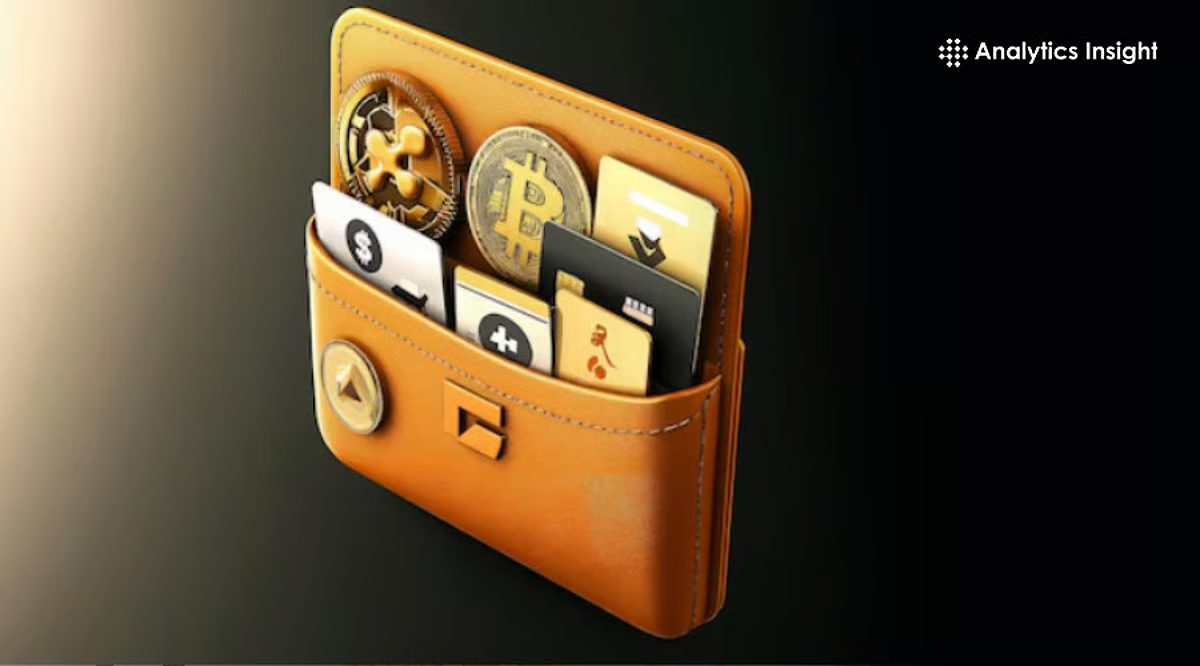
As I wrote in the previous article, a wallet is not simply a “wallet to put cryptocurrency in.”
Cryptocurrency itself is managed on the blockchain.
A wallet handles the information necessary to manage and send that cryptocurrency.
As a beginner, I think it’s easy to understand if you think of it as “something like a wallet to manage cryptocurrency yourself.”
And the big difference from an exchange is the part about “who manages it.”
—
The big difference is “who manages it”
This was a point where I, as a beginner, thought, “I see!” while researching.
When you hold cryptocurrency using an exchange, you are not directly managing the private keys yourself.
On the other hand, when you create your own wallet and manage cryptocurrency, the part you manage yourself increases.
In other words, while the degree of freedom increases, the responsibility for self-management also increases.
For example, if you lose the seed phrase used to manage your wallet, or if it becomes known to others, it could become a major problem.
In the world of cryptocurrency, the idea of “protecting your own things yourself” is quite important.
—
For example, this kind of image
Let’s think about it in a very simplified way.
When using an exchange
Deposit Japanese yen
↓
Buy Bitcoin
↓
Manage it on the exchange’s service
That is the flow.
On the other hand,
When using your own wallet
Buy cryptocurrency at an exchange, etc.
↓
Send it to your own wallet
↓
Manage it yourself
That is the flow.
Of course, it’s not the case that everyone needs to move the cryptocurrency they bought to a wallet.
Where and how you manage it depends on the service you use and your own purpose.
—
“Putting it in a wallet doesn’t mean it’s safe!”
This is also an important point.
“I moved it to my own wallet, so now I’m safe!”
…That is not the case.
Rather, with a wallet you manage yourself, your own management becomes very important.
For example,
* Do not tell others your seed phrase
* Keep important information like private keys safe
* Do not connect your wallet to suspicious sites
* Do not click on suspicious links
* Carefully check the destination address for transfers
and so on.
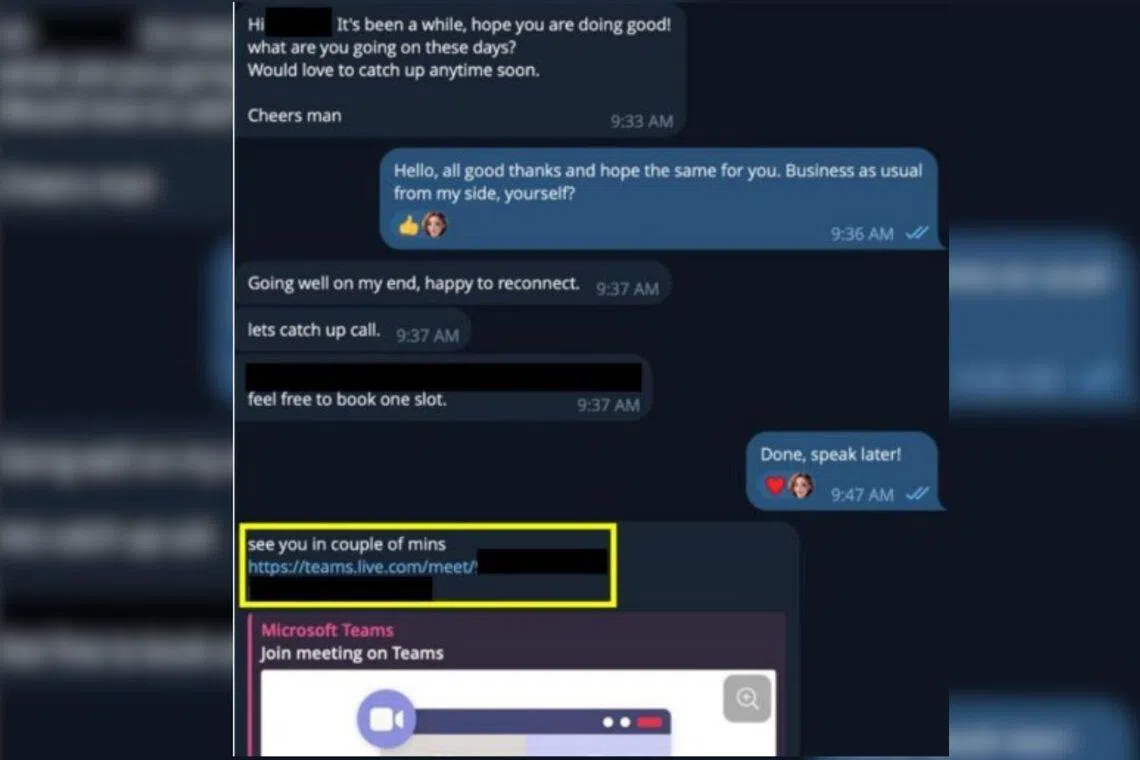
Especially, even if you get a message saying, “This is the support center. Please tell us your seed phrase,” don’t say, “Yes! Here it is!”
No, you need to have enough wariness to ask, “Wait, who are you?”
—
So, which one should I use?
Reading this far, you might think, “So, should I use an exchange or a wallet?”
But it seems this isn’t simply a matter of “which one is the correct answer.”
Their roles are different to begin with.
An exchange is a place to buy and sell cryptocurrency.
A wallet is for managing cryptocurrency yourself.
So, rather than “exchange or wallet,” I think it’s easier to think of it as “using them differently depending on what you want to do.”
For example, there is a way of using them where you buy Bitcoin at an exchange and then send it to a wallet as needed.
—
What should a beginner learn first?
I’ve written a lot so far, but I don’t think you need to memorize everything from the start.
First, it’s enough to remember these two things:
Exchange = A place to buy and sell cryptocurrency
Wallet = Something for managing cryptocurrency yourself
And if you get interested in things like “How do I create a wallet?”, “What is a seed phrase?”, or “What is a private key?”, you can learn them one by one at that time.
I wasn’t able to understand everything from the beginning either.
Actually, I still look things up every time a new katakana term appears.
In the world of cryptocurrency, the katakana update frequency is too high.
—
Summary
What I felt after researching the difference between a wallet and an exchange this time was, “Even though they handle the same cryptocurrency, their roles are different.”
An exchange is an entrance for buying and selling cryptocurrency.
A wallet is for managing cryptocurrency yourself.
And when you manage a wallet yourself, you need to manage the safety yourself by that much.
At first, you get confused as similar terms like “wallet?”, “exchange?”, and “brokerage?” appear one after another.
But if you think about their roles separately one by one, you will start to see things clearly little by little.
First, it’s okay to just remember this much:
Exchange = Buy/Sell
Wallet = Manage yourself
…And as I research the next article, a new katakana term appears again.
It’s probably just a repetition of this.
Studying cryptocurrency is a battle against katakana. 😇