Investors often assume that holding several mutual funds automatically creates diversification. But if two or more schemes own many of the same stocks, the portfolio may be less diversified than it appears. This is where portfolio overlap becomes important.
“Some overlap between mutual funds is neither unusual nor necessarily a problem. In fact, it is quite natural when funds operate in similar market segments or draw from the same investment universe,” said Debasish Mohanty, MD & Chief Strategy Officer, The Wealth Company Mutual Fund.
According to Mohanty, overlap becomes a concern when multiple schemes provide substantially similar exposure without adding meaningful diversification. An investor could hold several equity funds from different fund houses and believe the portfolio is diversified, while a significant portion of the underlying investments may still be concentrated in the same stocks, sectors or market-cap segments.
“The issue, therefore, is not merely the presence of common stocks but the extent to which those common exposures influence the overall portfolio,” he said.
For example, if the same companies or sectors account for a significant share of multiple schemes, a fall in those stocks could affect several mutual fund holdings simultaneously. The number of schemes an investor owns, therefore, may not be a reliable indicator of the actual level of diversification.
Is there a specific overlap percentage investors should watch?
There is no universal percentage at which portfolio overlap automatically becomes a warning sign, Mohanty said. An overlap figure should be viewed in the context of the categories involved, the investment universe available to the fund managers and the weight of each scheme in the investor’s overall portfolio.
Investors should also look beyond the number of common holdings and examine their weights. For instance, two schemes may have several stocks in common, but those stocks may have relatively small allocations in each fund. Conversely, a smaller number of common stocks could create significant concentration if they occupy large positions in both schemes.
Investors should ask whether the overlap is concentrated in a few large companies, a particular sector, market-cap segment or investment style. The same headline overlap percentage can therefore have very different implications for different portfolios.
Jiral Mehta, Senior Manager – Research at FundsIndia, however, suggested a more specific reference point. “There is a risk associated with a high overlap, so it is better to limit the overlap to 40%,” he said.
Mehta also recommended using online mutual fund overlap tools to identify common holdings between schemes. However, the 40% figure should be viewed as his suggested limit rather than a universal industry threshold.
Which fund combinations are more likely to overlap?
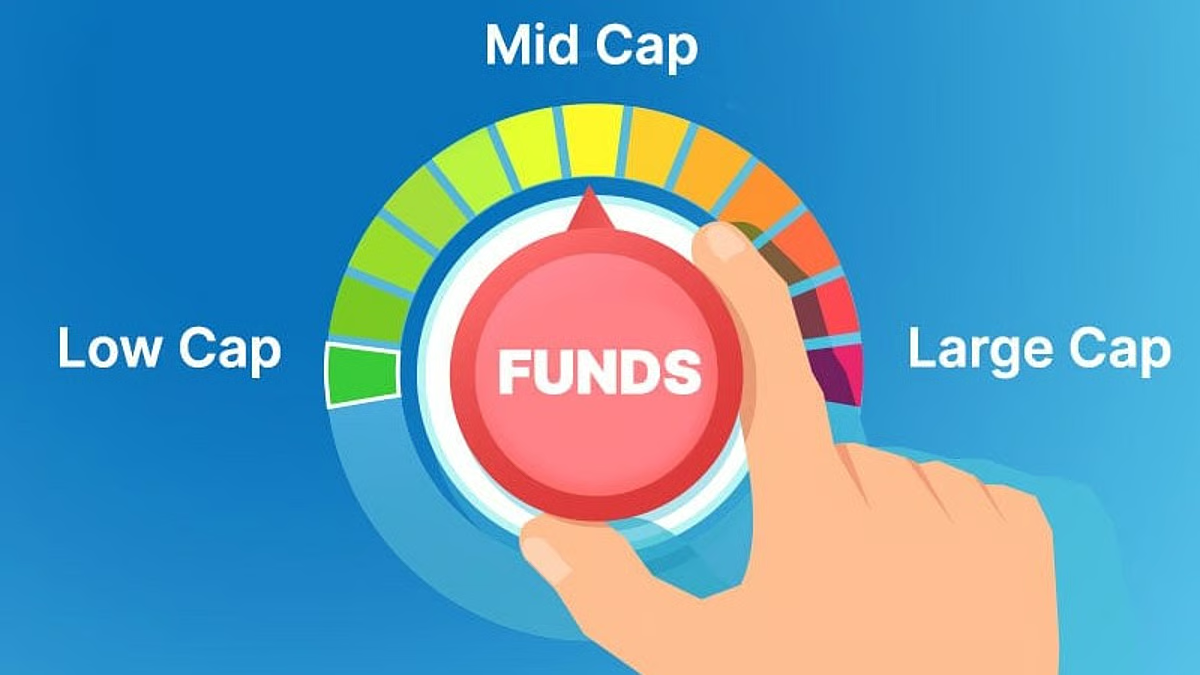
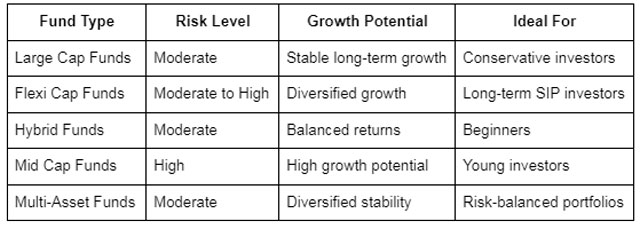
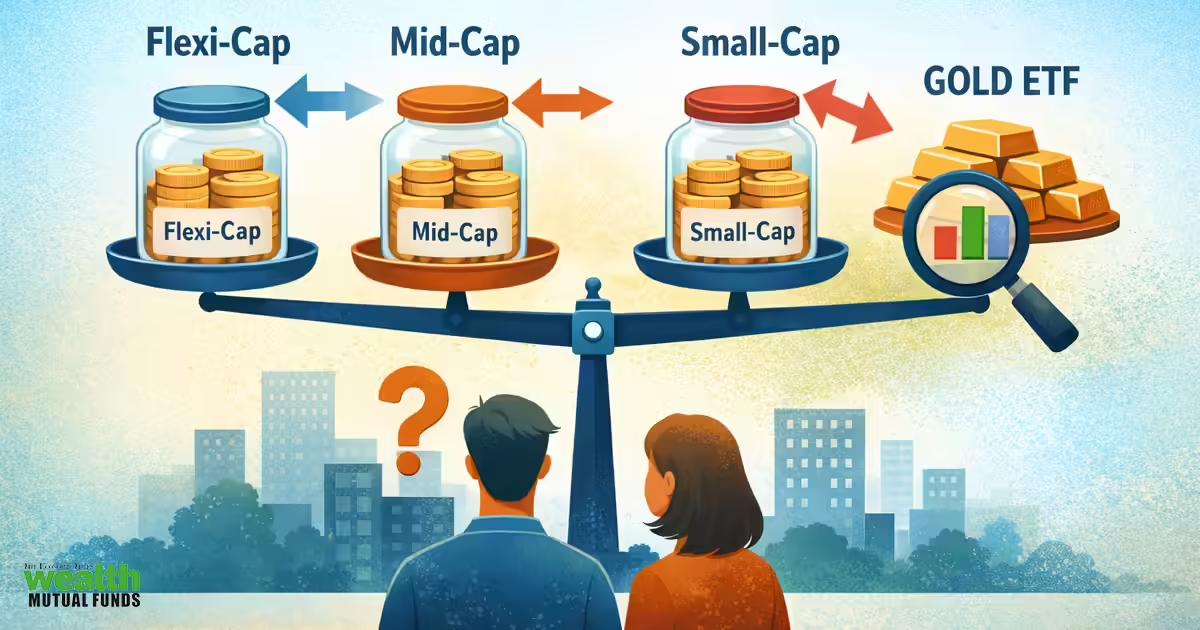
Overlap is more likely when funds operate within similar investment universes. For instance, large-cap, flexi-cap and large-and-mid-cap funds can have meaningful common exposure to large companies even though their mandates are different.
Overlap can also occur among sectoral and thematic funds when their underlying themes intersect. Similarly, an actively managed fund and an index fund can end up owning many of the same large stocks.
Therefore, investors should not assume that different fund categories automatically translate into different underlying portfolios.
Mehta also cautioned against selecting multiple funds simply because they have recently performed well. Such an approach can leave an investor concentrated in one or two investment styles. When those styles fall out of favour, the entire portfolio could face prolonged underperformance.
“Equity funds go through cycles. Different investment styles, market cap segments, sectors and geographies perform well at different times,” Mehta said. He favours diversification across investment styles so that the overall portfolio can potentially deliver more consistent performance with lower volatility.
Can high overlap still be acceptable?
High overlap does not necessarily mean that two funds are identical. Two schemes may own several of the same companies but hold them in substantially different proportions. Their remaining portfolios, sector allocations, market-cap exposure, investment styles, turnover and risk characteristics may also differ.
“Even relatively high overlap does not necessarily mean that two funds are identical or serve exactly the same purpose,” Mohanty said.
The important consideration is what each scheme contributes to the investor’s overall portfolio. Different strategies or risk profiles can make some degree of overlap reasonable, but investors should not ignore the effect of common holdings.
Ultimately, portfolio overlap is a portfolio-construction issue rather than a standalone number. Investors should look at their mutual funds collectively and ask: After combining all my schemes, what stocks, sectors, market-cap segments and investment styles am I actually exposed to, and does that match the diversification I intended?
That consolidated view can reveal concentration that may not be apparent when each mutual fund is assessed separately.