Last Updated:
For investors looking to deploy fresh money, the rise in bond yields can improve the opportunity. Here’s all you need to know:




The current rise in G-Sec yields should therefore not be viewed only as a negative development for the bond market, says an expert.
For some time, fixed-income investors were waiting for interest rates to fall so that long-duration bonds could benefit. Today, the situation has changed. G-Sec yields have risen sharply, and the more relevant question now is whether these higher yields are beginning to create an attractive opportunity for investors.
India’s 10-year government bond yield has moved significantly higher in recent weeks. There is no single reason behind this rise. Higher crude oil prices have increased inflation concerns, while a weaker rupee makes imported commodities, particularly crude, more expensive in rupee terms. Domestic liquidity has also tightened, and higher global bond yields are adding further pressure.
For existing investors in long-duration bonds, this rise in yields can be uncomfortable because bond prices move in the opposite direction to yields. But for investors looking to deploy fresh money, the same rise in yields can actually improve the opportunity.
This distinction is important.
Why higher yields can be good for new investors
Suppose an investor entered a long-duration government bond when the yield was around 6.5%. If market yields subsequently move towards 7.25%, the price of that existing bond will fall.
But a new investor entering at 7.25% is starting with a much higher yield. In simple terms, what creates short-term pain for an existing bond investor can create a better entry point for fresh money.
This is why investors should not necessarily view rising G-Sec yields only as bad news. As yields move higher, the starting return potential from high-quality fixed income also improves.
However, this does not mean investors should immediately move their entire debt portfolio into long-duration funds.
Is 7.25% the peak? Nobody knows
The 7.25% level can become an important reference point for the 10-year G-Sec, but it should not be treated as a guaranteed ceiling.
Crude oil remains an important variable. India imports a large part of its energy requirement. So, higher crude prices can increase the import bill and add to inflationary pressure. A weaker rupee makes these imports even more expensive.
If inflation remains elevated, the RBI may have less flexibility on interest rates. At the same time, if US Treasury yields remain high, Indian bonds will also have to offer sufficiently attractive yields to remain competitive for global capital.
Therefore, yields can still move higher before they eventually stabilise. That is precisely why trying to identify the exact peak may not be the best strategy.
Start building duration, rather than trying to time it perfectly
For investors with fresh fixed-income allocation and an adequate investment horizon, the current environment may be a good time to gradually start building duration exposure.
There are two broad ways to approach this.
Investors who do not want to actively take a call on interest rates themselves can consider dynamic bond funds. These funds have the flexibility to increase or reduce portfolio duration depending on the fund manager’s assessment of interest rates, liquidity and the yield curve.
This flexibility can be useful in the current environment because there are still several moving parts. Inflation, crude prices, RBI policy and global yields can all change the direction of the bond market.
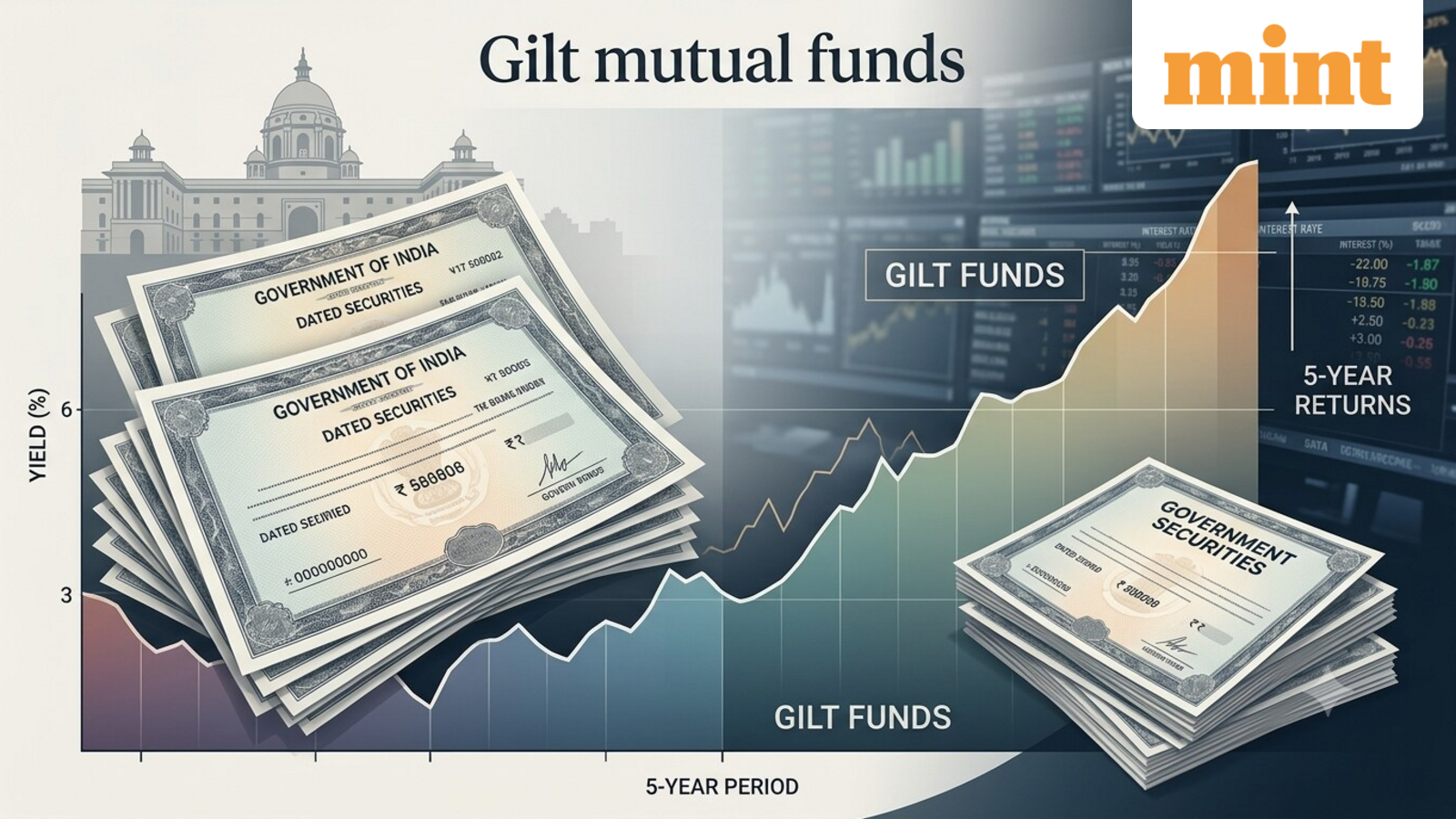
For investors who understand interest-rate risk and have a longer investment horizon, long-duration G-Sec or gilt funds can also become increasingly interesting as yields rise.
Government securities carry very low credit risk, but investors need to understand that low credit risk does not mean low volatility. A long-duration G-Sec fund can see meaningful NAV movement if interest rates change sharply.
Duration works both ways
This is one of the most important things investors need to understand. Long-duration bonds are more sensitive to interest-rate movements. If yields rise another 50 basis points after an investor enters, the portfolio may experience mark-to-market losses.
But the opposite is also true. If an investor starts building exposure when the 10-year G-Sec yield is around 7.25% and, over the next couple of years, inflation moderates and yields eventually decline, the investor can benefit from two sources.
First is the accrual from the underlying bonds. Second is the potential capital appreciation as bond prices rise when yields fall. That is where duration can become powerful. But it requires patience.
Long-duration debt should therefore not be viewed in the same way as a fixed deposit. An FD provides relative certainty of return if held to maturity. A duration fund is a market-linked investment whose NAV will move depending on interest rates.
Don’t shift the entire fixed-income portfolio
The purpose of fixed income in a portfolio is not only to generate returns. It also provides liquidity, stability and visibility for future cash flows.
Investors should therefore avoid taking one big interest-rate call with their entire debt allocation.
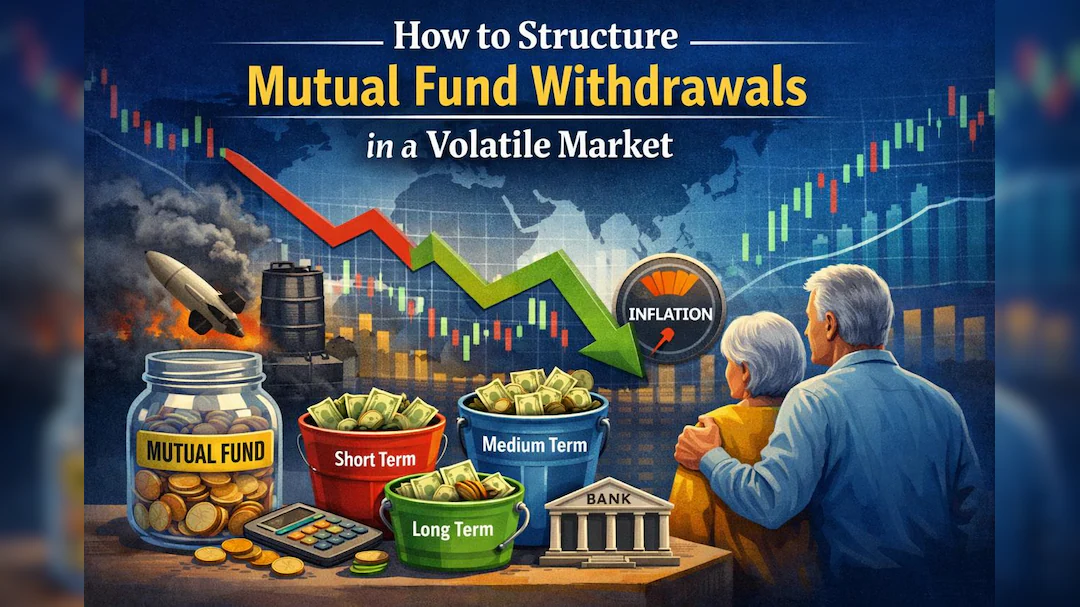
A more sensible approach is to divide the fixed-income portfolio according to when the money will be required.
Money needed over the next one or two years should generally remain in relatively low-duration and high-quality instruments.
For medium-term requirements, investors can consider appropriate short-to-medium-duration strategies depending on their risk profile.
Only money with a sufficiently long horizon and the ability to tolerate interim NAV volatility should be considered for meaningful duration exposure through dynamic bond, gilt or long-duration G-Sec funds.
This allows investors to participate in the potential opportunity without disturbing the stability of the overall fixed-income portfolio.
Staggering the investment may be more sensible
There is also no need to invest the entire intended allocation in one go. If the 10-year yield is around current levels, an investor can start building exposure and keep some money available to add further if yields move higher.
For example, instead of committing the entire amount today, an investor can divide the allocation into a few tranches over the coming months. This avoids the need to correctly predict whether yields will peak at 7.20%, 7.25% or move somewhat higher.
The objective is not to catch the exact top in yields. It is to recognise when yields have become attractive enough to start building exposure.
Bond-market discomfort often creates future opportunity
There is an interesting behavioural aspect to fixed-income investing. When yields are falling and bond fund returns look attractive, investors often become enthusiastic about duration. But by that stage, a considerable part of the capital appreciation may already have happened.
When yields are rising and bond NAVs look weak, investors tend to become uncomfortable. Yet higher yields are also improving the return available on fresh investments.
In that sense, volatility itself can create the opportunity. The current rise in G-Sec yields should therefore not be viewed only as a negative development for the bond market.
For investors with an appropriate time horizon, this may gradually be creating a more attractive entry point into high-quality duration strategies. The better approach may not be to predict where G-Sec yields will peak, but to gradually start building duration when valuations become attractive, while keeping enough flexibility to add more if yields rise further.
(The article is written by Ajay Kumar Yadav, group CEO & CIO of Wise Finserv. Views are personal.)
Disclaimer: The views and investment tips shared in this article are for general information purposes only. Readers are advised to consult a certified financial advisor before making any investment decisions.
Quick Answers
 Ask News18
India’s 10-year G-Sec yields have risen due to multiple factors, including higher crude oil prices increasing inflation concerns, a weaker rupee making imported commodities more expensive, tightened domestic liquidity, and higher global bond yields.
Ask News18About the Author

A team of writers and reporters decodes vast terms of personal finance and making money matters simpler for you. From latest initial public offerings (IPOs) in the market to best investment options, w…Read More
September 30, 2026, 15:47 IST
Read More