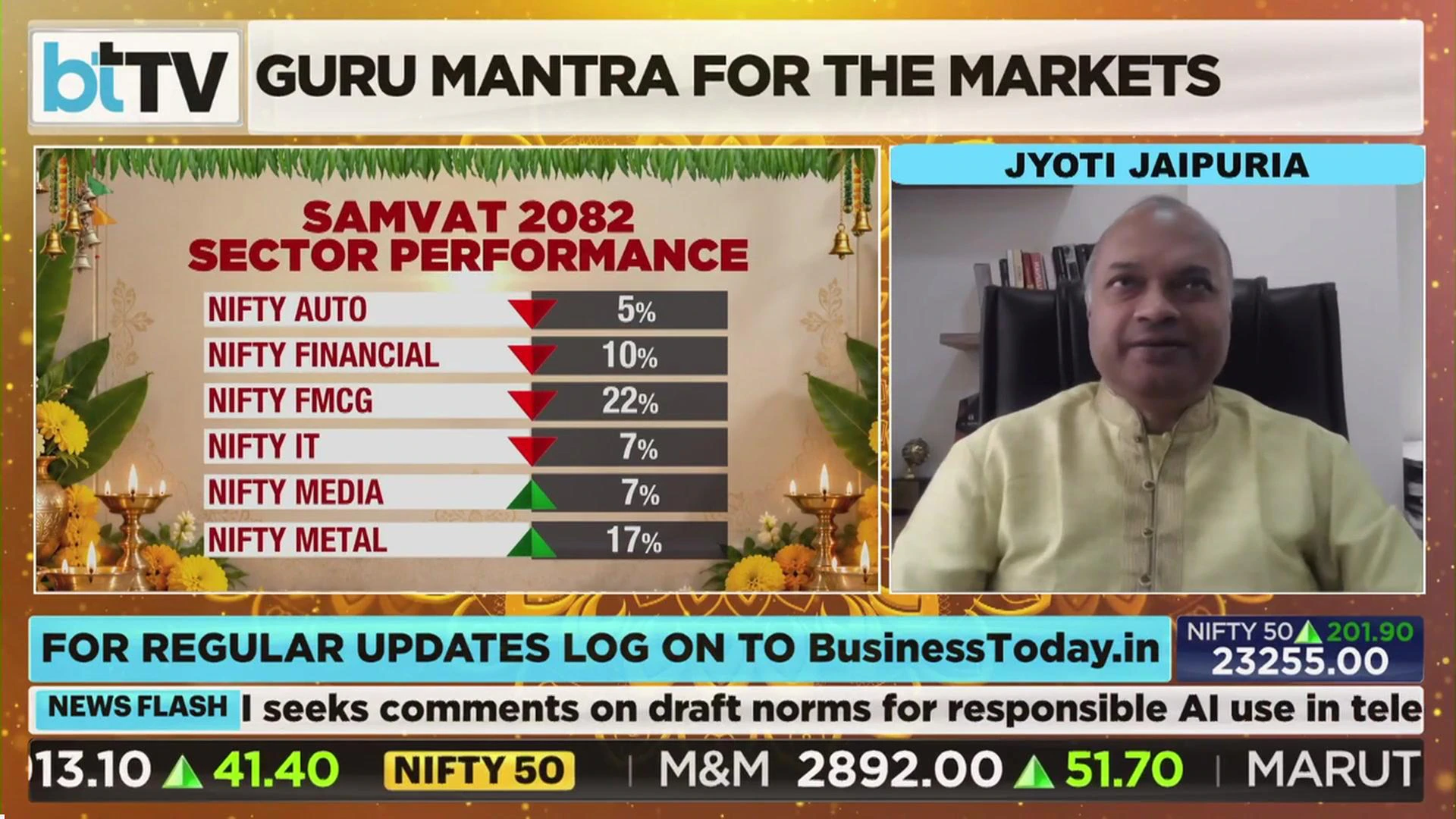
Jaipuria said the gap between expected profit growth in large-caps and smaller companies remains meaningful. “People are expecting the large cap space to grow earnings at 13 to 15%. In the small and mid-cap space, it’s expected to grow at 20%,” he said, making the case that a cyclical recovery in earnings should translate into stronger upside for the broader market.
That view ties into the wider market conversation around 2027, where investors are increasingly balancing cheaper large-cap valuations against the superior growth potential of smaller businesses. For Jaipuria, that trade-off still leans in favour of stock-specific opportunities in the mid- and small-cap universe.
Balance sheets have changed the game
A key pillar of his optimism is the sharp improvement in corporate balance sheets. Jaipuria noted that debt-equity levels in small-cap companies have fallen materially, saying “the debt equity for the small cap companies is down to 0.2 now.”
That matters because smaller companies have historically been punished hardest when the cycle turns. Stronger balance sheets, however, could reduce the intensity of the old boom-and-bust pattern that once defined this part of the market. In effect, Jaipuria is arguing that today’s small-caps are not just faster-growing — they are also financially sturdier than in previous cycles.
More runway after the rally
Despite a strong six-month run in small- and mid-caps, Jaipuria believes the cycle is far from exhausted. He pointed out that small-cap upcycles have typically lasted 24 to 30 months, with returns historically running much higher than current market performance suggests.
“We’ve had a good run in the last six months in the small and mid-cap, but there’s more to go,” he said. Valentis, he added, is pencilling in earnings growth of 25% plus across its portfolio over the next two years.
Valuations may not do the heavy lifting
Jaipuria acknowledged that small- and mid-caps are not optically cheap relative to large-caps. But that, in his framework, this does not weaken the investment case. “Valuations are a little higher than the large cap,” he said, adding that “most of the returns over the next two years will come because earnings are going to see a sharp revival.”
That makes the 2027 bet more nuanced than a simple style preference. Large-caps may still attract flows as value re-emerges, but Jaipuria’s message is clear: If earnings recovery broadens out as expected, smaller companies could remain the market’s most powerful profit compounding story.
Disclaimer: Business Today provides stock market news for informational purposes only and should not be construed as investment advice. Readers are encouraged to consult with a qualified financial advisor before making any investment decisions.