Last Updated:
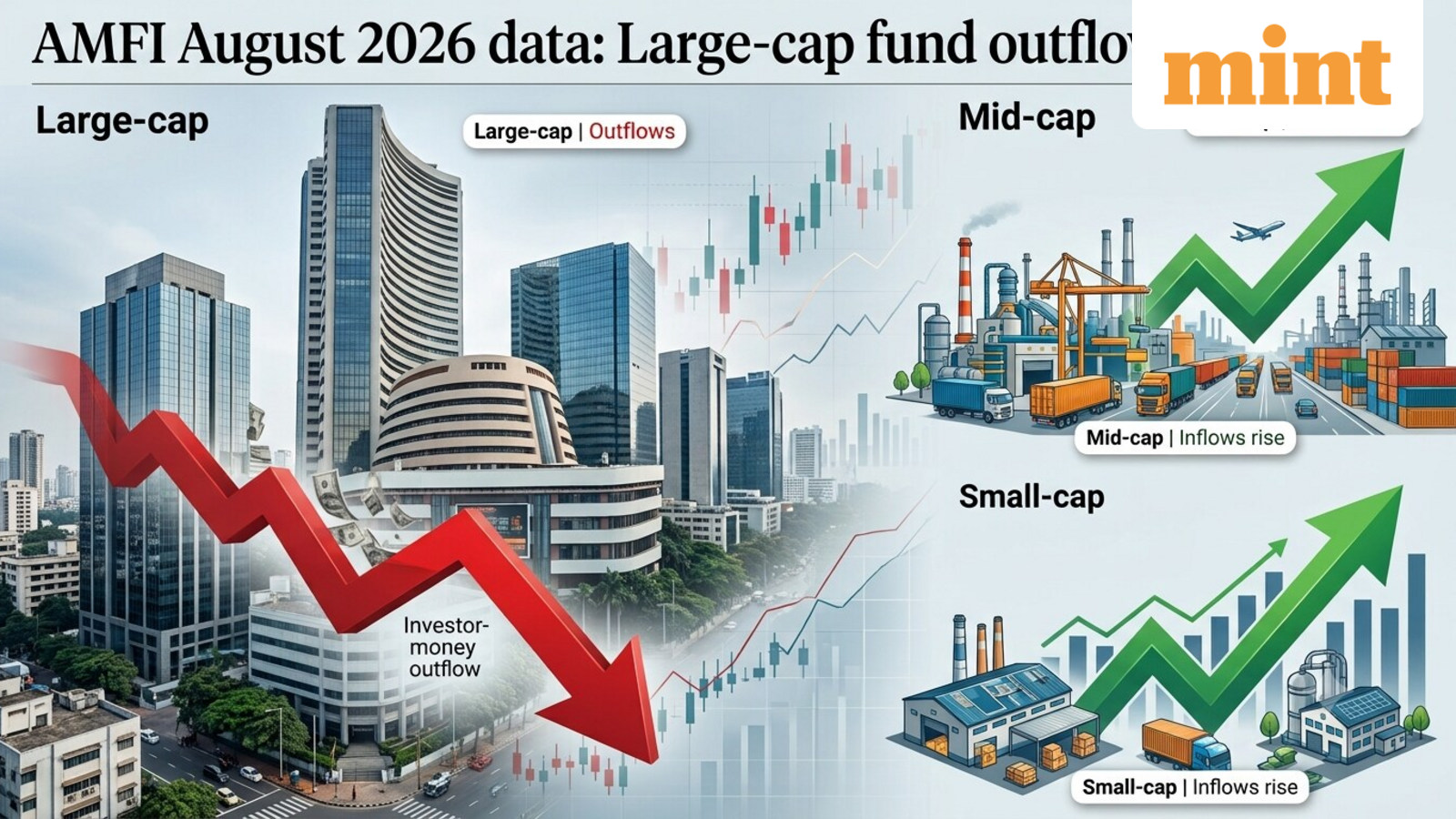
Under Sebi rules, multi-cap mutual funds must invest at least 25% each in large-cap, mid-cap and small-cap stocks.




For investors seeking long-term wealth creation without the hassle of periodically rebalancing multiple equity funds, multi-cap funds have emerged as an increasingly relevant category.
Investors looking to build a diversified equity portfolio often split their money across large-cap, mid-cap and small-cap mutual funds. Multi-cap funds offer a different approach by combining all three segments within a single scheme, while maintaining a minimum allocation to each.
Unlike flexi-cap funds, where fund managers have complete freedom to shift allocations across market capitalisations, the multi-cap funds are governed by a specific regulatory framework. Under Securities and Exchange Board of India (Sebi) regulations, these schemes must invest at least 25% each in large-cap, mid-cap and small-cap stocks. This mandatory allocation ensures that investors maintain exposure across the market spectrum regardless of changing market conditions.
Recommended Stories
-
Bitcoin Falls Below $60,000 To Hit Multi-Year Low: Why Are Cryptocurrencies Falling?

-
Tech Mahindra CEO Salary: Mohit Joshi Receives Rs 67.5 Crore In FY26, Up 11.7% From Previous Year

-
Sensex Ends 109 Points Higher After Giving Up 800-Point Rally; Nifty Closes Above 24,050

-
Stocks to Watch Today: IRFC, Vedanta, HCL Tech, LIC, Tata Steel, Bharat Forge, RIL, Tata Motors, Swiggy, Bandhan Bank

For investors seeking long-term wealth creation without the hassle of periodically rebalancing multiple equity funds, multi-cap funds have emerged as an increasingly relevant category.
How Do Multi-Cap Funds Work?
The defining feature of multi-cap funds is their compulsory allocation across all three market-cap segments. While the minimum allocation is fixed, fund managers retain flexibility in selecting stocks within each segment based on their investment philosophy and market outlook.
A skilled fund manager in this space isn’t just picking stocks; they are actively navigating three distinct pools of opportunity simultaneously, each with its own earnings cycle, liquidity profile, and valuation dynamics.
This structure allows investors to benefit from the relative strengths of different parts of the market. Large-cap companies typically provide stability and resilience during volatile periods, mid-cap companies often offer faster earnings growth, while small-cap businesses can generate higher returns over longer investment horizons, albeit with greater volatility.
In markets where mid- and small-caps have delivered disproportionate alpha over rolling three-year periods, the mandatory exposure to these segments has worked in investors’ favor provided the fund manager could identify the right businesses within each bucket.
Multi-Cap Funds vs Flexi-Cap Funds
Although both categories invest across market capitalisations, they differ in portfolio construction. Flexi-cap funds can allocate capital freely across large-, mid- and small-cap stocks depending on market conditions and valuations. During uncertain periods, many Flexi Cap Funds tend to increase exposure to large-cap stocks for stability.
Multi-cap funds, on the other hand, cannot reduce exposure below the mandated 25% in any market-cap bucket. This ensures that investors continue participating in potential opportunities across all segments, though it may also mean maintaining exposure to relatively weaker segments during certain phases of the market cycle.
Neither structure is inherently superior. Investors who prefer tactical asset allocation may favour Flexi Cap Funds, while those seeking consistent exposure across market segments may find Multi Cap Funds more suitable.
Performance Across the Category
The Multi Cap category has delivered competitive returns over recent years, although performance has varied considerably across individual schemes, highlighting the importance of fund selection.
| Scheme Name | 3 Years (%) | 3Y Rank | 3Y Quartile | 5 Years (%) | 5Y Rank | 5Y Quartile |
|---|---|---|---|---|---|---|
| Nippon India Multi Cap Fund | 16.7 | 9 | 2 | 18.5 | 1 | 1 |
| Mahindra Manulife Multi Cap Fund | 17.8 | 5 | 1 | 15.0 | 3 | 1 |
| Baroda BNP Paribas Multi Cap Fund | 15.2 | 11 | 3 | 14.2 | 4 | 2 |
| Aditya Birla Sun Life Multi Cap Fund | 13.8 | 12 | 3 | 12.6 | 5 | 2 |
*Compound annualised returns. Source: mutualfundindia.com. Data as of June 2026.
Category returns over the past three years have ranged from around 12% to nearly 18% annually, demonstrating that manager skill remains a key differentiator despite all funds operating under the same regulatory allocation framework.
Among schemes with a meaningful five-year history, returns range from around 11% to over 18% annually. This wide dispersion suggests that while the category provides a common investment structure, stock selection, portfolio construction and risk management play a significant role in determining long-term outcomes.
Over the three-year period, Mahindra Manulife Multi Cap Fund delivered the highest return among the schemes in the table at 17.8%, while Nippon India Multi Cap Fund led the five-year rankings with an annualised return of 18.5%. Mahindra Manulife, however, distinguished itself by maintaining first-quartile rankings across both the three-year and five-year periods, reflecting consistent performance rather than strength over a single market cycle.
Meanwhile, Baroda BNP Paribas Multi Cap Fund and Aditya Birla Sun Life Multi Cap Fund have generated 25.2 per cent and 13.8 per cent returns, respectively, on a three-year horizon. ICICI Prudential Multi Asset Fund Direct Growth has delivered a 17.5 per cent return in the past three years.
What Should Investors Look For?
When evaluating a multi-cap fund, investors should look beyond recent returns. Factors such as consistency across market cycles, rolling return performance, downside protection during corrections, portfolio quality, fund manager experience and investment philosophy often provide a better indication of long-term performance than short-term rankings alone.
Some funds have consistently ranked in the top quartile across multiple time periods, while others have generated stronger returns over specific market phases. Rather than focusing solely on absolute returns, investors should assess whether a fund has demonstrated a repeatable investment process capable of delivering competitive performance across varying market conditions.
About the Author

A team of writers and reporters decodes vast terms of personal finance and making money matters simpler for you. From latest initial public offerings (IPOs) in the market to best investment options, w…Read More
Read More