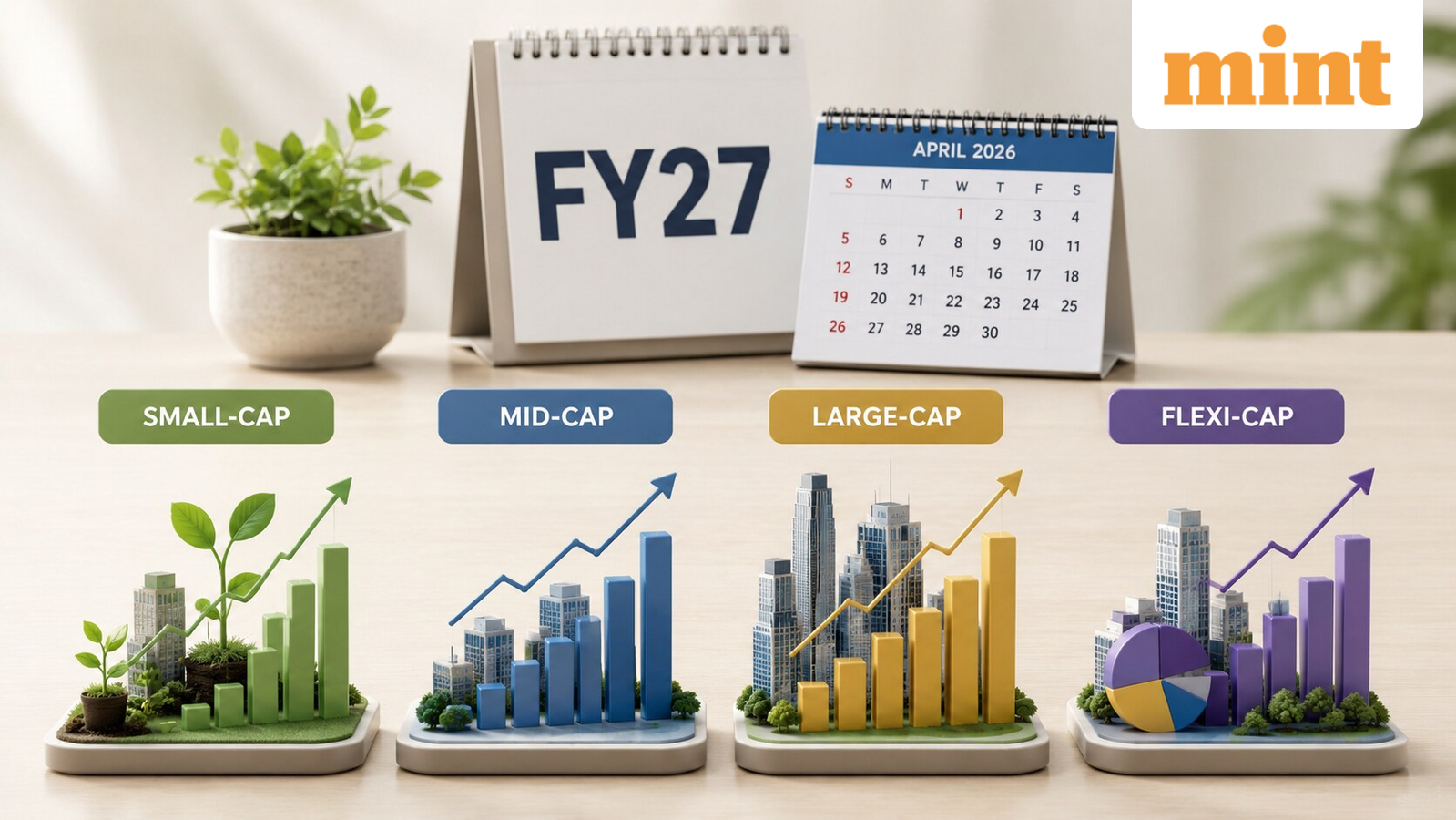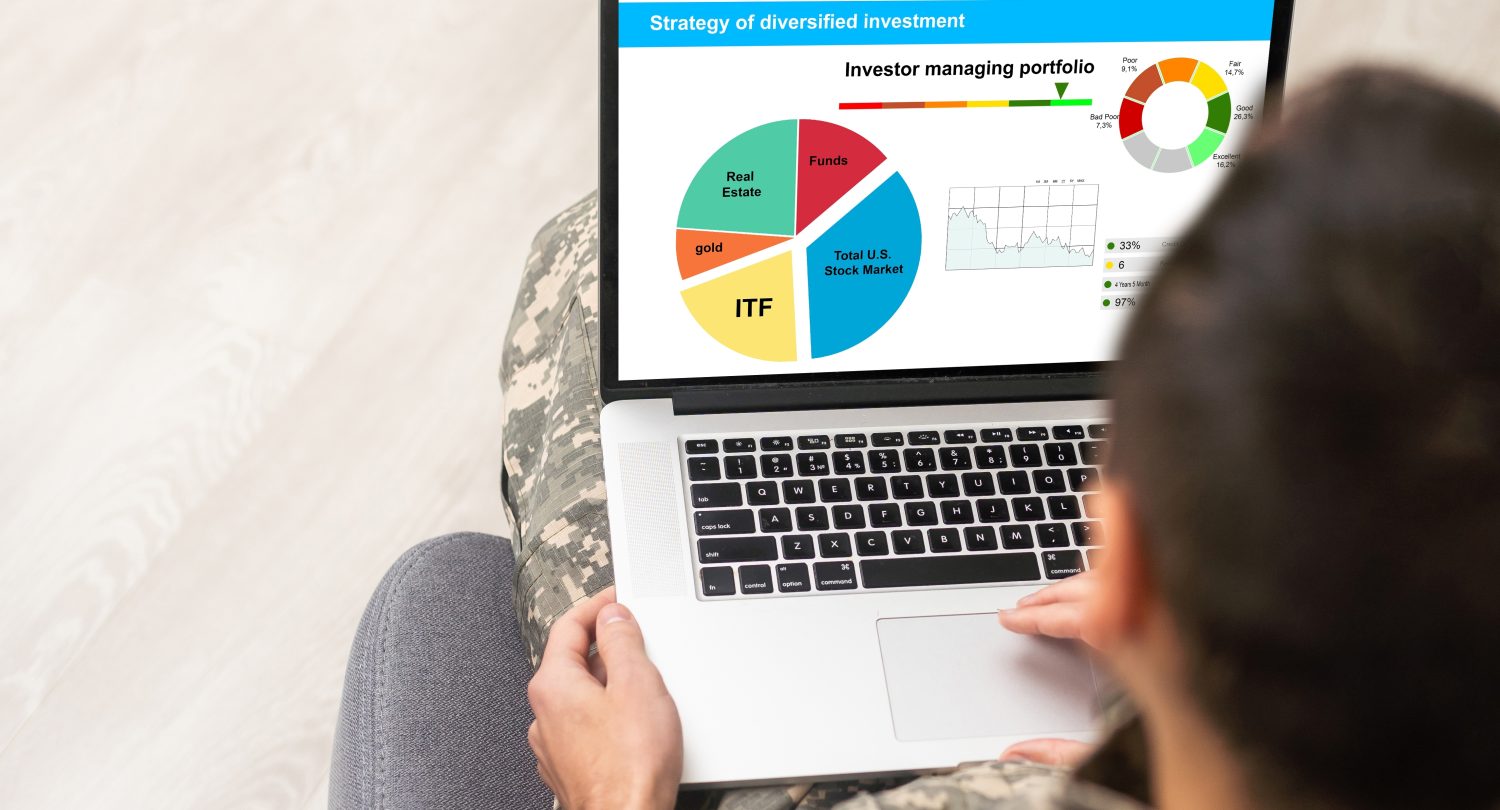
50:25:25 Mutual Fund Strategy: Choosing the right mix of large, mid and small-cap funds can play an important role in building a diversified equity mutual fund portfolio. While large-cap funds can provide stability, mid and small-cap funds can increase the potential for alpha generation.
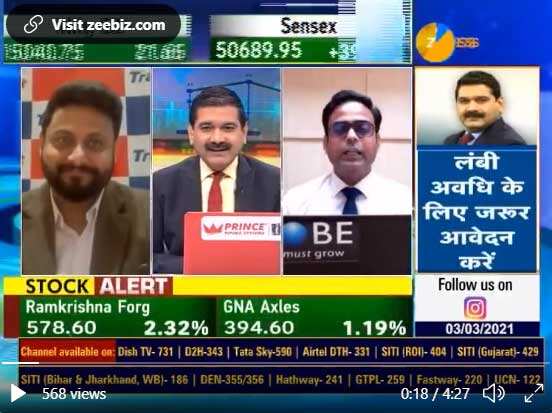
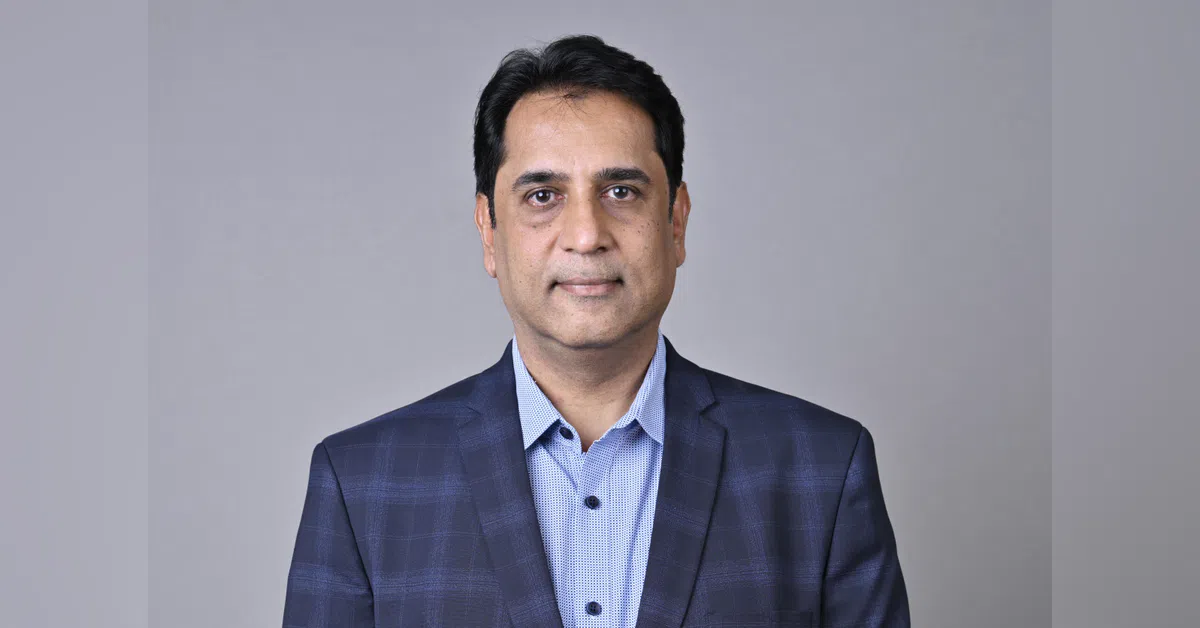
In a conversation on Zee Business, Hrishikesh Palve, Director at Anand Rathi Wealth, said investors should first be clear about their financial goals and identify fund categories with the potential to generate alpha. He then suggested a market-cap allocation that broadly translates into a 50:25:25 approach.
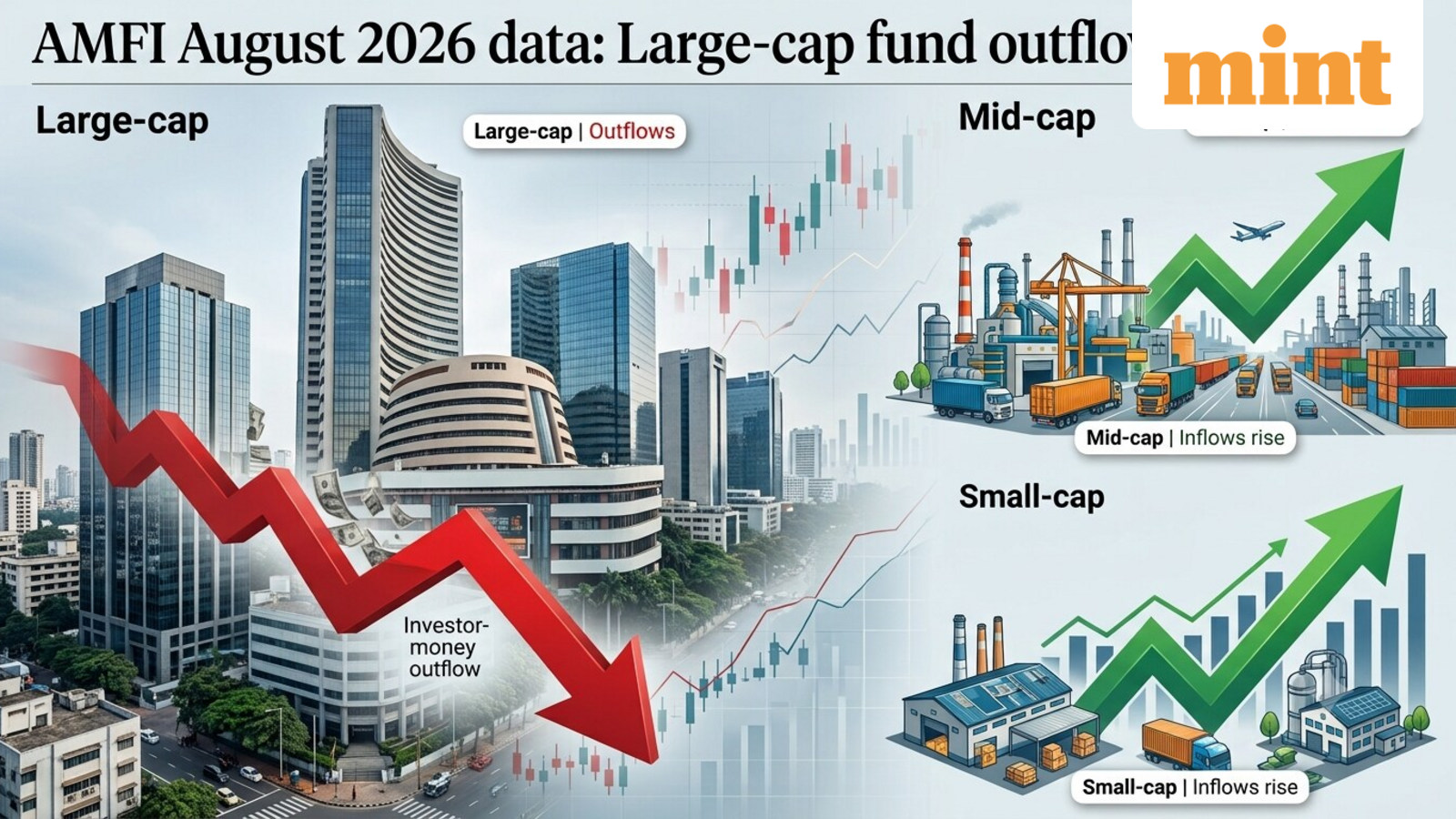
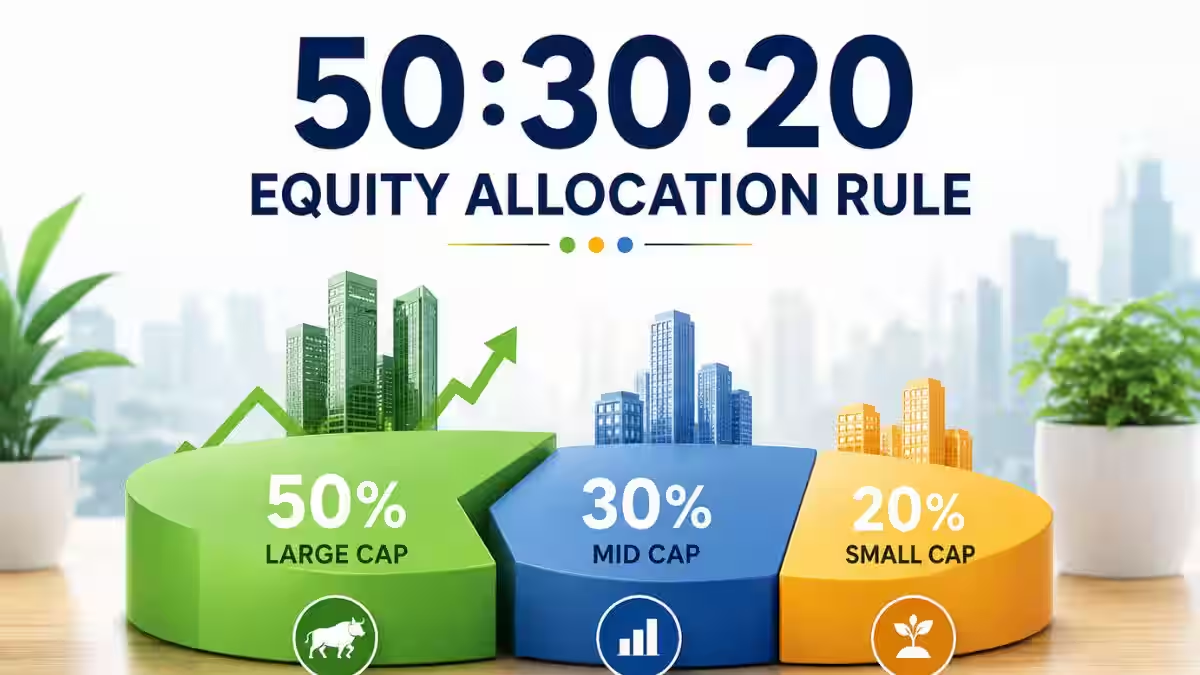
According to Palve, investors should aim for around 50–55 per cent allocation to large-cap funds, 22–25 per cent to mid-cap funds and the remaining portion to small-cap funds.
“Your market cap allocation should be 50 to 55 per cent in large cap, 22 to 25 per cent in mid cap, and the remaining should be in small cap,” Palve said.
He added that creating an appropriate mix across market-cap categories can increase the potential for alpha generation.
What is the 50:25:25 mutual fund strategy?
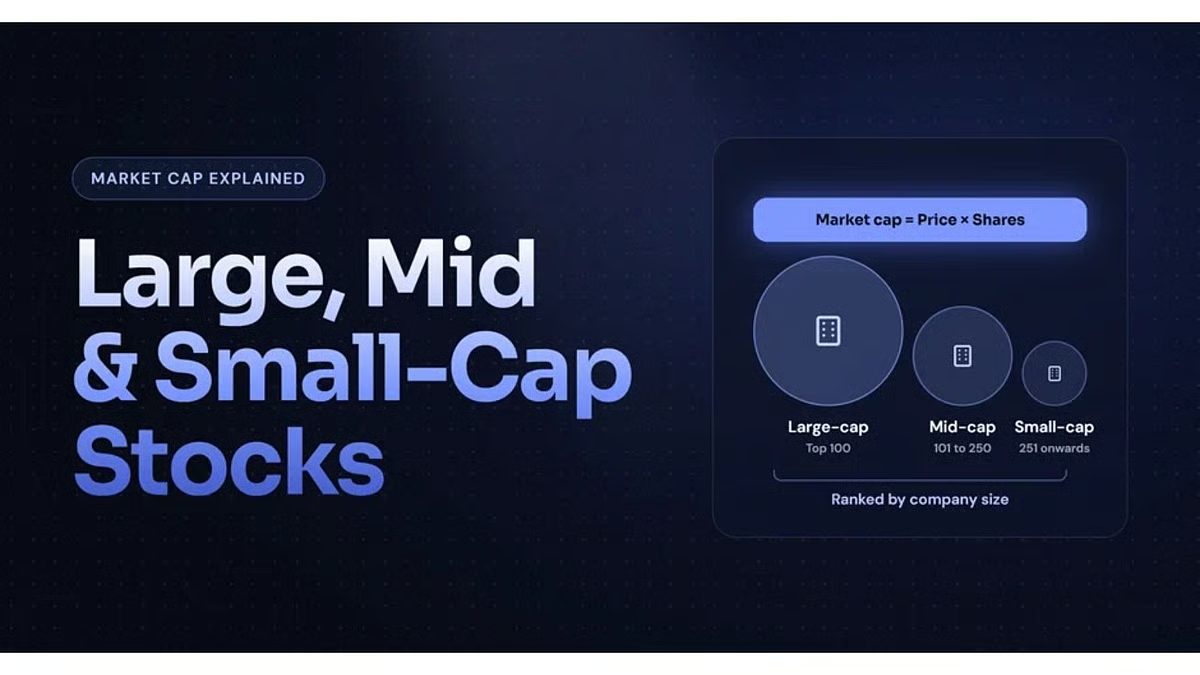
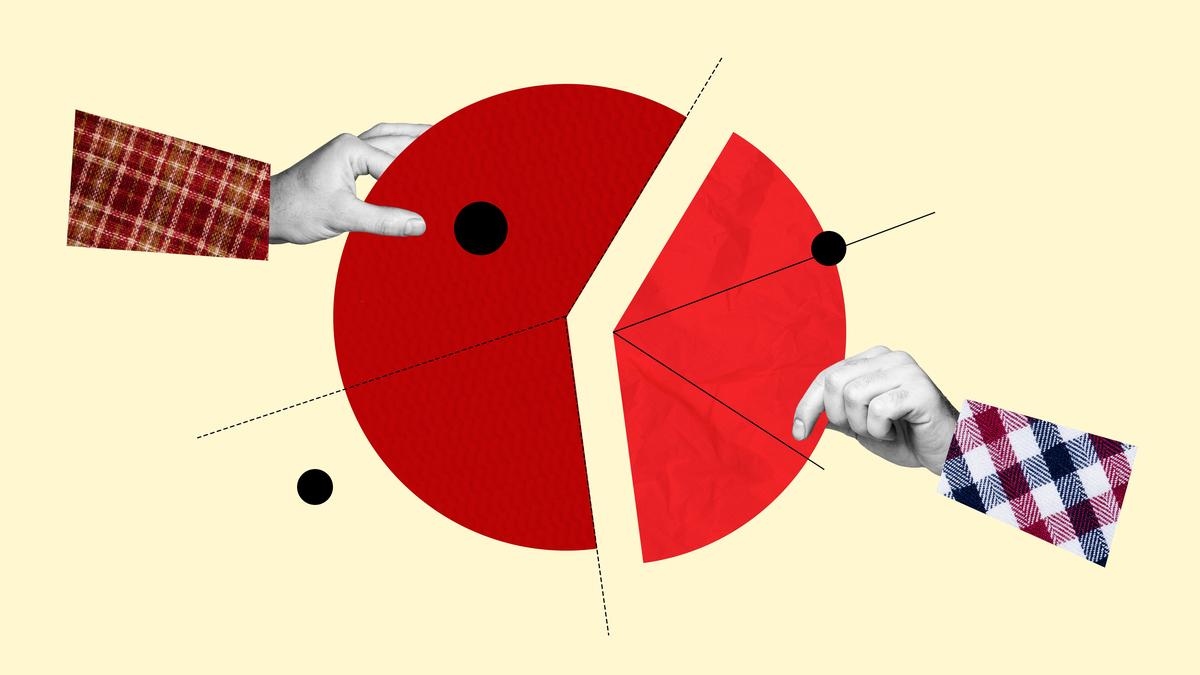
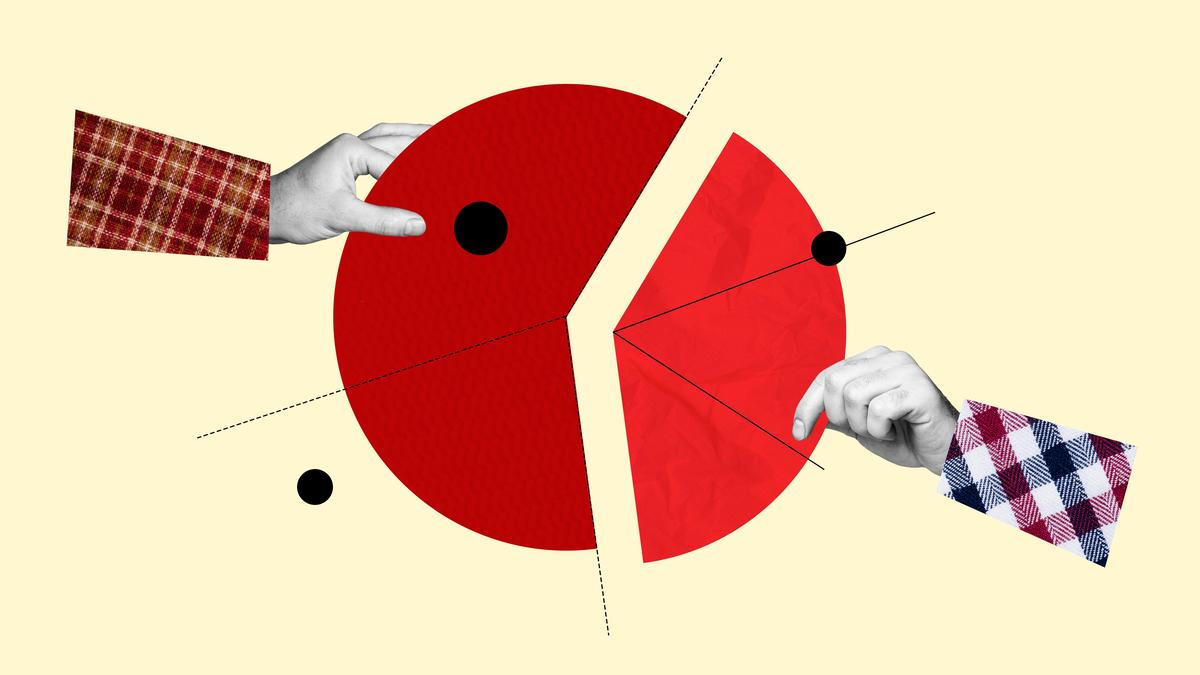
The 50:25:25 approach is a simplified way of describing a diversified equity mutual fund allocation across large, mid and small-cap segments. Palve’s specific suggested allocation is:
- Large-cap: 50–55 per cent
- Mid-cap: 22–25 per cent
- Small-cap: The remaining allocation
This is therefore better understood as a broad 50:25:25 framework rather than a rigid 50:25:25 formula. The actual allocation can vary depending on an investor’s financial goals, risk appetite and investment horizon.
Palve also stressed that investors should first select fund categories where there is a greater potential for alpha generation and then decide the appropriate market-cap allocation.
Why should large-caps form the biggest allocation?
Palve explained that large-cap funds play a different role from mid and small-cap funds.
“Large cap does not generate alpha for you to a greater extent, but it brings stability,” he said.
This is why he suggested keeping the largest portion of the portfolio in large-cap funds.
Mid and small-cap funds, meanwhile, can increase the potential for alpha generation. Palve said that maintaining a mix across the three market-cap segments can improve the probability of generating alpha while ensuring that the portfolio is not overly concentrated in one category.
Why do mid and small-cap funds need a longer investment horizon?
The experts also cautioned investors against choosing funds solely on the basis of recent returns. Mid and small-cap funds can go through extended periods of weak performance, making the investment horizon particularly important.
Kshitiz Mahajan, CEO of Complete Circle Wealth, said investors should align mid-cap investments with goals of around seven years or more, while small-cap investments should generally be linked to goals with a horizon of eight to nine years or more.
“If your goal is entirely five years-oriented, then small and mid-cap have no place in it,” Mahajan said.
He explained that there can be periods of two to three years when returns do not materialise in these segments. Investors therefore need to give such investments sufficient time.
“Don’t chase funds just because they delivered high returns”
The experts also highlighted the risks of selecting mutual funds purely by looking at their past returns.
Palve said investors should not evaluate funds only on absolute returns. Instead, they should check whether a fund has beaten its benchmark and generated alpha.
“Absolute return should never be looked at in funds. It has to be looked at relatively,” Palve said.
He added that investors should assess how much additional return a fund has generated over its benchmark.
Mahajan compared past returns to a report card of a fund’s previous performance.
“Returns are like a report card,” he said, while cautioning that past performance does not guarantee future results.
According to Mahajan, investors should also go beyond headline returns and examine the underlying sectors, top holdings, the fund manager’s track record and tenure, fund size and drawdowns before making a decision.
Why 20% returns should not be the only benchmark
The discussion also highlighted why investors should be cautious about chasing funds that have delivered exceptionally high returns in the past.
Palve said that 20 per cent or more returns could be considered “super returns” for the purpose of the discussion. However, such performance was seen only in some funds and categories rather than across the entire mutual fund universe.
Mid-cap and small-cap funds, along with certain infrastructure-focused funds, featured among the categories where some schemes had delivered more than 20 per cent over a 10-year period. However, the same level of returns was not seen consistently across shorter periods.
The experts also pointed out that market conditions can have a significant impact on long-term returns. Strong performance in a few years can materially influence the overall compounded return over a 10-year period.
Experts advise caution with sectoral funds
While sectoral and thematic funds can sometimes feature among the best-performing schemes, Palve advised ordinary investors to be cautious with such funds.
He said sectoral funds require investors to have a clear understanding of when to enter and when to exit.
As an example, he pointed to IT and pharma, which performed strongly around the COVID period but subsequently went through weaker phases.
“For an ordinary investor, it may not be known when to exit,” Palve said, adding that this can ultimately affect the investor’s overall investment journey.
For investors who want exposure to future-oriented themes, Mahajan suggested considering diversified categories such as flexi-cap and multi-cap funds that may already hold companies benefiting from those themes, instead of taking concentrated bets through sectoral funds.
What should investors do before choosing a mutual fund?
Mahajan said investors should first define their asset allocation, investment horizon and risk capital before selecting individual funds.
He also suggested that investors interested in future-oriented themes should look at diversified fund categories that have exposure to companies aligned with those themes.
For lump-sum investments, Mahajan suggested using a Systematic Transfer Plan (STP).
He also said that market corrections can provide opportunities to increase equity exposure. According to him, investors should not waste opportunities when markets correct by around 5–10 per cent, provided the investment is aligned with their overall plan.
At the same time, he stressed that investors should focus on generating good, inflation-beating returns rather than chasing a fixed 17 per cent, 18 per cent or 20 per cent return target every year.
According to Mahajan, 12–13 per cent compounded returns from a broader portfolio could represent a good outcome, provided investors remain invested for the long term.
How should investors evaluate their mutual fund portfolio?
Palve said investors should not expect every fund in a portfolio to be a top performer.
Instead, a portfolio should be assessed as a basket of funds. Some funds may outperform while others may lag, but what matters is how the overall portfolio performs relative to its benchmark.
He said that if a mutual fund portfolio generates around 2–3 per cent alpha over the benchmark over a period of time, it can be considered a good performance.
“If the basket is generating 2–3 per cent alpha, it would be considered a good performance,” Palve said.
The objective, therefore, should not be to identify one fund that delivers the highest return, but to build a combination in which different funds and categories complement each other.
Key takeaway for investors
The 50:25:25 approach is essentially a simplified way of looking at market-cap allocation. Palve’s suggested mix is 50–55 per cent in large-cap, 22–23 per cent in mid-cap and the balance in small-cap.
The broader message from the experts is that large-cap funds can provide stability, while mid- and small-cap exposure can increase the potential for alpha generation. However, the allocation should not be treated as a one-size-fits-all formula.
Investors should first define their financial goals, asset allocation, risk capital and investment horizon. They should then select suitable fund categories and evaluate individual schemes based on factors such as benchmark performance, alpha generation, underlying holdings, fund-manager track record, fund size and drawdowns.
Most importantly, investors should avoid chasing funds simply because they have delivered exceptional past returns. As the experts emphasised, the goal should be to build a well-diversified portfolio that stays invested for the long term and generates reasonable, inflation-beating returns rather than chasing a specific return number every year.