The drug and biotechnology sector has had a strong recovery so far in 2026, driven by innovation, robust quarterly performances, optimistic full-year outlooks, positive regulatory updates and a major wave of M&A activity. However, it faces its share of headwinds like slower-than-expected launches of newer therapies, looming patent expirations for several blockbuster drugs and ongoing policy and pricing uncertainty in major markets. Competitive pressure, particularly in fast-growing areas like obesity/cardiometabolicand cancer treatments, also remains intense.
Despite these headwinds, the industry’s continued emphasis on innovation, advanced drug development technologies and favorable clinical and regulatory developments supports a constructive long-term outlook. Large pharmaceutical companies, in particular, continue to benefit from diversified product portfolios, strong cash generation and stable profitability, making them relatively defensive investments and attractive long-term holdings during periods of broader market volatility.
Among the large drugmakers, Eli Lilly LLY, Johnson & Johnson JNJ and Bayer BAYRY are worth watching as the industry shows a strong recovery.
Industry Description
The Zacks Large Cap Pharmaceuticals industry comprises some of the largest global companies that develop multi-million-dollar drugs for several therapeutic areas, like neuroscience, cardiovascular and metabolism, rare diseases, immunology and oncology. Some of these companies also make vaccines, animal health products, medical devices and consumer-related healthcare products. They invest millions of dollars in their product pipelines and line extensions of their already-marketed drugs. Continuous innovation is a defining characteristic of large pharma companies. They constantly invest in drug development and the discovery of new medicines. Regular mergers and acquisitions, and collaboration deals are other key features of large drugmakers.
What’s Shaping the Future of the Large-Cap Pharma Industry?
Innovation and Pipeline Success: For big drugmakers, an innovative pipeline is a competitive necessity and key to top-line growth. Pharma companies are continually striving to ramp up innovation and allocate a significant portion of their revenues to R&D. Drugmakers are integrating artificial intelligence (AI) to accelerate the drug discovery process for delivering more effective therapies. New technologies, such as gene editing, mRNA vaccines, precision medicine and next-generation sequencing, are revolutionizing the drug and biotech industries.
Innovation is at its peak with key spaces like rare diseases, next-generation oncology treatments, obesity/cardiometabolic, immunology/inflammatory diseasesand neuroscience attracting investor attention.
Successful innovation and product line extensions in key therapeutic areas, along with strong clinical study results, may serve as important catalysts for these stocks.
Aggressive M&A & Collaboration Activity: The sector is characterized by aggressive M&A activities. Pharmaceutical companies have enormous amounts of cash and need new sources of growth because several blockbuster drugs are approaching loss of exclusivity. Rather than developing every replacement product internally, large companies are increasingly buying biotech companies with promising late-stage or commercially validated assets.Moreover, collaborations and partnerships with smaller companies are in full swing.M&A activity rebounded strongly in 2025 and has accelerated further in 2026.
Fast-growing and lucrative markets such as obesity/cardiometabolic, oncology, immunology, rare disease and gene therapy are focus areas for M&A activities. Recently, areas such as inflammatory diseases and neuroscience have been attracting buyout interest.
Some key recent $5 billion-plus deals include Merck’s acquisition of Terns Pharmaceuticals, Gilead’s acquisition of Arcellx, Biogen’s acquisition of Apellis Pharmaceuticals, Lilly’s acquisition of Centessa Pharmaceuticals, GSK’s pending acquisition of Nuvalent and AbbVie’s pending acquisition of Apogee Therapeutics, among others.
Pipeline Setbacks & Other Headwinds: The failure of key pipeline candidates in pivotal studies and regulatory and pipeline delays can be setbacks for large drug companies and significantly hurt their share prices. Other headwinds for the industry include pricing and competitive pressure, generic competition for blockbuster treatments, a slowdown in sales of some of the most high-profile older drugs, Medicare drug price negotiations and increasing FTC scrutiny of M&A deals.
Macroeconomic Uncertainty: Uncertain macroeconomic conditions—including persistent inflationary pressures, a slowing labor market, concerns about U.S. fiscal sustainability and escalating geopolitical tensions across several regions—have weighed on investor sentiment and increased uncertainty around the global economic outlook.
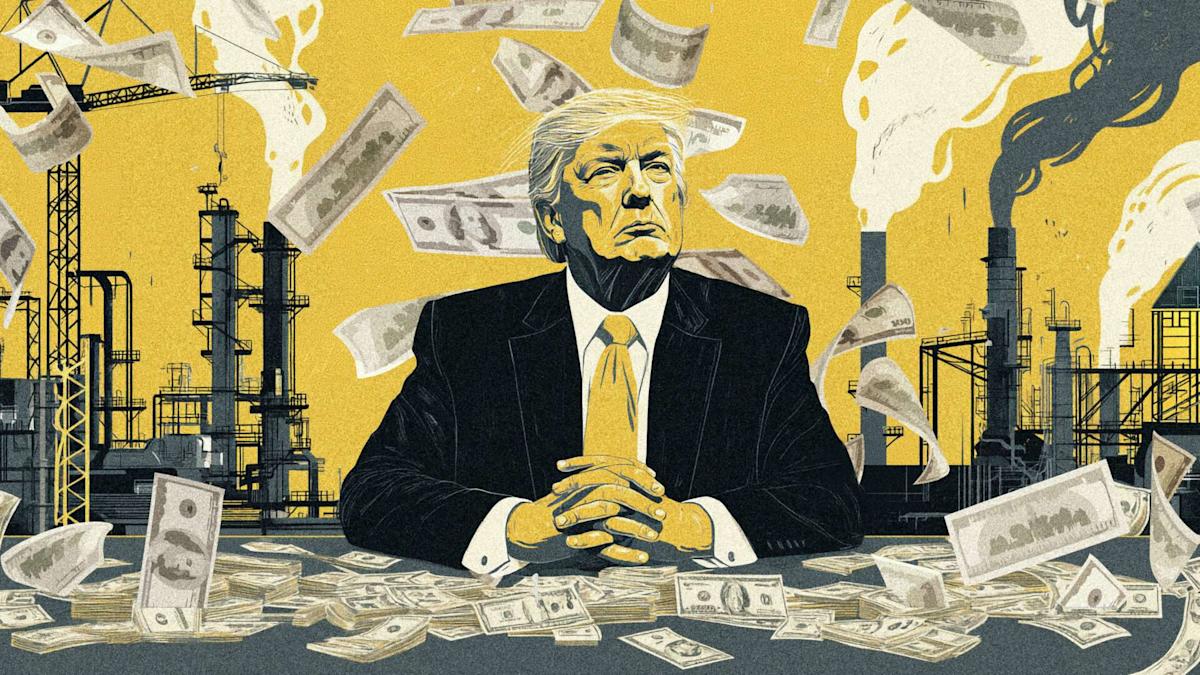
Adding to these concerns is uncertainty surrounding U.S. trade policy. President Trump has repeatedly threatened to impose steep tariffs on pharmaceutical imports, including suggesting tariffs of up to 100%, to encourage drugmakers to establish or expand manufacturing facilities in the United States rather than rely on production in Europe and Asia. Such measures could increase costs, disrupt global supply chains and create additional uncertainty for the pharmaceutical industry.
Zacks Industry Rank Indicates a Dull Outlook
The Zacks Large Cap Pharmaceuticals industry is an 11-stock group within the broader Medical sector. The group’s Zacks Industry Rank is basically the average of the Zacks Rank of all the member stocks.
The Zacks Large Cap Pharmaceuticals industry currently carries a Zacks Industry Rank #200, which places it in the bottom 19% of 247 Zacks industries. Our research shows that the top 50% of the Zacks-ranked industries outperform the bottom 50% by a factor of more than 2 to 1.
Before we present a few large drug stocks that are well-positioned to outperform the market based on a strong earnings outlook, let’s take a look at the industry’s performance and its current valuation.
Industry Versus S&P 500 & Sector
The industry has outpaced the Zacks Medical Sector but underperformed the S&P 500 so far this year.
Stocks in this industry have collectively risen 12.6% so far this year compared with the Zacks Medical Sector’s increase of 3.2%. The Zacks S&P 500 composite has risen 12.8% in the said time frame.
As you can see, the industry has done decently well this year. However, the industry rank indicates a rather dull outlook because earnings estimates for several companies have declined due to costs related to the various acquisitions. Though these costs hurt near-term profitability, they eventually benefit the company in the long run.
YTD Price Performance
Industry’s Current Valuation
Based on the forward 12-month price-to-earnings (P/E), a commonly used multiple for valuing large pharma companies, the industry is currently trading at 18.74X compared with the S&P 500’s 20.69X and the Zacks Medical Sector’s 21.16X.
Over the last five years, the industry has traded as high as 20.80X, as low as 13.09X and at a median of 16.97X, as the chart below shows.
Forward 12-Month Price-to-Earnings (P/E) Ratio
3 Large Drugmakers to Watch
Bayer: The company’s key drugs Nubeqa for cancer and Kerendia for chronic kidney disease associated with type II diabetes are fueling growth in its Pharmaceuticals division, making up for the decline in sales of oral anticoagulant Xarelto due to patent expiration. Bayer is also working to expand the labels of Nubeqa and Kerendia, which, if successful, can further drive growth.
Multiple high-impact launches across oncology, cardiology, and women’s health further extend the pharma division’s growth runway. Some key new drug approvals are Lynkuet (elinzanetant) for moderate-to-severe vasomotor symptoms (VMS) associated with menopause and Hyrnuo (sevabertinib) for HER2-mutant non-small cell lung cancer.
Strategic collaborations and acquisitions, including partnerships with Vividion, AskBio and Cytokinetics, continue to support innovation. The Crop Science segment is also showing signs of recovery. Bayer recently received a favorable ruling in the ongoing glyphosate litigation. However, generic competition for Xarelto and Eylea continues to weigh on sales, while the company’s elevated net debt remains an overhang.
This Zacks Rank #3 (Hold) company’s shares have risen 27.9% so far this year. Estimates for its 2026 earnings per share have risen from $1.25 to $1.28 over the past 30 days.
Price and Consensus: BAYRY
Eli Lilly: The company has seen extraordinary momentum in its cardiometabolic franchise. Its blockbuster drugs, Mounjaro for type II diabetes and Zepbound for obesity, have become some of the fastest-growing medicines in pharmaceutical history, gaining from enormous global demand for GLP-1 therapies. These therapies account for around 65% of the company’s total revenues and have become key top-line drivers for Lilly, with demand rising rapidly.
In addition to Mounjaro and Zepbound, Lilly has secured approvals for several other therapies over the past few years. These include Omvoh, Jaypirca, Ebglyss and Kisunla. These drugs are also contributing to Lilly’s revenue growth.
Lilly is developing several next-generation, more powerful and more convenient GLP-1–based treatments, including oral options and multi-acting candidates.
Its newly launched once-daily oral GLP-1 pill, Foundayo (orforglipron), for treating obesity, is expected to be a commercial game-changer. The launch uptake for Foundayo has been encouraging, with sales expected to be higher in the second half. In its GLP pipeline, retatrutide, a triple-hormone receptor agonist, is one of Lilly’s most important late-stage candidates. The company plans to submit the treatment to the FDA in the first quarter of 2027. If approved, retatrutide could become another multibillion-dollar product.
Lilly has also embarked on an aggressive M&A spree in the past couple of years, acquiring biotech companies across oncology, neuroscience, cardiovascular disease, gene editing, inflammation, cell therapy and vaccines to diversify its long-term growth drivers beyond GLP-1 therapies. The company has announced more than $20 billion in biotech deals this year.
Lilly has its share of problems. Prices of most of Lilly’s products are declining in the United States. Price is expected to continue to be a drag on top-line growth in the low to mid-teens percentage in 2026. Rising competition in the GLP-1 diabetes/obesity market is a key headwind. Also, sales of late-life cycle products like Trulicity, Taltz and Verzenio are expected to be flat to down in 2026.
Lilly has a Zacks Rank #3 at present. You can see the complete list of today’s Zacks #1 Rank (Strong Buy) stocks here
The stock has risen 12.6% so far this year. The Zacks Consensus Estimate for 2026 has risen from $35.05 to $35.60 per share over the past 30 days.
Price and Consensus: LLY
J&J: Its biggest strength is its diversified business model, as it operates through pharmaceuticals and medical devices divisions, which reduces dependence on any single product or market. It has more than 275 subsidiaries and boasts 28 platforms or products with more than $1 billion in annual sales, with the aim of adding even more. Its diversification helps it to withstand economic cycles more effectively. It also boasts strong cash flows and has increased its dividends for 64 consecutive years. J&J believes that the depth of its portfolio and pipeline is stronger than ever.
J&J’s Innovative Medicines segment is the company’s primary growth engine. Innovative Medicine segment sales rose 6.2% on an organic basis in the first half of 2026, despite the loss of exclusivity (LOE) of the blockbuster drug, Stelara. Growth was driven by J&J’s key drugs like Darzalex, Erleada and Tremfya. New drugs like Carvykti, Tecvayli, Talvey, Rybrevant and Spravato also contributed significantly to growth. J&J’s MedTech business is performing well, but its growth moderated in the second quarter due to weakness in Cardiovascular. J&J also rapidly advanced its pipeline in the past year, attaining significant clinical and regulatory milestones that will help drive growth through the back half of the decade. In the past year, it has gained approval for new products, Inlexzo, Icotyde, as well as Imaavy.
The company expects 2026 to be a year of accelerated growth. The company is confident that it can achieve its target of generating around $100 billion in revenues in 2026. It expects sales to continue to improve in 2027, with a “line of sight” to double-digit growth by the end of the decade. J&J believes that it is already achieving this growth. Though J&J’s total revenues are currently rising in a mid-single-digit range, excluding Stelara, J&J’s top line grew in a double-digit range in both the first and second quarters of 2026. It also expects its MedTech business to perform better in the second half of the year than it did in the first half. J&J faces its share of headwinds likethe legal battle surrounding its talc lawsuits, the Stelara patent cliff, the upcoming LOE of key drugs Opsumit and Simponi, and softness in MedTech.
J&J has a Zacks Rank #3 at present. The stock has risen 26.6% so far this year. The Zacks Consensus Estimate for 2026 earnings is stable at $11.59 per share over the past 30 days.
Price and Consensus: JNJ
Want the latest recommendations from Zacks Investment Research? Today, you can download 7 Best Stocks for the Next 30 Days. Click to get this free report