
© Tapati Rinchumrus / Shutterstock.com
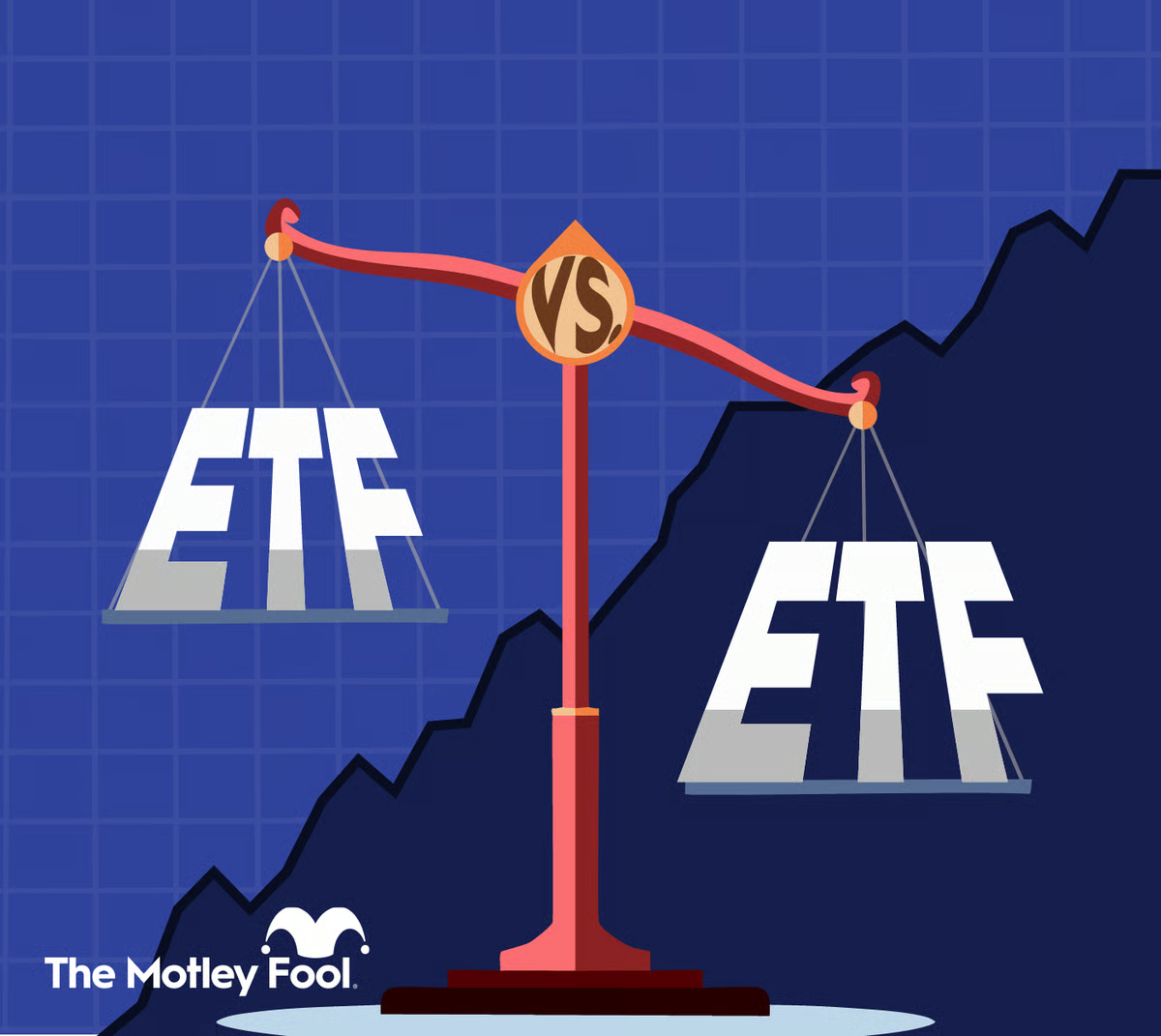
The pitch for Vanguard Growth ETF (NYSEARCA:VUG) sits at the cheap end of a long-running debate about whether active stock pickers can beat an index dominated by mega-cap growth names. VUG charges 0.03% and currently holds about $234 billion in assets, tracking the CRSP US Large Cap Growth Index via full replication. For a 52-year-old earning $180,000 with $450,000 in a 401(k) parked in an actively managed large-cap growth fund charging 0.55% to 0.75%, moving the same exposure into VUG retains roughly $2,565 a year in fees.
What the fund owns and how it earns
Mechanically, VUG holds about 158 names weighted by market capitalization, so the biggest US growth companies drive almost every basis point of return. Per Vanguard fund documents, the top positions are:
- NVIDIA (NASDAQ:NVDA | NVDA Price Prediction) at 13.3%
- Apple (NASDAQ:AAPL) at 12.3%
- Alphabet (NASDAQ:GOOGL) at 9.9%
- Microsoft (NASDAQ:MSFT) at 9.1%
- Amazon (NASDAQ:AMZN) at 4.6%
Technology accounts for 65.9% of the sector mix, and consumer discretionary accounts for another 16.2%. The dividend yield, reported by Vanguard at 0.37%, is 0.37%, so almost all of the return comes from price appreciation.
The active manager scoreboard
On whether the cheap index actually delivers, the S&P Dow Jones SPIVA U.S. Year-End Scorecard shows 83.2% of active large-cap growth managers trailed their benchmark over 10 years, climbing to 91.5% over 15 years. Over the past five years, VUG returned about 103%, outpacing the broader Vanguard Total Stock Market ETF by 70%. NVIDIA’s 1,193% five-year run and Alphabet’s 125% one-year gain explain much of that gap. An active manager underweighting one name like NVIDIA would have missed the entire AI capex cycle, which is part of why so few of them beat the index.
Concentration cuts both ways
The same concentration that produced the returns is the main risk. The top 10 names account for roughly 64% of the fund, and the portfolio carries a P/E of about 40. With the 10-year Treasury near 4.5%, the discount rate on those future earnings is not trivial. There is no defensive sleeve, no value tilt, and no manager discretion to step aside if AI capex disappoints. Year-to-date, Microsoft is down 11%, and Amazon has slipped 7% over the past month, a reminder that leadership can rotate even inside the growth bucket.
Where VUG fits in a portfolio
For investors who already own a Nasdaq-100 tracker, layering VUG on top adds little: top-10 overlap is heavy, and both funds lean on the same Magnificent Seven names. A cleaner companion is the Vanguard Value ETF, which charges the same 0.03% expense ratio and returned 72% over five years, with very different sector exposure. The pair gives style-neutral large-cap coverage at a combined cost most active blends cannot match.
VUG works as the core large-cap growth sleeve for an investor with a 10- to 20-year horizon who wants market-cap-weighted exposure to US innovation at the lowest available cost. On a $450,000 balance, the fee differential compounded at 8% over 20 years amounts to roughly $120,000 in additional terminal wealth, before any benefit from passive funds that typically beat active large-cap growth peers. Investors who need income, downside protection, or active risk management would have to look elsewhere, as this fund makes no attempt to provide any of those.