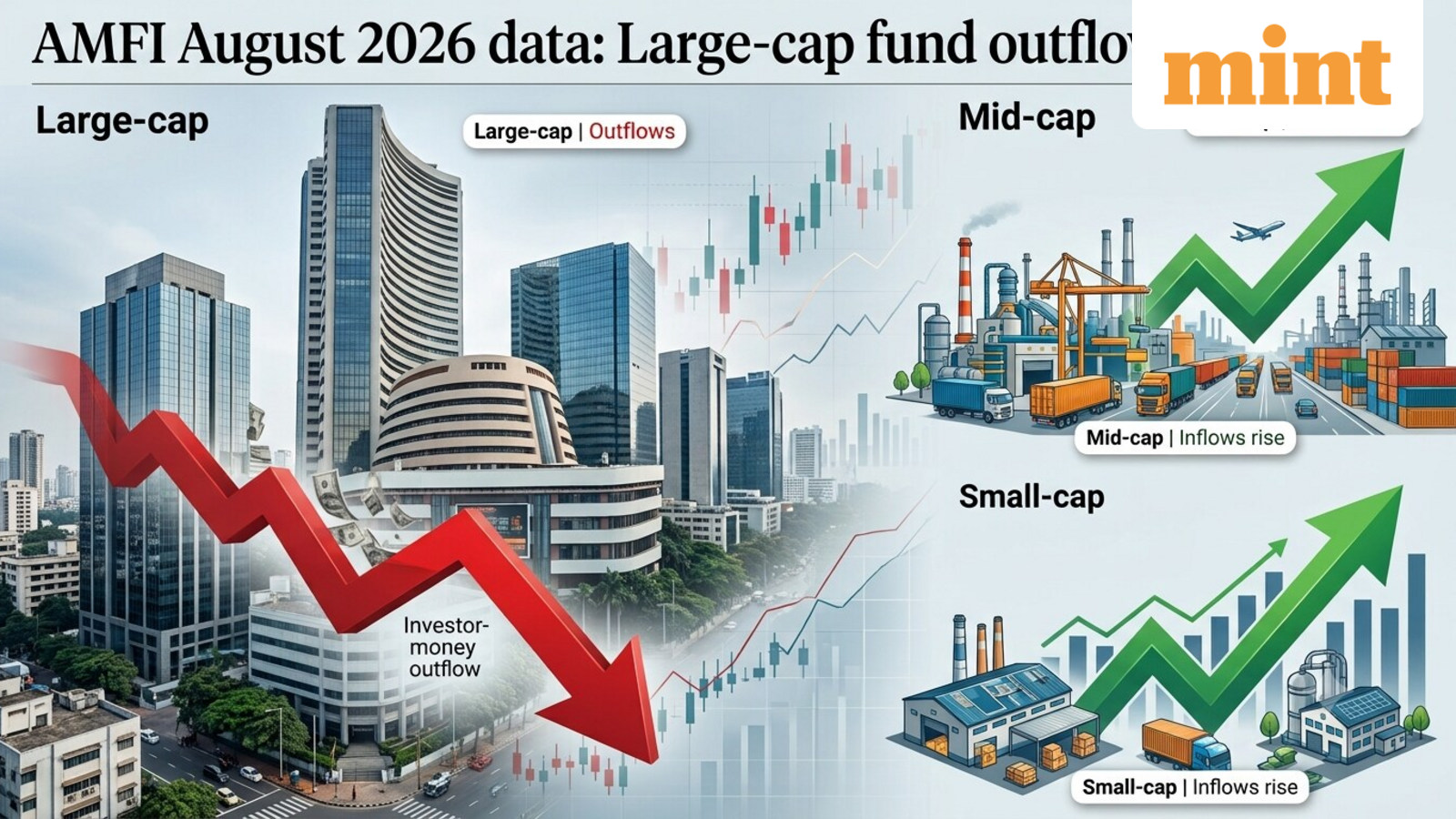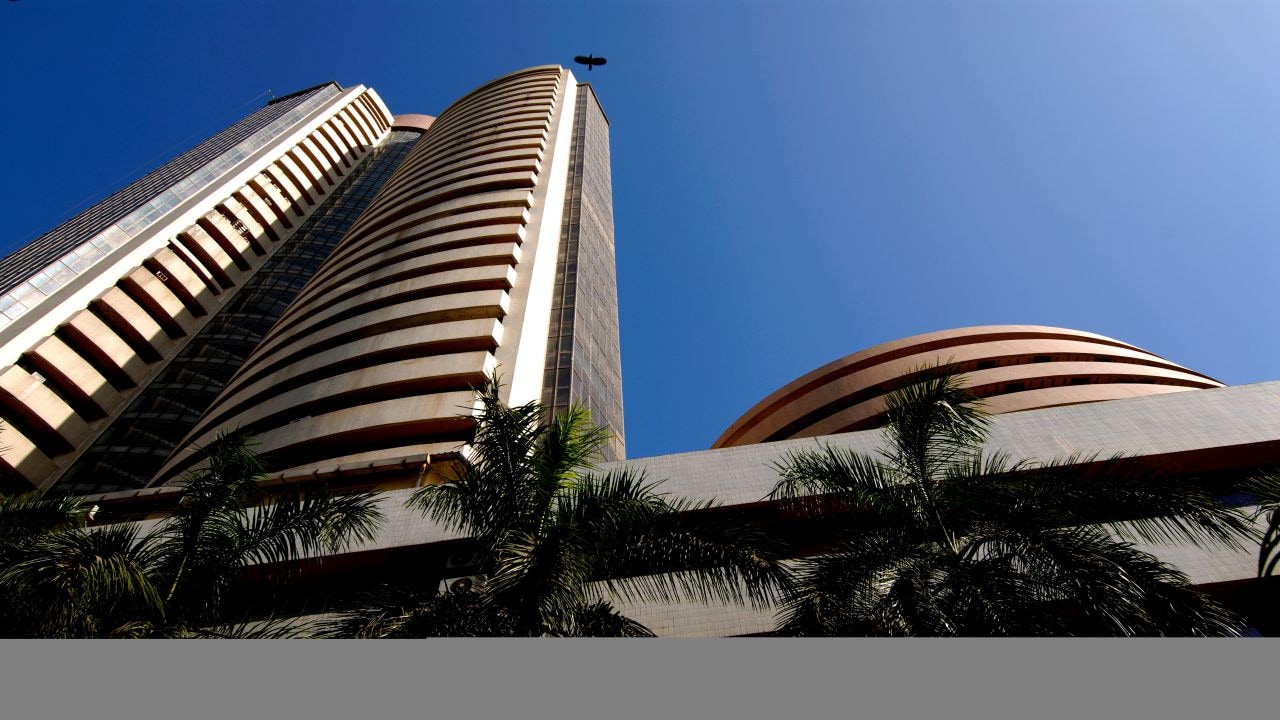
Even as the West Asia conflict weighs on domestic large-cap stocks, investors continue to favour comparatively “expensive” mid- and small-cap shares. So far in May, benchmark indices Nifty 50 and BSE Sensex have remained in the red, while their mid- and small-cap counterparts have posted gains in the low- to mid-single digits.
The trend is visible over a longer period as well. Over the past three months, the Sensex and Nifty have returned 5.4% and 7.1%, respectively, while mid- and small-cap indices have gained between 16.9% and 19.7% — more than three times the returns of the benchmark indices. Over a one-year period, the benchmark indices remain in the red, whereas mid- and small-cap indices have delivered returns ranging from 1.6% to 8.3%.
What stands out is that investor interest in these segments has remained resilient despite persistent concerns over elevated valuations. Both the Nifty Smallcap 250 and BSE 250 Small cap indices are trading higher than the five-year average (See table), leading to market experts repeatedly flagging the froth in mid- and small-cap stocks over the past two years.
Regulatory Guardrails
In March 2024, former Securities and Exchange Board of India chairperson Madhabi Puri Buch had warned of “froth” in these segments. Subsequently, S Naren, chief investment officer and executive director at ICICI Prudential Mutual Fund, had cautioned investors to get “lock, stock and barrel” out of mid- and small-cap stocks.
Concerns over liquidity and valuation risks had become so pronounced that mutual fund houses were asked to disclose stress test results for mid- and small-cap schemes to assess the time required to liquidate positions during periods of market stress.
Foreign Capital Re-routing
But the outperformance has continued. Market participants attributed this to stronger-than-expected earnings growth and steady inflows, coupled with relatively lower foreign institutional investor (FII) exposure compared to large-cap stocks.
“Selling pressure still continues in large-caps as FII holdings are predominantly higher there compared to the mid- and small-cap categories,” said George Thomas, fund manager at Quantum Asset Management Company. He added that the outperformance also reflects sustained inflows into these segments.
Thomas said the small-cap segment continues to offer a wider opportunity set, while signs of froth are relatively more visible in mid-caps because of a comparatively smaller universe of quality stocks.
Some experts believe the outperformance of broader markets could continue if foreign capital outflows persist amid the ongoing geopolitical tensions in West Asia.
“Fundamentals are significantly better than they were a few years ago, providing room for stronger growth and returns,” said the chief investment officer at the Indian broking arm of a foreign bank. He added that the geopolitical crisis has opened the door for other emerging markets at a time when India is witnessing outflows, a trend that may continue in the near term.