The prop trading firms outperforming their peers over the
past two years share a structural feature that gets less attention than it
deserves: most of them are backed by, affiliated with, or quietly becoming
brokers themselves.
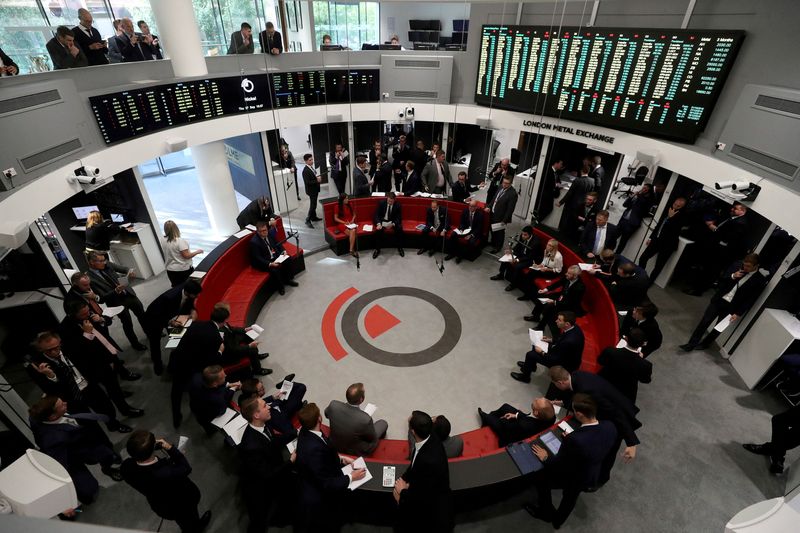
London’s trading industry is coming home!
The conventional explanation is capital access. A
broker-backed prop firm can absorb funded-account drawdown more comfortably
than an independent one running on challenge fee revenue alone. That
explanation is not wrong. It is also incomplete, and the part it leaves out is
where the real advantage sits.
A prop firm with no brokerage relationship has one
monetisation event per client: the challenge fee. Everything after that, the
funded account, the payouts, the eventual churn, is a cost, not revenue. A firm
in that position is structurally dependent on a high volume of new challenge
attempts to stay solvent, because the unit economics on any single client stop
at the fee.
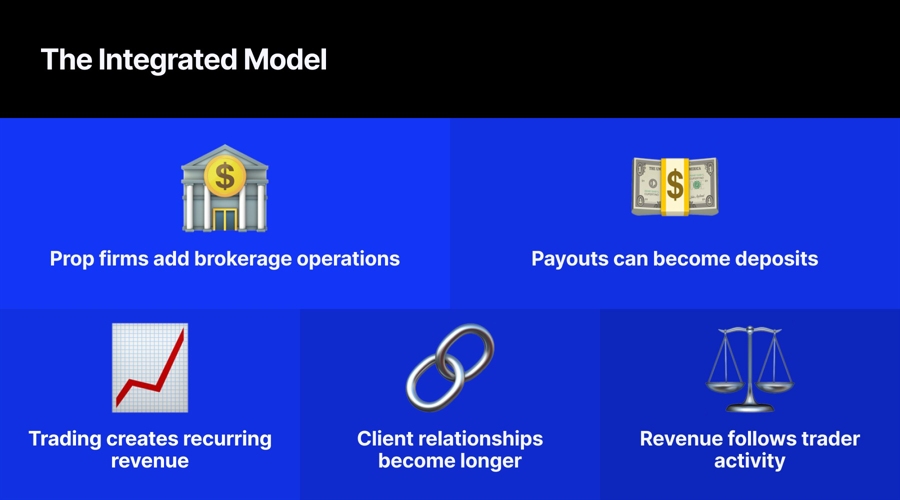
A broker-backed firm has a second and third monetisation
event available, and increasingly a fourth. When a funded trader becomes
profitable, the firm has an incentive misaligned with simply paying that trader
out in cash.
If the payout instead becomes a deposit into an affiliated
brokerage account, the firm captures a referral percentage on the deposit
itself, then ongoing spread markup, swap markup, and rebate revenue on every
trade that the trader places going forward, and, in some arrangements, a revenue
share on the client’s eventual losses at the broker.
This is not a hypothetical structure. It is becoming a
standard playbook for smaller prop firms specifically, because it converts a
one-time cost centre, the payout, into a recurring revenue relationship the
firm did not have before.
Risk Literacy Is the Deeper Gap, Not Just Revenue
Most brokers, even ones running fully internalised books,
operate with at least a baseline understanding of risk: exposure limits,
correlation across positions, and some sense of what the book actually holds.
That baseline is often thin, but it exists, because managing a book without it
is not a viable brokerage business for long.
Most small and mid-sized prop firms have no equivalent
baseline at all. Risk, for many of them, is defined narrowly as the gap between
challenge fee revenue and payout liability, a cash flow calculation rather than
an actual risk model. There is no framework for exposure, no correlation
analysis across funded accounts, and frequently no one on staff whose job is to
ask the question.
This is where the move into brokerage does more than open a
second revenue stream. It puts the firm’s principals into direct contact with
people who have spent years managing exposure for a living: liquidity
providers, hedging desks, and peers running B-book operations.
A prop firm
founder negotiating a brokerage relationship is, often for the first time,
having conversations that force a real risk vocabulary into the business. Some
firms respond by hiring a two- or three-person risk desk.
Others outsource the
function entirely to someone who has already built that discipline at other
firms and knows exactly which questions the business has never asked itself.
Either path gets the same result: a firm that finally has someone whose job is
to ask the question.
The compounding problem for firms that never make this move
is structural, not just a knowledge gap. A single revenue source, the challenge
fee, combined with no functional risk framework, means every downturn in
challenge volume and every unexpected cluster of successful funded traders hits
the same undefended balance sheet.
Firms building brokerage relationships are
not just diversifying revenue. They are backing into the risk discipline their
business model never forced them to build on their own.
The Vertical Integration Trend Is Accelerating for a
Structural Reason
Prop
firms becoming brokers, or building formal referral arrangements with
brokers they have a commercial relationship with, is not primarily a growth
strategy. It is a response to a specific economic problem: challenge fee
revenue alone does not scale with the size of a firm’s most successful traders.
The better a funded trader performs, the more the firm owes them, and the
payout obligation grows precisely in proportion to the outcome the firm was
supposedly built to reward.
Vertical integration inverts that relationship. The firm’s
revenue no longer moves in the opposite direction from a trader’s success. It
moves in the same direction, because a trader who deposits into an affiliated
broker and keeps trading is now generating spread and markup revenue that
scales with their activity rather than shrinking with their payout.
Firms that have made this shift are not disguising it as a
favour to successful clients, though it is frequently marketed that way. A
trader offered the choice between a $5,000 cash payout and depositing that
$5,000 with a broker the firm has a commercial relationship with is being
offered two genuinely different products, and only one of them ends the firm’s
exposure to that client’s future trading.
The Conflict of Interest Is Real, and It Is Also Not New
The obvious criticism is that this structure gives the firm
a direct financial interest in a client’s continued trading, and, in some
revenue-share arrangements, in the client’s eventual losses. That criticism is
accurate as far as it goes.
It becomes less persuasive as a reason to avoid the
structure once the comparison point is made explicit. Retail brokerage has operated on some version of
this economics for decades: a market maker’s
B-book, a rebate arrangement with a liquidity provider, or a spread markup on
an introducing broker relationship all create a financial interest that sits
somewhere between neutral execution and outright conflict.
The prop trading
industry did not invent the tension between serving a client’s interest and monetising
their activity. It
is simply the newest business model to inherit it, at a stage in its growth
where the industry has not yet built the disclosure norms that older parts of
the brokerage world eventually settled into.
The firms doing this well are transparent about the
arrangement at the point a trader is offered the choice. The firms doing it
poorly present the broker deposit as the only practical option, or bury the
referral and revenue-share economics in language the trader never reads closely
enough to understand what they are agreeing to.
What Determines Which Firms Survive Their Own Growth
A
prop firm running purely on challenge fees is racing against its own payout
liability. A broker-backed firm has a second revenue stream that grows
alongside its most successful clients instead of shrinking against them. That
is a genuinely stronger position, and it explains a meaningful share of why
broker-backed firms have weathered the recent consolidation better than
independents.
It is also a position that only holds up if the firm’s
internal risk model accounts for the full economics of the relationship, not
just the challenge fee side of it. A firm that undercounts its brokerage-side
revenue when sizing payout obligations is still exposed, just less visibly.
And
a firm that treats the broker referral as a growth hack rather than a disclosed
business line is building a reputational liability that eventually surfaces the
same way undisclosed conflicts of interest have surfaced in every other corner
of retail finance.
The question worth asking is not whether broker-backed prop
firms have an advantage. They clearly do. It is whether that advantage is being
built on disclosed economics the client can actually evaluate, or on a payout
conversation the client was never in a position to fully understand.
The firms
answering that question honestly are the ones whose growth will hold up under
scrutiny, not just under a balance sheet.
The prop trading firms outperforming their peers over the
past two years share a structural feature that gets less attention than it
deserves: most of them are backed by, affiliated with, or quietly becoming
brokers themselves.
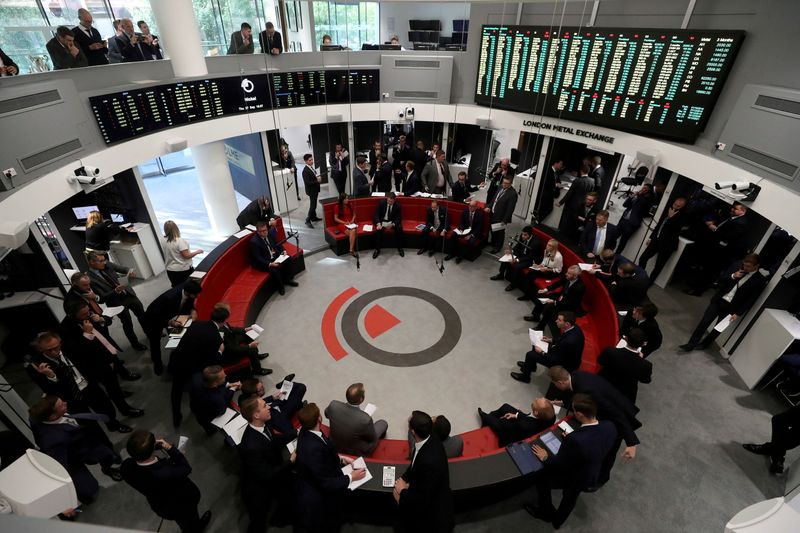
London’s trading industry is coming home!
The conventional explanation is capital access. A
broker-backed prop firm can absorb funded-account drawdown more comfortably
than an independent one running on challenge fee revenue alone. That
explanation is not wrong. It is also incomplete, and the part it leaves out is
where the real advantage sits.
A prop firm with no brokerage relationship has one
monetisation event per client: the challenge fee. Everything after that, the
funded account, the payouts, the eventual churn, is a cost, not revenue. A firm
in that position is structurally dependent on a high volume of new challenge
attempts to stay solvent, because the unit economics on any single client stop
at the fee.
A broker-backed firm has a second and third monetisation
event available, and increasingly a fourth. When a funded trader becomes
profitable, the firm has an incentive misaligned with simply paying that trader
out in cash.
If the payout instead becomes a deposit into an affiliated
brokerage account, the firm captures a referral percentage on the deposit
itself, then ongoing spread markup, swap markup, and rebate revenue on every
trade that the trader places going forward, and, in some arrangements, a revenue
share on the client’s eventual losses at the broker.
This is not a hypothetical structure. It is becoming a
standard playbook for smaller prop firms specifically, because it converts a
one-time cost centre, the payout, into a recurring revenue relationship the
firm did not have before.
Risk Literacy Is the Deeper Gap, Not Just Revenue
Most brokers, even ones running fully internalised books,
operate with at least a baseline understanding of risk: exposure limits,
correlation across positions, and some sense of what the book actually holds.
That baseline is often thin, but it exists, because managing a book without it
is not a viable brokerage business for long.
Most small and mid-sized prop firms have no equivalent
baseline at all. Risk, for many of them, is defined narrowly as the gap between
challenge fee revenue and payout liability, a cash flow calculation rather than
an actual risk model. There is no framework for exposure, no correlation
analysis across funded accounts, and frequently no one on staff whose job is to
ask the question.
This is where the move into brokerage does more than open a
second revenue stream. It puts the firm’s principals into direct contact with
people who have spent years managing exposure for a living: liquidity
providers, hedging desks, and peers running B-book operations.
A prop firm
founder negotiating a brokerage relationship is, often for the first time,
having conversations that force a real risk vocabulary into the business. Some
firms respond by hiring a two- or three-person risk desk.
Others outsource the
function entirely to someone who has already built that discipline at other
firms and knows exactly which questions the business has never asked itself.
Either path gets the same result: a firm that finally has someone whose job is
to ask the question.
The compounding problem for firms that never make this move
is structural, not just a knowledge gap. A single revenue source, the challenge
fee, combined with no functional risk framework, means every downturn in
challenge volume and every unexpected cluster of successful funded traders hits
the same undefended balance sheet.
Firms building brokerage relationships are
not just diversifying revenue. They are backing into the risk discipline their
business model never forced them to build on their own.
The Vertical Integration Trend Is Accelerating for a
Structural Reason
Prop
firms becoming brokers, or building formal referral arrangements with
brokers they have a commercial relationship with, is not primarily a growth
strategy. It is a response to a specific economic problem: challenge fee
revenue alone does not scale with the size of a firm’s most successful traders.
The better a funded trader performs, the more the firm owes them, and the
payout obligation grows precisely in proportion to the outcome the firm was
supposedly built to reward.
Vertical integration inverts that relationship. The firm’s
revenue no longer moves in the opposite direction from a trader’s success. It
moves in the same direction, because a trader who deposits into an affiliated
broker and keeps trading is now generating spread and markup revenue that
scales with their activity rather than shrinking with their payout.
Firms that have made this shift are not disguising it as a
favour to successful clients, though it is frequently marketed that way. A
trader offered the choice between a $5,000 cash payout and depositing that
$5,000 with a broker the firm has a commercial relationship with is being
offered two genuinely different products, and only one of them ends the firm’s
exposure to that client’s future trading.
The Conflict of Interest Is Real, and It Is Also Not New
The obvious criticism is that this structure gives the firm
a direct financial interest in a client’s continued trading, and, in some
revenue-share arrangements, in the client’s eventual losses. That criticism is
accurate as far as it goes.
It becomes less persuasive as a reason to avoid the
structure once the comparison point is made explicit. Retail brokerage has operated on some version of
this economics for decades: a market maker’s
B-book, a rebate arrangement with a liquidity provider, or a spread markup on
an introducing broker relationship all create a financial interest that sits
somewhere between neutral execution and outright conflict.
The prop trading
industry did not invent the tension between serving a client’s interest and monetising
their activity. It
is simply the newest business model to inherit it, at a stage in its growth
where the industry has not yet built the disclosure norms that older parts of
the brokerage world eventually settled into.
The firms doing this well are transparent about the
arrangement at the point a trader is offered the choice. The firms doing it
poorly present the broker deposit as the only practical option, or bury the
referral and revenue-share economics in language the trader never reads closely
enough to understand what they are agreeing to.
What Determines Which Firms Survive Their Own Growth
A
prop firm running purely on challenge fees is racing against its own payout
liability. A broker-backed firm has a second revenue stream that grows
alongside its most successful clients instead of shrinking against them. That
is a genuinely stronger position, and it explains a meaningful share of why
broker-backed firms have weathered the recent consolidation better than
independents.
It is also a position that only holds up if the firm’s
internal risk model accounts for the full economics of the relationship, not
just the challenge fee side of it. A firm that undercounts its brokerage-side
revenue when sizing payout obligations is still exposed, just less visibly.
And
a firm that treats the broker referral as a growth hack rather than a disclosed
business line is building a reputational liability that eventually surfaces the
same way undisclosed conflicts of interest have surfaced in every other corner
of retail finance.
The question worth asking is not whether broker-backed prop
firms have an advantage. They clearly do. It is whether that advantage is being
built on disclosed economics the client can actually evaluate, or on a payout
conversation the client was never in a position to fully understand.
The firms
answering that question honestly are the ones whose growth will hold up under
scrutiny, not just under a balance sheet.