

A Focused Mandate in Financial Hybrids
HYFY invests at least 80% of its net assets in hybrid securities from financials-sector issuers worldwide, with a primary emphasis on Europe and North America. The universe spans preferred securities, contingent convertible securities (CoCos), capital securities, and subordinated debt — instruments that sit between traditional bonds and equity in a company’s capital structure. CoCos, predominantly issued by European banks, are particularly notable: they can be written down or converted to equity if an issuer’s capital ratio falls below a regulatory trigger, offering higher yields in exchange for that loss-absorption risk.
Portfolio construction relies on a bottom-up process driven by issuer engagement, fundamental credit analysis, and scenario modeling, complemented by top-down macro analysis. The fund carries no index constraint — its benchmark is the ICE BofA Global Corporate index for reference purposes only — and Lazard’s team has full discretion over country allocation, credit quality, and duration. The portfolio may hold unlimited exposure to below-investment-grade securities and is classified as non-diversified, meaning it can concentrate meaningfully in a limited number of issuers. Three portfolio managers from Lazard’s Fixed Income team — François Lavier, Alexis Lautrette, and John R. Senesac, Jr. — have managed the fund since inception.
Costs, Competition, and Investor Fit
At 0.60%, HYFY’s expense ratio is competitive for an actively managed global fixed income strategy. The primary competing ETF in the hybrid financial securities space is FPE, which takes a broader preferred and hybrid approach. HYFY’s tighter focus on financial-sector issuers and its explicit CoCo exposure differentiates it for investors seeking yield from bank capital structures specifically. The fund does not distribute a K-1, simplifying tax reporting.
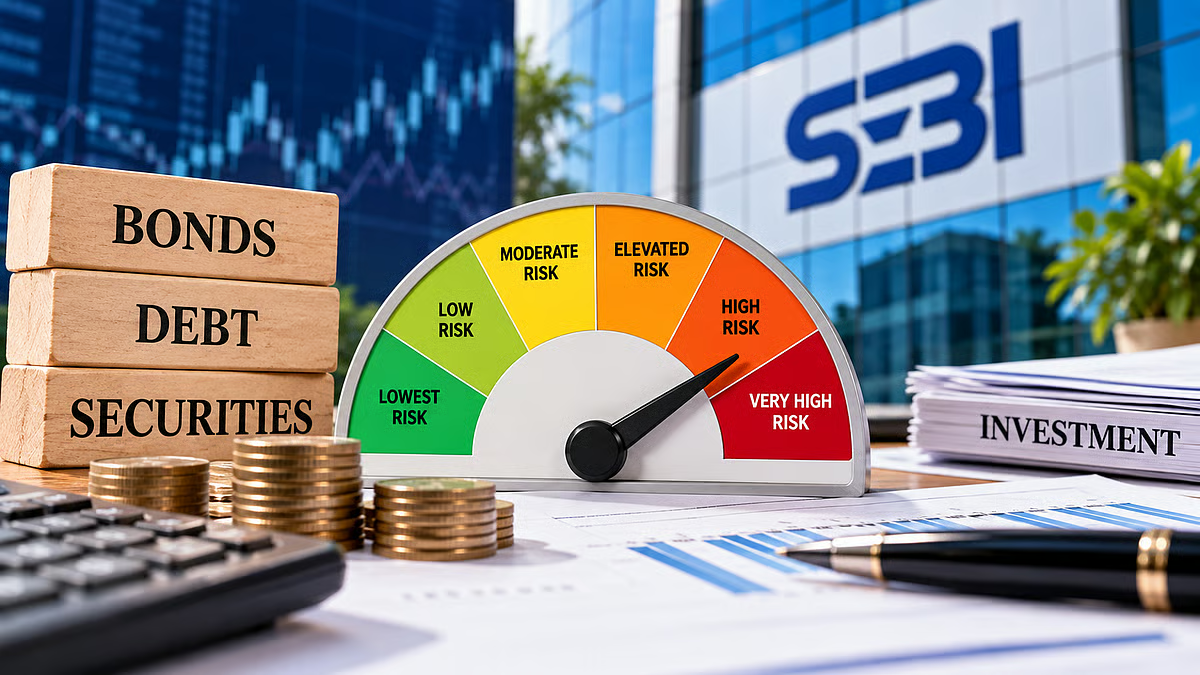
The strategy may appeal to income-oriented investors comfortable with credit complexity and global financial sector concentration. However, the risk profile is meaningfully elevated relative to conventional bond funds. CoCos can suffer complete principal loss without an issuer entering bankruptcy. Capital securities may have coupons deferred at the issuer’s discretion. Currency fluctuations add another layer of variability for a globally invested portfolio. Combined with the fund’s non-diversified structure, concentration in financials, and limited operating history, HYFY carries a risk profile that warrants careful consideration alongside its yield potential.