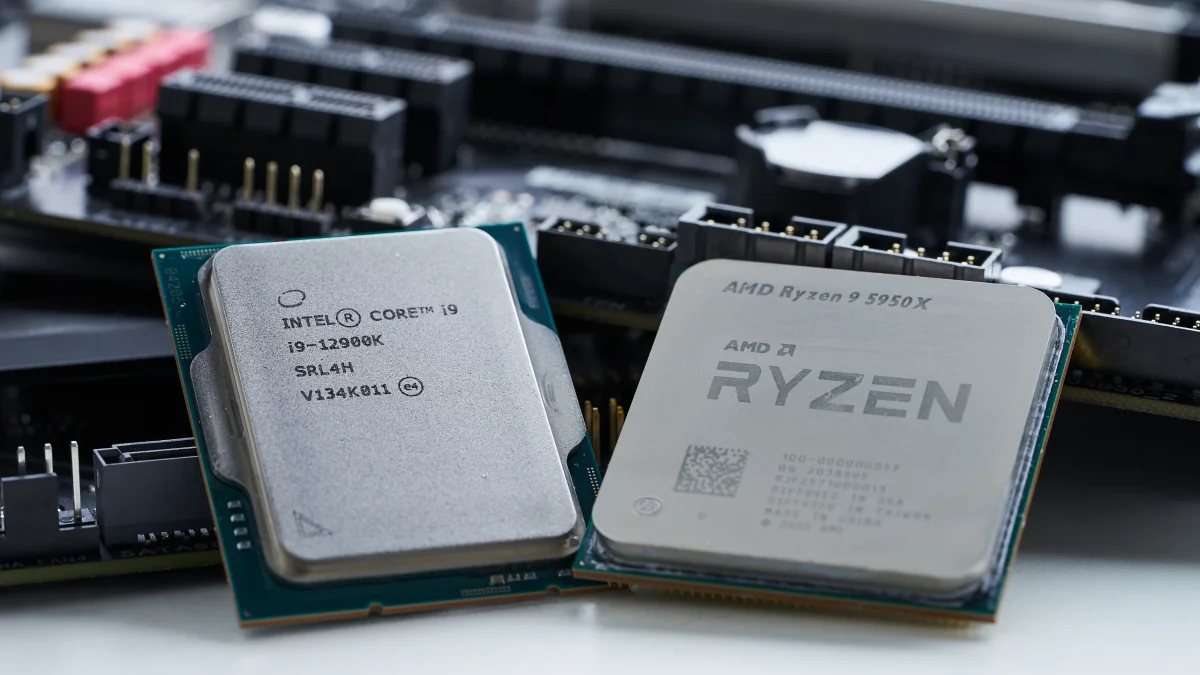
Intel has staged a rather unexpected comeback in the desktop CPU market, reclaiming a significant portion of the market share it previously lost to AMD. Interestingly, the turnaround might have more to do with supply conditions and the struggling gaming PC market than a sudden shift in processor competitiveness.
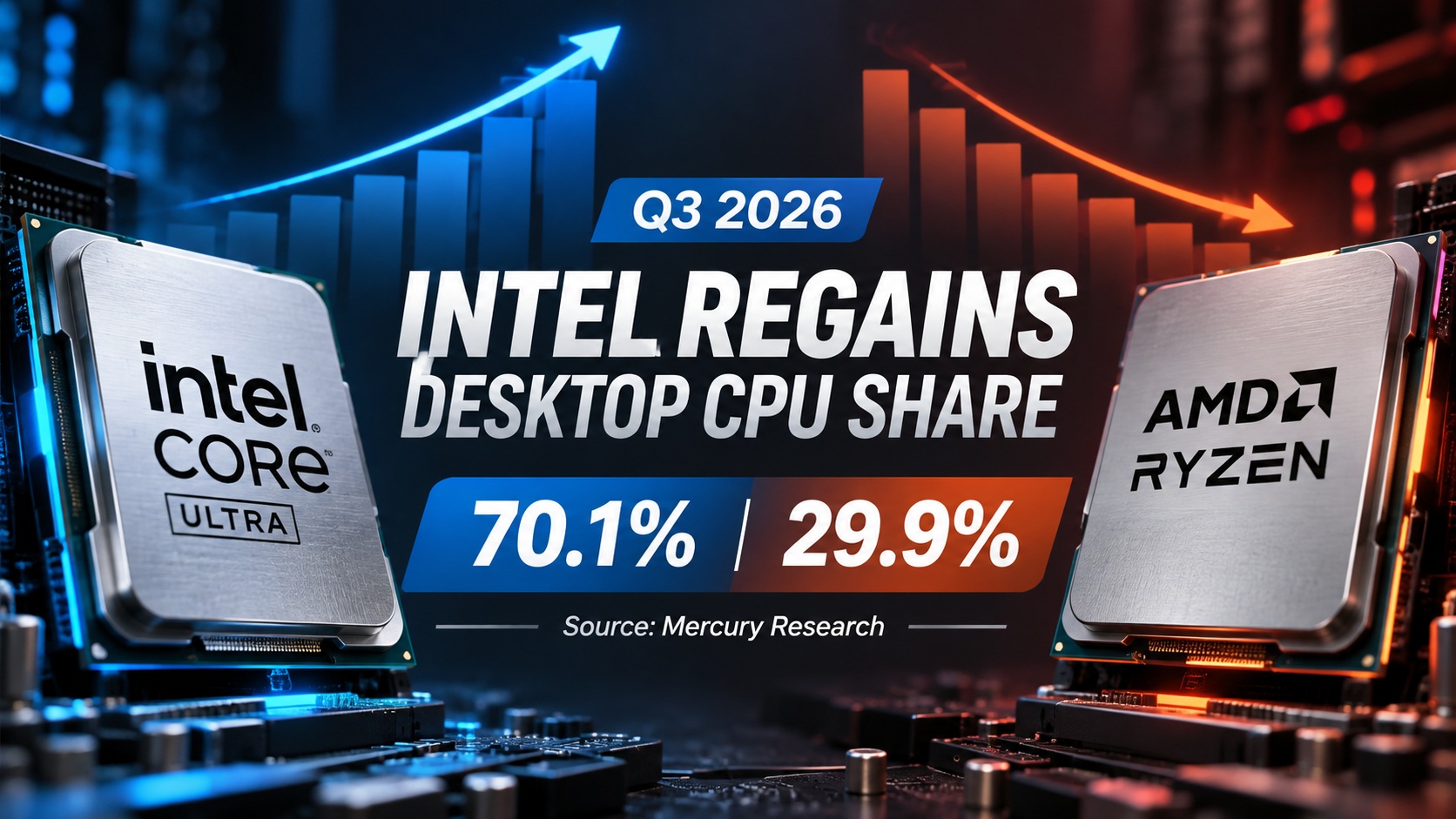
According to the latest Q3 2026 figures from Mercury Research, shared by PC Gamer, Intel’s desktop x86 CPU shipment share climbed to 70.1%, up from 65.1% in the preceding quarter. Meanwhile, AMD’s share declined from 34.9% to just 29.9%, representing a roughly five-percentage-point swing in Intel’s favor.
| Manufacturer | Q2 2026 | Q3 2026 | Change |
|---|---|---|---|
| Intel | 65.1% | 70.1% | +5.0 pp |
| AMD | 34.9% | 29.9% | -5.0 pp |

This is particularly surprising considering AMD’s recent momentum. As we reported back in August, Intel’s overall x86 CPU market share had fallen to levels last seen in 1995, while AMD continued gaining ground across several segments.
So, what explains this rather dramatic reversal?
Mercury Research acknowledges that the exact causes remain uncertain, but suggests Intel may have redirected more processor supply toward the desktop market following weaker demand for mobile CPUs. With desktop CPU demand typically increasing during the third quarter, Intel appears to have benefited from a seasonal recovery after undersupplying the segment earlier in 2026.

AMD, on the other hand, apparently failed to capitalize on the same seasonal uptick.
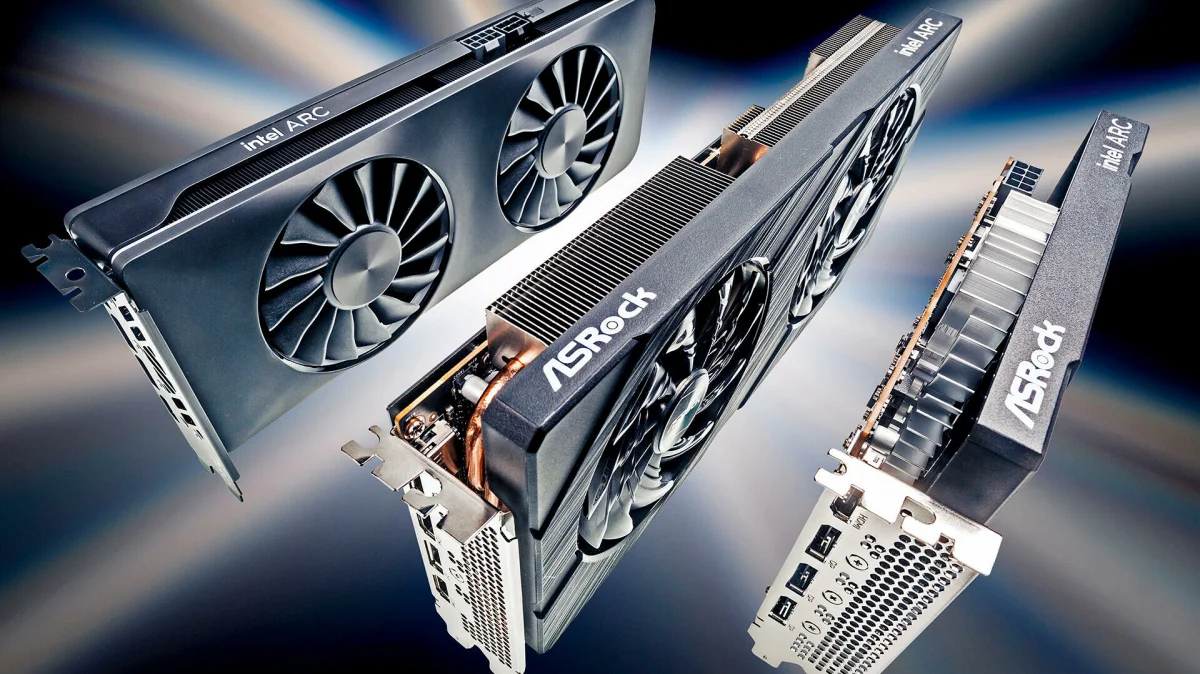
Another possible explanation concerns AMD’s stronger exposure to the enthusiast gaming market. Despite the company’s Ryzen X3D processors maintaining a considerable gaming-performance advantage, Mercury Research suggests that supply constraints affecting gaming GPUs have weakened demand for gaming PCs, disproportionately impacting AMD.
Rising DRAM prices could be exacerbating the situation. Indeed, Intel’s own Q3 2026 filing confirms that higher component costs, particularly memory, have negatively impacted client demand. Intel’s Client Computing and Physical AI Group revenue actually declined 5% year-over-year despite its desktop shipment-share gains.
New Research Shows Desktop CPU Market Shrunk 13% Despite Intel’s Share Gains
Further corroborating the broader market slowdown, Jon Peddie Research (JPR) published its Q3 2026 findings on November 13, revealing that global client CPU shipments declined 3.4% quarter-over-quarter and 6.5% year-over-year, reaching just 60.8 million units.
More importantly, desktop CPU shipments fell by 13% year-over-year, while notebook processors experienced a comparatively modest 4% decline. JPR attributes part of this weakness to sluggish demand in the DIY gaming market, where consumers reportedly brought forward purchases into late 2025 to avoid anticipated RAM and SSD price increases.


Meanwhile, server CPU shipments followed the opposite trajectory, climbing to 8.13 million units, compared to 7.83 million in the preceding quarter and 6.59 million a year earlier, with AMD continuing to gain ground.

JPR President Dr. Jon Peddie expects challenging conditions in the PC market to persist through at least the first half of 2027. Altogether, these findings suggest that Intel’s desktop market-share recovery occurred against the backdrop of a shrinking market, rather than a significant resurgence in overall consumer CPU demand.
AMD Shifts Focus Toward Data Centers As Server CPU Business Surges
Meanwhile, AMD’s latest financial results highlight the company’s increasing dependence on its lucrative data center business, which generated a record $8.5 billion in quarterly revenue, up 97% year-over-year.

Notably, AMD continued gaining ground in server CPU shipments, with its share increasing from 34.5% to 35.5% during Q3 2026, suggesting that its broader competitive position remains relatively strong.
Ultimately, Intel’s desktop market-share rebound should not necessarily be interpreted as a sudden resurgence in gaming CPU competitiveness. These figures measure processor shipments rather than end-user purchases, and the company’s gains could reflect improved supply availability and shifting market demand rather than consumers abandoning AMD’s Ryzen processors.
News Source: PC Gamer

About the author: Sebastian Castellanos is a data scientist by education and training. He’s also deeply passionate about PC gaming hardware and software. He has recently started writing technical articles and guides on Wccftech about PC hardware, games and mods.
Follow Wccftech on Google to get more of our news coverage in your feeds.