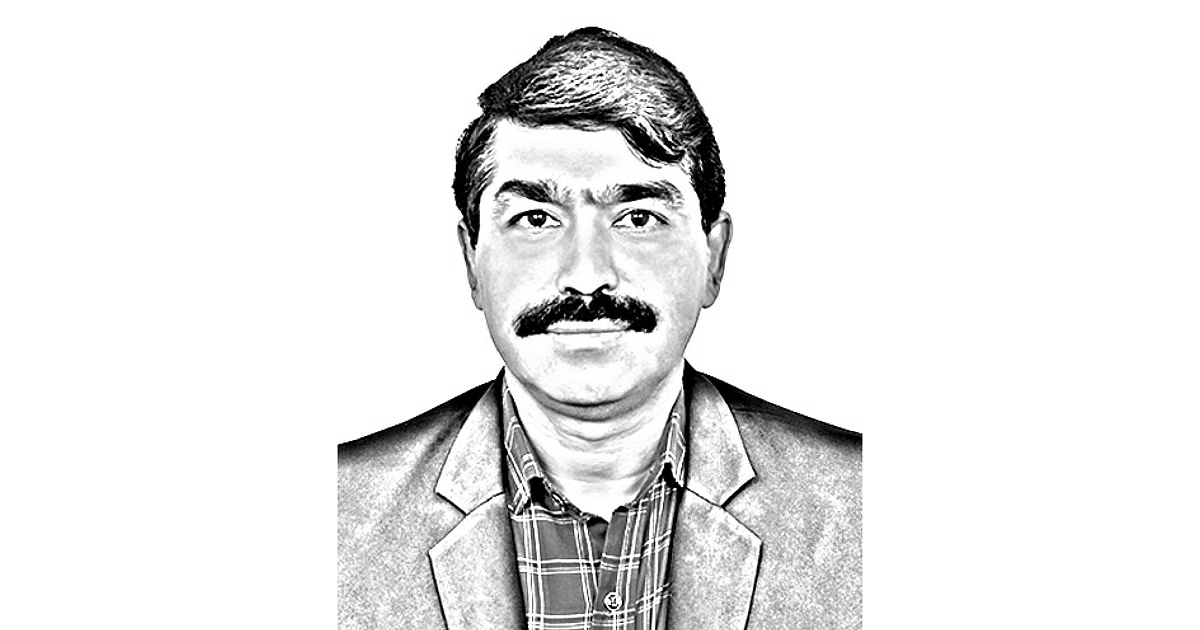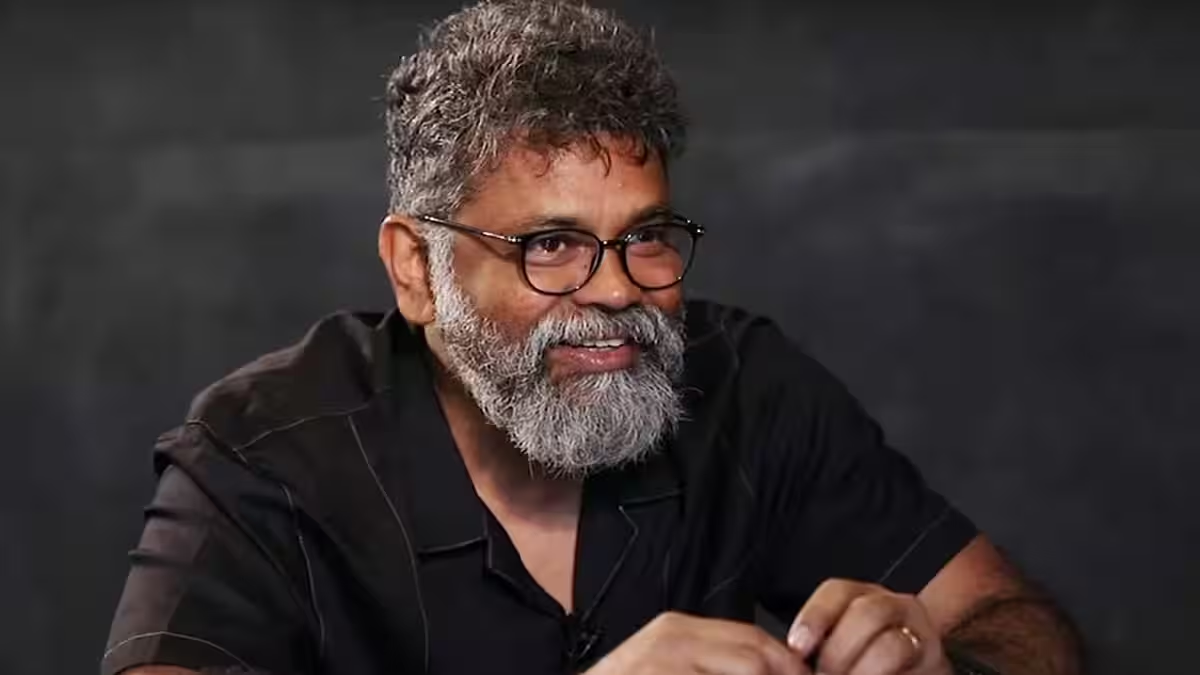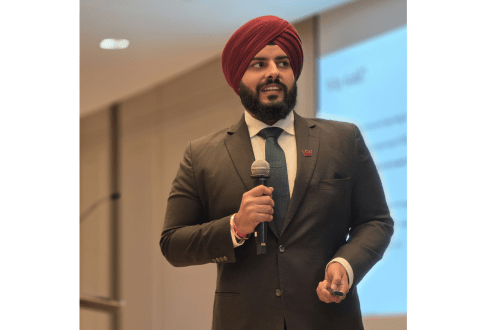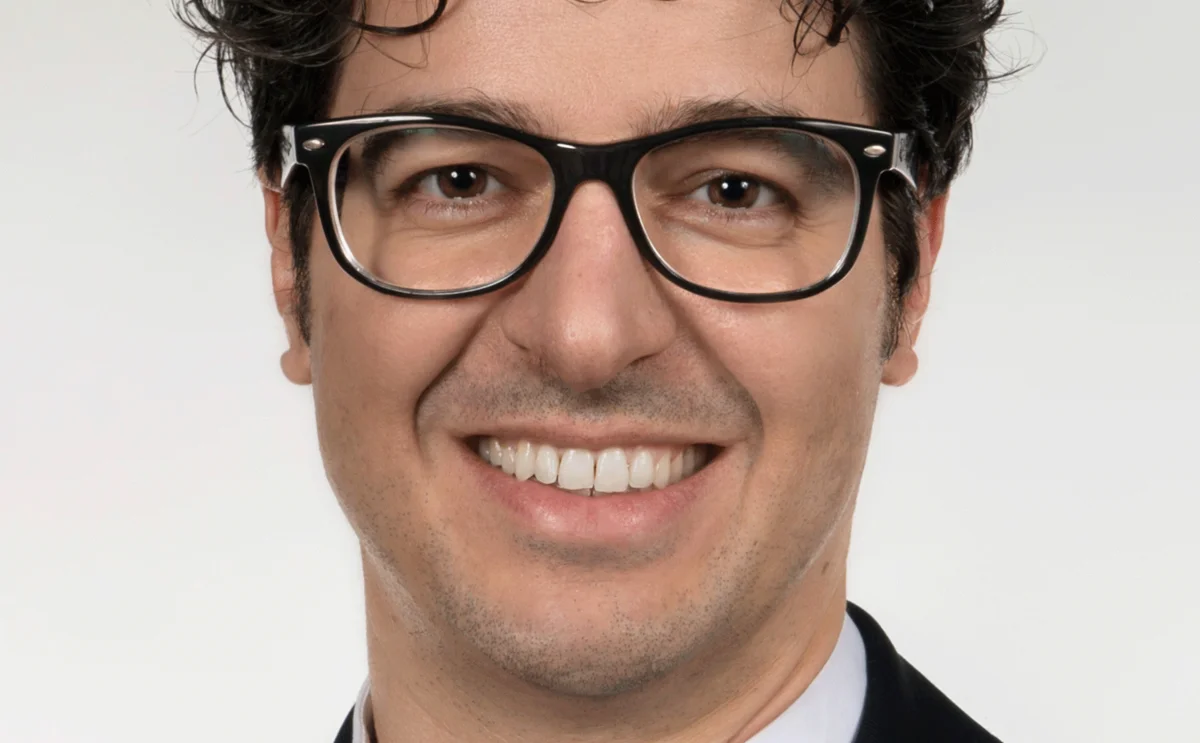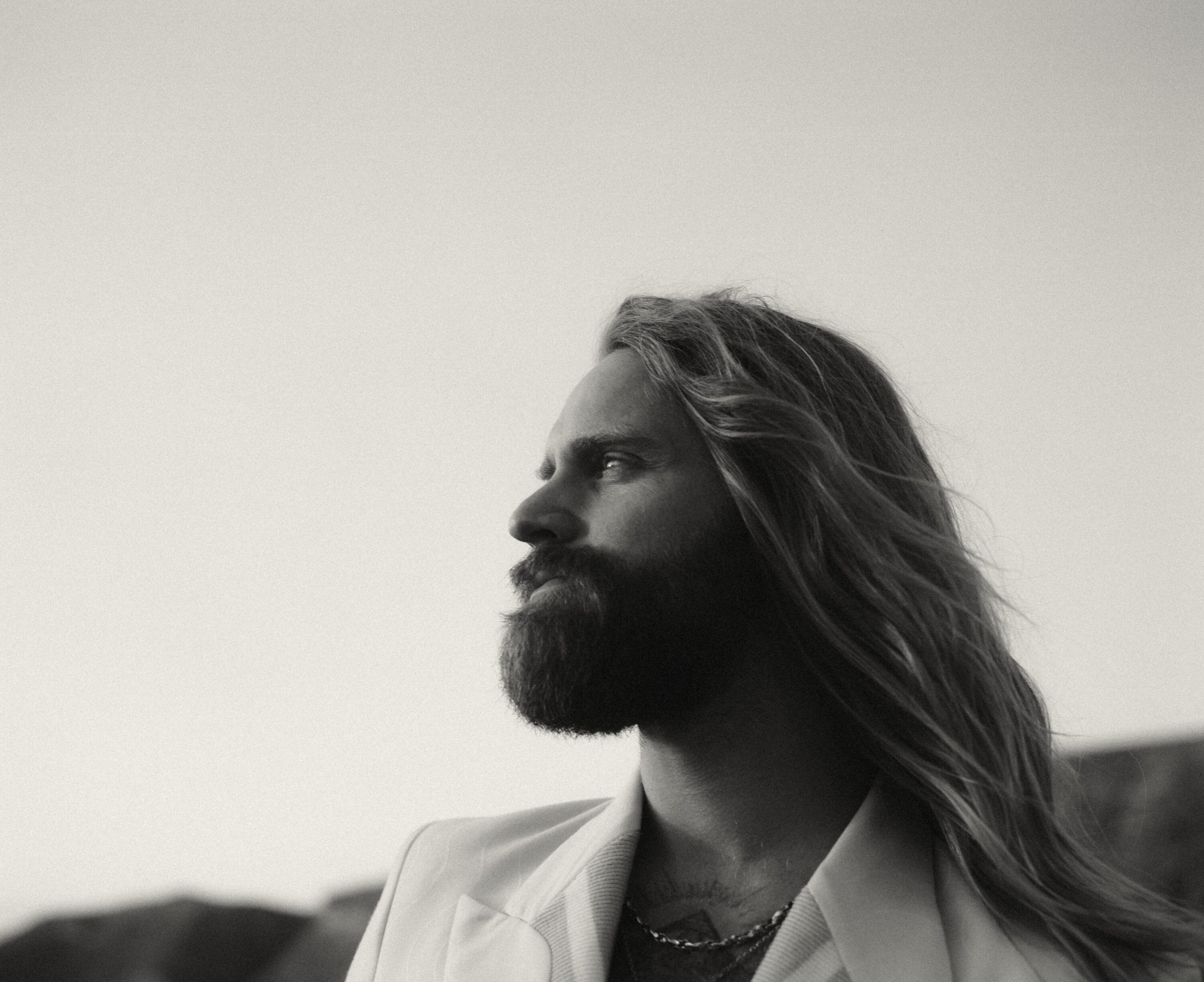
Amitabha Bagchi is the author of the bestselling Above Average and DSC Prize-winning Half the Night Is Gone. He has also translated the ghazals of Muneer Niazi into English. He is a professor at IIT, Delhi.
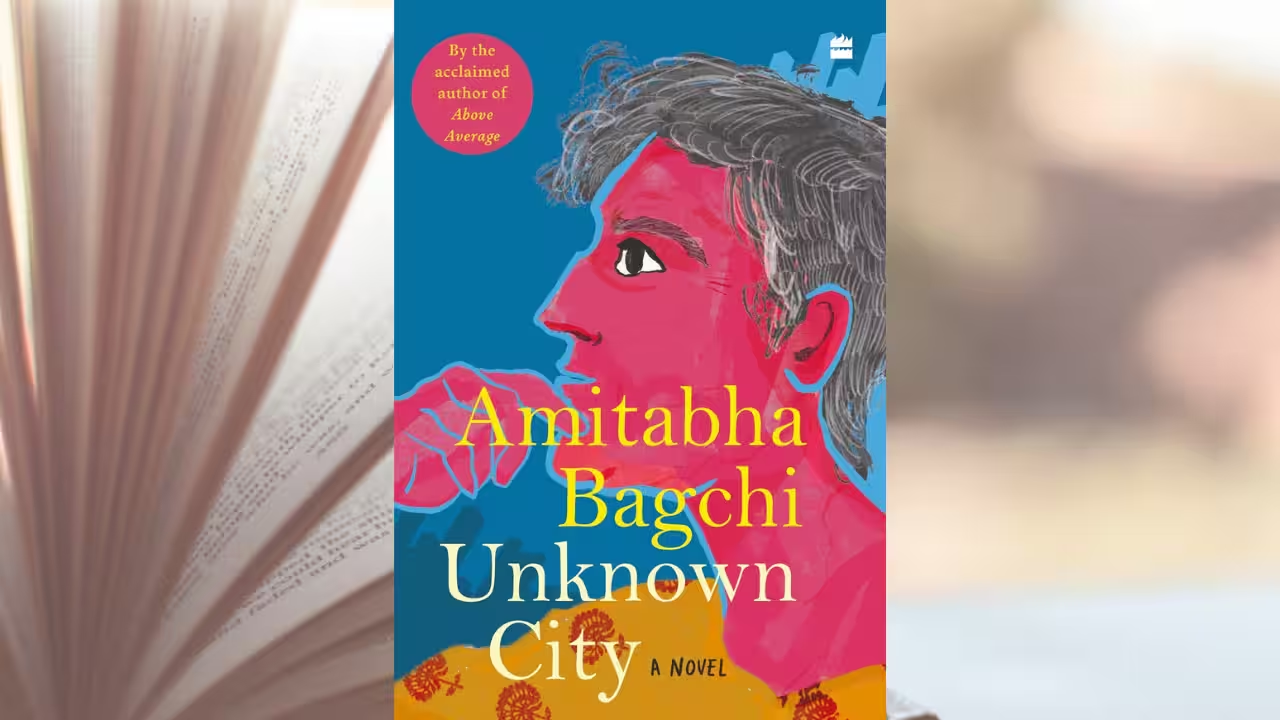
Unknown City is Bagchi’s fifth novel and a sequel to the bestseller Above Average. It is about Arindam Chatterjee who is now a nearly fifty-year-old novelist and professor. He is committed to revisiting the relationships he had in his twenties during his years in America and after graduating from the Indian Institute of Technology. He revisits his past relationships with a diverse array of women, some of whom he has kept in touch with intermittently, others he resurrects in his recollections and archived email conversations. There are shades of all kinds of women in terms of their ideologies, their expectations, their personalities, their career trajectories, the choices that they make professionally and personally. This may be a novel but it is also a cross between a long letter to the reader and the interior monologue of a writer finding his métier.
In Above Average, Arindam had said, ‘It is a blessing to be understood, and an even greater blessing to be granted understanding.’ In Unknown City he says “I don’t know enough about women”. Yet the entire book is about him reflecting on his relationships with women and after a period of time, insight dawning upon him about the true personalities and strong identities of the women who were his friends and girlfriends. Many of whom he had misread or misunderstood in his younger days.
Unknown City’s opening pages are challenging to read first. Only after attuning oneself to the fact that this is a first-person account, with the narrator ruminating, but in a comforting, mildly perplexed way, talking to the reader as if sharing his innermost thoughts and experiences. It leaves the reader in an odd position of wanting to be judgemental but by being constantly put on an emotional roller coaster, the reader has to find their sweet spot of being non-judgemental and pay attention. Their version of an unknown city. At times it is best put the book down and reflect. This novel is a powerful testimony to an individual’s changing life, changing nation, changing way of being etc.
This interview was conducted via email and has been lightly edited.
What is the genesis for Unknown City?
Two threads came together. The first was that during the early days of the pandemic, in 2020, when life slowed down for everyone, I found myself thinking about my twenties and the broken strands of old relationships. I made some notes at the time but didn’t think much of it. Then, two years later, in 2022, I was trying to write a novel whose protagonist was a woman, something that I had never felt I would be capable of doing and yet always wanted to do. It was not moving forward, so eventually I gave up on it and went back to the fragments I had written in 2020 and started developing them, with the sense that I first needed to better understand the women I had known when I was younger before I could think of writing a book centred around a woman. Those fragments turned into the novel Unknown City.
Would it be appropriate to consider this novel to contain elements of autofiction?
Yes, certainly. Autofiction in the sense that it draws on my own life and also presents the development of the main character as a writer. Above Average, which this book is a sequel to, was also autofiction in that sense, but in 2007 when it came out the term “autofiction” had not been invented yet, so we called it “semi-autobiographical fiction”. In an earlier era people used the French term roman-a-clef. This new term is much sleeker, much slicker! But I am not sure I like it more.
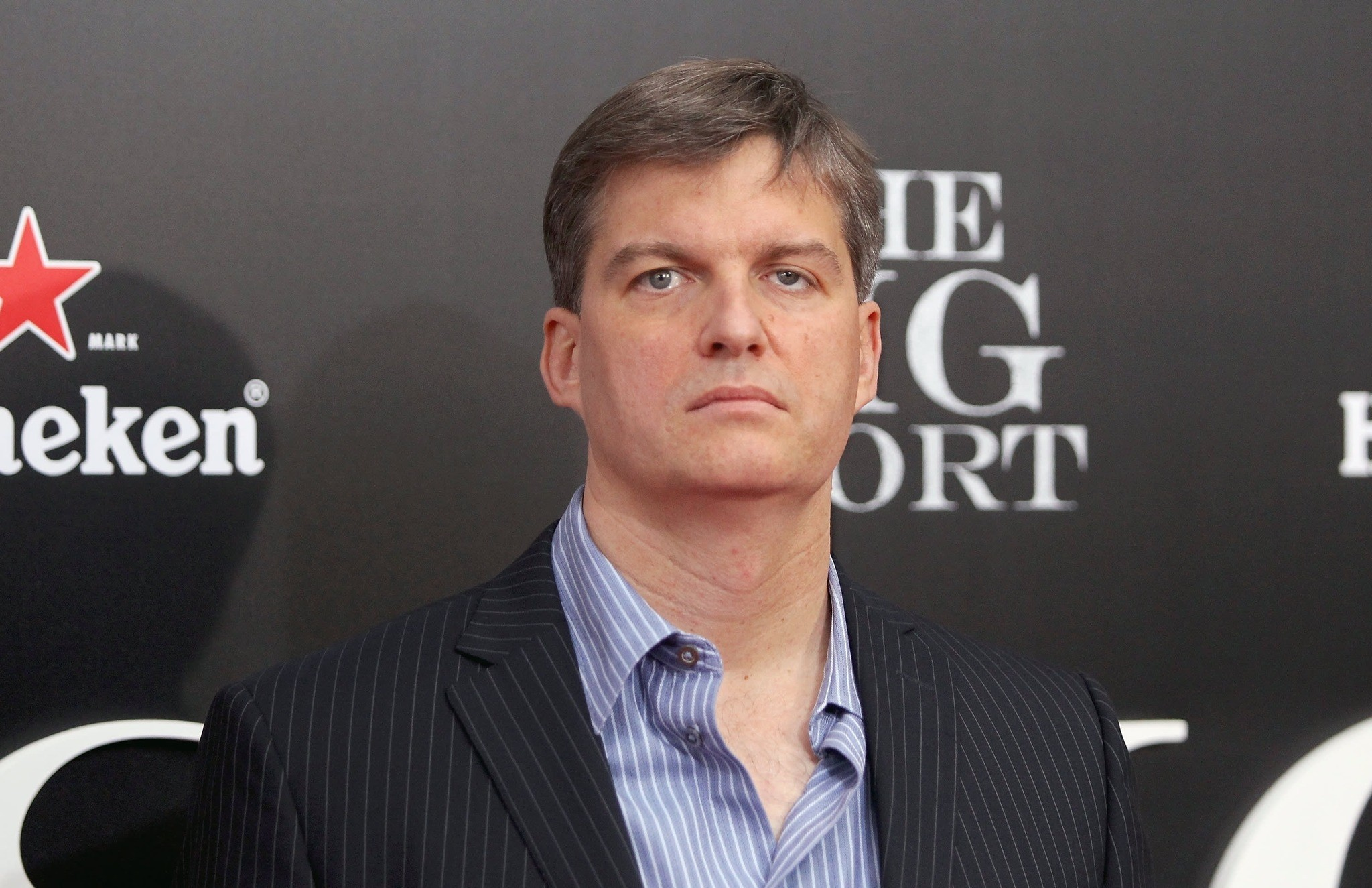
Amitabha Bagchi
The voice becomes stronger and surer with every passing page. Yet, you are challenging the fundamental rule of writing, show do not tell; here there is so much telling that it makes one’s head spin. So, is this about the growth of a novelist while that of also the protagonist?
I think most novelists grow from one book to the next. This has definitely been true for me. In fact, I would say something stronger: I have never been able to start a new book till a new voice came to me. The drama in Unknown City comes from reconsidering old memories, from the shock of discovering deep rooted misunderstandings. You can say it is “tell not show” but I think it is show in the sense that it shows the protagonist wandering in his own past and finding things that he didn’t know existed there. In any case, I think “show don’t tell” is a good guideline for fiction writers when they are starting out, but it is not necessarily fundamental to the process of writing literary fiction.
The manner in which you etch it in your characters is remarkable. How did you define or draft each character till they met with your satisfaction? Why does this novel sound like a polyphonic novel though it is ostensibly being privy to the mind of the writer/protagonist?
The thing about Unknown City is that its fundamental narrative movement is similar to the movement of character development. What I mean is that we are presented with a character but then the thought process that the protagonist, Arindam Chatterjee, follows as he recalls certain incidents peels layers off and we go further and further into that character along with him. A specific thing about this book—I didn’t deliberately plan this, it just happened—is that there’s very little dialogue but there are many one-liners, snippets of what someone said, that are presented. So, we hear from almost all the characters, but what we hear has been distilled through Arindam’s memory, and hence is, by definition, memorable. Perhaps this is why you thought of the book as polyphonic.
The relationships shared/mentioned become like an incessant drumming in the reader’s head. It is almost like a conversation amongst collegiates exchanging notes about their love lives. Yet, it is impossible to put the book down in the middle of an episode being recounted. How did you figure out details of these multiple relationships that they stood out distinctly? Did you work out the backstories first before incorporating them into the main narrative?
As I mentioned, many of the main characters are drawn from my own life, so the challenges were not so much in building backstories or inventing narrative details, the challenges were different. The first challenge was to translate real people into characters. This has an easy part and a difficult part. The easy part is to make formally complete characters out of real people, i.e., make sure they are consistent and fully realised on the page. The hard part is to develop empathy and compassion within yourself for people who have hurt you, and to hold yourself accountable in the cases that you have hurt someone. The second challenge comes from the fact that life itself is random and doesn’t conform to any grand narrative, but a novel doesn’t have that luxury. So, the material drawn from life has to be reworked till some kind of narrative emerges. The danger here, of course, is that you begin to believe that life has a narrative. But this is an occupational hazard of the novelist’s profession. There are no hard hats that can protect you from the danger of believing your own stories!
Writers have the privilege of playing with time. What impact does it have on a writer when fiction encapsulates a slice of recent history that really seems like a different era? What is it about the intersection of memory, time, and history that fascinates you?
I think the intersection of memory, history and time have always been the stuff of all narrative forms, from the epics of old down to even what people call flash fiction in the current day. In modern fiction, from the early twentieth century onwards, there has been a movement to explore the nature of memory itself. Proust is a prominent figure in this movement. Today we acknowledge that memory is imperfect in many ways, and we have seen over a century of writing that builds literature out of this acknowledgment. In Unknown City we see a quixotic project, an effort to explore and correct that which has been wrongly remembered. In some ways you could think of this as my response to my own times, where every aspect of history, even every aspect of the present, has several contradictory versions that neatly align with the ideology of the persons who hold those versions. As we go deeper into the “fake news” era, questions of memory are becoming more and more urgent.
This is the first time that you have written a sequel. Serialisation is the epitome of storytelling in the twentieth century especially on streaming television platforms. Does it hold true for novels too? Will the readers remain engaged?
Serialisation has been around since the mid-nineteenth century, from at least the times of Dickens. Devaki Nandan Khatri’s Chandrakanta, for example, was first published in serial form in the late 1880s. And I think it’s very different writing a novel in serial form and writing a sequel long after the first book came out (Above Average came out in 2007 and Unknown City in 2025, eighteen years later.) One key difference I think is that when I wrote the end of Above Average back in 2005 I didn’t leave things hanging with the idea of continuing it in a sequel. Even this sequel was written in such a way that someone who hasn’t read Above Average could take it as a stand-alone book and enjoy it. Personally, I think of a novel as a world in itself, complete and finished, even if there are a few things unresolved. I want the reader to resolve them or deal with the lack of resolution, without the promise that I might come back in a couple of years with a resolution for them. The one time I actually wanted to write a sequel to a novel, Half the Night is Gone, I struggled for two years and then eventually gave up on the idea.
Despite women’s movements being quite successful, hyper-masculinity is the norm today. On p.87 it says, “I don’t know enough about women…probably because the feminist critique id male writing has no space for bald-faced admissions of ignorance.” Unknown City is a wading into this unknown territory. Why does your novel feel like a dialogue, more as if the bewildered and entitled male is trying to understand the feminist?
I have always experienced the gender divide as something that feels unbridgeable. Yet, as a humanist at heart I feel that two human beings should be able to connect at some level. As you can see, these are two contradictory propositions. My literary hero, Krishna Sobti, believed that a writer should be able to write both men and women characters equally well. And she proved this in her writing. But I feel she could do this because she was a woman. It’s not as easy for a man to enter into the sensibility of a woman. We are working with a basic disadvantage, a socialisation that, across cultures, encourages men to ignore the inner world of women, because the truths of that inner world indict us men as oppressors. So, if a man does set out to write a woman character, he must first unlearn everything he believes in. The feminist critique of human society provides a critical apparatus that can help start this process. But that process is never going to be easy, because human life is not simple enough to be fully encapsulated into even the most sophisticated theory. Despite this, Arindam bumbles through the writings of some prominent twentieth century feminists, hoping that he can make a little space for himself, a space in which he can acknowledge the structure of oppression he is part of and not drown in the guilt this acknowledgment brings. I hope that begins to answer your question.
Why title it Unknown City? It lends itself to multiple meanings after having read the novel, but how did you select it?
Hopefully the answer to the previous question sheds some light on this one as well. The title comes from she’er of Parveen Shakir: “raaston ka ilm tha hum ko na samton ki khabar/shehr-e-namaalum ki chaahat magar karte rahe” (I didn’t know what was where, its streets were new to me/but still I desired it, the unknown city). This couplet seemed to completely describe Arindam’s relationship to the world, especially to the world of women. And so, the phrase “Unknown city” seemed like an apt title.
What is it that you find charming with these long Henry James-like paragraphs? With James, it was the definitive interior monologue technique. But in the Unknown City it is impossible to gauge if the writer is addressing the reader or is it a meandering conversation with himself?
When I wrote Above Average, the style naturally ended up sounding like someone recounting stories of their college days some years after they had ended. In Unknown City, two decades have passed; the same voice has grown more analytical, more sure and yet more confused. The more Arindam learns, the less he understands. Every crisp declarative statement invites qualification, there are sidenotes and footnotes to everything. There is an implicit sense that direct statements are likely to be false, or only partially true. In a world where confidence has become a hallmark of deceit, caveats and subordinate clauses feel necessary to Arindam, as they do to me. So, I don’t think it is the charm of this style that has brought me to it. It’s more like I am stuck in this style because it feels, at this point in time, like the only way I can write.
For a reader, who has lived through these times, the nuanced descriptions and opinions that the narrator offers will bring back many a memory. At other times, it feels as if this is a discourse that is meant to speak to everyone across the ideological spectrum. Who is your intended audience?
In these highly partisan times, I still hold the quixotic notion that people should be able to talk across divides of gender, sexuality, caste, race, etc. That means, effectively, that I consider everyone to be my intended audience. In practice it probably means that my audience shrinks, because today increasingly authors reach out to their audience by first making some kind of claim of belonging—“I am from your camp” or “I am just like you”—and then presenting the book that backs up that claim. I have no such claim to make.
You recently published “A manifesto for Indians writing in English”. What prompted you to write it?
In the late 1990s when Salman Rushdie made his unfortunate and ill-informed statement claiming that Indian English writing was superior to Indian writing in other languages, I was thinking something quite the opposite. I appreciated the works of the writers who were writing then, but I wasn’t compelled by them, I thought they were good but not great. And I saw major gaps in their concerns and in the way they approached language. The thing I was worried about then, specifically the idea that the whole movement was standing on the narrow basis of western approbation, seems to have played out in some specific ways over the next three decades and today Indian English literary fiction is not top of the table even in our home market.
I think it is time now to acknowledge a few things about Indian Writing in English. Some of these things crystallised for me when I spent six months reading sixty odd books that had been submitted for the JCB Prize for Literature in 2022. Firstly, the great wave of the 1990s was a Western fad and not the early stirrings of a great literature. If it had been then Indian English writing wouldn’t have devolved into Chetan Bhagatisms of various kinds within a decade of Arundhati Roy winning the Booker Prize. Secondly, Indian English writers have had precious little to do with Indian literature in other languages, and this has impoverished our writing and limited the range of our concerns. The wave of translations that began ten or fifteen years ago has drowned out original English literary fiction by Indians, and deservedly so because those writers are talking about things that Indian English writers don’t seem to know anything about. Thirdly, Indian writers writing in English today generally don’t have a deep relationship with the English language. They don’t feel that writing literary fiction should necessarily involve pushing the boundaries of the language they are writing in.
Having said all that, I believe that English is an Indian language and that Indian English writers are capable of producing a literature that can shed light on the innermost realms of the human heart. I wrote the so-called manifesto to list out things I feel we will need to do if we are to produce such a literature: We need to look beyond the bubble of our privilege, we need to understand history, we need to develop a moral perspective and, of course, we need to work on our prose. Let us discard the false sense of importance that comes from writing in a language that happens to be a language of power; the fancy litfests in five-star hotels, the hobnobbing with the wealthy, the attention of white people are all distractions from the real thing. Let us instead compare ourselves objectively with our colleagues writing in other Indian languages. And then, in all humility, let us get down to the hard but honest work of writing.