
There can be many advantages to receiving retirement income from a fairly-priced annuity.
getty
Are you concerned that you might outlive your money in retirement? You’re not alone. Almost two-thirds (62%) of survey respondents feared outliving their money more than they feared dying, according to Living and Funding Longer Lives, a 2025 survey by Corebridge Financial.
The best way to address the fear of running out of money in retirement is to build a portfolio of lifetime retirement income that covers your living expenses, with a margin for surprises. To build such a portfolio, you’ll need to shift your thinking. When you were working, you most likely focused on investing in a diversified portfolio of retirement savings. As you approach retirement, you’ll need to shift your focus to developing a diversified portfolio of retirement income.
Applying Portfolio Thinking To Retirement Income
When investing for retirement, financial advisors typically suggest allocating your assets between bonds, stocks, and other investments such as cash, real estate, and commodities. When you approach retirement and apply portfolio thinking to living in retirement, the “bond” part of your retirement income portfolio delivers monthly guaranteed retirement income that you can’t outlive and won’t drop if the stock market crashes. These sources of guaranteed retirement income include Social Security, pensions if you’ve earned one, bond ladders, and income annuities purchased from an insurance company.
While there are many flavors of annuities, for the purpose of this discussion, we’ll discuss income annuities that deliver a monthly income for the rest of your life, no matter how long you live, and that won’t drop if the stock market crashes. Like any important purchase you make, there are annuities that are priced fairly and annuities that you might want to avoid. You’ll need to shop carefully or work with an advisor who you trust to choose the right one for you.
Continuing with the portfolio thinking, the “stock” part of your retirement income portfolio involves investing a portion of your retirement savings and using a systematical withdrawal plan that’s designed to deliver a retirement paycheck for the rest of your life. This variable retirement paycheck might increase or decrease over time, depending on your investment performance.
So, how much do you allocate between guaranteed retirement income and a variable retirement paycheck? An overarching goal is to have sufficient guaranteed income so that when the stock market dips or crashes, you don’t panic and sell your stock investments near a market bottom to raise the cash you need for essential needs. To that end, you’ll want to think carefully about how much guaranteed retirement income you need to feel comfortable during a market crash. One strategy to apply this goal is to cover your “must have” living expenses with guaranteed retirement income and cover your “nice to have” living expenses with variable retirement paychecks.
Annuities Can Play Multiple Roles In Your Retirement Income Portfolio
Once you decide how much guaranteed retirement income you need to feel comfortable during stock market dips, estimate how much income you’ll get from Social Security and pensions. You can then close any gap with an income annuity.
Annuities have other advantages than providing a portion of your guaranteed income. For example, 57% of survey respondents report that having more guaranteed lifetime income would improve their financial security in retirement, according to The Decumulation Planning Gap, another recent survey from Corebridge Financial. This guaranteed lifetime income would help give them permission to do more of what they want, such as travel (69% of survey respondents), home improvements (29%), and eating out (25%). These findings are consistent with similar studies from Blackrock, Fidelity, and TIAA.
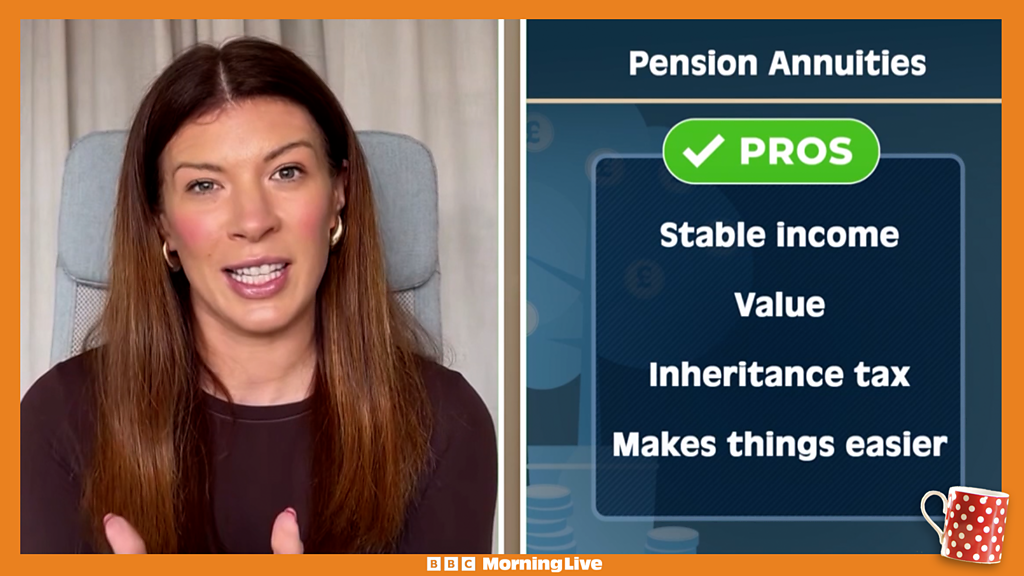
With many retirees expected to live long lives, annuities can also be considered as insurance against the risk of living a long time and outliving your money. Here’s one way to look at it:
“Annuities are the only form of insurance that rewards you when something good happens—like waking up every day. Unlike many forms of insurance that protect against risks you hope never occur, annuities provide a benefit retirees can look forward to receiving—guaranteed income that can’t be outlived,” said Bryan Pinsky, president of Individual Retirement and Life Insurance for Corebridge Financial. “That dependable income can help cover everyday expenses while giving retirees more flexibility to spend on travel, hobbies and other priorities.”
Another good thing about an annuity is that once you start, it’s very user friendly, automatically dropping money into your checking account each month. You won’t need to manage investments or withdrawals. As such, annuities can help protect you against cognitive decline in your later years, helping prevent financial losses due to making mistakes or becoming a victim of fraud.
Building a retirement income is one of your most important retirement planning tasks, and there are many important considerations to take into account to ensure your financial security. Do your homework and consider all the options available to you to help create the retirement income you need.