While renewed interest in integrated bracelet sports watches born in the 1970s has focused especially on the Patek Philippe Nautilus, Audemars Piguet Royal Oak and Vacheron Constantin 222, one model from the era has remained unfairly in the shadows: Girard-Perregaux’s equally noteworthy Laureato.
Launched in 1975 (right between the Royal Oak of 1972 and the Nautilus of 1976) the Laureato was exceptional both in its looks and in having a world-first high-frequency quartz movement independently designed and developed at the factory.
Originally called the Quartz Chronometer, the newcomer had a battery-powered mechanism that earned so many prizes for timekeeping accuracy that the watch was initially only nicknamed the Laureato (or Graduate), but the moniker stuck.
While the Nautilus and Royal Oak were famously penned by Gérald Genta and the 222 is attributed to another freelance designer, the talented Jörg Hysek, the person behind the Laureato — once falsely attributed to Italian architect Adolfo Natalini — is known only to have been a Girard-Perregaux employee whose name has never been revealed.
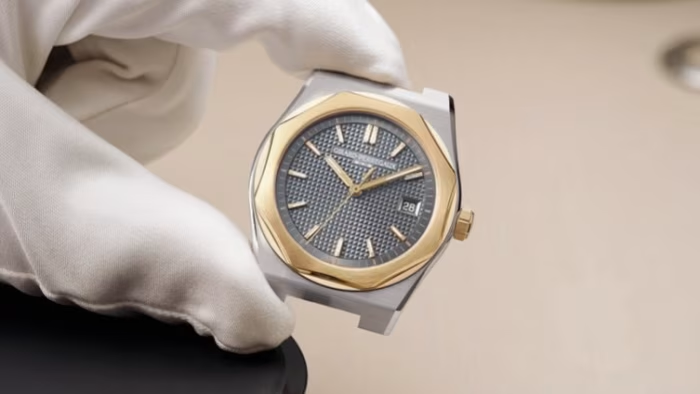
But that has not prevented his — or her — legacy from living on for half a century and now, to mark 50 years since the Laureato/Quartz Chronometer was unveiled, Girard-Perregaux has released this special edition in a suitably 1970s steel and yellow gold bimetal configuration.
Beneath the grey, clous-de-Paris dial lies the all-new GP4800 calibre pictured here in deconstructed form: a three-hand, automatic movement that has been made as compact as possible to suit the move towards smaller case sizes — but which can also be used as a base on to which complications can be added.

Measuring just 25.6mm in diameter and 4.28mm thick, the marvel of micro-engineering features an escapement made from lightweight, low-friction, antimagnetic silicium, which transfers its energy to a variable inertia balance wheel that can be precisely adjusted for accuracy using a quartet of minuscule, white gold timing screws mounted on its rim.
A high-torque mainspring barrel gives a minimum power reserve of 55 hours, while the 18ct gold oscillating weight runs on ceramic ball bearings and is protected from damage by a shock absorber system that — as wearers with hypersensitive ears will be pleased to hear — is also claimed to “reduce winding noise”.
Girard-Perregaux fans will also appreciate the incorporation of the “three gold bridges” architecture, which has been a signature of the maker’s movements since it was first used in 1867.
Comprising the balance bridge, gear train bridge and barrel bridge, the metal plates are both functional and aesthetic, with the balance bridge being skeletonised to give a view of the balance wheel, balance spring and escapement through the transparent case back.
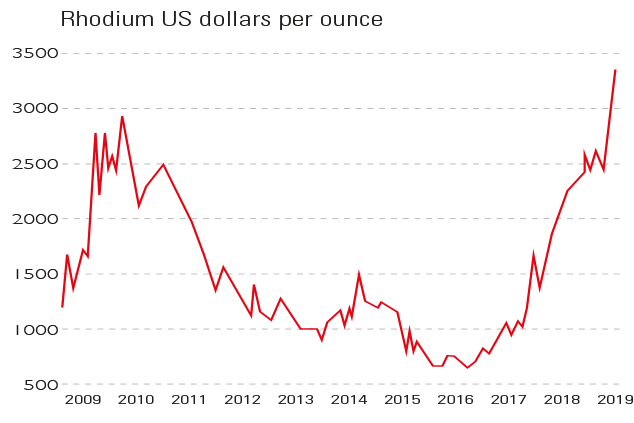
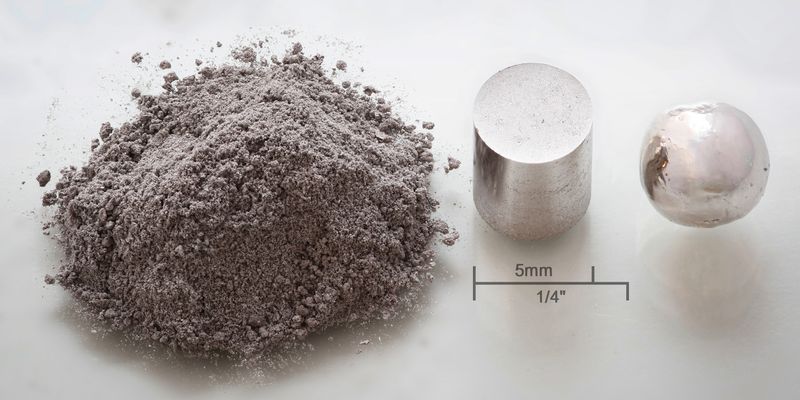
The 163 components that make up the movement are variously decorated with 10 different finishes, including rhodium plating and engraving on the bridges, snailing on the mainspring barrel, sand blasting and circular-graining of the mainplate and polished, arrow-shaped motifs on the oscillating weight.
Just 200 examples of the Laureato Fifty will be available worldwide, priced at £22,700, with each serving as a fitting tribute to the model’s original designer — whoever they might be.