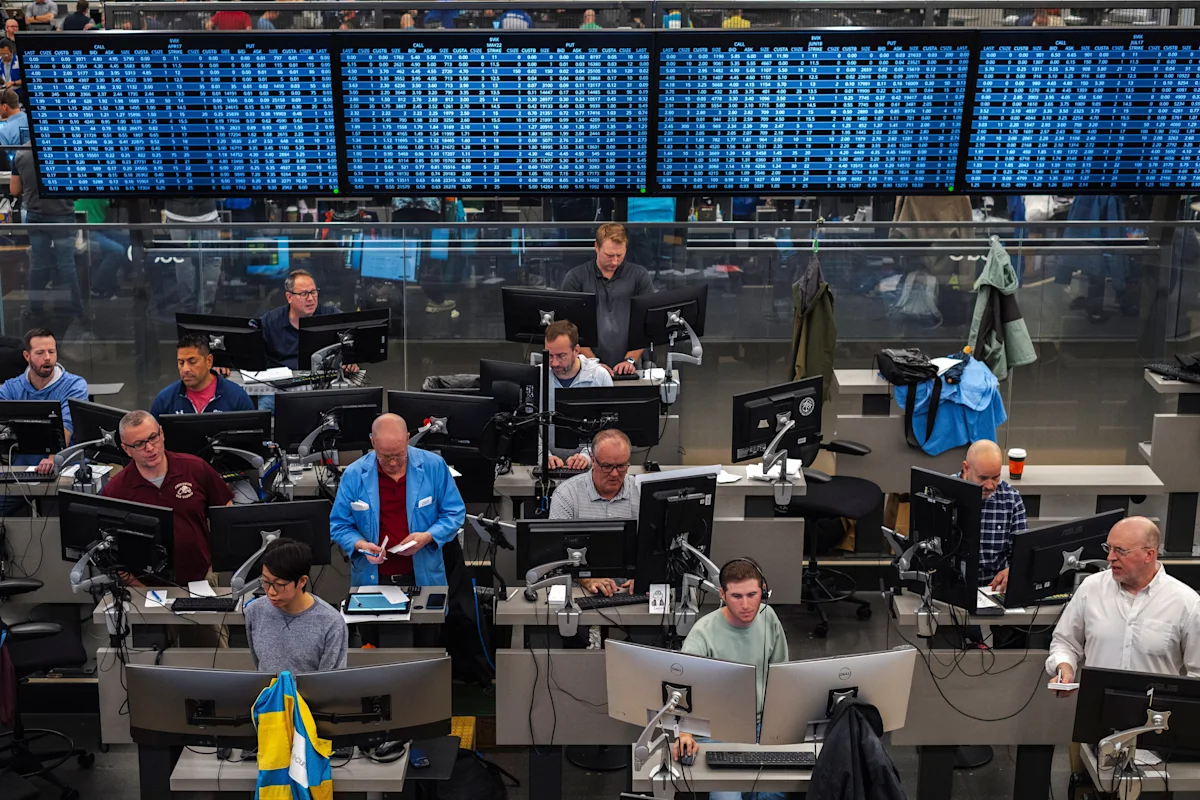
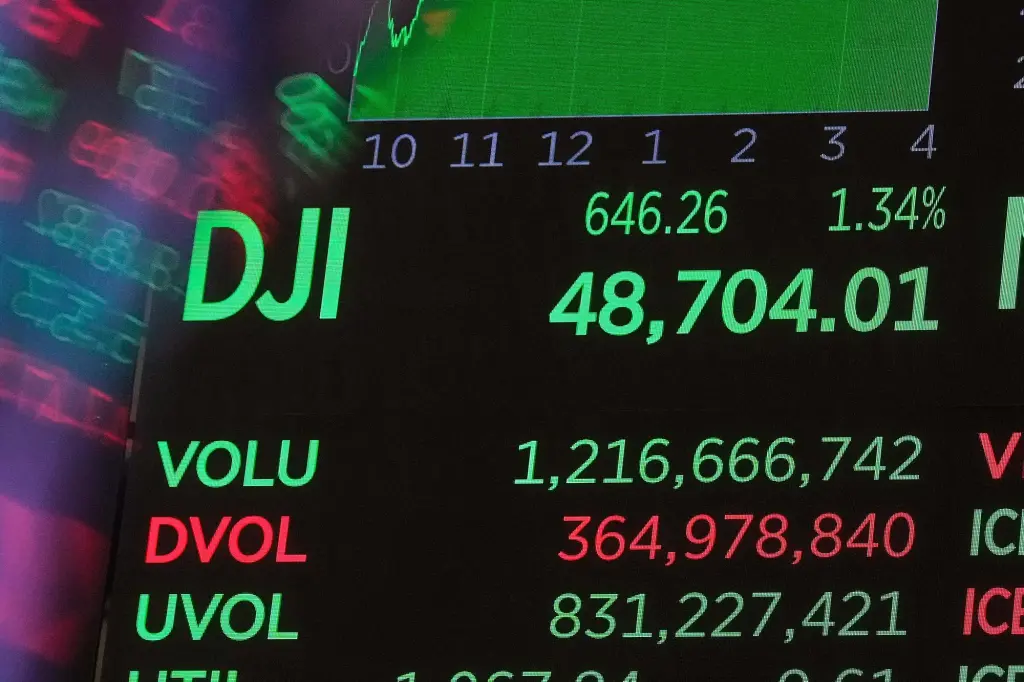
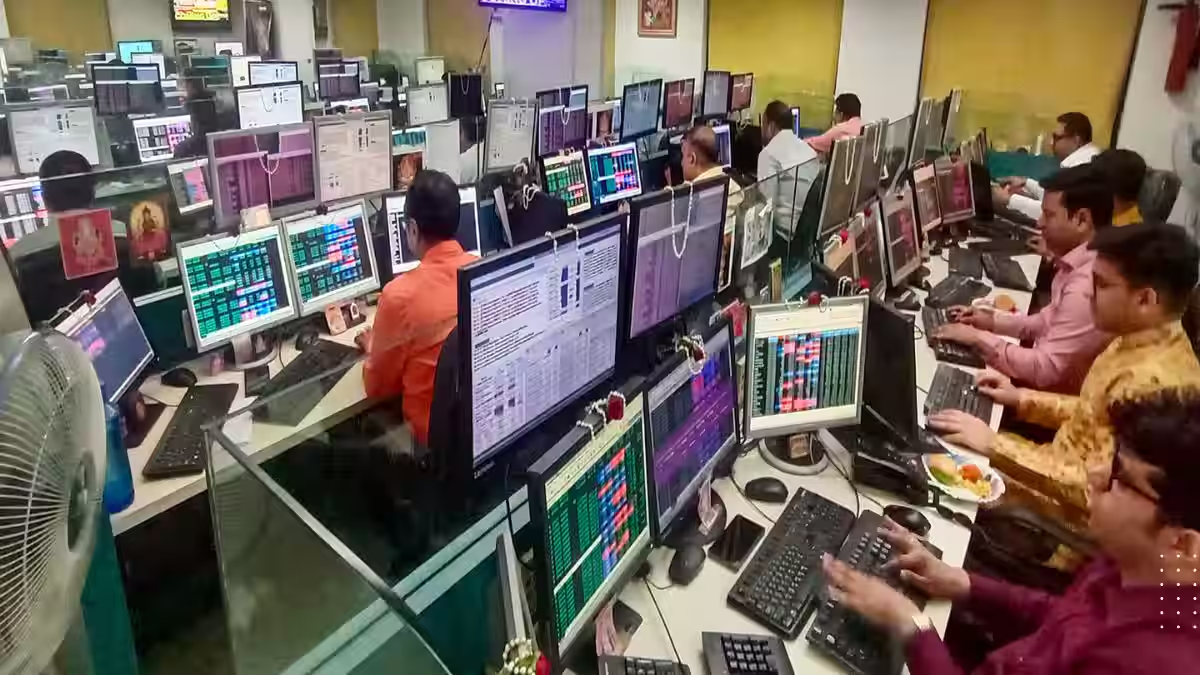
The Indian equity market has been rather volatile in the last six months.
The West Asia war, a surge in Brent crude oil prices, impact of Trump 2.0’s reciprocal tariffs on Indian goods, persistent foreign portfolio investor (FPI) selling, concerns about a below-normal south monsoon this year, and the weak Indian rupee have been some of the factors at play.
The bellwether Nifty 50 index, which represents well-established large companies, plunged -7.9% over the past six months, whereas the Nifty Smallcap 250 index, which represents small-caps––much-loved by investors in recent years–– has delivered 7.8%.
In other words, the large frontline companies have faltered, while the smaller companies have shown resilience amid volatility and generated wealth for investors.
This is because the smaller companies are mainly domestic-facing playbooks. With the Indian economy showing resilience and many small-caps participating in the growth story today (reflected by their strong order books), they have been rather insulated from global macroeconomic and geopolitical events.
Moreover, with investors exuding confidence in small caps, fund managers haven’t held back from deploying the assets into small caps, which can again be attributed to the rise of the Nifty Smallcap 250 index.
How have small-cap funds fared?
Small-cap funds, on average, have delivered around 10% absolute returns over the last 6 months, according to Value Research data as of 22 June 2026.
That said, certain schemes have delivered even higher returns in the last 6 months, as seen in the table here.
Top Performing Small Cap Funds Over the Last 6 Months
| Funds | 6 Mths Abs Ret (%) |
| Bank of India Small Cap Fund | 21.9 |
| TRUSTMF Small Cap Fund | 18.8 |
| Union Small Cap Fund | 17.0 |
| Motilal Oswal Small Cap Fund | 15.5 |
| ITI Small Cap Fund | 14.8 |
| LIC MF Small Cap Fund | 14.8 |
| JM Small Cap Fund | 14.6 |
| Bajaj Finserv Small Cap Fund | 13.5 |
| Helios Small Cap Fund | 12.2 |
| HSBC Small Cap Fund | 12.1 |
Direct Plan and Growth Option considered.
Data as of 22 June 2026
The top 3 small funds that have demonstrated remarkable performance over the last 6 months are:
Bank of India Small Cap Fund
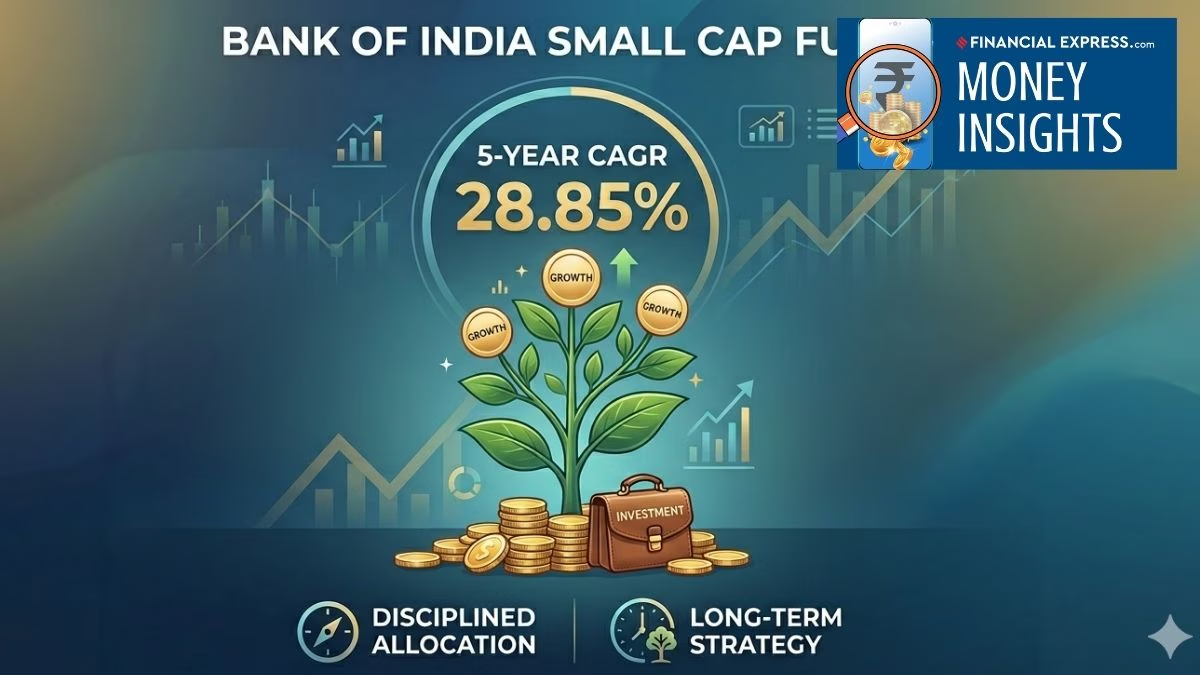
This scheme, launched in December 2018 as the BOI AXA Small Cap Fund, has clocked an absolute return of 21.9% – the highest in its category over the past 6 months (as of 22 June 2026).
Bank of India Small Cap Fund has phenomenally outperformed the category and the small-cap index.
What’s behind this stupendous performance?
Stocks like Acutaas Chemicals, Sky Gold and Diamonds, Wockhardt, Lloyds Metals & Energy, and a few others, which are part of the fund’s top-10 holdings, have clocked remarkable double-digit returns in the last six months.
Top Holdings of Bank of India Small Cap Fund
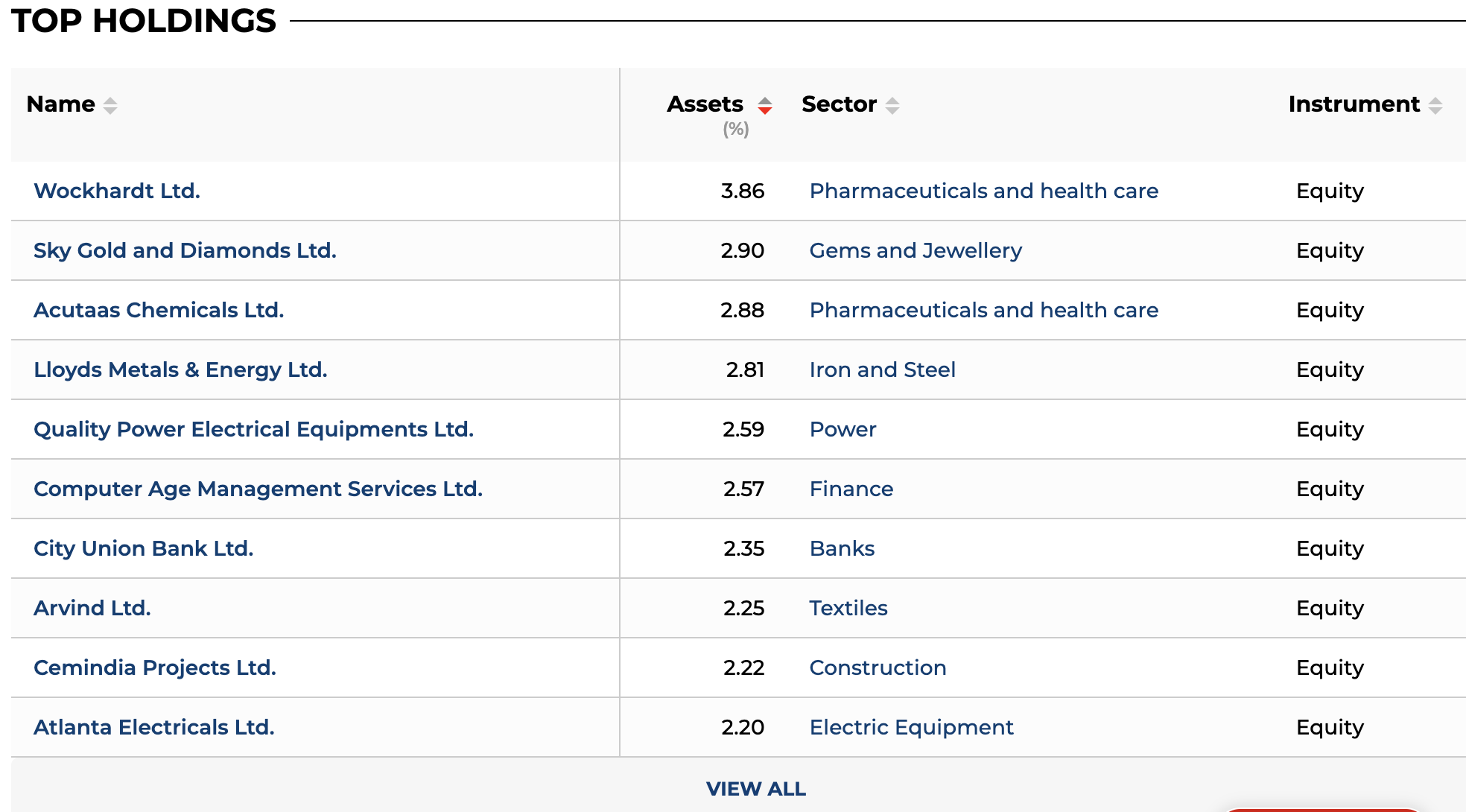
The fund’s exposure to sectors such as capital goods, chemicals, and healthcare has augured well.
A lower relative exposure to export-heavy IT services, which have witnessed a collapse in stock prices , has helped reduce the negative impact.
The fund has pursued a growth style of investing and hasn’t resisted churning. The portfolio turnover over the past six months has ranged from nearly 50% to 78%.
The fund is nearly fully invested with 97% in equities, holds 1% in debt and around 2% in cash & cash equivalents.
TrustMF Small Cap Fund
This scheme was launched in November 2024. Since its inception, TrustMF Small Cap Fund, a relatively young scheme, has delivered 18.8% absolute returns over 6 months (as of 22 June 2026).
The fund has fared exceptionally well since mid-April 2026. On 1-year returns, the fund also tops the list with an absolute return of 27.7%.
The fund has consistently outperformed the small-cap fund category and generated remarkable alpha relative to the smallcap index.
The reason for this is that TrustMF Small Cap Fund has been tactical in its approach. The fund deployed its cash smartly when small-cap valuations fell below the 5-year median in March and April this year.
Certain investment bets rewarded investors handsomely. For example, MCX, Acutaas Chemicals, Sai Life Sciences, and Navin Fluorine International, among others, which are part of the top holdings, all surged in the last 6 months and 1 year.
Top Holdings of Trust MF Small Cap Fund
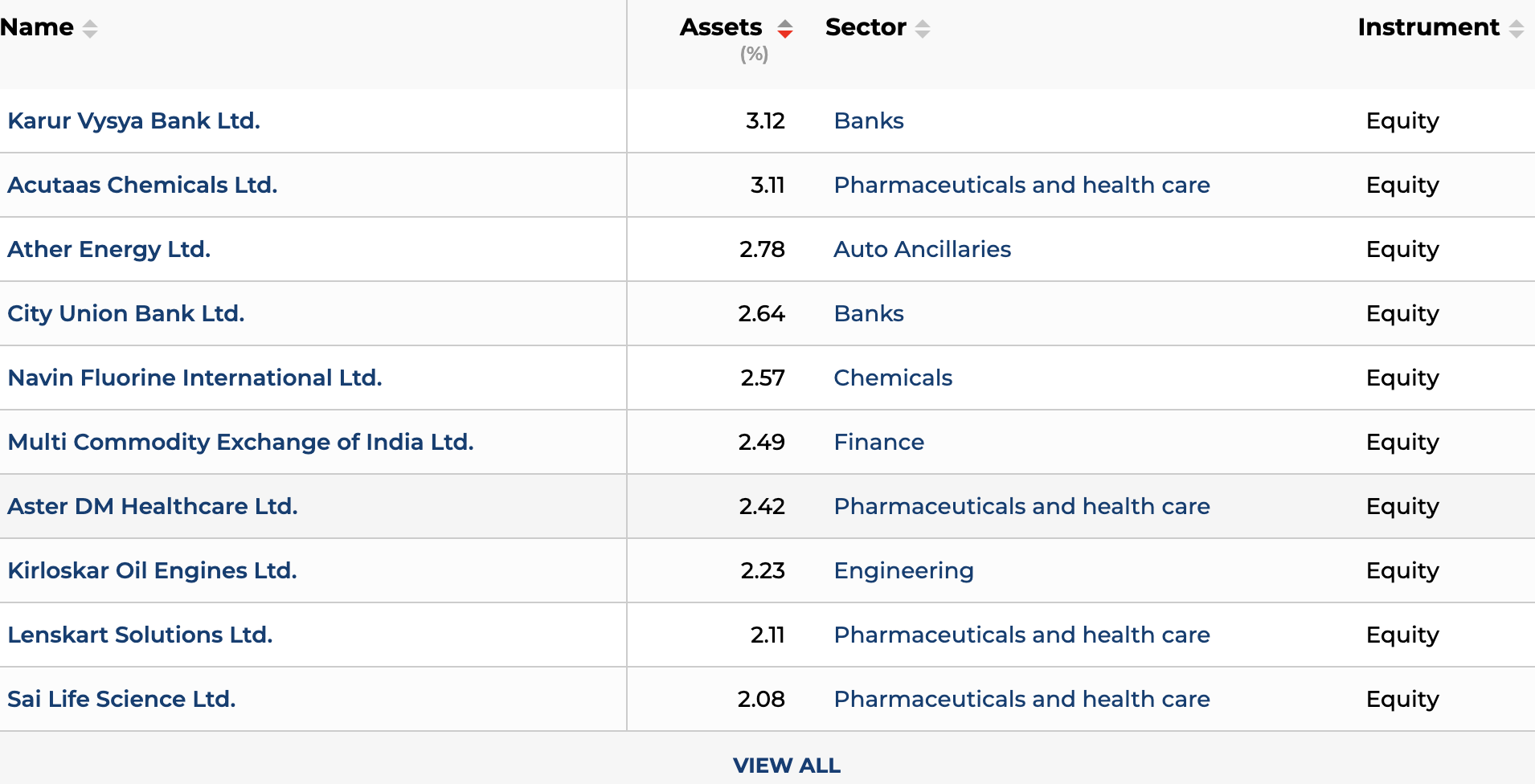
Exposure to sectors such as chemicals, capital goods, and financial services boded well for the fund.
That being said, the fund management team has actively managed the portfolio, at times engaging in high churn, as high as 82-192% over the last 6 months.
At present, the fund is holding around 96% of its assets in equities and 4% in cash & cash equivalents.
Union Small Cap Fund
This scheme, launched in June 2014 as Union Small and Midcap Fund, later rechristened as Union Small Cap Fund in March 2018 after the mutual fund categorisation and rationalisation norms kicked in, has clocked 17.0% absolute returns – the third highest in its category over the past 6 months (as of 22 June 2026).
The fund has particularly outperformed its category and the smallcap index since February 2026. It has demonstrated exceptional resilience while generating alpha.
Stocks such as GE Vernova T&D India, Kirloskar Oil Engines, Acutaas Chemicals, Navin Fluorine International, and Gabriel India, which are part of the fund’s top 10 holdings, have seen a phenomenal run-up over the last 6 months, helping push the fund’s returns.
Top Holdings of Union Small Cap Fund
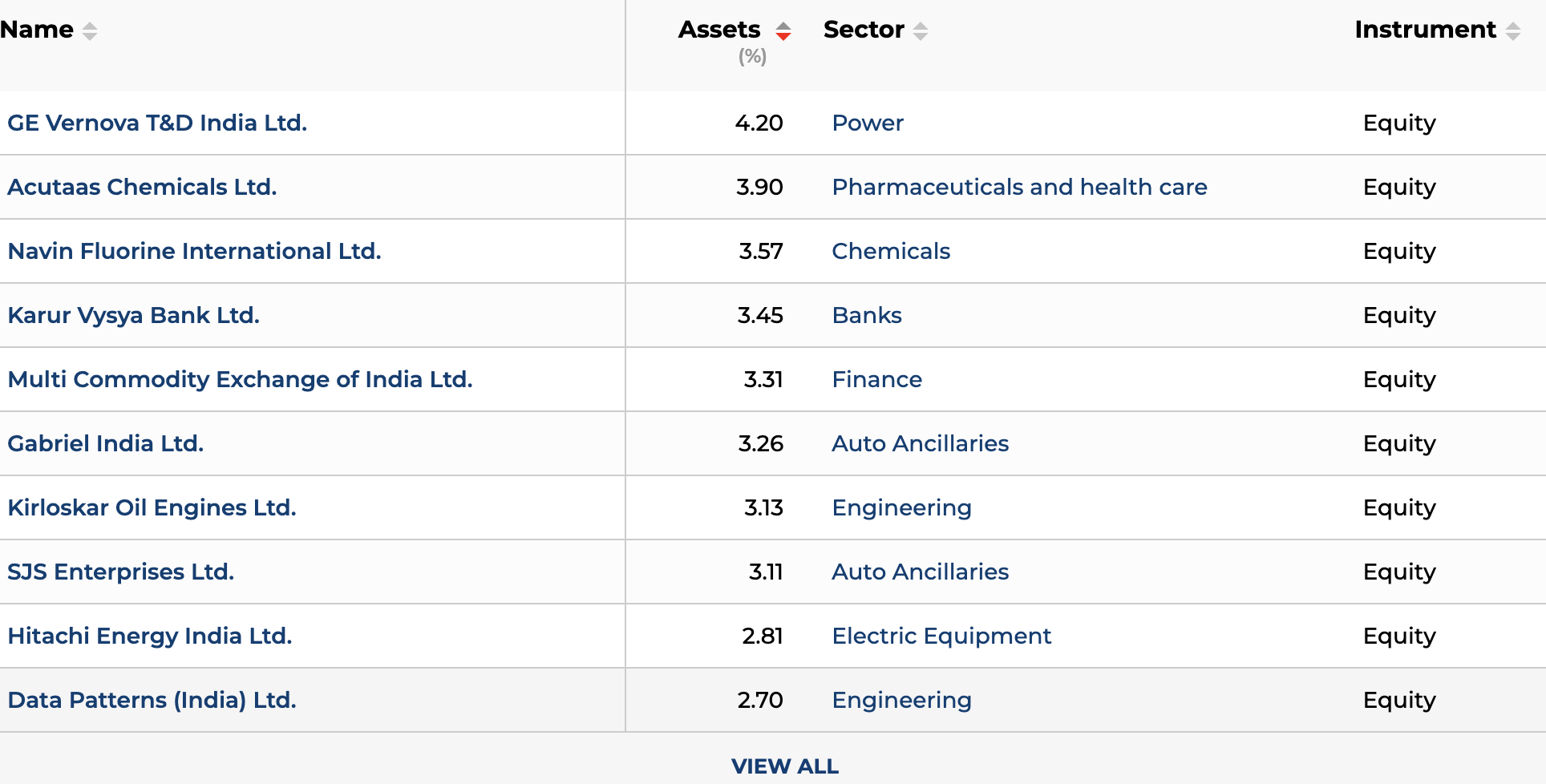
Exposure to sectors such as capital goods, chemicals, financial services, and auto & auto ancillaries has worked in the fund’s favour.
What’s important is that, while pursuing a growth style when investing in small-caps, the fund’s portfolio turnover ratio has not been abnormally high. It has been in the range of 45-48%. This highlights the fund manager’s high conviction and buy-and-hold approach, compared to high churn peers such as TrustMF Small Cap Fund.
The fund currently holds 98% of its portfolio in equities, and the remainder in debt and cash & cash equivalents.
What do longer-term returns show?
If we consider the long-term performance, which helps to make sure that outperformance hasn’t come from a one-off rally and is the right way to judge a small-cap mutual fund scheme, the list of schemes is a bit different.
Top Performing Small Cap Funds Over the Last 5 Years
| Funds | 5-Yr CAGR (%) |
| Invesco India Smallcap Fund | 22.5 |
| Bandhan Small Cap Fund | 22.1 |
| Nippon India Small Cap Fund | 21.9 |
| Bank of India Small Cap Fund | 21.7 |
| Quant Small Cap Fund | 21.5 |
| HSBC Small Cap Fund | 20.3 |
| LIC MF Small Cap Fund | 20.0 |
| Sundaram Small Cap Fund | 19.7 |
| Union Small Cap Fund | 19.6 |
| Edelweiss Small Cap Fund | 19.6 |
Direct Plan and Growth Option considered.
Data as of 22 June 2026
Of the top 3 small-cap funds mentioned that have fared well in the past six months, two schemes, namely Bank of India Small Cap and Union Small Cap, have delivered strong 5-year returns as well, clocking compounded annualised growth rates (CAGRs) of 21.7% and 19.6%, respectively. This reflects that they have been consistent in delivering returns over the long-term.
Bank of India Small Cap has taken a slightly high risk (standard deviation of 21.9% over the last 3 years) but has justified it on a risk-adjusted basis (Sharpe ratio of 0.81 over the last 3 years).
Union Small Cap Fund, on the other hand, has taken lower risk (standard deviation of 19.8% over the last 3 years) in the category, yet has fared decently on risk-adjusted returns (Sharpe ratio of 0.78 over the last 3 years).
Some of the other top-performing schemes on 5-year returns are Invesco India Small Cap Fund, Bandhan Small Cap Fund, and Nippon India Small Cap Fund, which have delivered CAGRs of 22.5%, 22.1%, and 21.9%, respectively, as of 22 June 2026. Read my previous article 3 Small-cap funds for your 2026 watchlist here, to understand why these funds may be worthwhile for your portfolio.
How to Approach Small Cap Funds?
From a valuation standpoint, the price-to-equity (PE) of the Nifty SmallCap 250 index is at 35.3, higher than the 5-year median of 28.2
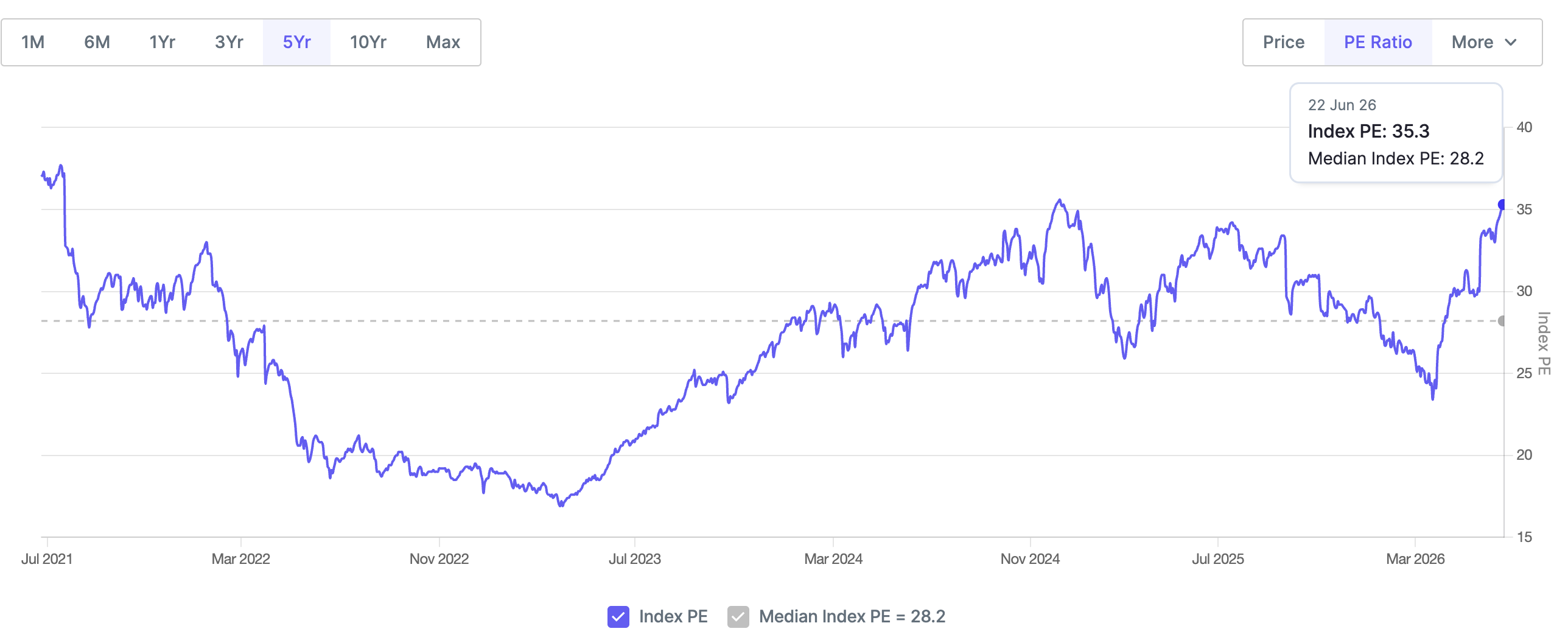
Even the price-to-book (PB) ratio is at 3.8, slightly above the 5-year median of 3.6.
With money chasing small-caps, valuations have risen in this segment of the market relative to large-caps or frontline companies.
In other words, the small-cap segment is once again showing some froth, while, on a bottom-up basis, certain small-cap companies seem fundamentally well-placed.
That said, you need to approach strategically. Small-cap funds may be part of your satellite portfolio, with an allocation of around 15-20%, provided you have a high-risk appetite and an investment horizon of at least 5 years.
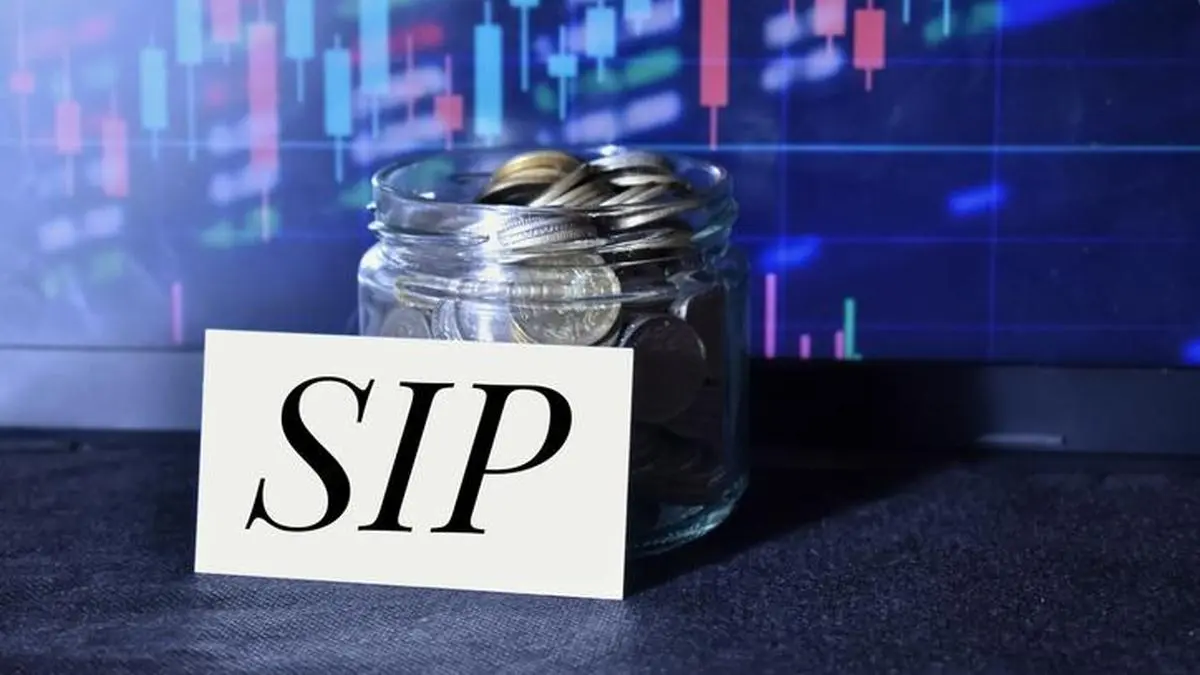
Considering the fact that markets would remain volatile, it makes sense to stagger your investments, or even better is taking the SIP route, which can potentially help mitigate the risk while you endeavour to compound wealth over the long term.
Invest sensibly, be a thoughtful investor.
Happy investing!
Note: We have relied on data from www.valueresearchonline.com, www.financialexpress.com, www.screener.in, and the factsheets published by the respective fund houses throughout this article. Only in cases where the data was not available, have we used an alternate, but widely used and accepted source of information.
Returns data as of 22 June 2026. Direct Plan and Growth Option Considered. The Risk Measures have been calculated using calendar month returns for the last three years. The Risk Measures have been calculated using calendar month returns for the last three years and are as of 31 May 2026.
Standard Deviation is a measure of the total volatility of the fund. The Sharpe Ratio is a measure of risk-adjusted return that shows how much excess return an investment generates for each unit of risk taken.
Portfolio data as of 31 May 2026. The average of the price-to-book value ratios and price-to-equity ratios of all underlying stock holdings in proportion to their portfolio weights is considered.
Disclaimer:
Disclaimer: The above content is for informational purposes only. Mutual Fund investments are subject to market risks. Past returns are not indicative of future returns. Please consult your financial advisor before investing.
Rounaq Neroy has over 20 years of experience in the financial markets and investments. He is a close observer of the Indian economy and writes deeply on the capital markets, mutual funds, stocks, precious metals, asset allocation, wealth management, and investment strategy. His editorials provide interesting, actionable investment ideas to guide readers in the journey of wealth creation and make wise decisions. Rounaq was the Head of Content at PersonalFN (Quantum Information Services Pvt. Ltd.), which also owns Equitymaster.com – India’s oldest and trusted equity research house.