Mutual fund investors are often advised to stay invested for the long term, and that advice is not wrong. Real wealth in equities or any assets is built over time. The benefits of compounding go to those who remain patient through market volatility.
But there is an important distinction to draw – investing for the long term is not the same as holding a fund for years without ever looking at it.
A mutual fund is not a one-time decision. Over time, fund managers may change, investment strategies may shift, market conditions may evolve and your own financial goals will almost certainly look different from what they were when you first invested. None of this means you should be trigger-happy with exits.
The real skill lies in distinguishing between temporary turbulence and genuine warning signs between a fund going through a rough patch and a fund that has structurally stopped working for you.
Here are 5 signals worth watching:
1. The fund has been underperforming consistently for several years
It is perfectly normal for a mutual fund to trail its benchmark for a year or two. Markets move in cycles, and no single investment style — whether value, growth or quality — stays in favour indefinitely. A value-oriented fund may lag in a momentum-driven market but come back strongly once the cycle turns. That is not a reason to panic.
Swati Jain, CEO (Wealth) at Arihant Capital Markets, says, “A fund underperforming for a year or two isn’t a valid reason to exit. Investments face multiple cycles, and not necessarily funds perform best in every cycle. Even some of the top high-return funds have shown a downward trend for no good reason but because of the market.”
The picture changes, however, when a fund consistently trails both its benchmark and its peers across multiple timeframes.
Gurmeet Singh Chawla, Managing Director of Master Portfolio Services Limited, identifies this as the clearest warning sign. “The clearest one is when a fund keeps trailing both its benchmark and its peers over several time periods, not just for a quarter or two when the going is tough for everyone,” says Chawla.
Rather than focusing on one-year returns, investors should look at three- and five-year rolling returns, performance relative to the benchmark, and comparisons with peers in the same category. A fund that consistently ranks at the bottom of its peer group across rolling periods is a different matter from one having a difficult year.
Dinshaw Irani, MD & CEO of Helios India, adds that a fund manager deserves a reasonable window to course-correct but that window has a limit: “A fund may underperform its benchmark over a short to medium term which can be a year but anything beyond that should be questioned by the investor as a year is a long enough time for a manager to re-evaluate his portfolio.”
Patience is a virtue in investing, but blind patience is not. If underperformance stretches on without any visible sign of improvement, it may be time to reassess.
2. A significant change in fund manager or investment strategy
Many investors choose a mutual fund based on its past returns. But in an actively managed fund, the manager and their investment philosophy are often as important as the track record itself. When either changes, it warrants a closer look.
This does not mean the fund will necessarily underperform. A new manager can deliver excellent results. The question is whether the investment philosophy that led you to the fund in the first place is still intact.
Swati Jain puts it this way: “Similarly, if a fund significantly modifies its investment strategies or the fund manager who drove the performance of the fund leaves. In such scenarios, it’s prudent for investors to assess and review their investments periodically and exit to grow wealth and avoid being trapped in phases of weak performance.”
When you invest in a fund, you are placing trust not just in a scheme but in a process and a mindset. If the person running that process changes, the future pattern of returns may shift too — even if everything else looks the same on paper.
Chawla believes such changes deserve particular scrutiny in actively managed strategies: “Further, a change in the fund manager or core investment team deserves scrutiny, particularly in actively managed strategies where performance is closely tied to a specific individual’s approach.”
The practical questions to ask are: Is the new manager following the same investment philosophy? Are there sudden, large shifts in the portfolio? Has the risk level changed? Does the fund still serve the purpose for which you originally chose it? A change in manager alone need not trigger an exit — but ignoring it entirely is equally unwise. These transitions often gradually alter both the character and the performance of a fund.
3. The fund has drifted away from its original mandate
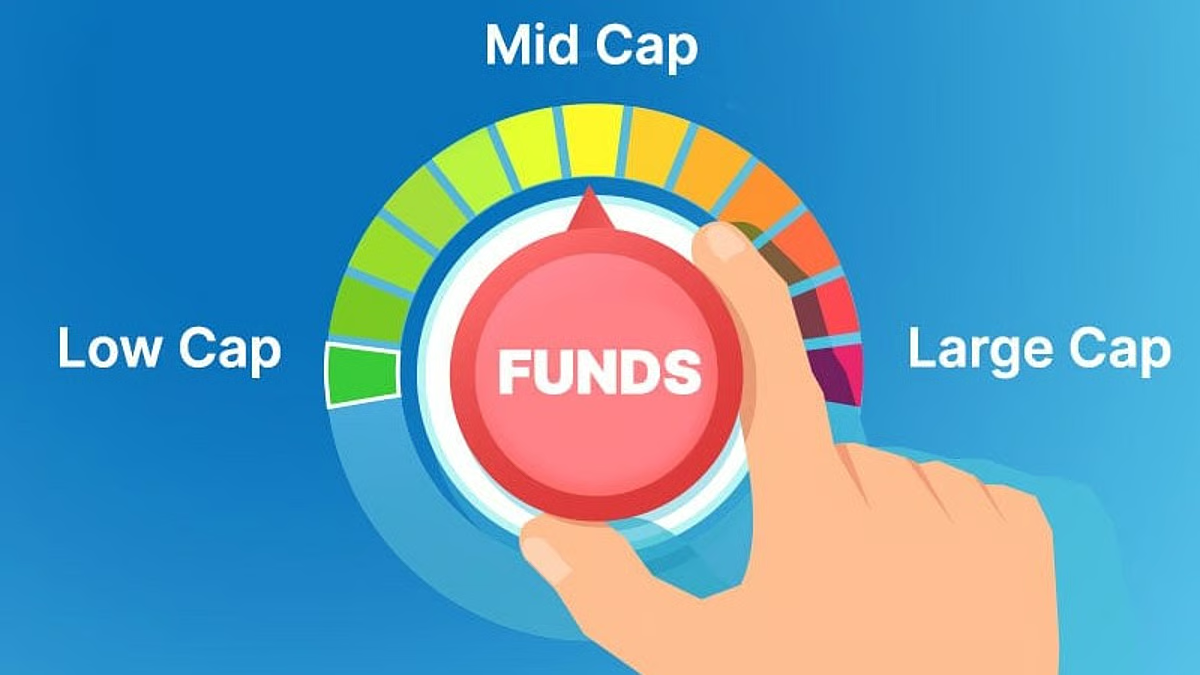
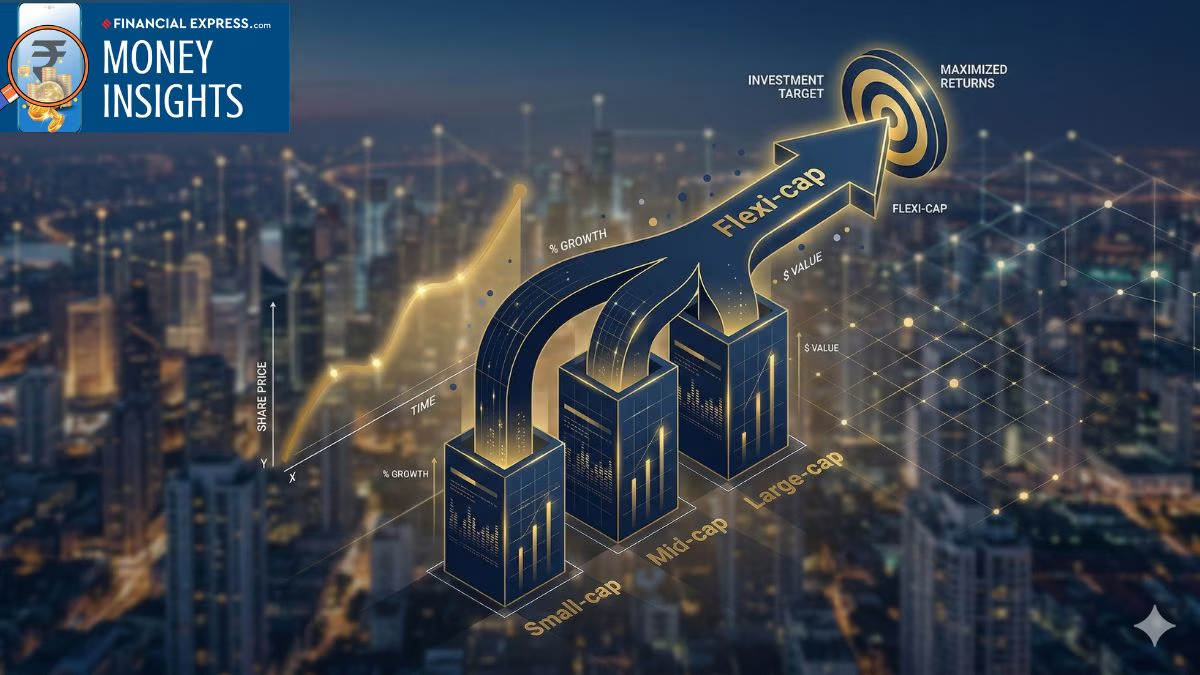
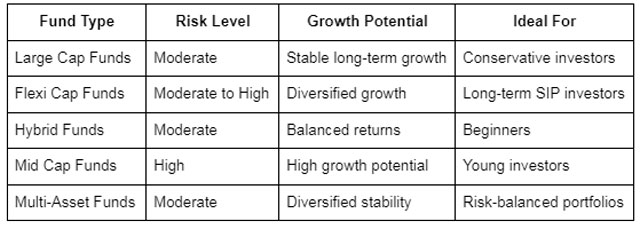
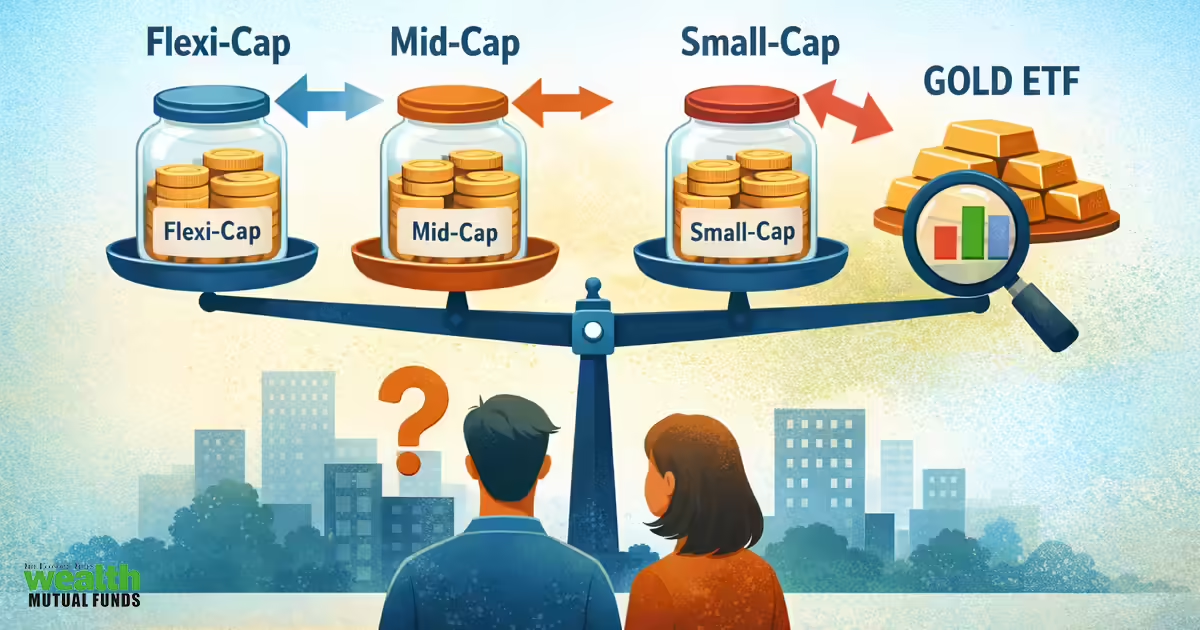
There is usually a clear reason behind selecting any mutual fund. You might have chosen a large-cap fund for stability, a mid-cap fund for growth potential, or a flexi-cap fund for broader diversification. The problem arises when the fund quietly begins to drift away from the role it was chosen for.
This is known as ‘style drift’, when a fund’s portfolio, risk profile, or behaviour starts moving in a direction different from its stated strategy. It often goes unnoticed because investors are watching returns, not composition.
Chawla flags this as a particularly significant concern: “Style drift—when a fund strays from its mandate—is equally concerning, as it can distort the overall asset allocation an investor carefully constructed.”
Consider a fund you originally selected for stability and balance. If, over time, its portfolio has become concentrated in a handful of aggressive bets or overly exposed to a single sector, your overall portfolio’s risk level has changed — even if the fund’s recent returns look acceptable on the surface.
Real-world examples of this are not hard to find. Post the SEBI recategorisation exercise, several large-cap funds quietly increased their mid-cap exposure to boost returns, shifting the risk profile that investors had originally signed up for. The same applies to funds that frequently alter their style — toggling between value and momentum, for instance — making it difficult for investors to understand the actual exposure they hold.
The right question to ask periodically is not just ‘is this fund performing?’ but ‘is this fund still doing the job I hired it to do?’ If the answer is no, it may still be an excellent fund for another investor — but its utility in your specific portfolio has diminished. That is a valid and often overlooked reason to review or replace it.
4. The fund manager is failing to adapt to changing market conditions
Markets are never static. Sector leadership rotates — IT gives way to banking, manufacturing comes into favour, capital goods have their moment. A good fund manager is one who understands this and is willing to adjust the portfolio when the facts change. A manager who clings rigidly to a thesis that the market has already moved past is a problem.
Irani considers this a meaningful red flag: “Markets are dynamic and there are regular sector rotations, i.e. sector leadership changes over time periods. Thus, any manager who is reluctant to carry out regular changes in his portfolio should be a good candidate for exiting.”
This should not be misread as a requirement for constant portfolio churn. Many outstanding fund managers stick with their investment philosophy through multiple cycles — but the key difference is that they do not ignore new facts. Adapting to changing evidence is not the same as being reactive or trend-chasing.
What is harder to forgive, Irani argues, is a manager who doubles down on losing positions rather than acknowledging a mistake: “The reluctance of a manager to change along with the changing investment scenario is a big red flag. However, a bigger warning signal is if he doubles down on his losing bets instead of admitting his mistakes.”
For the average investor, assessing this is not always straightforward. But there are observable signals: Is the fund persistently concentrated in sectors or stocks that have been underperforming for an extended period? Is the fund consistently lagging its peers? And is the fund house communicating clearly with investors about why their strategy is expected to work?
Conduct during a rough patch reveals a great deal about a manager. In Irani’s words, the proactiveness of a portfolio manager in the face of prolonged underperformance is what sets a good manager apart from one who is simply waiting for the market to come back to them.
5. The fund no longer aligns with your financial goals or risk appetite
A common assumption among investors is that a well-performing fund should always stay in the portfolio. But performance is only one dimension. Whether a fund still matches your current financial goals and risk appetite is equally important.
An investor’s life is not static. Careers progress, responsibilities grow, and financial milestones draw nearer. A fund that was the right fit at 35 may not be the right fit at 52. This has nothing to do with how the fund is managed.
Jain makes the point clearly: “On the other hand, if there are any changes with respect to investors’ risk appetite, goals or investment period then a review would make sure whether a fund is still aligned to investor’s objectives.”
The most common scenario is the shift toward capital preservation as a goal — retirement, a child’s higher education, a large purchase — draws closer. Remaining in highly aggressive equity funds at that stage can expose you to unnecessary timing risk. Gradually moving into relatively safer options as the goal approaches is prudent portfolio management, not a reflection on the fund’s quality.
Chawla adds that the trigger to exit a fund is often not the fund’s performance at all, but the investor’s circumstances: “Other valid reasons include needing money for an emergency, reaching your financial goal, or finding a much better alternative. Don’t sell in panic during market crashes, but regularly reviewing your funds every year is wise. The key is thoughtful decision-making, not emotional reactions.”
The broader point is this: portfolios get constructed at a moment in time, for a version of your life that may no longer exist. Regular reviews are not about finding fault with your funds — they are about ensuring your portfolio is still working toward the right destination.
Temporary setback or genuine concern? How to tell the difference
This is perhaps the hardest question a mutual fund investor faces. When returns begin to slip, it is rarely obvious in real time whether the fund is going through a rough phase or whether something more structural has gone wrong.
Chawla urges investors to look beyond the headline numbers: “Short-term underperformance, especially in equity funds, should never be the sole reason to exit the fund. In the market, even the finest funds at some point of time face stretches where they lag, often because their investment style or holdings could be temporarily out of favour.”
The questions to ask are: Is the entire category struggling, or is this fund an outlier among its peers? Has the fund stayed true to its stated investment process, or has the underperformance come from poor execution and portfolio drift? And crucially, is the comparison being made on a rolling-returns basis — which is more reliable — rather than point-to-point, which can be misleading depending on the start and end date chosen.
Chawla elaborates: “Rather than reacting to a year or two of weak numbers, investors should examine the context behind the performance. Is the entire category struggling, or is this fund an outlier among its peers? Has the fund stayed true to its stated process, or has the underperformance stemmed from poor execution and deviation? Equally important is comparing performance on a rolling-returns basis rather than a point-to-point basis, which can be misleading. A fund that consistently ranks in the bottom quartile across rolling periods is a genuine cause for concern and warrants further action.”
Irani adds a behavioural dimension: how a fund manager conducts themselves during a prolonged rough patch is telling. A manager who is actively reviewing the portfolio, engaging with the investment thesis, and making adjustments where warranted deserves more patience than one who appears to be waiting out the storm without any visible change in approach.
When you should not exit a mutual fund
Having covered the warning signs, it is equally important to acknowledge what does not constitute a valid reason to exit.
Panic is the most common culprit. Markets dip, returns disappoint for a few months, a fund appears on a ‘worst performers’ list on social media, and investors sell — often at exactly the wrong moment. Another common mistake is chasing last year’s top performer, which typically means buying high and locking in poor entry points.
Rajeev Thakkar, CIO of PPFAS Mutual Fund, has consistently flagged this pattern in his communications to investors. While his remarks are aimed at equity investing broadly, they translate directly to mutual fund behaviour.
He has noted that valid reasons to exit an investment include a goal approaching and funds being required, discovery of a clearly superior risk-return alternative, the original investment thesis no longer holding, or a company or sector facing structural challenges.
What does not qualify is short-term underperformance in isolation. A fund with a sound investment process, a committed fund manager, and alignment with your goals does not become a poor investment because it has had a difficult year.
In fact, one of the most reliably wealth-destroying patterns in retail investing is buying aggressively after strong performance and selling during periods of weakness — effectively doing the opposite of what long-term compounding requires.
Summing up…
Successful mutual fund investing is not about holding forever, nor is it about switching funds at every dip or weak quarter. The right approach lies between the two.
A review is warranted when a fund has been consistently underperforming against its benchmark and peers across multiple periods; when the fund manager or core strategy has changed in ways that affect the original rationale for holding it; when the fund has drifted from its stated mandate and is distorting your overall portfolio; when the manager appears unwilling to adapt to materially changed market conditions; or when your own financial goals, time horizon, or risk appetite have shifted.
Patience, on the other hand, remains the right response to temporary underperformance rooted in market cycles rather than fund-specific failures.
The investors who build genuine long-term wealth are not the ones who trade the most. They are the ones who know when to hold on — and when the facts have genuinely changed.
Disclaimer: This article is for informational and educational purposes only and should not be construed as investment advice, a recommendation, or a solicitation to buy, sell, or hold any mutual fund scheme. Mutual fund investments are subject to market risks, and past performance is not indicative of future results. Investors should carefully evaluate their financial goals, risk appetite, investment horizon, tax implications, and portfolio allocation before making any investment decision. The views expressed by experts quoted in the article are their own and are intended to provide general guidance. Readers are advised to consult a qualified financial advisor before taking any investment-related action.
Every financial journey has a turning point. What’s yours?
Financial Express is launching a new series highlighting real experiences with money, investments, and the taxman. Did a sudden tax rule catch you off guard? Did a piece of financial advice change your life? Your story could provide invaluable, practical lessons for thousands of fellow taxpayers. Share your experience with us. We respect your privacy: no stories will be featured without a direct conversation and your full consent. Thank you.