According to market data for May 2026, the Nifty Midcap 100 Index was trading at a 12-month forward price-to-earnings (PE) ratio of 26.2, compared with its 10-year average of 22.9.
Around 36% of stocks in the Nifty Midcap 150 Index were trading below a PE multiple of 25, indicating selective opportunities within the broader mid-cap segment.
Association of Mutual Funds in India (AMFI) data for May showed varying valuation levels across mid-cap mutual funds.
HDFC Mid Cap Fund reported a trailing PE ratio of 26.77, lower than both the benchmark index at 28.92 and the category average of 32.36. Kotak Midcap Fund reported a PE ratio of 29.26, while Edelweiss Mid Cap Fund stood at 29.11. In comparison, Motilal Oswal Midcap Fund and Invesco India Midcap Fund reported higher PE ratios of 43.40 and 41.98 respectively.
Market participants say valuation differences across funds reflect differing portfolio strategies and stock selection approaches within the mid-cap category.
Volatility has also remained a key consideration for investors in the segment. Between January 2016 and May 2026, the benchmark mid-cap index recorded a standard deviation of 20.5%. During the same period, HDFC Mid Cap Fund reported a standard deviation of 18.9%, indicating comparatively lower volatility.
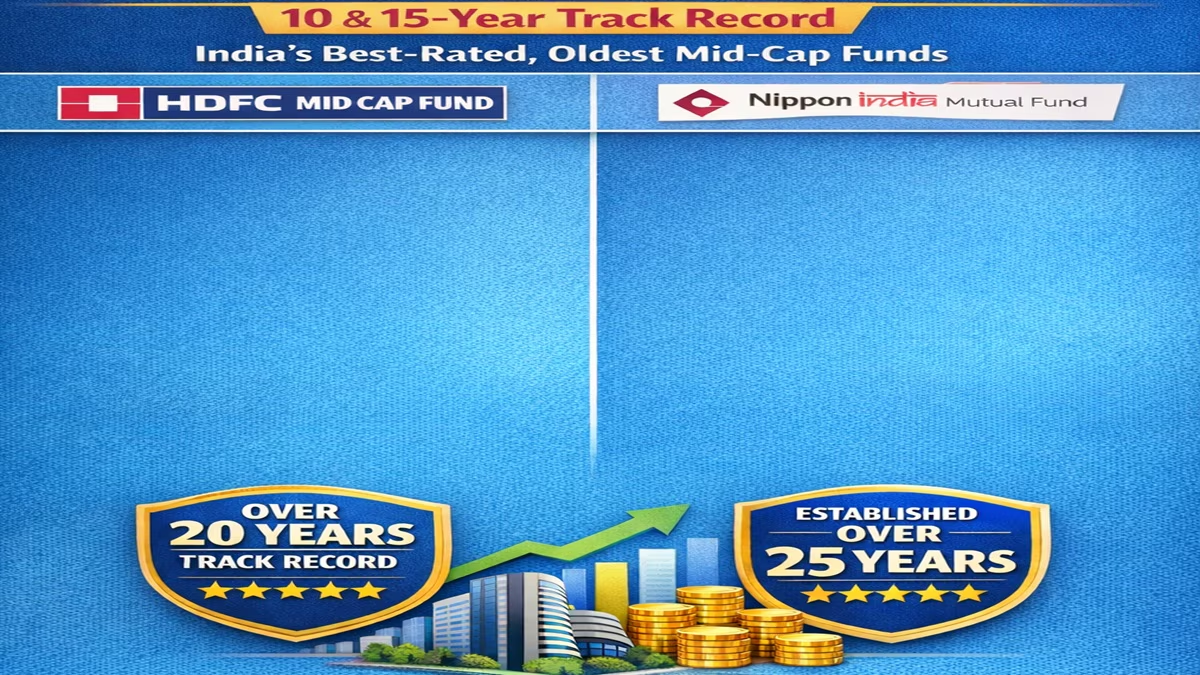
HDFC Mid Cap Fund, now in its 20th year, manages assets worth around ₹1 lakh crore and has been managed by Chirag Setalvad since inception.
According to data shared by the fund house, the scheme outperformed its category average in nearly 89% of five-year rolling return observations between inception and May 2026. Over the past 10 years, the fund recorded a return-to-volatility ratio of 0.96 compared with the category average of 0.88.
As of May 2026, the fund’s weighted average market capitalisation stood at approximately ₹67,165 crore, lower than the benchmark average of around ₹79,270 crore and the category average of about ₹84,976 crore. The fund also reported an active share of 73.4, compared with the category average of 66, indicating a more differentiated portfolio relative to peers.