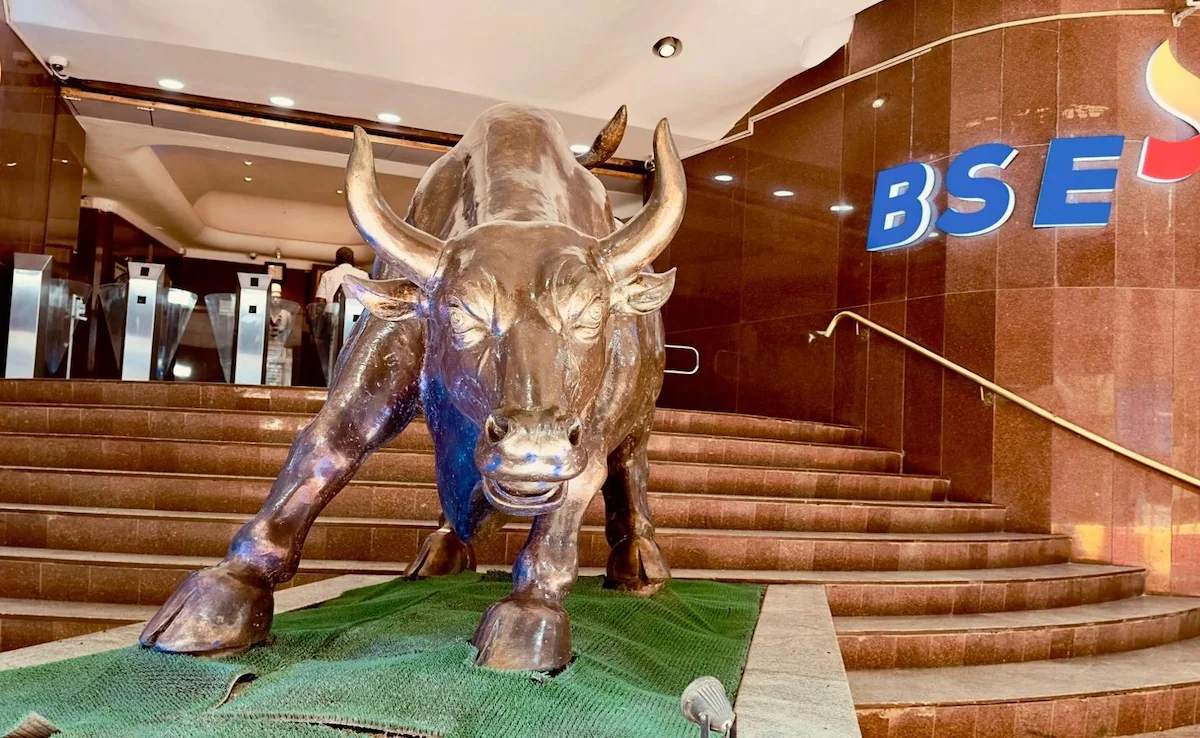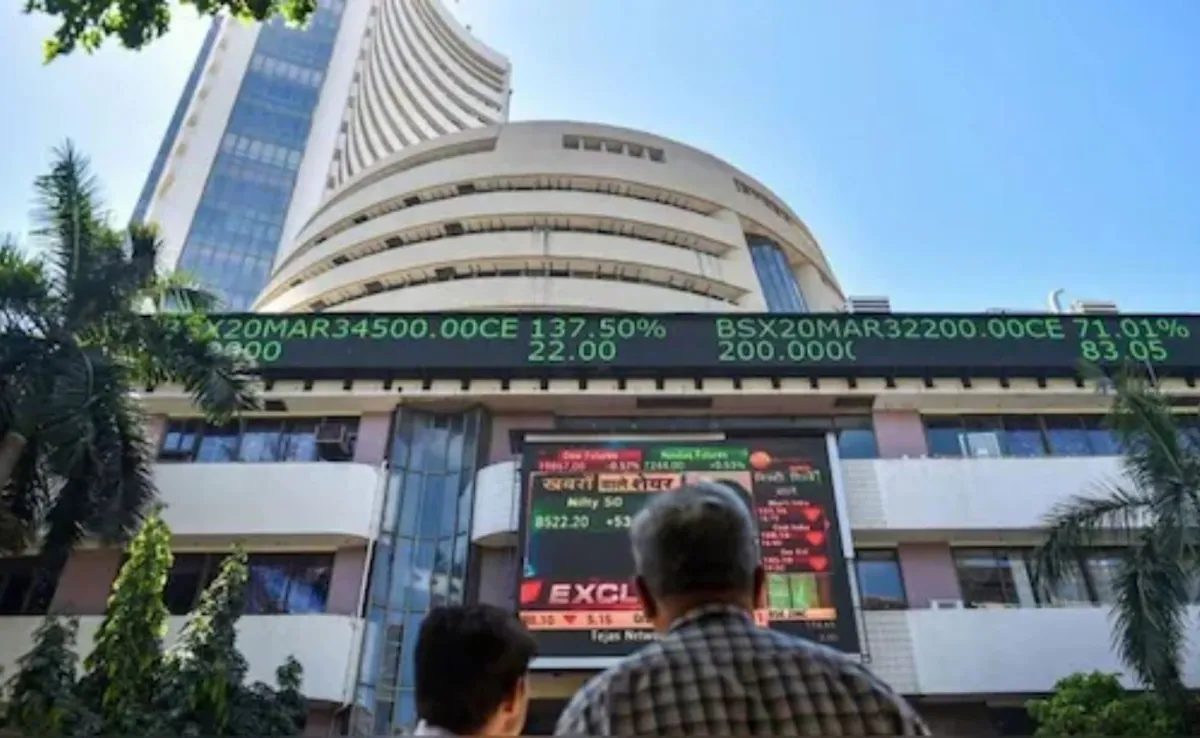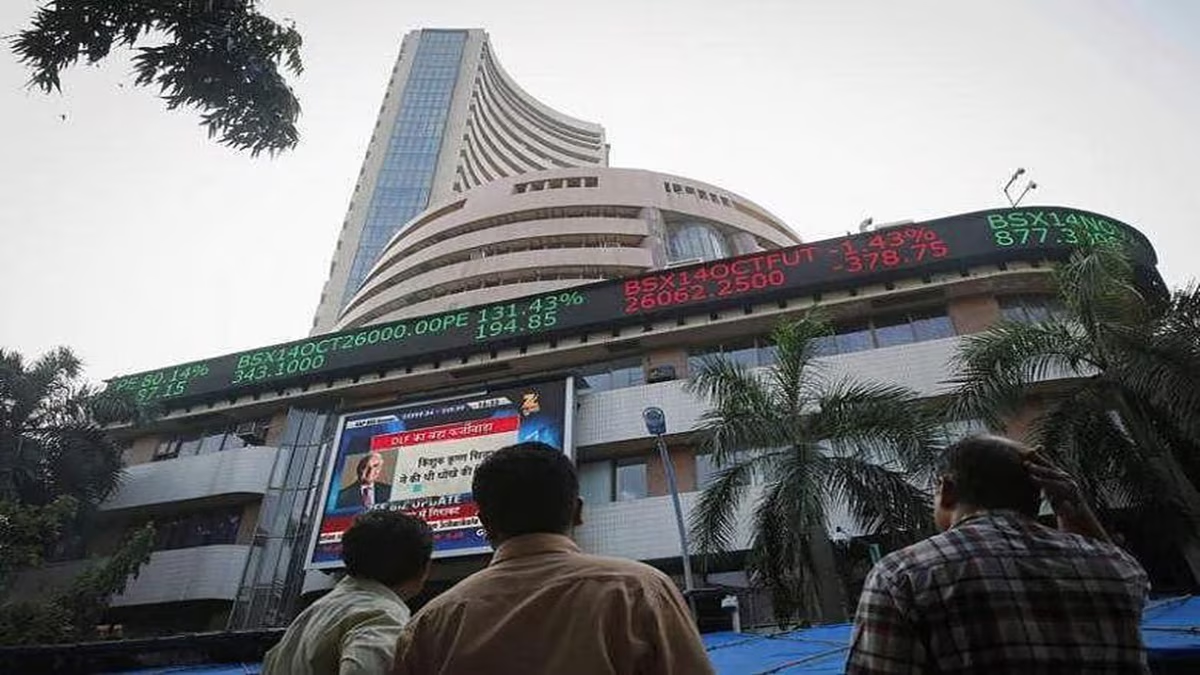
Large cap funds have found themselves under scrutiny this year as large-cap stocks have been under pressure. They have underperformed mid cap funds and small cap funds in the current calendar year with most funds delivering negative returns.
On a year-to-date basis, the category average return of large cap fund stands at -7.3%, significantly lower than the mid cap fund category average of 1% and small cap fund category average of 4.8%.
Oen of the key reasons large-cap stocks have struggled to hold gains is due to heavy sell off by foreign institutional investors.
The sell off was particularly evident in banking, oil & gas, and IT sectors, all of which have heavy-weight positions in key large-cap indices.
While the IT sector has been under pressure due to concerns related to AI-related disruptions, the banking segment has been a casualty of the US-Iran war which has resulted in higher inflation.
Rising crude prices have triggered margin concerns for downstream oil marketing companies.
Despite the ongoing concerns, large cap funds continue to play a vital role in building a relatively stable and resilient portfolio for long-term wealth creation.
In this editorial, we have listed five reasons why investors in large cap funds should stay the course.
1. Market Leadership Keeps Evolving
No market segment outperforms year-after-after. While the mid and small-cap segment is leading the rally today, historical data shows that leadership rotates over time.
Large-cap companies often gain favour during phases when mid and small caps are experiencing stretched valuations and/or a deceleration in corporate earnings, leading to risk-off sentiments.
For instance, large cap funds outperformed mid cap funds and small cap funds by a notable margin in 2025, highlighting their growth potential.
2. Higher FII Interest
Domestic institutions, pension funds, insurance companies, and foreign investors frequently allocate substantial capital to large-cap stocks because of their better liquidity, leadership positions, and high governance standards.
When risk appetite changes, large cap stocks are often the first ones to attract significant inflows.
3. Stable Risk-Adjusted Returns
Large cap funds may not generate extraordinarily high returns because large-sized companies already hold significant market share, and therefore, they grow at a slower pace.
That said, they have historically provided reasonably healthy returns with lower volatility.
For investors seeking steady long-term wealth creation rather than chasing the high returns by taking high risk, the risk-reward balance of large cap funds remains appealing.
4. Potential Value Opportunity
Prolonged periods of underperformance can turn the valuations in the large-cap space attractive.
As investor attention shifts elsewhere, quality large cap companies may become attractively priced, creating opportunities for future outperformance when market sentiment improves.
5. Foundation of a Diversified Portfolio
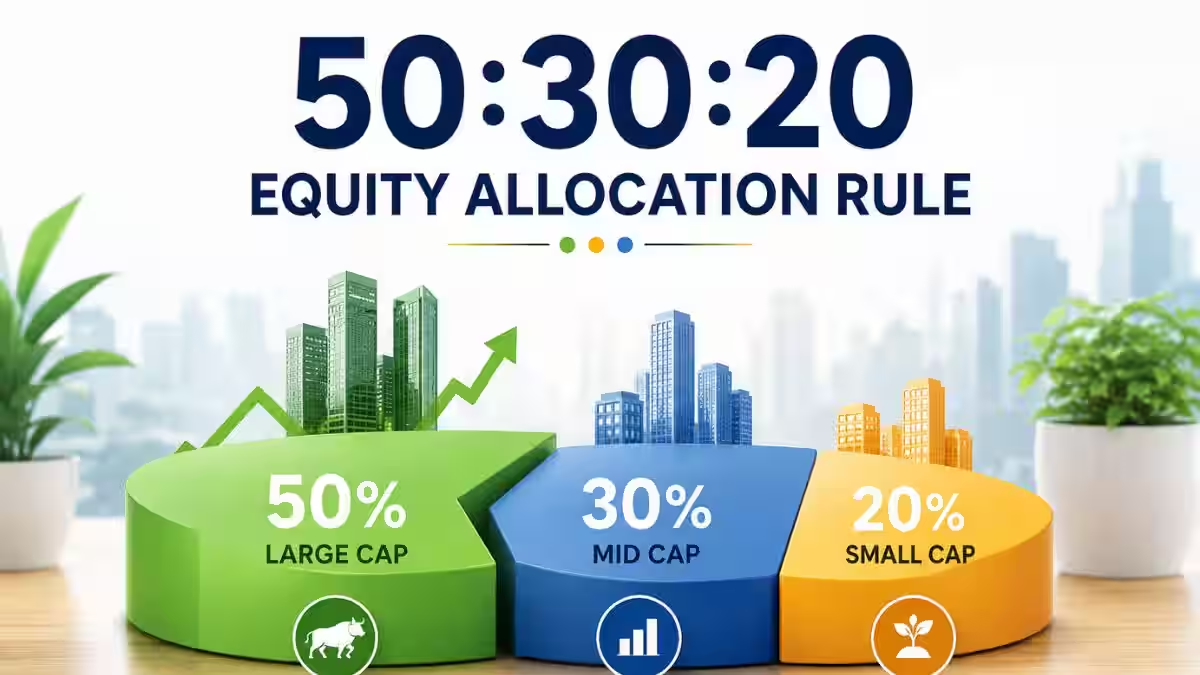
Large-cap funds are often considered suitable for the core of an equity portfolio.
This is because their role is not necessarily to outperform every year but to provide exposure to market leaders and offer broad market exposure, while maintaining liquidity and stability.
Such allocation helps investors avoid the pitfalls of chasing momentum and high returns and supports long-term portfolio discipline.
They are also suitable for first time investors looking to understand the market.
Conclusion
Short-term underperformance of large cap funds should not be a reason for investors to trim exposure or exit these investments altogether.
Large cap funds can continue to remain the core component of most investors’ portfolio because they offer stability, liquidity, diversification, and exposure to some of the market’s strongest and most established companies.
Thus, investors in large cap funds benefit from the steady growth of capital over the long run without exposing the portfolio to high risk.
On the other hand, mid and small cap funds are only suitable for investors who can handle sharp market swings.
Rather than chasing shifting exposure to recent top performers, investors should focus on maintaining a disciplined asset-allocation strategy and staying invested through market cycles.
Investors can consider shortlisting funds based on performance in difficult market conditions, especially their ability to limit losses and manage risk relative to the benchmark and category peers.
This approach would offer a more balanced view of a large cap fund’s long-term value.
Happy investing.
Disclaimer: This article is for information purposes only. It is not a stock recommendation and should not be treated as such. Learn more about our recommendation services here…
The website managers, its employee(s), and contributors/writers/authors of articles have or may have an outstanding buy or sell position or holding in the securities, options on securities or other related investments of issuers and/or companies discussed therein. The content of the articles and the interpretation of data are solely the personal views of the contributors/ writers/authors. Investors must make their own investment decisions based on their specific objectives, resources and only after consulting such independent advisors as may be necessary