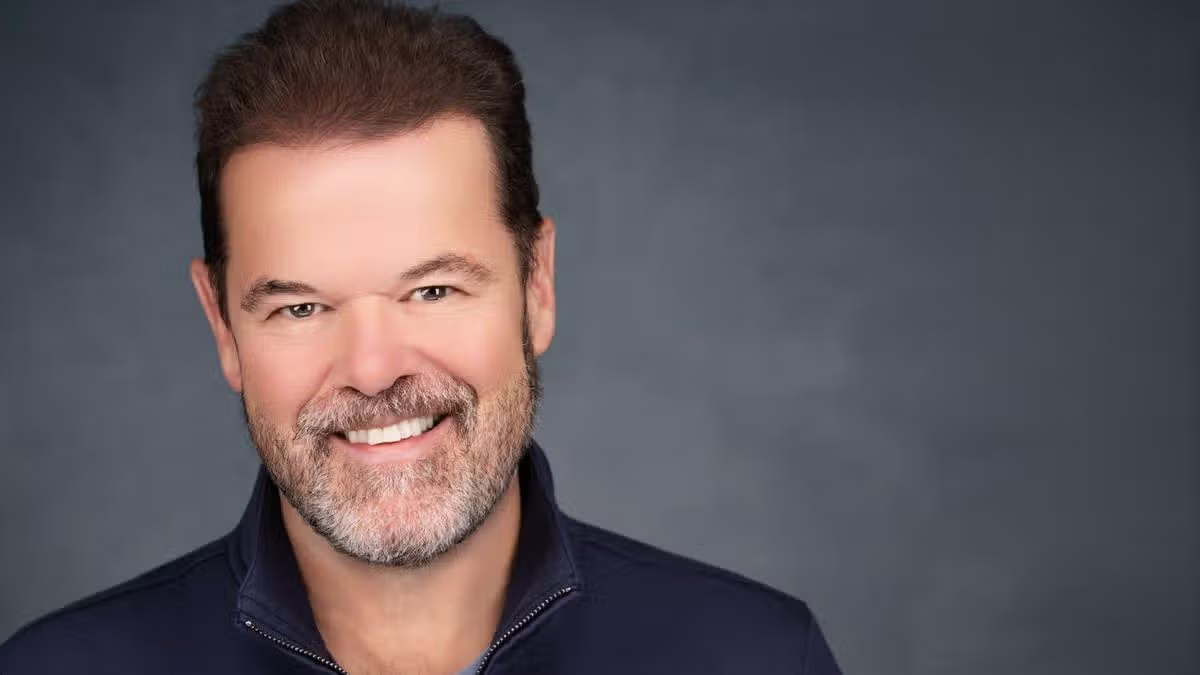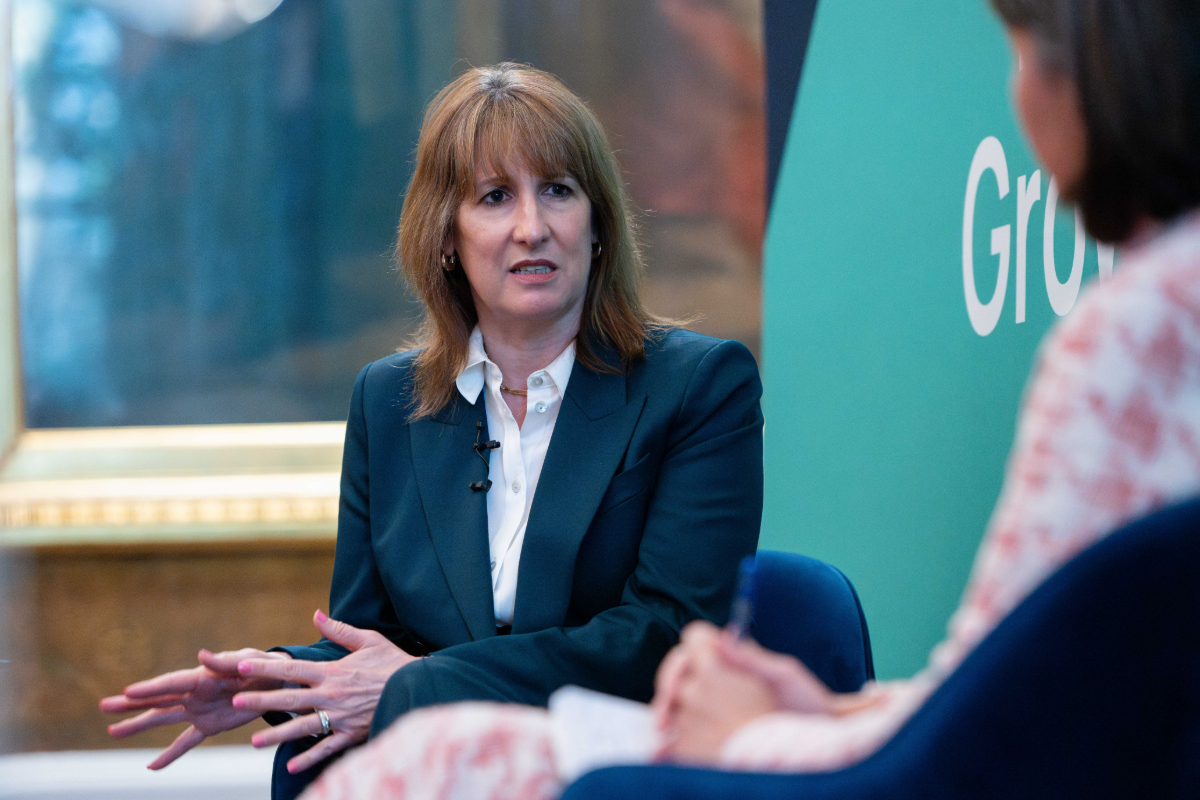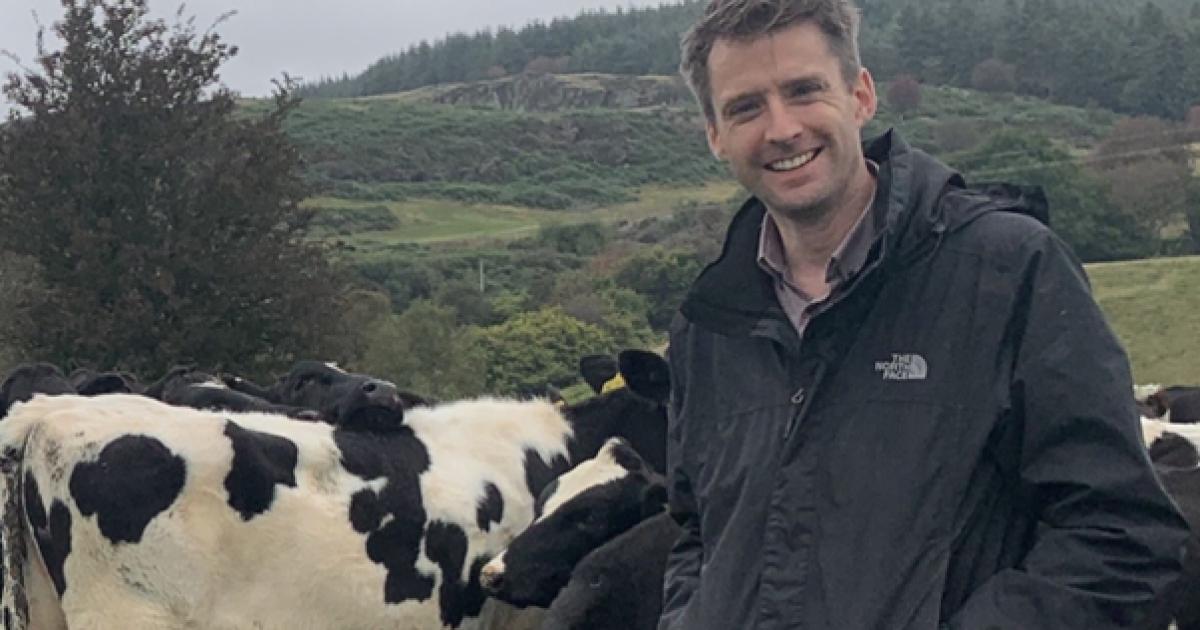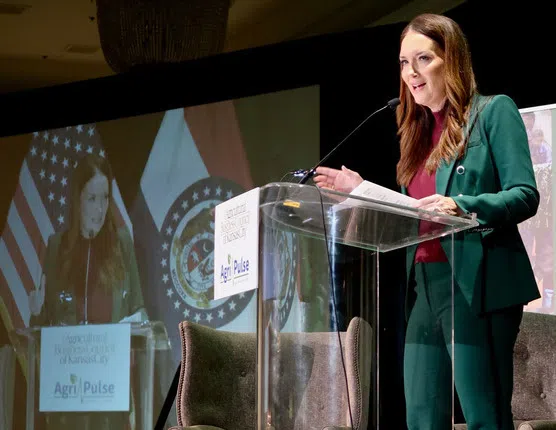
Kristen Dolan is SVP of Growth at Influential.

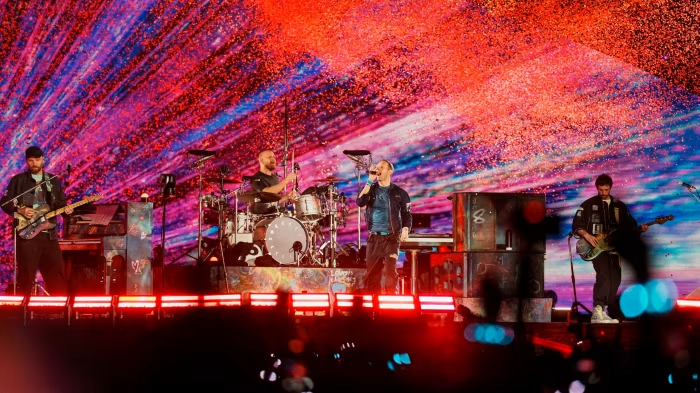
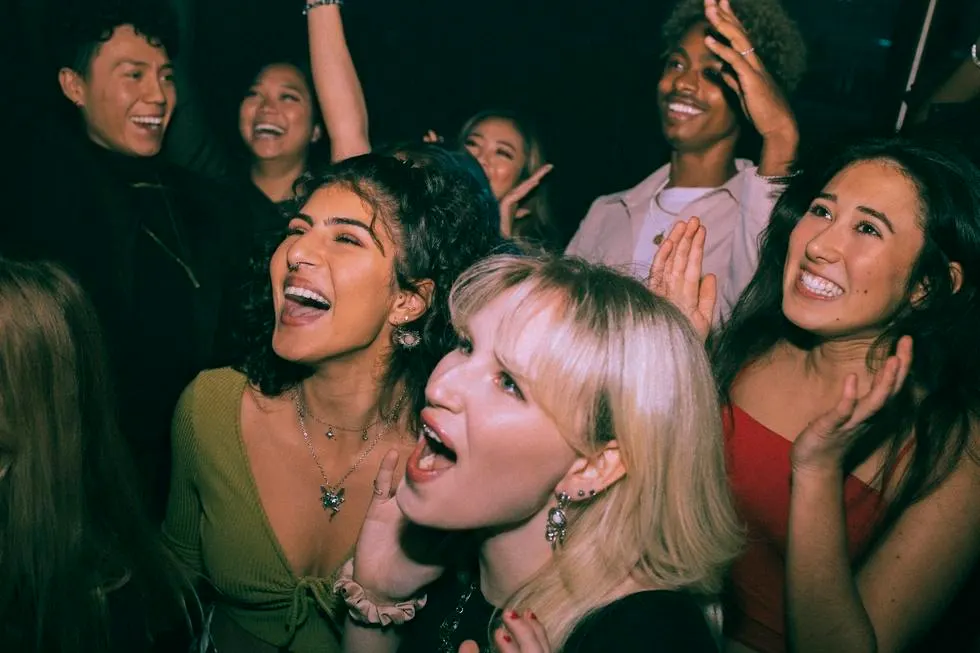
I recently attended a Lil Wayne concert, and while I was not thinking about work or the creator economy as I was in the moment, I did see a connection as I was writing this article. Most of us can name a Lil Wayne song or, at minimum, one of the hundreds he is featured on. His music has remained popular for decades. How do you keep an audience engaged for all that time? What I found interesting was that he pulled out an electric guitar and performed rock-infused medleys while telling his story. He kept his multi-decade catalog fresh and interesting, he sequenced his music in a way that kept the crowd moving, dropped location-specific shoutouts and adjusted to the live crowd in real time.
How an experience is delivered matters. For example, listening to music from a jukebox—a static song from a predetermined list—is the basic level of experiencing music, akin to a display banner ad adapted to the pre-set IAB sizes. On the other hand, a DJ or musical artist offers a dynamic experience. They can read the room, play to the audience and offer new listening experiences. Concerts attract crowds because people seek experiences, not repetition.
Influencers are like this. They win by curating context, not just posting content. And on that theme, instead of “a milli,” I’ve curated my top five game-changing insights from the creator economy this year to help inform brands on what to play next.
Prove Performance, Don’t Just Predict It
Brands that put $1 into influencer marketing get $5.78 back, on average. Yet, 30% of brands still do not measure influencer marketing ROI.
The math matters, but it only works when the marketing connects to a great product and seamless experience—especially when customers are willing to pay up to 16% more for a better experience.
In my work of leading large-scale influencer programs, the difference between a campaign that performs and one that plateaus comes down to alignment with content, product and customer experience (CX).
Use AI To Scale Creativity, Not Replace It
AI-generated content is flooding feeds. By 2026, nearly 40% of video ads will use generative AI, and 1 in 10 of the fastest-growing YouTube channels are now entirely AI-made. Content volume now outpaces human capacity.
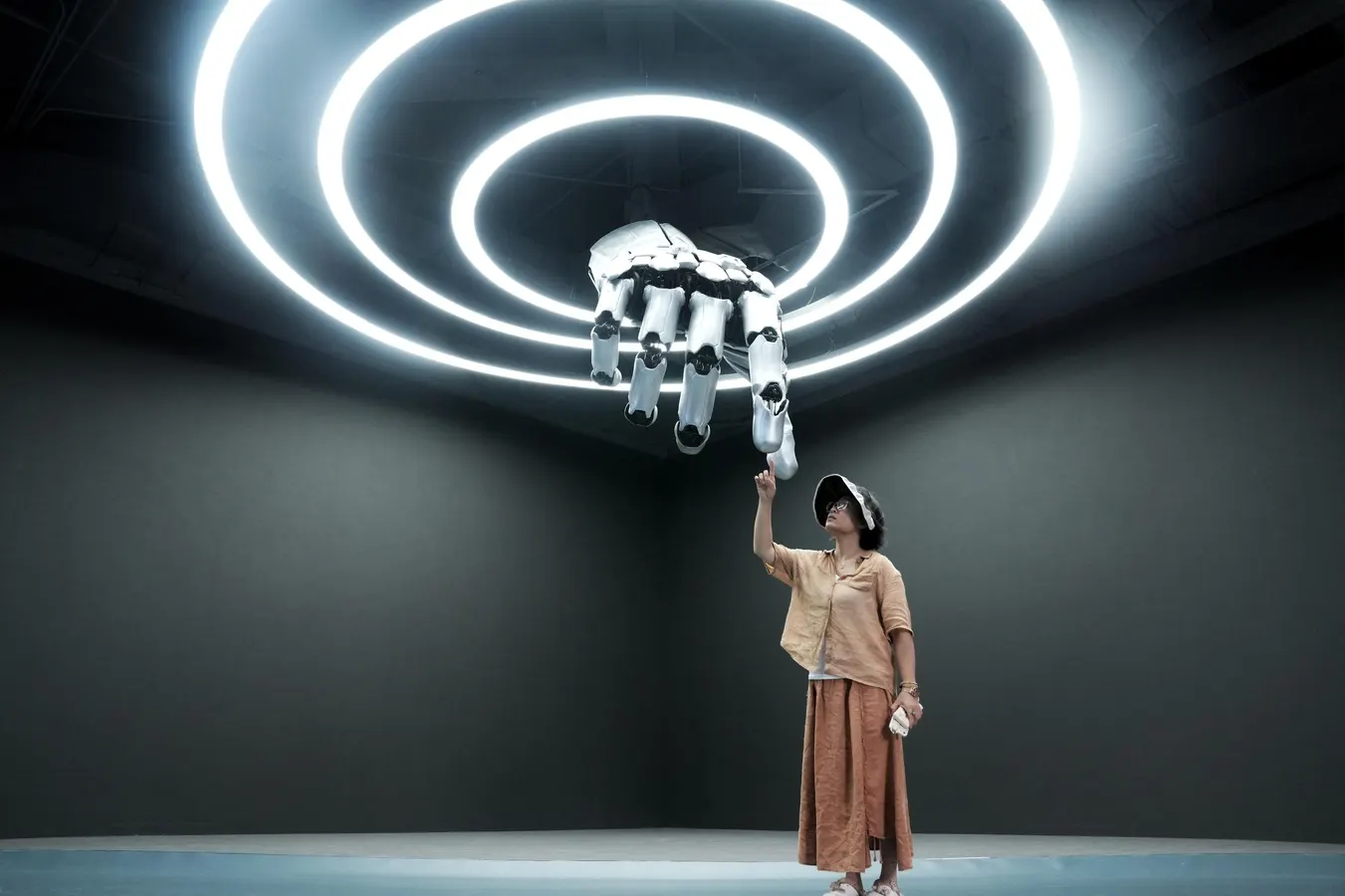
But more content doesn’t mean a better connection. As “AI Slop” fills the internet, audiences crave something distinctly human. The future is more of a duet, not a duel. Each serves different needs: the “jukebox” (on demand, efficient, scalable) versus the “concert” (live, emotional, experiential).
For creators and brands, the power lies in using AI to amplify what humans do best: being creative, telling stories and offering personal insights.
As AI engines reshape discovery, it’s important to optimize creator content for generative engine optimization (GEO). Google already surfaces Instagram, TikTok, Reddit and YouTube in search, and AI engines like ChatGPT are driving measurable referral traffic (Walmart reports roughly 20%). The next wave of visibility will come from creators whose content is structured, tagged and contextually rich enough to rank in AI-driven search.
For brands, the real opportunity is co-creation that blends human creativity with AI’s scale. That’s where storytelling becomes both optimized and alive.
Turn Creator Feedback Into Your CX Superpower
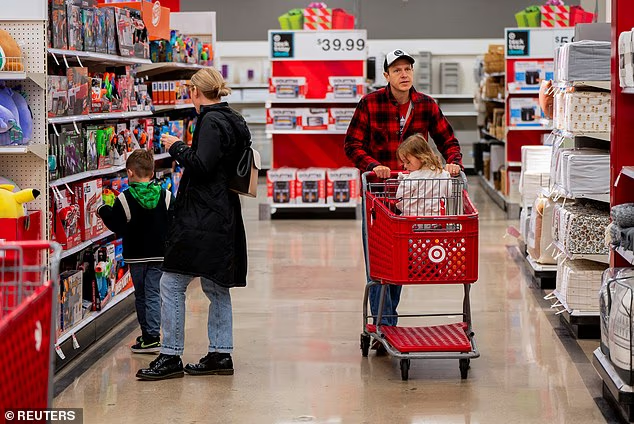
In the next wave of the creator economy, influence and customer experience are symbiotic feedback loops instead of separate functions. Today’s consumers, especially Gen-Z and repeat buyers, are sharing product feedback and driving improvement in real-time.
The brands that win in 2026 will be those that treat creators as extensions of their customer experience ecosystem—for example, embedding creators into annual brand programs spanning product launches, tentpoles and experiential touchpoints to capture authentic, cumulative insights from the audiences they influence most.
Imagine creator partnerships that go beyond content to shape experience: personalized landing pages built around each creator’s community and promotion, AI-powered product recommendations tailored to influencer-driven trends and live moments that merge social conversation with customer feedback.
In an era of waning loyalty and rising expectations, creators remain the most human feedback mechanism a brand has.
Invest In Ongoing Creator Storytelling To Build Brand Equity
The convergence of “creator-tainment” is no longer a prediction headline; it’s now our reality. The IAB’s recent announcement of official CreatorFronts in 2026 signals that brands are finally treating creators as storytellers and not simply content suppliers.
Streaming platforms are battling for originality. Many people are watching creator-led programming than traditional television. And together, those shifts are opening a new lane for creators to pitch partnerships with brands and not just a sponsored post.
For marketers, the opportunity is to invest in partnerships that evolve like a series, not a pilot. Work with creators who build arcs, continuity and community, which is the kind of long-term storytelling that keeps audiences coming back. Episodic storytelling builds brand equity.
Creator Coupling Is The New Collab Strategy
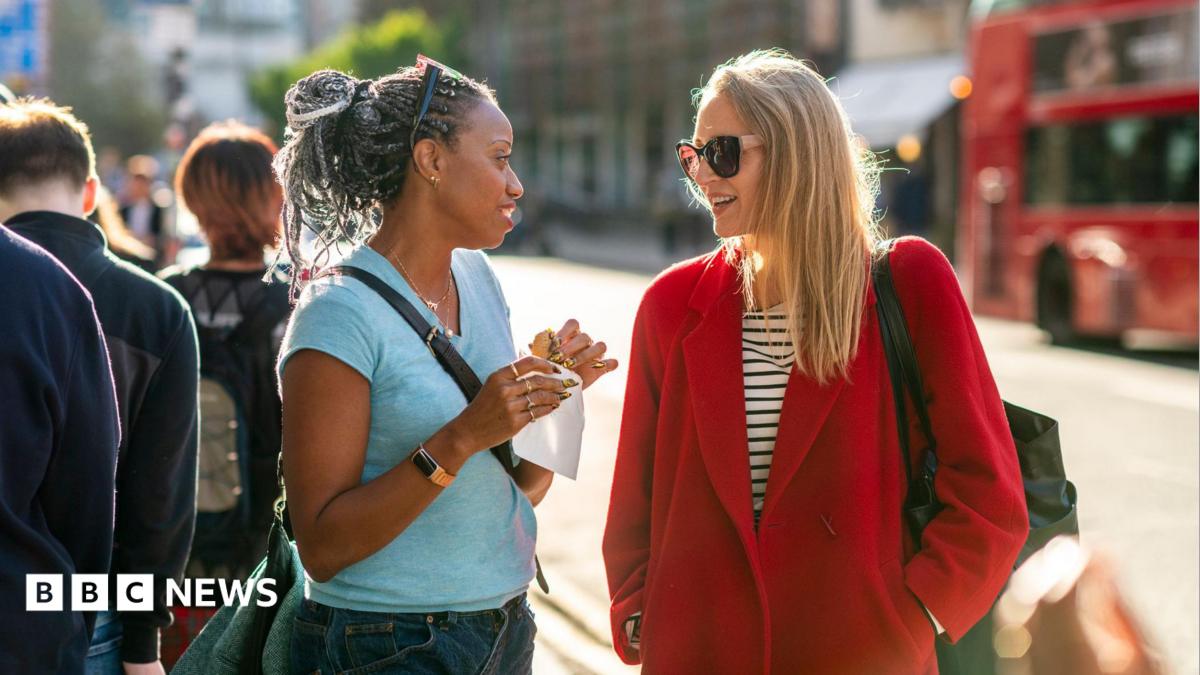
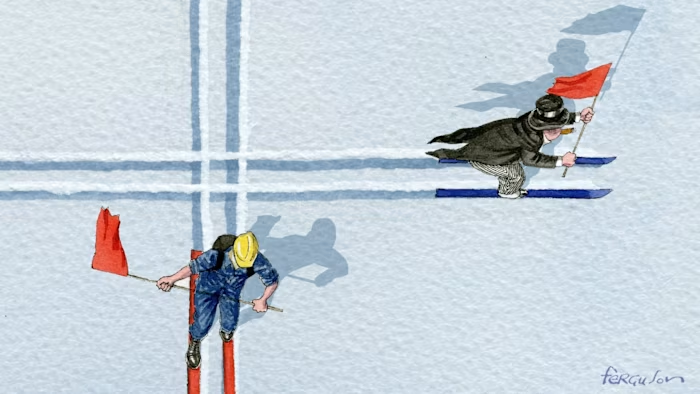
Creator coupling takes a standout trait from one influencer and pairs it with another to expand reach and relevance. Think of it as strategic chemistry by extending voices, perspectives or communities via shared attributes to create something bigger than either could on their own.
When done well, it connects diverse narratives and fuels discovery. Linking creators through shared attributes or complementary audiences helps brands identify which combinations of creator, content and context drive the strongest results and fuel ongoing trendspotting.
The brands excelling in the creator economy are building evolving rosters and experimenting with permutations that keep their storytelling fresh. Creator coupling gives marketers a smarter, data-informed way to scale influence and move beyond transactional partnerships.
Brands must stand out in an infinite mosh pit of content, choices and information. Heading into the next year, I expect to see more brands lean into the “live concert” experience, offering value, customization and community, starring creator partnerships. In other words, in a room full of jukeboxes, be the live concert.
Forbes Business Development Council is an invitation-only community for sales and biz dev executives. Do I qualify?