WASHINGTON (TNND) — Layoffs hit a two-decade high last month to levels that are typically seen during recessions as the government shutdown and artificial intelligence adoption added to the headwinds hitting a labor market that has been stalling out with tariffs and economic uncertainties.
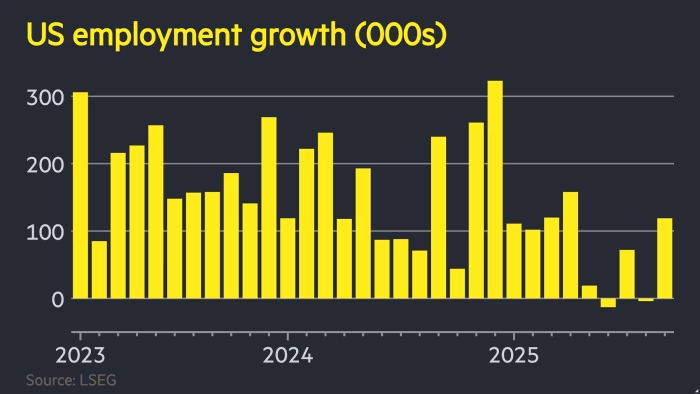
It’s the latest sign of potential trouble brewing for a labor market that has sputtered for much of 2025 with fewer jobs being created and pullbacks in hiring that have stirred concerns about a widespread slowdown that could damage the economy.
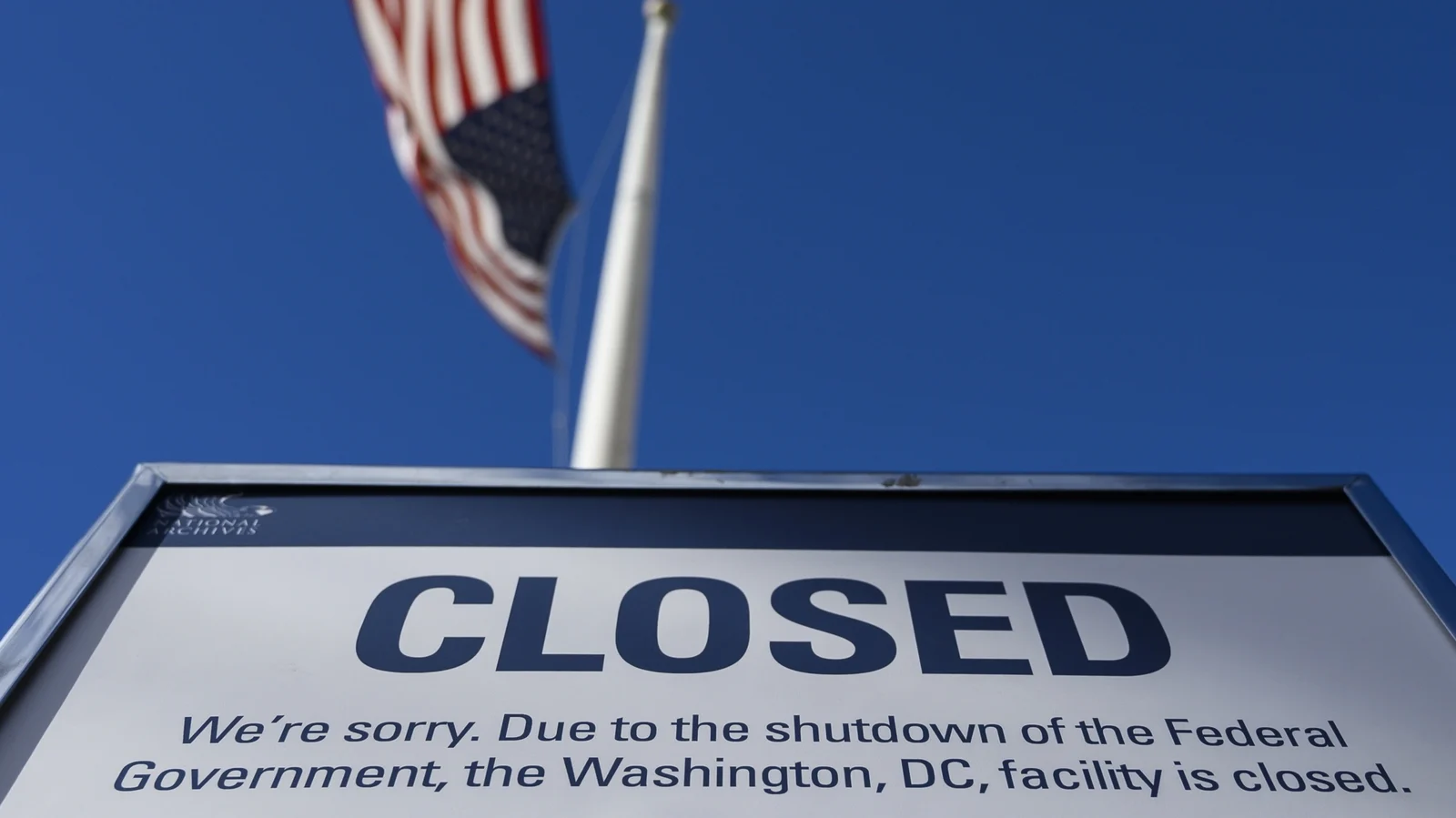
The government shutdown is also making it more challenging for economists to get a full gauge of the labor market. Two consecutive jobs reports have been delayed by the shutdown, along with updated releases of other economic data, the longest blackout on record.
Without the government data, economists and Fed officials are having to rely on private companies’ reports on job openings, hiring and wages that are painting a mixed picture of the labor market and economy.
Consulting firm Challenger, Gray & Christmas said in a report released on Thursday employers had cut more than 153,000 jobs in October, the highest figure for the month since 2003 and the most for a single month in the fourth quarter since the 2008 financial crisis. It was also a massive increase from the previous month, where companies announced just 54,000 jobs.
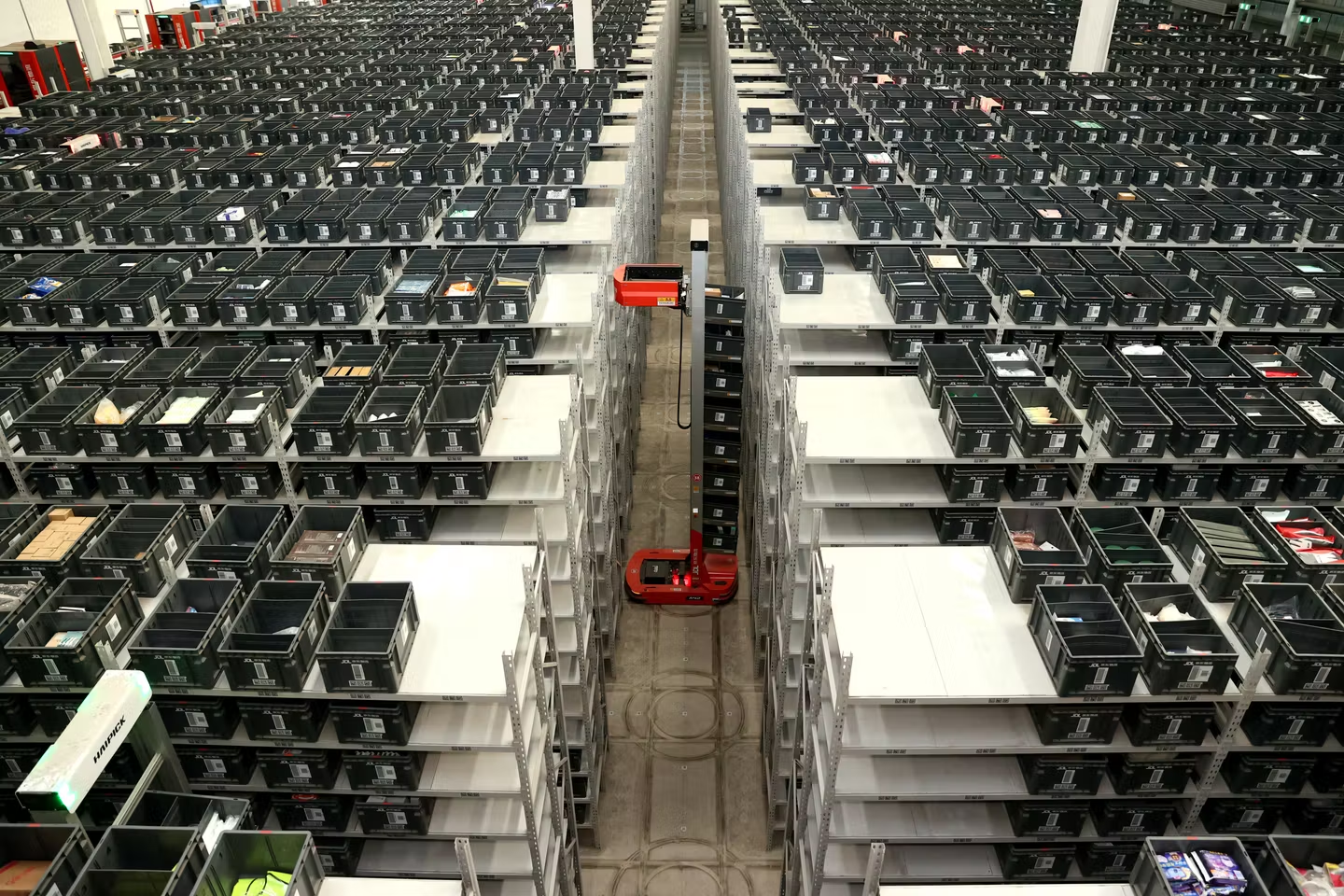
It comes after a series of significant layoffs at major American companies like Amazon, Target, UPS and Microsoft that drew attention. Reasoning behind layoffs varied from corporate restructuring to downsizing and getting more efficient by using artificial intelligence. In the Challenger, Gray & Christmas report, cost-cutting was the top reason for job cuts, followed by AI and market and economic conditions.
A separate report from payroll processor ADP on Thursday offered more positive news about the labor market, with the U.S. adding 42,000 jobs in the private sector, reversing two consecutive months of losses. Most of the additions were in trade, transportation and utilities, while education and health sectors also added jobs. Information technology, manufacturing, professional services and leisure and hospitality all shed workers.
Workers finding themselves without a job are being put in a challenging situation. Despite steadily low unemployment rates, new positions have been tough to come by with fewer openings with companies more hesitant to hire in what has been a “low-hire, low-fire” environment for much of the year. The Federal Reserve Bank of Chicago estimates the current unemployment rate sits at nearly 4.4%.
“Those laid off now are finding it harder to quickly secure new roles, which could further loosen the labor market,” said Andy Challenger, workplace expert and chief revenue officer for Challenger, Gray & Christmas.

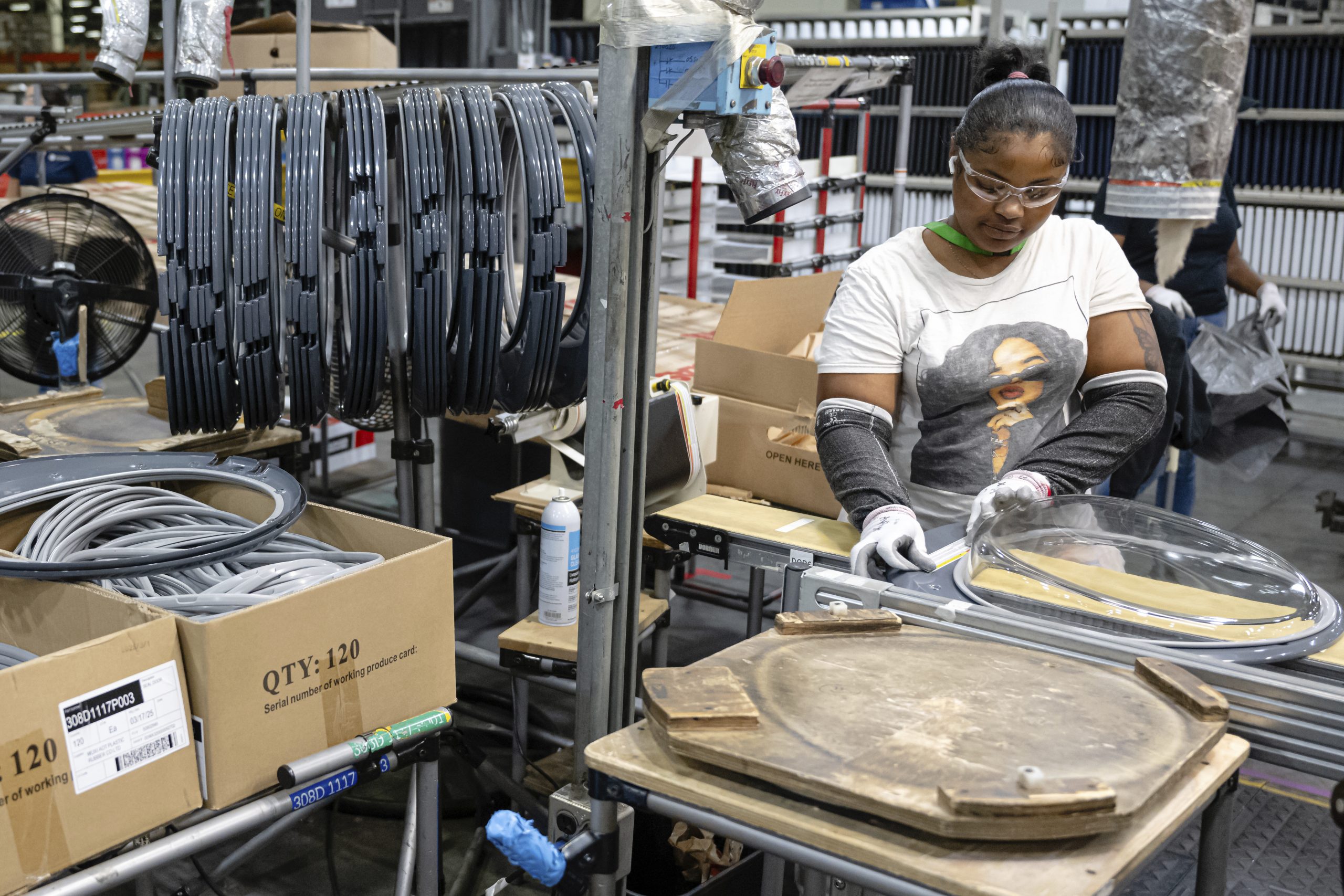
FILE – Employees of Learning Resources, an educational toy company, work at a warehouse in Vernon Hills, Ill., Friday, April 11, 2025. (AP Photo/Nam Y. Huh, File)
Indeed’s Hiring Lab said in a report on Thursday that job postings through October slumped to the lowest level since 2021, with year-over-year declines in nearly every sector it tracks. That follows a similar trend to the pre-shutdown government data blackout that revealed fewer jobs being created and a slower pace of hiring.
Prior to this year, the labor market was the main pillar upholding the economy throughout the rocky post-pandemic recovery. Jobs had been plentiful to come by and employers were reluctant to let workers go, which kept the economy on track by supporting continued spending despite frustration over higher prices.
Fed chair Jerome Powell said after the October meeting that officials were watching the recent string of layoffs. Officials have cut rates by a quarter-point at their last two meetings and markets are expecting another cut next month, though Powell was cautious to say the path forward offered no guarantees.
Emerging weaknesses in the labor market has forced officials to prioritize preserving it over combatting the lingering effects of inflation, which has been running above the 2% target for years. Multiple officials have described the status of the labor market as gradually slowing in what is otherwise a mostly healthy economy.
“While federal statistical agencies are largely not producing data during the government shutdown, data available from other sources suggest that the overall economic picture in the U.S. has not changed much over the past few months. The economy has been growing at a moderate pace while labor market conditions appear to be consistent with a gradually cooling,” Fed vice chair Philip Jefferson said in a Friday speech.
But economists and the Fed are still closely monitoring the labor market and unemployment increases because upticks have historically come quickly. The limited job growth in recent months has also been concentrated in a handful of sectors rather than broad-based gains that would indicate a robust employment situation.