Around 559 million people now hold cryptocurrency worldwide — nearly 10% of the global connected population — yet we’ve noticed most beginners buy their first coin before they fully understand how it works. With crypto becoming easier to buy than ever, skipping the fundamentals is the fastest way to lose money to scams, bad trades, or simple wallet mistakes. We break down how cryptocurrency actually works, from blockchain and consensus mechanisms to wallets, private keys, and the security practices that protect your assets.
What is Cryptocurrency?

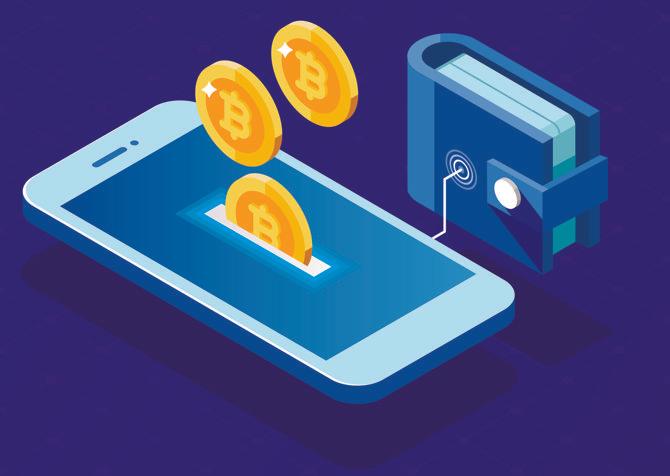
A big misconception we’ve noticed many beginners have is thinking cryptocurrency is “stored” inside a wallet the same way cash sits in a bank account. But that’s not how it works. Your cryptocurrency always exists on the blockchain. The wallet simply gives you access to it.
So, what is cryptocurrency? Think of it as digital money or virtual currency that exists purely on a computer network. Unlike traditional cash, there’s no physical money like paper notes or coins to hold, and in most countries, it isn’t recognized as government-backed legal tender. What you own is a record on a shared database confirming that a certain amount of a particular digital currency belongs to your wallet address.
That record is maintained not by a bank or government but by thousands of computers around the world running simultaneously, forming a decentralized system for managing digital financial assets.
Digital Money vs. Traditional Fiat Money
Many new traders assume cryptocurrency works like online banking because both rely on apps and digital balances. Actually, they work very differently.
When we use traditional fiat currency such as the US Dollar, Euro, or British Pound, banks do far more than simply move numbers around. They verify your identity, confirm your account balance, authorize the payment, update internal databases, and communicate with other financial institutions before the recipient gets the funds.
Suppose you send $200 to a friend. Your bank deducts the money from your account, sends instructions through established payment networks, and the recipient’s bank credits their account after confirming everything checks out. Every step depends on trusted intermediaries maintaining accurate records.
Cryptocurrency removes those intermediaries entirely. When we send crypto, the transaction is recorded directly on a shared database called a digital ledger, or blockchain. No bank approves or processes transactions. Thousands of computers independently verify if you own the crypto you’re trying to spend and whether the transaction follows the network’s rules. If it does, the payment becomes part of the blockchain.
In our experience, this difference usually becomes real the first time someone sends cryptocurrency to the wrong wallet address. Banks can often reverse transfers or investigate fraudulent payments. Public blockchains can’t. Crypto doesn’t come with the built-in consumer protection, deposit insurance, or customer support that traditional banking offers. Once a transaction is confirmed, it’s usually permanent.
The Core Concept of Decentralization
We’ve noticed that decentralization is one of the most misunderstood ideas in cryptocurrency trading. While many people assume it simply means “no banks,” that’s only part of the story. It goes much further than that.
Decentralization means that no single person, company, or government controls the network. Generally, cryptocurrencies are decentralized finance networks based on blockchain technology, a distributed digital ledger that autonomously records secure transactions across decentralized computers.
Think of it like a shared Google Doc that thousands of people have a read-only copy of. Each time a new cryptocurrency transaction is added, every copy updates simultaneously. No single person can edit their own copy and have that change accepted by the others. The only way to add a valid entry is to follow the network’s rules and have thousands of independent computers agree that the entry is correct.
In our view, decentralization is one of crypto’s biggest strengths, but also one of its biggest trade-offs. Why? Without a central authority, no one can freeze your wallet or reverse your transaction. The downside is, you’re responsible for your own security.
The 3 Technologies That Make It Work
The cryptocurrency ecosystem isn’t built on a single invention. It combines three technologies that work together to create a secure digital payment system.
Blockchain: The Distributed Database

Here’s a question we hear a lot: Why can’t someone simply edit Bitcoin’s transaction history? The answer comes down to how a blockchain stores information.
A blockchain is a specialized database designed to record transactions, but unlike traditional databases, it isn’t controlled by a single company or stored on one central server. Banks, retailers, hospitals, and governments all maintain centralized databases that they alone can update. When your bank account balance changes, only the bank’s internal systems modify those records.
Blockchains distribute identical copies of the ledger across thousands of computers called nodes. Whenever new transactions are confirmed, every participating node eventually updates its own copy, keeping the network synchronized without requiring a central authority.
Transactions are then grouped into blocks. Once a block is full, it’s linked to the previous one, creating a continuous chain stretching back to the very first block on the network, hence the name blockchain.
Because each new block references the one before it, changing old records would need updating every subsequent block across thousands of computers simultaneously. On large public blockchains like Bitcoin, that’s practically impossible.
Cryptography: Securing the Data

If nobody verifies your identity, how does the blockchain know you’re the rightful owner? The answer lies in cryptography.
Whenever we send, get, or store crypto, advanced cryptographic techniques work behind the scenes to protect our transactions and prove ownership. Two concepts make this possible: hashing and public-private key pairs:
- A hash works like a digital fingerprint. Every piece of information generates its own unique string of characters, but changing even a single letter, number, or punctuation mark creates a completely different hash. Blockchain networks use hashes to link blocks together, making it easy to detect any kind of tampering.
- A public-private key pair proves ownership of your cryptocurrency. Your public key (or wallet address) is what you share with others to get funds. Your private key is a secret code that authorizes cryptocurrency transactions. When you send cryptocurrency, your private key creates a digital signature that proves you approved the transaction without revealing the key itself to the parties involved.
We’ve seen people spend weeks comparing cryptocurrencies, studying charts and researching projects while giving very little thought to protecting their private keys. From our experience, poor wallet security is responsible for far more losses than weaknesses in blockchain technology.
P2P Networking: Eliminating the Middleman

Think about what happens when you pay for something with your debit or credit card. Before the merchant gets your money, the payment passes through several intermediaries that verify, process, and settle the transaction.
Crypto takes a different route. It relies on peer-to-peer (P2P) networking, which allows computers to communicate directly with one another instead of routing every transaction through a central server. As new transactions are broadcast across the network, participating computers share and verify them until everyone reaches the same view of the blockchain.
Transaction records remain transparent because every participant can verify them independently using the public ledger. This allows cryptocurrency payments and other online transactions to occur without relying on traditional payment methods or centralized payment services.
From our perspective, P2P networking matters because it removes a single point of failure. If one computer goes offline, the network doesn’t stop, it keeps running.
How a Crypto Transaction Actually Happens
Your crypto transaction may seem instant, but several things still happen behind the scenes before it’s finalized.
Step 1: Starting the Transfer (Using Your Wallet and Private Key)
Every cryptocurrency transaction starts with a digital wallet. Despite the name, a crypto wallet doesn’t store your coins. Those assets always remain on the blockchain. The wallet only stores the private keys for you to access and spend the crypto.
Suppose Alice wants to send 0.5 BTC to Bob. She opens her wallet and enters:
- Bob’s wallet address
- The amount she wants to send
- An optional network fee
Once she confirms the payment, her wallet creates a transaction message containing several pieces of information:
- The sender’s wallet address
- The recipient’s wallet address
- The amount being transferred
- The transaction fee
- A digital signature created using Alice’s private key
This digital signature is important because it proves Alice authorized the transaction without revealing her private key to anyone on the network. Without it, the network can’t confirm transactions or verify ownership of the funds.
Step 2: Broadcasting to the Network
Here’s something that surprises many first-time crypto users. Clicking “Send” doesn’t mean the payment is complete. It’s only the beginning of the verification process.
Once the transaction has been signed, your wallet broadcasts it to the cryptocurrency network. Each node gets the transaction and forwards it to other nodes, allowing it to spread across the network. Within seconds, thousands of computers have received the same transaction
At this stage, the transaction is still pending. Before it can become part of the blockchain, the network needs to verify that the transaction is valid and follows its rules.
Step 3: Node Verification and Consensus
Before the network accepts any transaction, it first needs to prove you aren’t cheating. That’s why every payment is independently checked by thousands of nodes before it can become part of the blockchain.
Typical checks include:
- Does Alice own crytocurrency she’s trying to send?
- Is the digital signature valid?
- Has the cryptocurrency already been spent elsewhere?
- Does the transaction follow the network’s protocol?
In our experience, this independent verification prevents double-spending, where someone could attempt to spend the same cryptocurrency twice. Because thousands of nodes perform these verifications independently, fraudulent transactions are quickly rejected.
If the transaction passes every check, it enters the mempool, a temporary waiting area for verified transactions that are ready to be included in the next block.
Step 4: Consensus and Settlement
Verification alone isn’t enough. The network still needs to decide which verified transactions should be added to the blockchain next. That’s where consensus comes in. Different blockchains reach consensus in different ways. Bitcoin relies on miners. Ethereum, Solana, Cardano, Avalanche, and many other modern blockchains rely on validators.
The selected miner or validator gathers verified transactions from the mempool and assembles them into a new block. That proposed block is then checked by the rest of the network before becoming part of the blockchain. Once consensus is reached, the transaction is considered settled. At this point, Bob can see that the cryptocurrency has been successfully transferred to his wallet.
From our perspective, consensus is what separates cryptocurrency from every digital payment system that came before it. Traditional finance depends on trusted institutions keeping accurate records. Blockchain replaces that trust with transparent rules that every participant can independently verify.
Step 5: Adding the Block to the Immutable Chain
At this step, the transaction becomes extremely difficult to reverse. Once the network accepts the new block, it becomes part of the blockchain permanently. Every participating node updates its own copy of the ledger so that everyone shares the same transaction history.
With Bitcoin, a transaction is considered fully settled after six more blocks have been added on top — roughly one hour.
How Do Computers Agree?

We’ve found that many beginners use “consensus” and “validation” interchangeably. They aren’t the same thing. Validation checks whether a transaction follows the rules. Consensus decides which valid transactions officially become part of the blockchain.
The two most widely used consensus mechanisms today are Proof of Work (PoW) and Proof of Stake (PoS).
| Proof of Work (PoW) | Proof of Stake (PoS) |
| Miners compete to solve mathematical puzzles | Validators stake cryptocurrency to help secure the network |
| The first miner to solve the puzzle adds the next block | The network selects validators to propose and verify new blocks |
| Rewards come from newly created coins and transaction fees | Rewards come from staking incentives, and on some networks, transaction fees |
| Used by Bitcoin, Litecoin, and Dogecoin | Used by Ethereum, Solana, Cardano, Avalanche, and Polygon |
Proof of Work (PoW): The Mining Process
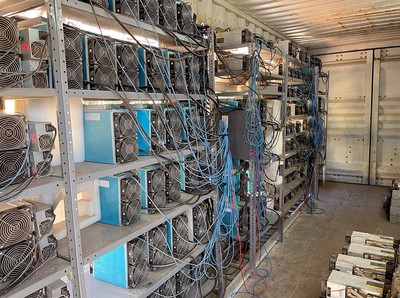
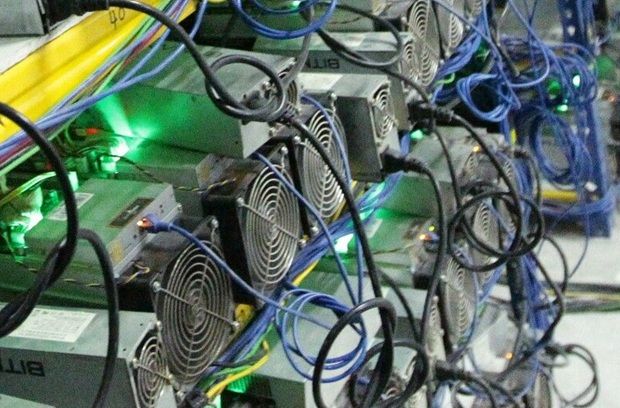
PoW is the original consensus mechanism introduced by Bitcoin, the first cryptocurrency, in 2009. Under this system, specialized computers known as miners compete to solve complex mathematical puzzles. The first miner to solve the puzzle earns the right to add the next block of verified transactions to the blockchain. The whole process occurs in five steps:
- Miners collect verified transactions waiting in the mempool
- Each miner competes to solve a cryptographic puzzle
- The first miner to find the correct solution broadcasts it to the network
- Other nodes verify the solution
- If everything checks out, the new block is added to the blockchain
The winning miner gets a block reward, which usually consists of newly created cryptocurrency plus the transaction fees paid by users whose transactions were included in the block.
Proof of Stake (PoS): Validators and Network Security
No race to solve puzzles. Proof of Stake works differently. Instead of relying on computing power, it relies on economic incentives. Participants known as validators lock up, or stake, a portion of their cryptocurrency as collateral for the chance to help secure the network. The blockchain then selects validators according to its own rules to propose and verify new blocks.
Many major blockchains now use PoS, including Ethereum, Cardano, Solana, Avalanche, and Polygon. It’s also worth knowing about slashing in PoS. If a validator attempts to cheat the network or repeatedly fails to perform its responsibilities, part of its staked cryptocurrency can be taken away as a penalty. This creates a strong financial incentive for validators to behave honestly. In our experience, PoS is easier for many newcomers to understand than mining.
Where Do Cryptocurrencies Come From?
One misconception we’ve noted with new traders is that all cryptocurrencies already exist, waiting for someone to buy or trade them. Not the case. Different cryptocurrencies enter circulation in different ways depending on how their networks are designed. Some are created through mining, others through staking, while many tokens are issued according to rules established when the project launches.
The Minting and Mining Process
On PoW blockchains like Bitcoin, new coins are created through mining. Miners verify transactions, group them into new blocks, and compete to add those blocks to the blockchain. The winning miner gets newly created Bitcoin along with the transaction fees included in that block.
Bitcoin’s mining reward isn’t fixed forever. Roughly every four years, the network undergoes a halving, which cuts the reward by 50%. This slows the rate at which new Bitcoin enters circulation and is one reason Bitcoin is often described as a scarce digital asset.
Looking back at previous halving cycles, we’ve noticed renewed interest from investors as the supply of new Bitcoin entering the market falls. Even so, a halving doesn’t guarantee higher prices. Market demand, investor sentiment, and broader economic conditions still play a major role.
PoS blockchains take a different approach. Validators secure the network by staking their cryptocurrency, and in return, they earn newly minted coins as rewards. This achieves the same goal of introducing new coins into circulation while consuming far less energy than PoW.
Here’s something many beginners don’t expect: some blockchain networks intentionally destroy tokens. This process, known as token burning, permanently removes a portion of coins or tokens from circulation. By reducing the available supply, token burning can offset the issuance of new coins and influence the network’s long-term tokenomics.
Tokenomics: Hard Caps vs. Inflationary Supply
Every cryptocurrency has rules that determine its supply, known as tokenomics. These rules define how many coins are currently in circulation, how many can ever exist, and how new coins are created over time.
Some cryptocurrencies have a hard cap, meaning there’s a fixed maximum supply that can never be exceeded. Bitcoin, for example, has a permanent limit of 21 million BTC. This built-in scarcity is one reason many investors compare Bitcoin to gold and include it among their long-term cryptocurrency investments.
Others use an inflationary supply, where new coins continue entering circulation according to the network’s rules. Ethereum follows this model, although recent upgrades and token-burning mechanisms have significantly slowed its supply growth. Ongoing issuance helps reward validators, secure the network, and support its long-term operation.
When looking to trade cryptocurrencies, don’t stop at the current market price. From our perspective, one of the biggest mistakes new investors make is ignoring fully diluted supply. We’ve tracked projects where less than 10% of the total token supply was circulating while the remaining 90% was scheduled to unlock gradually over the following years. Early buyers saw attractive cryptocurrency prices, only to watch their holdings lose value as millions of new tokens entered the cryptocurrency market.
Is Cryptocurrency Safe? Understanding the Security Risks

We’ve found that beginners often lump every crypto-related theft into one category. That’s understandable, but it creates the wrong impression. Saying “crypto was hacked” is a bit like saying “the internet was hacked” because someone fell for a fake banking website. To understand the real risks, it’s important to separate the security of the blockchain from the security of the people and platforms that use it.
The Immutability of the Blockchain (Why Bitcoin Can’t Be Hacked)
The Bitcoin blockchain has never been successfully altered since it launched in 2009. Ethereum’s main chain is also secure, though the network did go through a hard fork in 2016 after the DAO exploit, a community decision to reverse the damage that shows governance can step in during extreme cases.
A big reason for Bitcoin’s track record is something called immutability. In blockchain, immutable means that once a transaction has been verified and added to the blockchain, it can’t realistically be changed or deleted. Every new block is permanently linked to the one before it, so altering a past transaction would need rewriting every subsequent block as well.
On Bitcoin, that would mean controlling an enormous amount of computing power in what’s commonly called a 51% attack. While such attacks have occurred on much smaller blockchains, carrying one out against Bitcoin would need resources so vast that the economics alone make it highly impractical.
Blockchain transparency adds another layer of security. Every confirmed transaction is permanently recorded on a public ledger that anyone can inspect. That doesn’t reveal users’ identities, but it does allow anyone to independently verify how funds move through the network.
The Real Threats: Wallet Exploits, Phishing, and Exchange Hacks
We’ve reviewed dozens of crypto exchange hacks over the years, and one pattern appears repeatedly: the blockchain wasn’t the weak point. User accounts, private keys, and centralized infrastructure were. According to Chainalysis, hackers stole about $3.4 billion in cryptocurrency during 2025, pushing total losses to $6.75 billion.
Here are the biggest threats to watch out for:
- Phishing scams: Attackers create fake emails, websites, or messages that look like they’re from a trusted crypto exchange or wallet provider. Their goal is to trick you into revealing your login details, recovery phrase, or private key. We’ve noticed that phishing sites got noticeably harder to spot in 2025. Some now copy not just the design of a legitimate cryptocurrency exchange but its SSL certificate too. In our experience, the safest habit is bookmarking your exchange’s URL directly and never clicking a login link from an email.
- Wallet exploits: If someone gains access to your private key or seed phrase, they control your wallet. These are the only credentials needed to access your crypto holdings, so they should never be shared or stored online.
- Exchange hacks: These attacks target the exchange’s systems, not the blockchain itself. In February 2025, hackers stole $1.5 billion from Bybit’s hot wallet infrastructure, making it the largest exchange hack on record. Bybit later reimbursed affected users using its own reserves.
Most of these risks are avoidable once you build a few simple practices. Never share your private key or recovery phrase, enable two-factor authentication (2FA) using an authenticator app instead of SMS, and store cryptocurrency in a hardware wallet, which keeps your private keys offline. If you use an exchange, only keep funds there that you plan to trade in the near term.
Final Verdict
From our perspective, learning how cryptocurrency works is far more valuable than trying to predict which coin will surge next. Bull markets come and go. Memecoins rise and fall, and regulations continue to evolve. The fundamentals of blockchain technology, however, remain remarkably consistent.
Once you understand the crypto industry, wallets, consensus, tokenomics, and blockchain security, you’ll find it much easier to judge new projects on their merits instead of social media hype. That’s a skill that stays useful in every market cycle.
FAQs
How does cryptocurrency get a value?
Cryptocurrency gets its value from supply and demand. Adoption, network activity, scarcity, utility, and investor sentiment all shape what people are willing to pay. Coins with real use cases tend to hold value better than purely speculative ones, though prices can still fluctuate because of market volatility.
Is cryptocurrency completely anonymous?
No. Most cryptocurrencies are pseudonymous, not anonymous. Every transaction sits on a public blockchain, where wallet addresses are visible to anyone. Addresses don’t reveal your identity outright, but they can sometimes be linked to you through exchanges or blockchain analytics.
What is the difference between a coin and a token?
A coin runs on its own blockchain, like Bitcoin or Ether. A token is built on top of an existing blockchain and usually is an asset, utility, or governance right. Thousands of tokens run on Ethereum alone.
Is $100 enough to start crypto?
Yes. Most exchanges let you buy fractional amounts of major cryptocurrencies, so you don’t need thousands of dollars to start. In our experience, starting small is the best way to learn how wallets and exchanges work without taking on real financial risk.