Retirement income planning is, according to the Nobel Prize-winning economist William Sharpe, “the hardest and nastiest problem in finance”.
Sharpe is best known as the inventor of the Sharpe ratio, which is a way of measuring risk-adjusted returns, and those tasked with creating both cautious portfolios and with income portfolios have had to grapple with many challenges in recent years.
For most of the decade after the global financial crisis, the challenge came on the income side of the ledger as bonds, traditionally the source of income in such portfolios, yielded nothing, while many of the equities that went up were those that did not pay a yield.
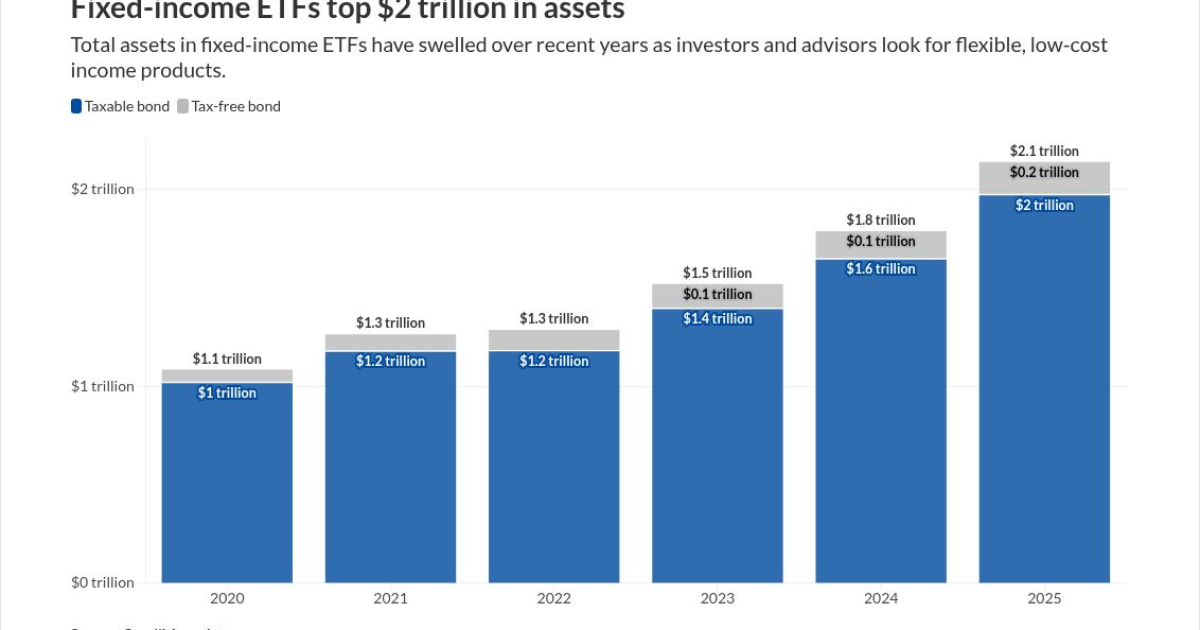
Then came the pandemic and its aftermath. The resulting inflation caused bond prices to fall sharply, creating losses that dented the returns from defensively managed portfolios — strategies that would usually be overweight to fixed income.
But the consequent higher bond yields also changed the picture for income investors, as income was, for the first time in more than a decade, available from a fixed income allocation, but at a price of higher volatility.
Strong returns from equities that did not pay a significant dividend created a scenario where income-focused investors may have been forced to create a portfolio that contains fewer of the assets that performed best, and so would underperform relative to whatever index it is benchmarked against.
John Stopford, who runs about £2.5bn across a pair of defensive income funds at Ninety One, says his approach is to ignore any of the standard benchmarks, and instead focus on achieving an income target, in his case, of about 5.5 per cent.
Vincent McEntegart, who runs the Diversified Monthly Income fund at Aegon Asset Management, says he targets a yield of 5 per cent, but that in total return terms, the aim is to provide downside protection in the event of a sell in equities.
He says: “In recent periods where equity markets fell by 15 per cent, we captured one-third of the drawdown (that is, lost one-third of the 15 per cent, or 5 per cent), and during March 2020 when markets sold-off in the wake of the pandemic, the market lost 30, and we lost 20.”
McEntegart does own some of the largest technology stocks, which he says helps his fund “keep up with” the index during boisterous market conditions.
David Lewis jointly runs the Jupiter Merlin Monthly Income Select fund, which sits in the most cautious of the IA Multi-Asset sectors, but says that he aims, from a capital appreciation perspective, to keep up with inflation, in addition to generating an income.