If you’re hunting for mutual funds that have delivered more than 20% annualised returns, two mid-cap funds deserve your attention.
Among the standout performers, these funds have emerged as the top two performers, with strong multi-year track records and annualised returns exceeding the 20% mark in 3 years, 5 years, and 10 years.
Despite sharp corrections, interest-rate cycles, geopolitical tensions, and periodic market sell-offs, these 2 mid-cap schemes have continued to deliver impressive long-term returns. If you look at the last decade, markets have gone through multiple disruptions from the pandemic shock and inflation concerns to global geopolitical tensions and periodic corrections. Yet these funds delivered annualised returns well above 20% over long investment horizons.
While mid-cap funds can be volatile in the short term, investors who remained invested through corrections were able to benefit from the long-term growth potential of India’s emerging companies, specifically those ranked 101st to 250th by market capitalization.
Mid-cap mutual funds with 20%+ CAGR
Among mid-cap funds in 2026, the following discussed funds have emerged as two standout performers, delivering more than 20% CAGR across key investment horizons.
| Fund name | 3-year return in % | Benchmark return in % | Category average return in % | 5-year return in % | Benchmark return in % | Category average return in % | 10-year returns in % | Benchmark return in % | Category average return in % |
| Invesco India Mid Cap Fund – Direct Plan | 26 | 19.92 | 20.12 | 22.3 | 17.86 | 18.22 | 20.51 | 18.1 | 17.52 |
| Edelweiss Mid Cap Fund – Direct Plan | 24 | 19.92 | 20.12 | 21.22 | 17.86 | 18.22 | 20.19 | 18.1 | 17.52 |
| Source: Value Research | |||||||||
SIP Returns
Let’s take a closer look at the top two mid-cap mutual funds with long-term SIP returns and see how much they have created wealth for investors over the years.
| Fund name | 3-Year SIP Return | Monthly SIP of Rs 10,000 would have grown to (approx) | 5-year SIP return | Monthly SIP of Rs 10,000 would have grown to (approx) | 10-year SIP returns | Monthly SIP of Rs 10,000 would have grown to (approx) |
| Invesco India Mid Cap Fund – Direct Plan | 20% | Rs 4.83 lakh | 22.59% | Rs 10.53 lakh | 21.81% | Rs 38.11 lakh |
| Edelweiss Mid Cap Fund – Direct Plan | 16.31% | Rs 4.60 lakh | 20.59% | Rs 10.03 lakh | 21.57% | Rs 37.64 lakh |
| Source: Value Research | ||||||
Invesco India Mid Cap Fund – Direct Plan
This 4-star-rated mid-cap fund from Value Research was launched on January 01, 2013. Since its inception, the fund has generated 16.42% CAGR.
This mid-cap fund is currently being managed by Aditya Khemani, and the fund’s expense ratio is lower at 0.49%.
The fund’s asset allocation consists of 98.58% in equity and 1.42% in Cash and cash equivalents (CCE). The scheme tracks the BSE 150 MidCap TRI, giving you exposure to a diversified basket of the top 150 mid-cap companies.
The fund has generated an average return of 25.01% in the last 3 years, significantly higher than the 20.99% delivered by the BSE 150 MidCap TRI and the 20.78% category average.
Top 10 holdings: BSE, Prestige Estates, Federal Bank, AU Small Finance Bank, Eternal, Global Health, Interglobe Aviation, Max Healthcare, L&T Fin and IndusInd Bank.
Top 5 sector exposure: Financial, Healthcare, Technology, Consumer Discretionary and Real Estate.
Risk profile: The fund has been categorized as high, very high risk by Value Research. Based on the standard deviation measures of 19.46%, the fund’s volatility is slightly higher than the benchmark (18.22%) and category average (18.09%).
The fund’s Sharpe ratio of 0.98 is higher than both the benchmark (0.83) and category average (0.82), indicating superior risk-adjusted performance. The fund’s Sortino ratio of 1.21 exceeds the benchmark’s 1.09 and category average’s 1.08, suggesting that the fund has delivered better returns relative to its downside risk.
The fund’s alpha of 3.81% is substantially higher than the category average of 0.39% indicates that the fund manager’s investment decisions generated significantly higher returns than expected for the amount of risk taken.
Edelweiss Mid Cap Fund – Direct Plan
This 5-star-rated mid-cap fund by Value Research was launched on January 01, 2013, and since inception, it has generated a SIP return of 19.33%. The fund has an expense ratio of 0.41% while the fund managers are Dhruv Bhatia, Trideep Bhattacharya and Raj Koradia.
The fund’s asset allocation has been divided into 96.05% in equity, 3.85% in debt, and 0.1% in CCE. The fund is benchmarked against the BSE 150 MidCap TRI, a widely tracked index representing the performance of leading mid-cap companies in India.
The fund has generated an average return of 24.23% in the last 3 years, comfortably outperforming both the BSE 150 MidCap TRI (20.99%) and the mid-cap category average (20.78%).
Top 10 holdings: MCX, BSE, Federal Bank, Fortis Healthcare, Marico, Solar, Bharat Heavy Elect, JSW Energy, Indian Bank and IDFC First Bank.
Top 5 sector exposure: Financial, Industrials, Consumer Discretionary, Materials and Healthcare.
Risk profile: At 17.78% standard deviation, the fund’s volatility is lower than both the benchmark (18.22%) and the category average (18.09%). This indicates that despite being categorized as a high-risk fund by Value Research, it has delivered higher returns while experiencing relatively lower fluctuations.
The fund’s Sharpe ratio of 1.03 is significantly higher than the benchmark (0.83) and category average (0.82), indicating superior risk-adjusted performance relative to both its benchmark and peers.
With a Sortino ratio of 1.29, the fund compares favorably against the benchmark (1.09) and category average (1.08). This suggests that the fund has managed downside risk effectively while delivering robust returns.
A beta of 0.95 compared to the category average beta of 0.96 indicates that the fund is slightly less volatile than the broader market.
The fund’s alpha of 4.07% is substantially higher than the category average of 0.39%, highlighting strong portfolio management given the risk taken.
What valuation metrics should retail investors monitor before investing in mid-cap funds?
Investors often focus only on past performance while evaluating or picking fund into the portfolio but it has certain limitations so instead just focusing on past returns one can consider evaluating fund performance across different market cycles it indicates how effectively fund has performed during it stress times and highlights fund manager expertise, along with one can also consider evaluating how fund has recovered from market falls relative to its peers and bench mark.
In addition to this, one can also consider evaluating performance metrics such as alpha generation potential relative to its benchmark, Nifty 50, and its peers, and can also consider assessing risk parameters such as standard deviation and beta, which help to understand how volatile the fund is likely to experience during uncertain times.
How much volatility did mid-caps experience during market corrections?
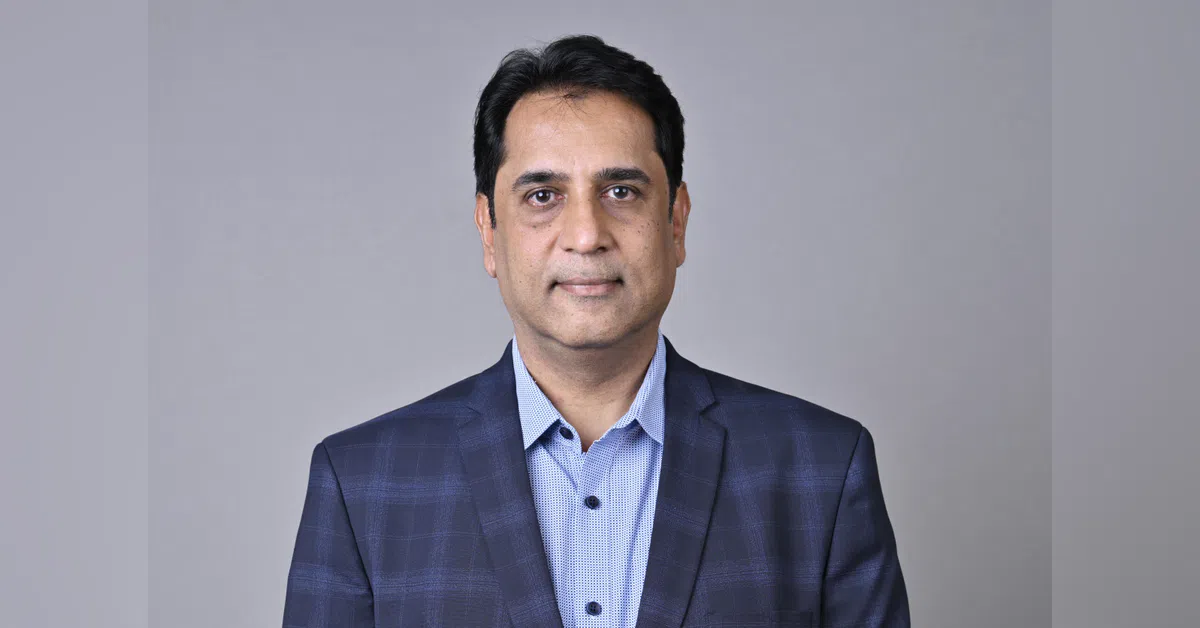
“Historical performance study on Nifty Midcap 150 indicates it has experienced an average drawdown of 22.04 annually, and on a median basis, it has seen a 18.35% during corrections, and it took nearly 382 days to recover to the previous peak,” said Hrishikesh Palve, Director, Anand Rathi Wealth.
However, this higher volatility has historically been followed by stronger post-correction returns.
“Following major drawdowns, the Nifty Midcap 150 delivered an average 1-year CAGR of 43.9%, this suggests that while mid-cap funds may witness declines during market uncertainties, they have also delivered strong returns for investors who remain invested through market cycles,” Hrishikesh Palve further added.
How many mid-cap funds should an investor ideally hold in their portfolio?
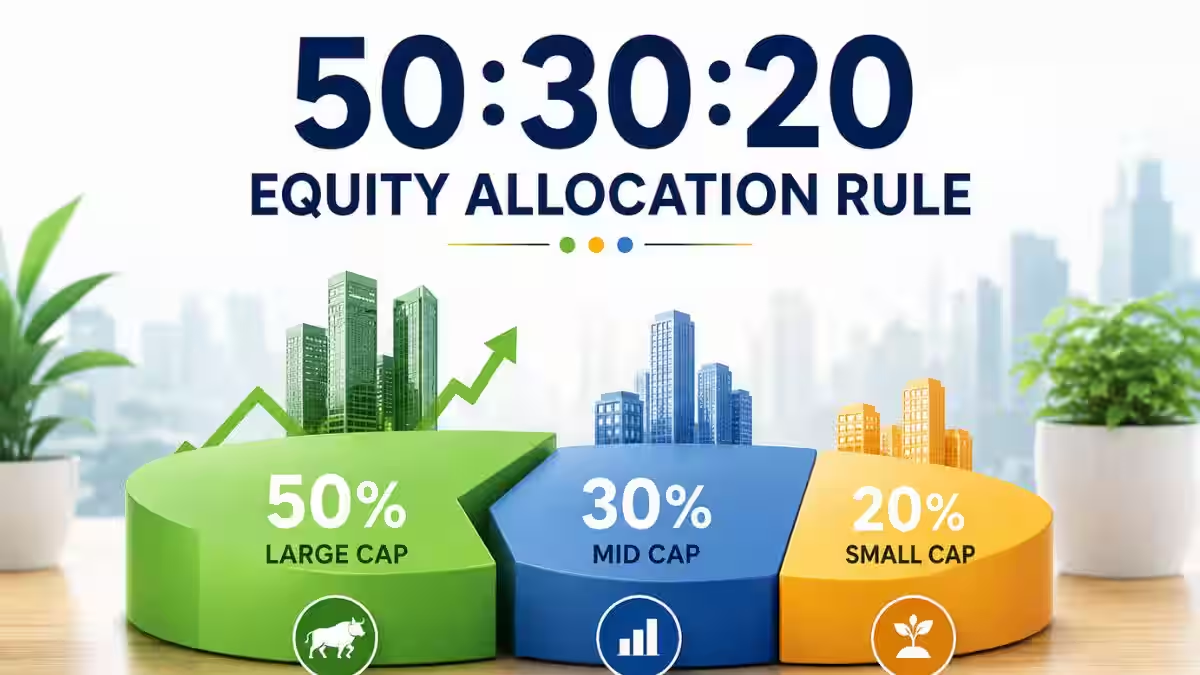
Investors are suggested to build a strategy-based portfolio by diversifying across market-cap-based funds, like including mid-caps, and strategy-based funds, like focused and dividend yield.
“Further, it is recommended to build with a market cap mix of 55:25:20 across large, mid, and small caps, and within that framework, mid-cap allocation can be fulfilled with 1 or 2 mid-cap funds from different AMCs,” stated Hrishikesh Palve.
This will help to balance growth potential with stability, allow investors to ride across market cycles, and reduce dependence on any single market segment and reduce concentration risk associated with the performance of any single segment or market cap, he further explains.
Disclaimer: This article is for informational purposes only and should not be construed as investment advice. Mutual fund investments are subject to market risks. Please read all scheme-related documents carefully before investing.
Every financial journey has a turning point. What’s yours?
Financial Express is launching a new series highlighting real experiences with money, investments, and the taxman. Did a sudden tax rule catch you off guard? Did a piece of financial advice change your life? Your story could provide invaluable, practical lessons for thousands of fellow taxpayers. Share your experience with us. We respect your privacy: no stories will be featured without a direct conversation and your full consent. Thank you.