The Investment Company Institute, SIFMA and other industry groups argue the bipartisan GROWTH Act would end “harmful double-effect” of surprise tax bills.
A broad coalition of financial industry groups is urging Congress to move on bipartisan legislation that would let mutual fund investors delay paying taxes on automatically reinvested capital gains until they sell their shares — a change they say would modestly boost after-tax returns for middle-income households and bring mutual funds in line with other investments.
In a letter to congressional leaders this week, the Investment Company Institute and several allied trade associations and advocacy groups called for passage of the Generating Retirement Ownership Through Long-Term Holding Act, or GROWTH Act.
The coalition behind the joint letter spans a wide swath of the financial and business lobby, including the US Chamber of Commerce, the American Council for Capital Formation, the American Securities Association, Americans for Tax Reform, Financial Services Institute, Investment Adviser Association, and SIFMA.
The proposal would allow investors to defer federal taxes on mutual fund capital gains distributions that are automatically reinvested, rather than paying those taxes each year as they do now. If the GROWTH Act advances, RIAs and broker-dealers could find themselves revisiting asset location strategies, weighing the relative after-tax trade-offs of mutual funds, ETFs, direct indexing, and individual securities for clients in higher brackets.
The ICI estimates that an investor who put $10,000 into an actively managed US equity mutual fund in 2015 and sold in 2024 could have ended up with as much as $1,340 more after taxes if the GROWTH Act’s deferral had been in effect. Under that scenario, the investor would still owe an additional $140 in capital gains taxes when the shares were sold, but would have benefited from extra compounding along the way.
Tom Quaadman, the institute’s chief government affairs and public policy officer, said in a statement that “tax fairness for 40 million Americans depends on Congress passing the GROWTH Act,” calling it “a common sense fix to the tax code that will help the middle class at a time when Americans are still facing high costs.”
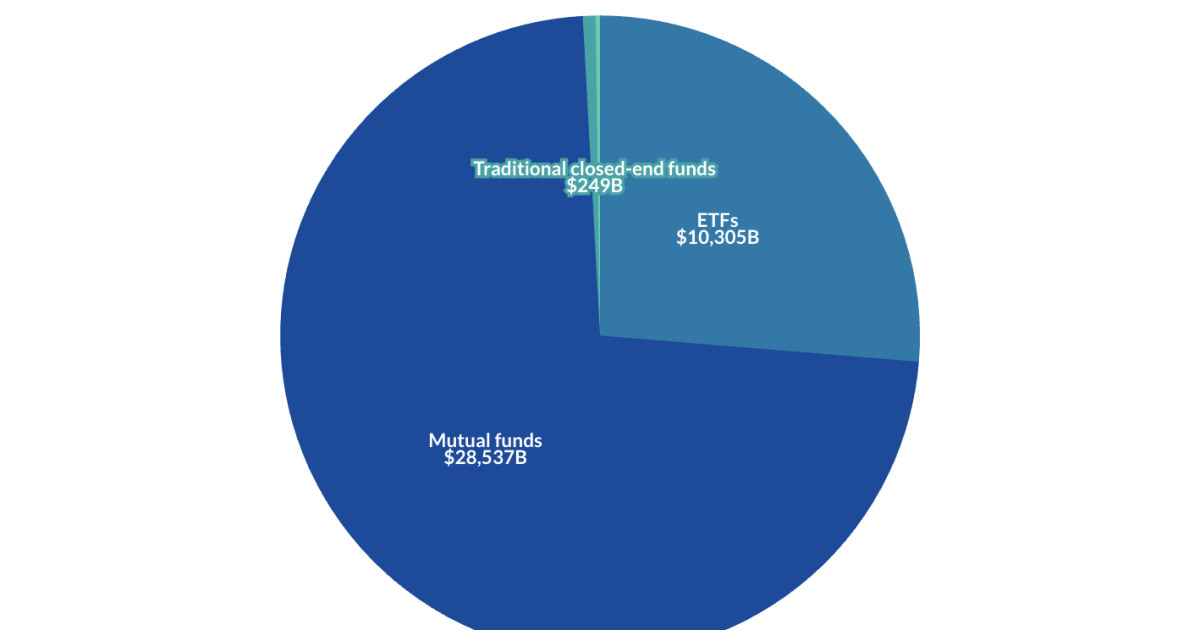
According to the institute’s data, roughly 40 million Americans hold about $7 trillion in long-term mutual fund assets in taxable brokerage accounts, with a median household income of $140,000. That’s meaningfully above the $125,000 median income for the broader universe of mutual fund holders. hose investors are more likely to feel the sting of year-end capital gains distributions that show up as unexpected tax bills even when they never saw the cash because the distributions were reinvested.
The joint letter warns that “under current law, savers face a harmful double-effect…First, they are hit with an annual tax bill they didn’t expect; and second, that tax payment reduces the compounding of their returns over the long run, undercutting the primary benefit of investing.”
In a separate statement, SIFMA president and CEO Kenneth Bentsen argued that the tax code does not treat mutual fund investors neutrally compared with owners of individual stocks, bonds, and exchange-traded funds, where reinvested gains generally are not taxed each year. Across the fund industry, he noted, about 95% of capital gains distributions are reinvested, meaning investors are paying taxes on income they never actually take as cash.
Along similar lines, a statement from ASA President and CEO Chris Iacovella stressed how the GROWTH Act “equalizes the tax treatment of dividends for mutual funds and ETFs, which makes it easier for American working families to save for retirement.”