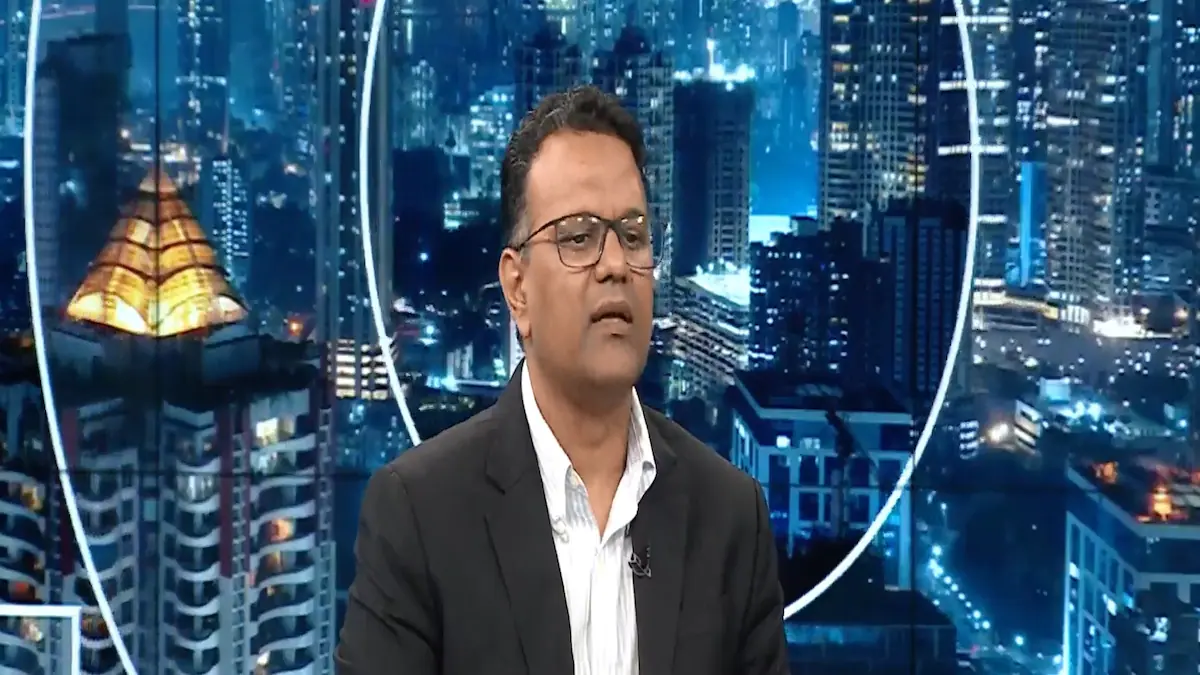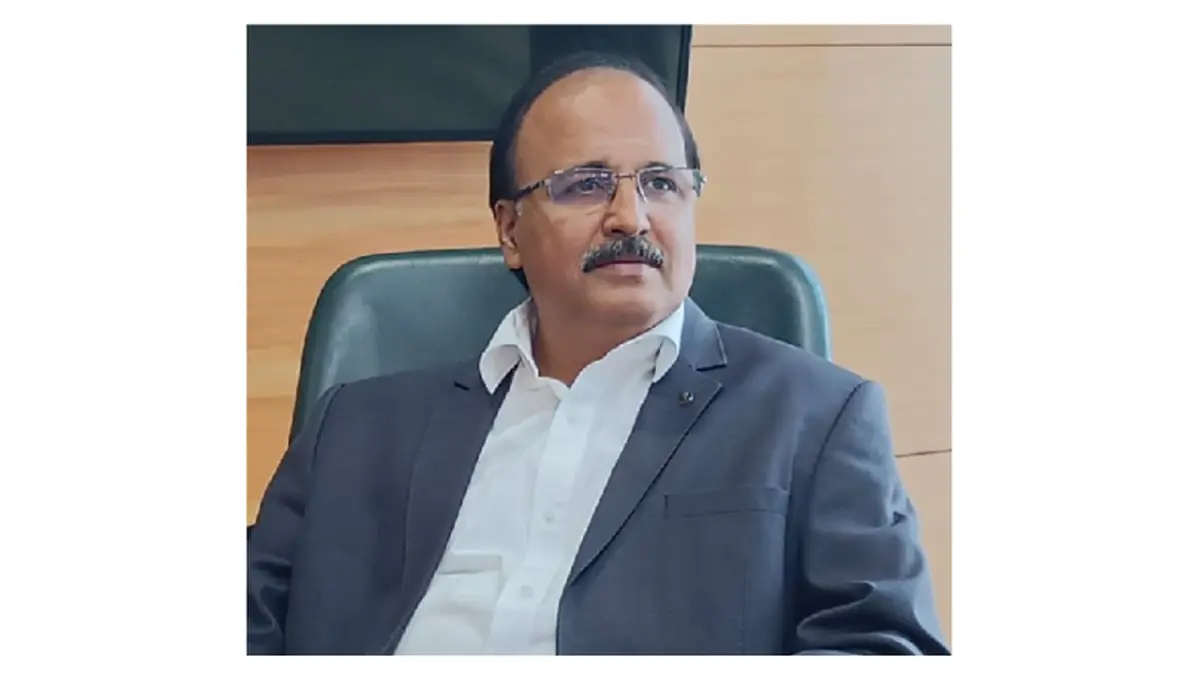
Wilshire’s Mark Perry tells InvestmentNews that performance gaps among alt managers are widening, leaving RIAs and investors with little room for error in private markets.
Performance dispersion among alternative investment managers has widened materially, leaving allocators with far less room for error, especially first-time alternative investors such as RIAs and high-net-worth individuals entering private markets at scale.
In today’s uncertain alternatives landscape, rigorous manager selection has become one of the most powerful levers for risk management and Mark Perry, managing director at Wilshire, tells InvestmentNews why selecting the right managers now matters more than ever – and where advisors can go wrong.
Asked what’s driving the widening performance gap Perry points first to the complexity of today’s environment.
“Manager selection in alternative investments is critical. This is true across market cycles but is amplified by volatility,” he says. “Today’s complex interplay between economic policy, geopolitical developments, technological innovation and sustainability initiatives is redefining the investment landscape, creating a rich opportunity set for the industry’s most capable managers, while exposing meaningful vulnerabilities among those slower to adapt.”
The implication for investors is that the environment is rewarding excellence and punishing complacency. In such a market, picking average managers is no longer sufficient and selecting the wrong ones can materially impair outcomes.
As more RIAs move into private markets for the first time, manager selection errors have become increasingly common. According to Perry, the biggest misstep is relying on surface-level access rather than disciplined sourcing and evaluation.
“In alternative investing, selectivity has become a defining advantage. While investors may see a steady stream of opportunities, often driven by managers with the largest marketing and sales budgets, the most compelling deals typically require proactive sourcing rather than waiting for pitches to arrive,” he explains. “That puts a premium on robust sourcing engines and the experience-informed pattern recognition skills to filter this deal flow. We are seeing outperformance generally being driven by smaller, sector focused managers that prioritize operational value creation over financial engineering, and whose specialization positions them to execute in today’s more demanding market environment.”
The takeaway is that strong marketing presence does not equal strong performance. Advisors must look beyond visibility and toward capability.
Private credit growth
Private credit, especially covenant-lite and bespoke structures, has grown rapidly. But where do advisors most often underestimate risk compared with traditional fixed income? Perry cautions that not all private credit risk is created equal.
“While heavy inflows into certain areas of private credit have intensified competition, compressing spreads, weakening underwriting standards, and eroding lender protections, these dynamics are most acute in the largest and most efficient segments of the market,” Perry says. “Labeling the entire asset class as uniformly risky, however, overlooks its inherent nuance. Private credit is highly segmented: parts of the market with abundant capital have indeed seen terms deteriorate, but others such as opportunistic credit, continue to benefit from meaningful barriers to entry rooted in structural complexity and sector specialization.”
He adds that in these less crowded segments, experienced managers retain pricing power, maintain stronger structures, and negotiate bespoke terms that support the potential for more attractive risk adjusted returns.
Hidden risks
Aggressive accounting and underwriting practices can mask underlying weaknesses. Perry warns of tools like aggressive EBITDA add backs and optimistic underwriting that can make borrowers appear healthier than they truly are.
“By inflating cash flow metrics and relaxing structural protections, these practices can understate leverage, mask weakening fundamentals, and delay the recognition of credit deterioration,” he says. “Combined with today’s prevalence of covenant lite structures, they remove early warning signals that lenders traditionally rely on. The result is that headline performance may look stable even as underlying risks quietly build, making disciplined underwriting and detailed, data-driven manager selection more important than ever.”
In alternatives, downside protection often matters more than chasing the highest returns. Perry believes advisors must take a multidimensional approach to diversification when evaluating managers.
“Diversification is a critical risk management tool and one of the key advantages private markets bring to portfolios anchored in traditional stocks and bonds,” he notes. “Recognizing that concentrated exposures are more vulnerable to drawdowns, advisors should intentionally diversify what they own (buyout, growth, venture, private credit, and real assets), where they own it (North America, Europe, Asia Pacific), and when they enter (staggered vintages and disciplined pacing), while blending different manager types to mitigate execution risk. This multidimensional approach spreads exposure across distinct value drivers and capital structures, and has the potential to help portfolios absorb shocks, maintain flexibility, and compound more effectively through uncertain cycles.”
Maintaining institutional grade
As alternatives become more accessible to high-net-worth and retail investors, RIAs face the challenge of maintaining institutional-grade diligence without overwhelming their practices. Perry suggests simplification rather than complexity is the answer.
“As alternatives become more accessible to individual and high net worth investors, RIAs can maintain institutional grade due diligence by simplifying implementation rather than building complex portfolios manager-by-manager,” he says. “By leveraging the diversified, multi strategy private market products that exist today, advisors can access professional manager research, portfolio construction, and monitoring within a single, scalable structure. This approach provides broad diversification across strategies, sectors, geographies, and vintages—while avoiding operational overload. As a result, these single-check, ticker-based solutions can deliver institutional caliber exposure to private markets in a format that is practical, efficient, and aligned with client needs.”
Family offices have expanded private market allocations significantly over the past decade. Perry says their approach offers a roadmap for RIAs.
“The recipe for success in private market investing is fundamentally the same whether you’re a large institution, a family office, or an RIA: you need broad deal flow, an institutional quality lens to separate truly attractive opportunities from the rest, and the ability to construct a prudently diversified portfolio across strategies, sectors, geographies, and vintages,” he says. “Achieving this requires both front end judgment and the middle and back office infrastructure to underwrite, close, and monitor investments with discipline.”
Perry adds that there are no shortcuts. Either an organization builds these capabilities internally, or it partners with a firm that already has them. For RIAs, leveraging institutional grade allocators and turnkey solutions can serve as an extension of their practice, delivering deep manager diligence, operational excellence, and diversified access without adding unwanted complexity to their business.
Across every segment of the alternatives universe, performance dispersion has raised the cost of getting manager selection wrong. As Perry makes clear, today’s environment rewards specialized skill, disciplined underwriting, robust sourcing, and institutional-grade due diligence.
For RIAs and high-net-worth investors entering alternatives at scale, rigorous manager selection is no longer just a best practice, it is a core risk-management imperative.