The legal team behind the Robinson Huron Treaty annuities settlement for past compensation is challenging a recent lower court decision that slashed $487 million in legal fees owed to it.
In a notice of appeal filed Nov. 21, the lawyers argue the Superior Court of Ontario decision was “marred by erroneous findings and unwarranted assumptions,” according to a statement from the legal team provided to SooToday through its legal counsel.
In his Oct. 28 decision, Superior Court Justice Fred Myers ruled the lawyers’ bill for $510 million was unreasonable and ordered it to be scaled back to $23 million — after Garden River First Nation and Atikameksheng Anishnawbek filed an application in June 2024 asking the courts to review the legal fees.
“Judge Myers failed to appreciate the enormity of the legal risk involved as well as the sanctity of Anishinaabe culture and values,” the statement said.
The $10-billion Robinson Huron Treaty settlement, which compensated 21 First Nations for historically underpaid treaty annuities, was reached with Canada and Ontario in 2023.
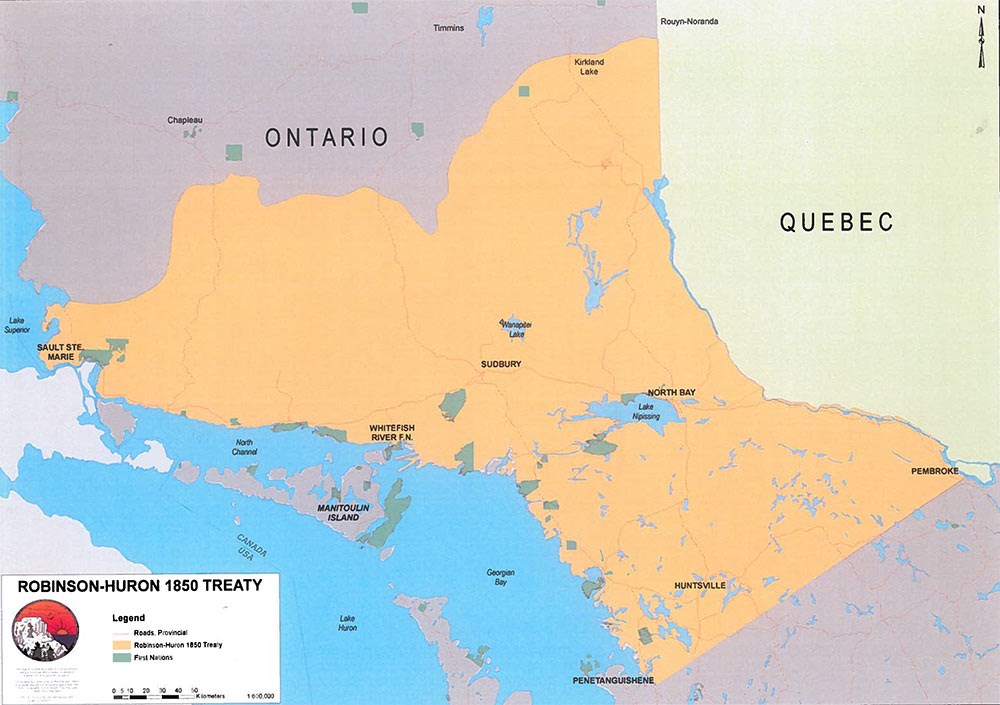
A pair of Robinson treaties signed in 1850 ceded more than 100,000 square kilometres of land in the upper Great Lakes region to the Crown, in return for annual payments to the Anishinabek of Lake Huron and Lake Superior.
Treaty annuities have remained at $4 per person since 1875 — despite the wealth generated through resource extraction within the territory far exceeding what treaty beneficiaries received.
In 2018, the Ontario Superior Court of Justice ruled the Crown had an obligation under the treaty to increase annuities as wealth generated from the land grew over time, as long as the Crown could do so without incurring a loss.
The $10-billion settlement for past compensation was finalized in early 2024, with hundreds of millions of dollars in settlement proceeds flowing into First Nations beginning in the summer of last year.
The legal team behind the historic settlement had been paid $17 million over the course of litigation leading up to last month’s Superior Court ruling.
In his decision, Myers found a five-per-cent contingency fee for the legal team was “neither fair nor reasonable,” and that lawyers gave incorrect advice in an effort to pressure First Nations into approving the legal fees — without being given an opportunity to seek independent legal advice.
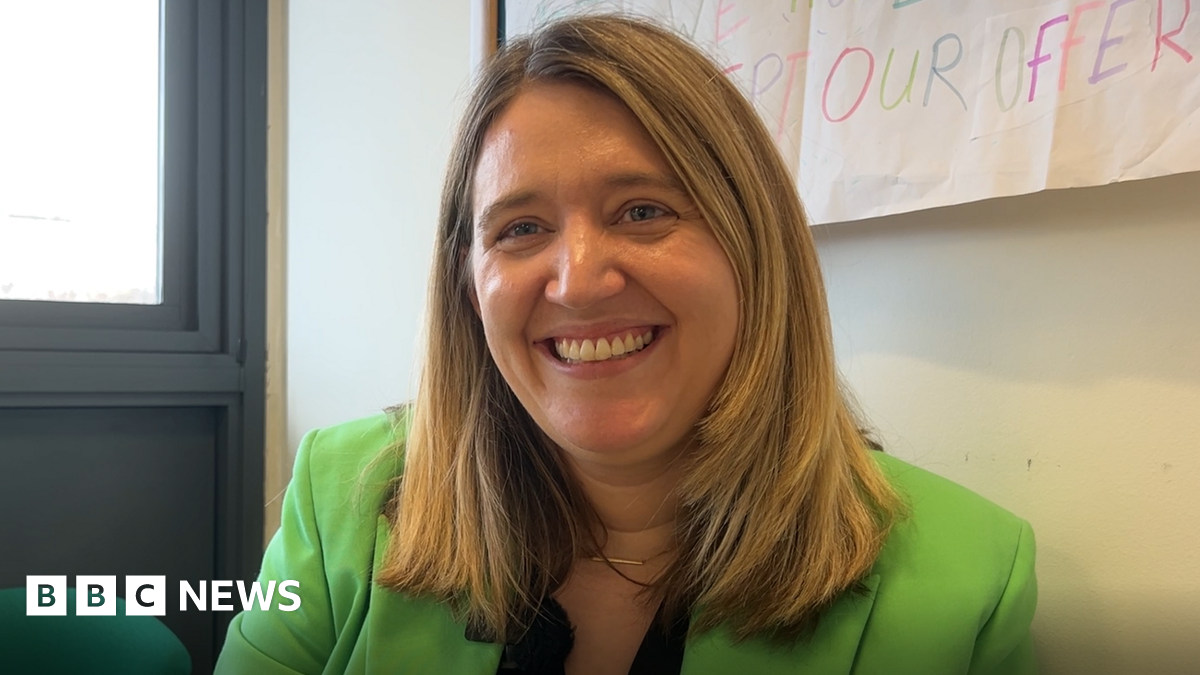
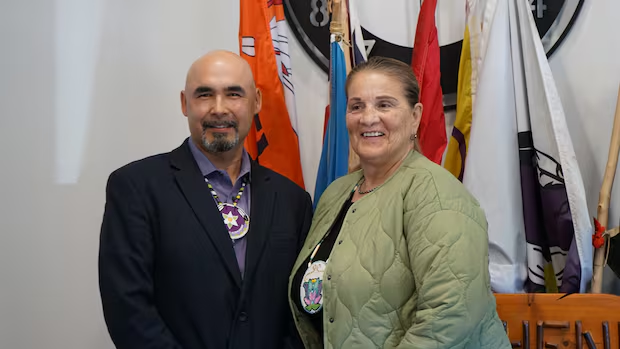
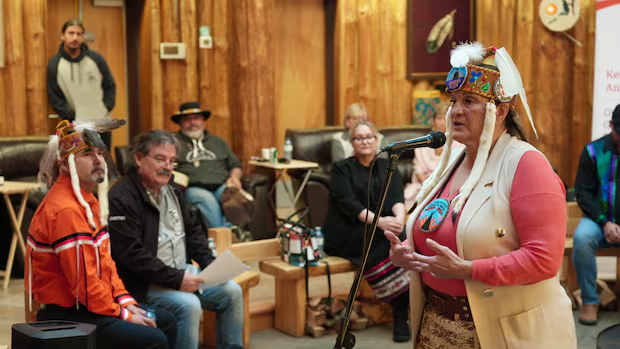
“Our goal has always been to make sure that there was fairness, there was accountability, and there was transparency in how the legal fees were managed and paid by the Robinson Huron Treaty Litigation Fund to the beneficiaries,” Garden River First Nation Chief Karen Bell said during a news conference held in the days following the court decision.
But in its appeal, the legal team contends that 19 of the 21 First Nations approved the payment of the fees owed under an agreement that was negotiated more than a dozen years ago.
The legal team also believes the court decision calls partial contingency fee agreements — arrangements that can play a “vital role in providing access to justice for those with limited resources” — into question.
“The appellants reject the notion that the Litigation Fund’s trustees were naive and ill-informed — a conclusion that echoes centuries of paternalistic attitudes toward First Nations,” the legal team said in its statement.
“The notice of appeal emphasizes that the chiefs and trustees involved in reaching the fee agreement were experienced negotiators who drove a hard bargain and were well aware of what they were doing over the entire course of the litigation.”
Last year, the legal team agreed to set aside $255 million — or half — of the legal fees in trust to be used for language and cultural programs within the treaty territory.
“The Myers decision has thrown those plans into doubt,” the legal team said.
The legal team also noted that Myers’s decision found litigation was “novel, immensely complicated and could easily have faltered along the way.”
“In fact, a Toronto law firm’s earlier attempt at securing justice for the First Nations had consumed seven years without a claim even being filed,” it said.
“Judge Myers praised the carefully-selected legal team that took over the litigation for their farsightedness in encouraging the creation of the Litigation Fund, an entity that was essential to the First Nations’ ability to pursue the litigation.”
The legal team confirmed it has not sought a stay to prevent the funds returned to the Robinson Huron Treaty Litigation Fund from being dealt with as the settlement proceeds.
The Robinson Huron Treaty Litigation Fund announced last week that it would not appeal the Superior Court decision.