
In regions where population growth and industrial expansion are outpacing the national average, a specific breed of institution is emerging as one of the most vital assets in the U.S. economy: the Mid-Cap Research University.
Stock image
While the national media remains hyper-fixated on the shrinking “Ivory Tower” and the administrative bloat of legacy elites, a quiet, high-stakes revolution is unfolding in America’s fastest-growing corridors. In regions where population growth and industrial expansion are outpacing the national average, a specific breed of institution is emerging as one of the most vital assets in the U.S. economy: the Mid-Cap Research University.
I have spent my career within the machinery of some of the nation’s largest R1 public institutions. From the inside, I’ve seen the transformational power these great institutions have on their students, their communities, their regions, and the nation. But I have also seen the paralysis that can come with scale and the inherent inertia with legacy thinking. As we navigate what I and others have referred to as the Higher Education Meta-Crisis – the convergence of a demographic cliff, declining public trust, rising costs, shifting federal priorities for funding, and the disruptive arrival of generative AI – I offer the following prediction: The engines of the new economy will come in different sizes. The next decade of American innovation will not be won simply by the biggest engines but also by the most intentional ones – fortunate, purposeful, and aligned. To compete with China and ensure both our national security and global competitiveness we need more innovation, more partnerships, and more human capital than what the large legacy institutions can produce. There is a group of well-positioned public universities (advantaged by geography, private investment, or both) that may be smaller than their flagship or land-grant counterparts that can lean into the opportunities their favorable circumstances afford and position themselves to best serve the needs of their region and the nation.
The Agility Divide: Magnet vs. Anchor
We must be careful not to confuse the Mid-Cap Research University with the traditional regional comprehensive institution. Many midsize (regional comprehensive) public universities are struggling today because they function as anchors. Often located in small, rural communities located far from any sizable industry base, metropolitan area, or economic activity, they are primarily degree-distributors and a source of employment for their communities. If the local population shrinks, e.g., with the out-migration of residents (and graduates), the university is dragged down with it.
In contrast, the Mid-Cap Research University is a magnet. Because of its status or trajectory as an R1 university and (fortunate) location in high-growth tech corridors, it helps to attract talent, capital, and industry from outside its region. It is the difference between an institution that provides a path out of a community and one that provides both pathways into the community and a reason for the world to invest in it.
Of course this is not meant to define all mid-size, research-engaged public universities. Think of these as the extremes on either end. Most institutions are somewhere in between. But there may be more than a few that fit the Mid-Cap Research University description have yet to fully recognize/understand that potential, or fully leverage (i.e., capitalize) on it.
The Metaphor of Momentum: Why ‘Mid-Cap’?
To some, applying a capitalization term to a university might feel like a reach. To others it might feel misplaced or even offensive. But in a period of higher ed’s meta-crisis, we must look at institutions through the lens of economic velocity rather than just academic heritage.
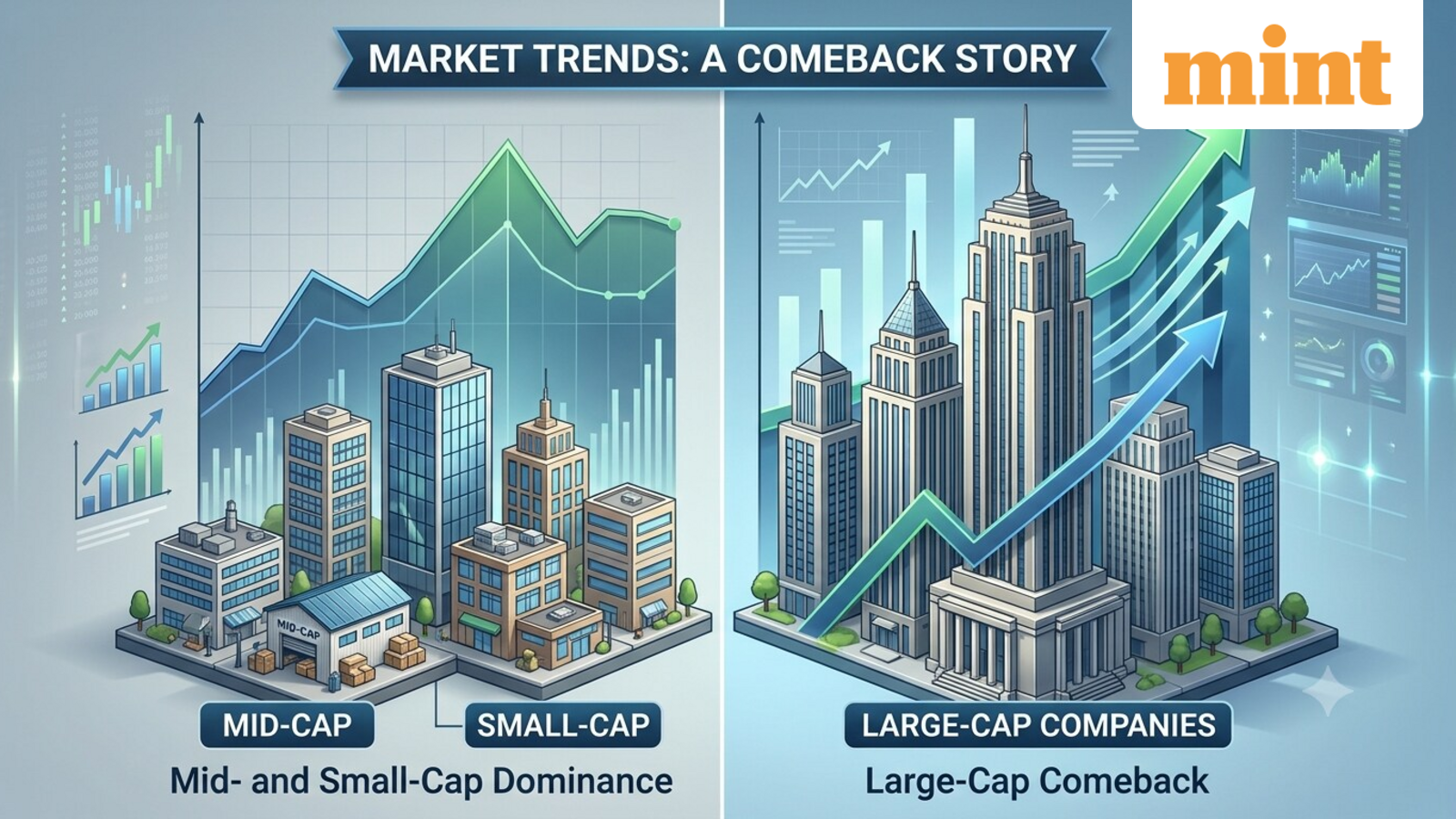
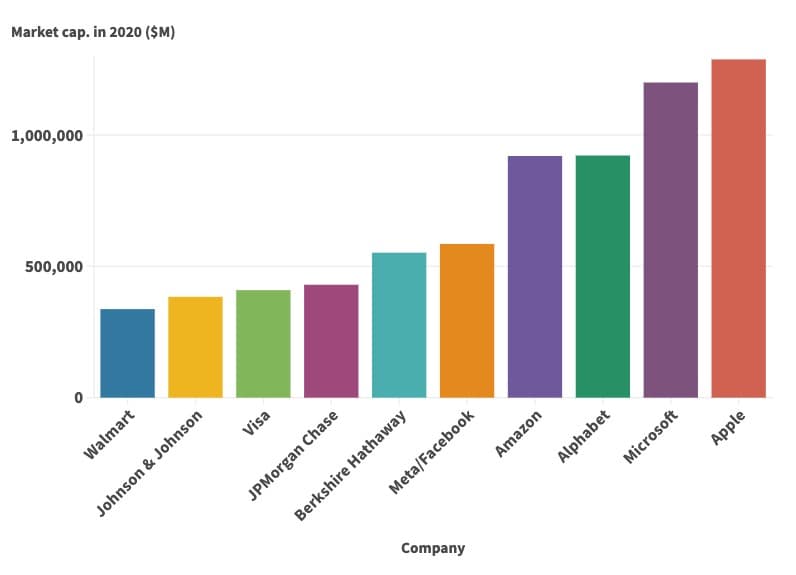
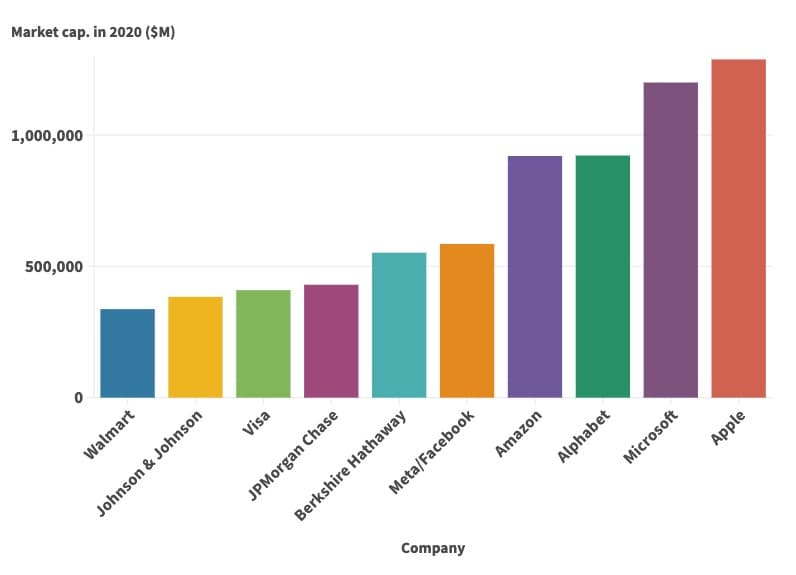
In the financial world, “mid-cap” stocks are the sweet spot of a portfolio. They have outgrown the volatility of small-cap startups but haven’t yet succumbed to the bureaucratic inertia of legacy “Large-Cap” blue chips. They are valued for their agility and growth potential. The same is true for “Scaling R1s.” These are institutions with total enrollment between about 10,000 and 25,000 students that have the infrastructure to be world-class in select, regionally-important domains, and (by virtue of their culture or leadership or both) demonstrated agility and intentionality.
The R1-Student Success Hybrid
For decades, a flawed assumption dominated higher education: that research intensity and student success were mutually exclusive. In fact, they are not. And that presumption animates a perpetual false narrative. Many universities have demonstrated clearly that research is not a silo, a separate ecosystem intended only for (and accessible only by) graduate students and faculty investigators, but a high-impact practice strongly correlated with undergraduate student success.
In today’s higher education world, in part thanks to media-produced rankings, a high graduation rate is a sacred covenant. Properly positioned, research can help institutions attract students, retain them year-to-year, and achieve higher graduation rates. When a mid-cap university scales its research profile, it creates a “living lab” where students work alongside world-class researchers on problems that directly impact their region’s economic future – from semiconductor fabrication to advanced energy systems, or from autonomous systems to recreation and tourism. This is how you build a national research profile that remains regionally focused, appropriately scaled, and human-centered. Student-centric mission statements need not be changed. Commitment to student success is both elevated and made more evident.
Curated Growth and Bandwidth Stewardship
The greatest threat to any size growing/rising university, such as a mid-cap university evolving to capture and leverage its regional opportunities, that is simultaneously responding to the elements of higher ed’s meta-crisis, is “initiative fatigue.” To achieve sustainable scale, leaders and their teams must adopt a philosophy of curated growth. This involves a rigorous audit to ensure that every effort – by faculty, staff, and leadership – is aligned with the university’s highest-impact goals.
However, curated growth cannot happen without bandwidth stewardship. As a leader, my primary duty often was to provide the “air cover” necessary to retire obsolete mandates and eliminate (or at least reduce) administrative friction. Institutional bandwidth is a finite, precious resource. Stewardship is the commitment to clearing the administrative underbrush so that the university’s most valuable asset – the intellectual capital of its faculty – can be deployed where it creates the most value.
The Innovation Fortress: A Geopolitical Antidote
Beyond campus boundaries, the Mid-Cap Research University combines with its regional industry partners to become an innovation fortress. In an era of global technological competition and the re-shoring of critical industries via the CHIPS Act and other federal actions, these institutions (like their larger counterparts) are part of the primary defense against the disruption of domestic supply chains.
By anchoring critical industries regionally or within a state’s borders, the Mid-Cap Research University – much like, and often alongside or in combination with its larger flagship or land-grant counterpart – becomes a vital component of national security. This is the new social compact: the state invests in the research engine, and the university delivers the human capital and innovation moat (a continuous competitive advantage driven by a company or organization’s ability to constantly invent, adapt, and outpace rivals) that sustain the state’s economic future.
The 60-Year Degree and Identity Infrastructure
I have advocated recently for the 60-Year Degree — the shift from a transactional four-year model to a perpetual enrollment model. Legacy R1s often are too tethered to 19th-century structures to adopt this with the necessary rapidity. It is the rising Mid-Caps – the favorably located institutions with both the will and the wherewithal (leadership, energy, culture, and commitment) – that have the “blank slate” capacity to build these new models from the ground up.
A distinct brand identity – often forged in the spirit of being a “challenger,” “pathbreaker,” “pioneer,” or a “disruptor” – is a university’s most valuable intangible asset. Interestingly, these all tip a hat toward research (discovery and innovation) and impact (contributing to economic growth, personal and community well-being). The brand identity must therefore extend beyond being student-centered (arguably the most important mission pillar) to include impactful research, meaningful university-industry partnerships, and tangible contributions to economic and national security. Finally, the brand identity must be visible and amplified by all parts of the university and across its multiple missions. High-profile community engagement and athletics, for example, serve as entry points, front porches, and funnels. These are the engagement engines that drive both talent recruitment and the philanthropy that sustains the academic core.
The Path Forward: Leading the Transition
The transition from a regional powerhouse to a Mid-Cap Research University is one of the most difficult pivots in higher education. Really, it’s less of a pivot than a springboard. But that jump forward (some might call it a leap of faith) requires a leader who is visionary and compelling, who is able to garner the support and commitment from both the board and the faculty, and who can work effectively and authentically with community, state, and business leaders. This leader realizes they are but a steward – the temporary guardian of their institution’s mission, growth trajectory, financial sustainability, and shared aspirations. Equally important is their role as an essential partner to the region’s success.
The success of the Mid-Cap Research University isn’t about replicating (or scaling to replicate) past models. It’s about becoming a new kind of institution: one that scales with soul, innovates with discipline, rises to the role of regional economic engine (talent, investment, workforce, jobs), and never forgets that its highest priority is the success of its students, before and after graduation.
A new group of universities can emerge, the “Hybrid Student-Success/R1” institution, perhaps smaller in size or lacking flagship status, but favorably located. The nation’s research enterprise and innovation ecosystem need not be limited to the rural heartland or the large coastal cities. Major impact, including major opportunities for students and industry partnerships, does not require a major metropolitan area. Regional powerhouses (and universities at the door to becoming such) located in areas of economic growth, inbound population migration, high quality of life, nationally competitive athletic programs, increasing outside investment – or any combination thereof – could be where the future of American higher education built. This could be considered the era of Mid-Cap agility: reimagination, reinvention, and reignition.