The recent data released by the Association of Mutual Funds in India (AMFI) brings out interesting facts.
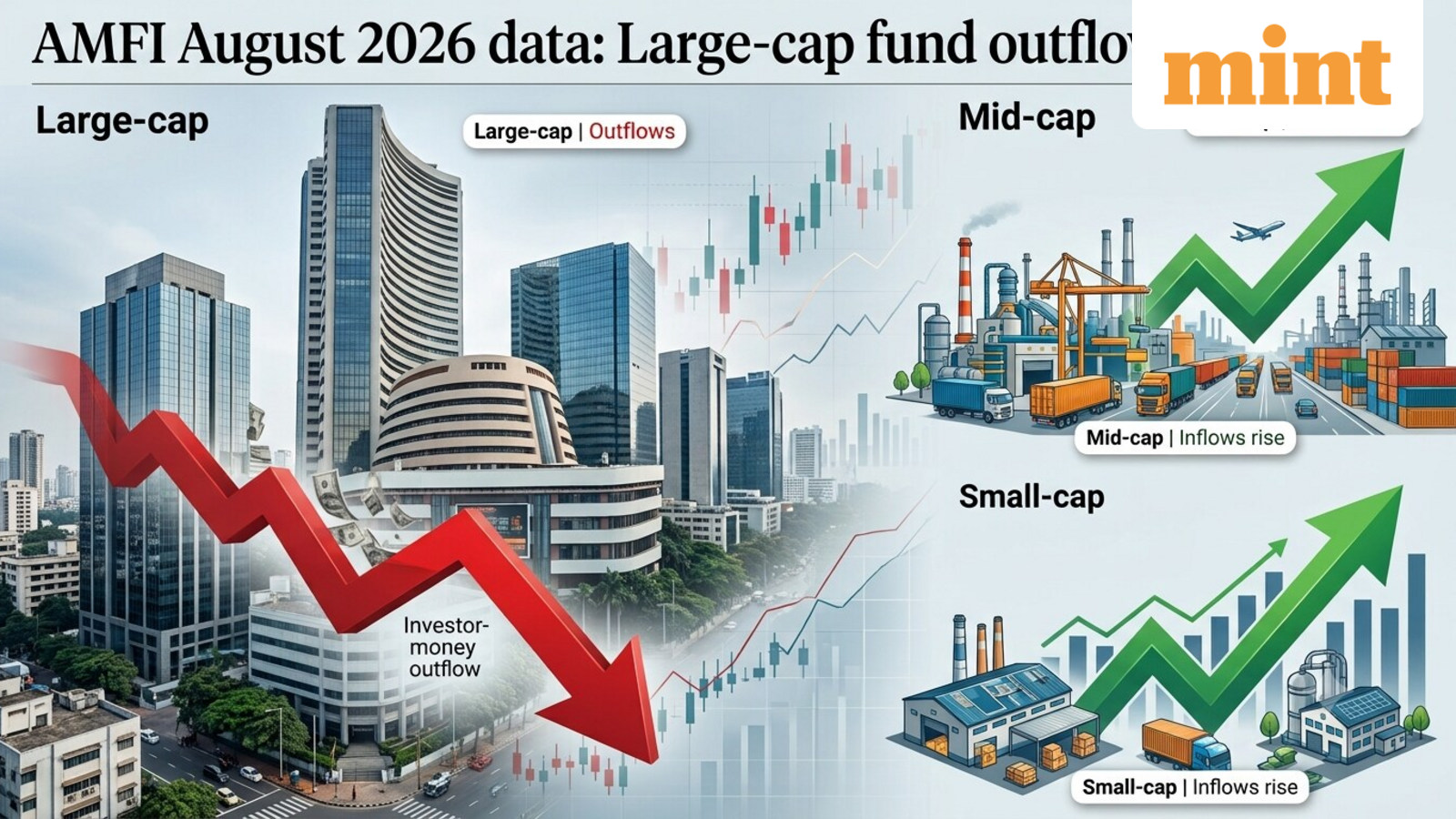
While the equity fund assets touched Rs 37.53 trillion in December 2025, the inflows have been mainly driven by mid cap funds, small cap funds, flexi-cap funds and sector & thematic funds.
This reveals a lot about the investor behaviour, where the focus is on creating wealth at a fast pace, despite the volatility in play due to geopolitical tensions, macroeconomic uncertainties, and elevated valuations of smaller companies.
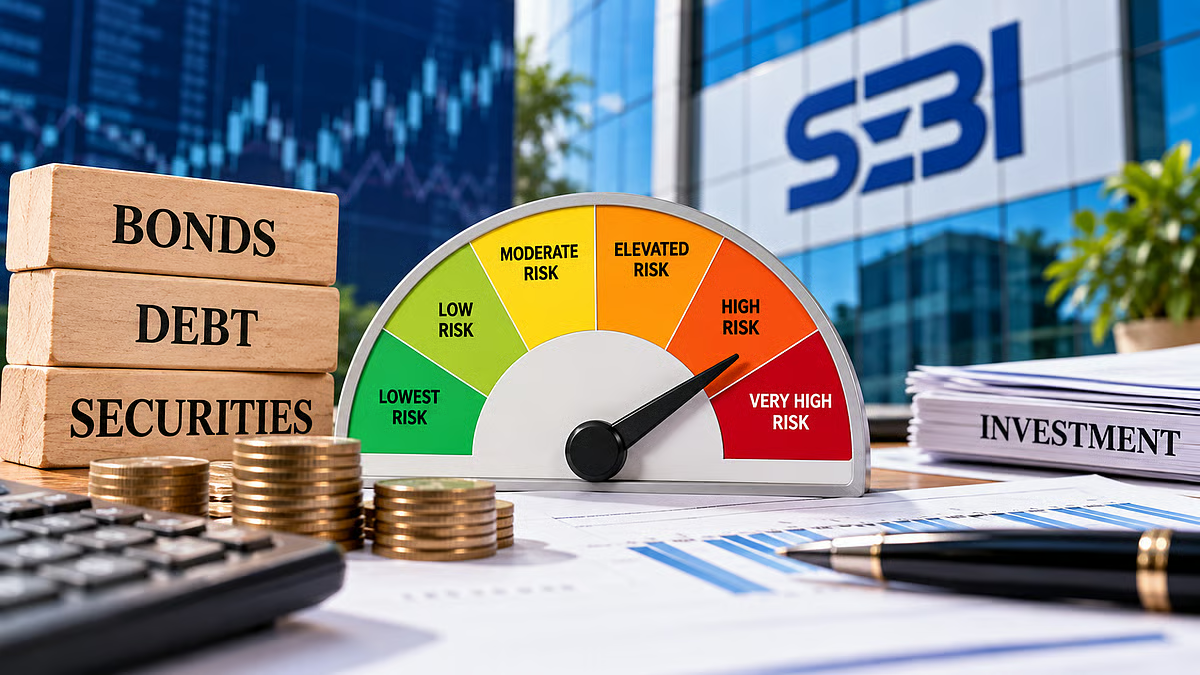
While the inflows into mid cap funds and small cap funds tapered in December 2025, they still accounted for around 11% of the total equity fund inflows. A staggering 25% of the money went to sector & thematic funds–again, a very high risk category.
Monthly Flow Trend of Growth/Equity-Oriented Schemes (Rs Crore)
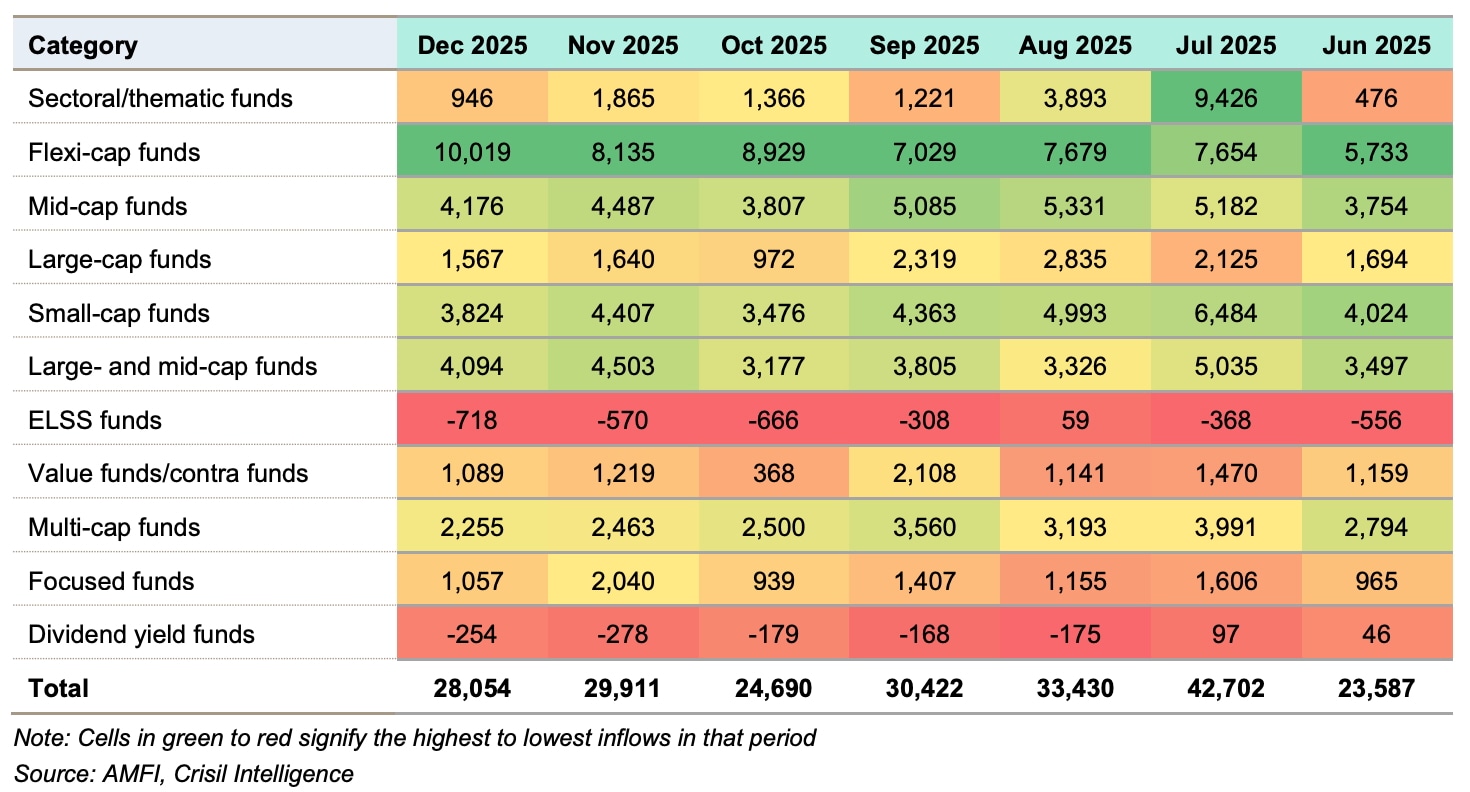
Flexi-cap funds, which have a versatile investment mandate to invest dynamically across market cap segments, also have garnered strong investor interest.
However, large cap mutual funds have received far less attention, going by the net inflows data.
Many investors seem to have overlooked the importance of stability when investing in mutual funds.
The Thesis
You see, in volatile and uncertain times — as we are witnessing currently — large cap funds make sense.
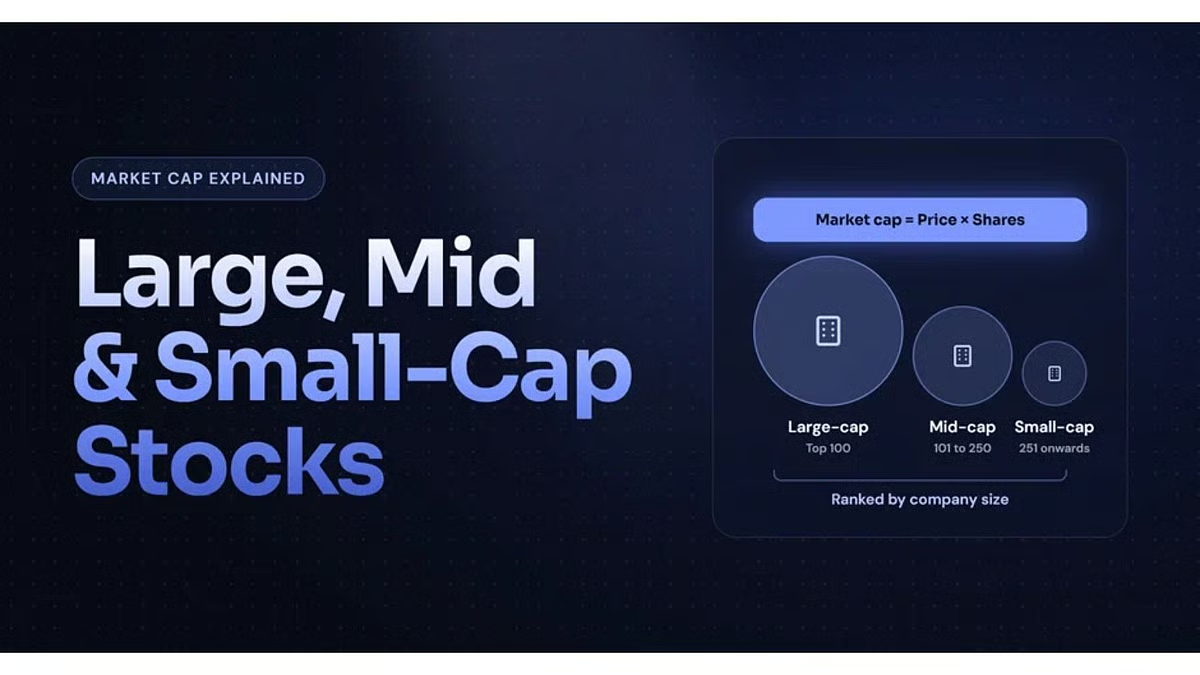
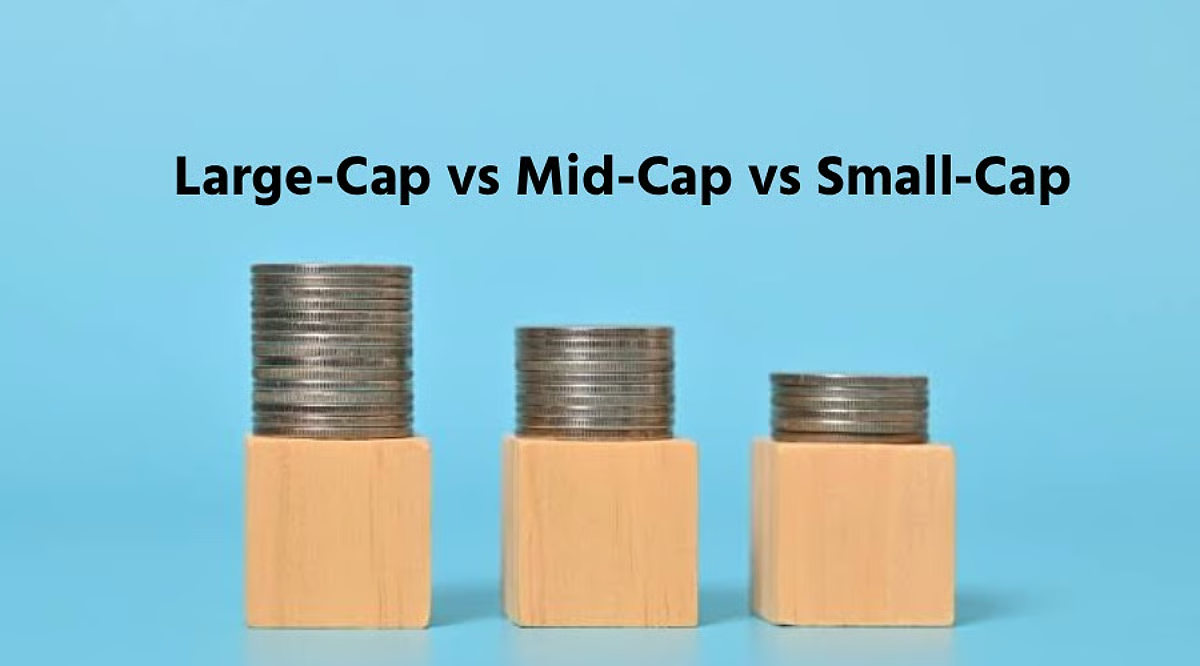
Large caps are the top 100 companies on a full market capitalisation basis. The bluechips.
Why Maturing Players Rule in Uncertain Times
Large cap companies usually have a large economic moat, access to wide resources, usually have healthy balance sheets, are run by experienced and efficient management teams, enjoy economies of scale, can take calculated risks, have better earnings visibility, and are market leaders in the respective sector, among other traits.
And in present times of escalating geopolitical tensions, protectionist policies, trade wars, currency depreciation, economic uncertainty, and the potential impact of it on corporate earnings, exposure to mature players is what you need the most in your portfolio.
They hold the ability to tide through the volatility better than midcaps and smallcaps, or sector or themes.
The Valuation Gap: Large Caps vs. The ‘Froth’
Currently, the Nifty Midcap 150 and Nifty Smallcap 250 indices’ price-to-equity (PE) ratios are near their 5-year median around 33x and 28x, respectively (as of 12 January 2026).
The forward PE of the MSCI India Mid Cap and MSCI India Small Cap Indices at 29.4x and 24.2, respectively, are also above their MSCI Emerging Market indices.
Given the slowdown in earnings, particularly in smallcaps, these levels cannot be assumed to be cheap. In fact, it would be fair to say that, in general, this level of valuation offers no margin of safety to the investor.
On the other hand, the large caps, which are represented by the Nifty 100 index, seem better placed. They are trading at a reasonable PE of around 22x, slightly below the 5-year median of 22.6x (as of 12 January 2026).
Even the forward PE of the MSCI Domestic Large Cap at 20.8x is better placed than the MSCI India Domestic Small Cap Indices.
In other words, the froth still exists in midcaps and smallcaps –they are trading at a premium compared to largecaps.
If the market remains under pressure due to the ongoing geopolitical tensions and macroeconomic uncertainties, mid cap funds and small cap funds may witness more drawdowns.
In other words, they may make your mutual fund portfolio more vulnerable. Hence, don’t just base your investment decisions on past returns, which are not necessarily indicative of future returns.
Make a judicious choice considering the risk involved currently.
Famed Wall Street investor, Benjamin Graham (the father of value investing and Warren Buffett’s mentor), has aptly said, “The essence of investment management is the management of risks, not the management of returns.”
The Core & Satellite Blueprint
What should be the investment strategy to follow now?
Follow a core & satellite investment approach –a strategy followed by some of the most successful equity investors around the world.
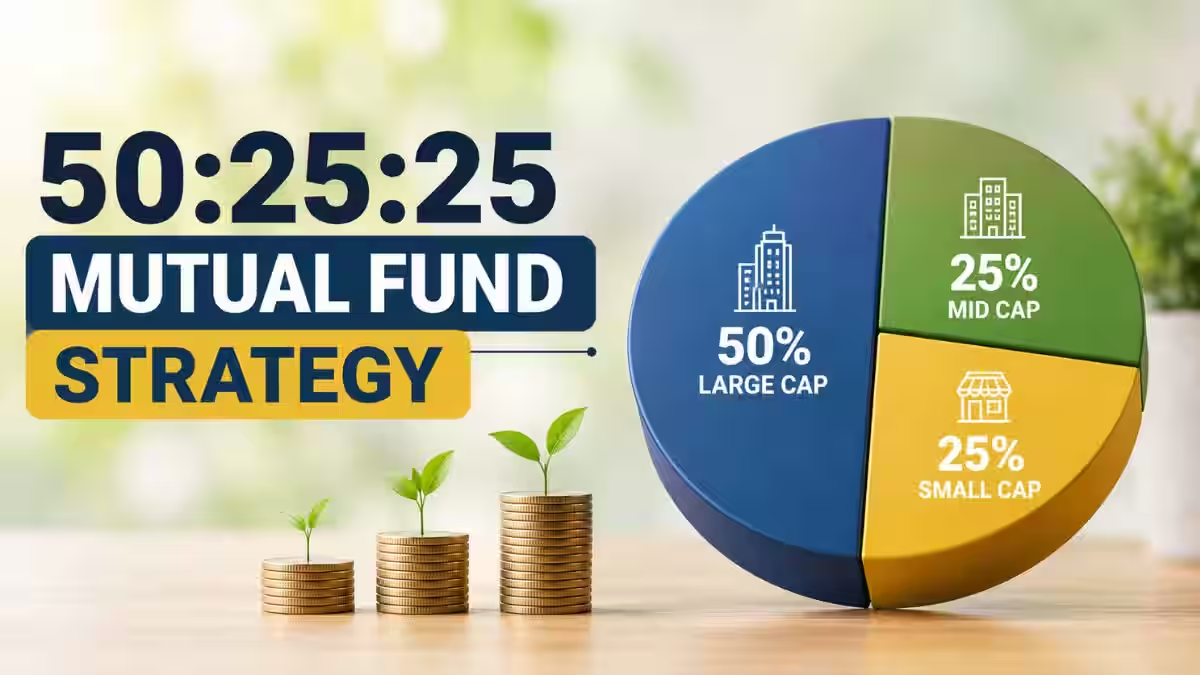
In the core equity mutual fund portfolio, consider owning some of the best large cap funds (along with other funds such as flexi-cap funds and value/contra funds) with an investment horizon of 3-5 years or more.
And only if you have the appetite for very high risk and a longer investment horizon of 7-8 years or more, mid cap funds, small cap funds and/or sector & thematic funds may be considered.
The core portion should ideally be the dominant part (65-70%) of your equity portfolio, and the remaining satellite holdings (30-35%).
Such allocation shall add stability to the investment portfolio and potentially multiply wealth.
Historical Returns: Large Cap vs. Flexi-cap vs. Mid Cap Fund vs. Small Cap Funds
| CAGR (%) | ||
| 5 Years | 7 Years | |
| Large Cap Funds | 14.3 | 14.8 |
| Flexi Cap Funds | 15.7 | 15.9 |
| Mid Cap Funds | 20.9 | 20.0 |
| Small Cap Funds | 22.4 | 20.9 |
Category average returns considered.
The table above shows that even large cap funds have clocked a decent CAGR over the longer periods, and if you choose a fund that outperforms the category average, then your portfolio returns could get even better.
So, choose your mutual fund schemes carefully and avoid making ad hoc investments. Instead, take a systematic portfolio-focused approach.
Here are the Top 3 Large Cap Funds you may consider
#1: ICICI Prudential Large Cap Fund
Launched in May 2008 as ICICI Prudential Bluechip Fund, this scheme was renamed ICICI Prudential Large Cap Fund.
This is the largest large cap fund in its category with an AUM of Rs 78,502 crore as per the December 2025 portfolio.
The fund usually holds around 60-70 stocks in its portfolio. As per the December 2025 portfolio, it held a well-diversified portfolio comprising 64 stocks, with a dominant portion in large caps and the rest in smallcaps and midcaps.
Top Holdings of ICICI Prudential Large Cap Fund
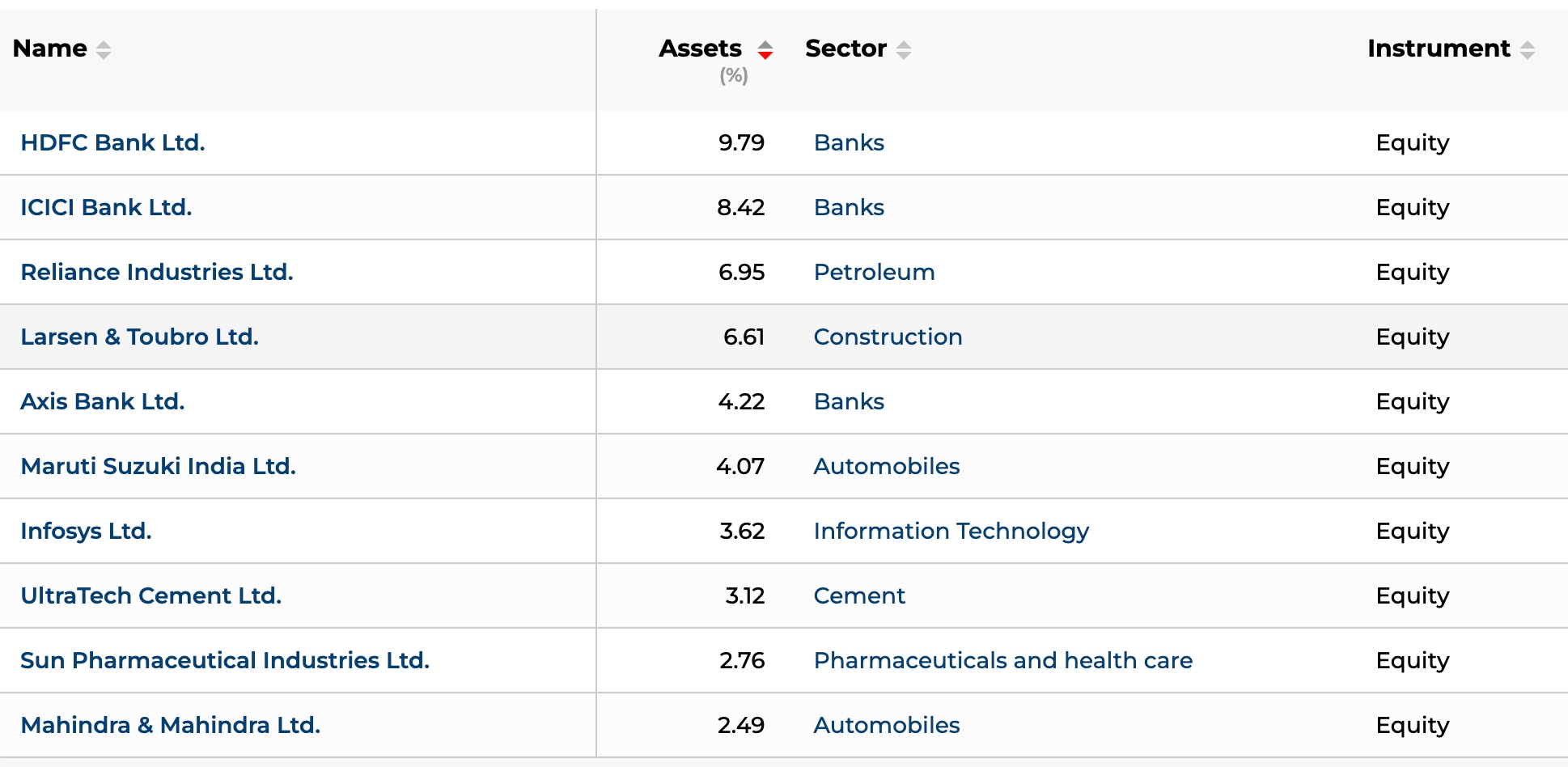
Source: Fund Factsheet
The fund holds its portfolio with conviction, as reflected by its buy-and-hold strategy.
The Returns (as of 12 January 2026):
Since inception = 15.7% CAGR, outperformed the Nifty 100 – TRI
5 years = 17.2% CAGR
7 years = 16.7%
Risk-Adjusted Performance: More than Just Returns
The fund has fared well not just on returns, but also on the risk-adjusted returns (evaluated over the last 3-year period, as of 12 January 2026):
Standard Deviation (a measure of total volatility of the fund) = 10.9%, lower than the category average of 12.8%.
Sharpe Ratio (a measure of risk-adjusted return that shows how much excess return an investment generates for each unit of risk taken) = 1.09, higher than the category average of 0.76.
#2: Nippon India Large Cap Fund
Launched in August 2007 as the Reliance Large Cap Fund, it was renamed when Nippon India Mutual Fund took over Reliance Mutual Fund in September 2019.
As per the December 2025 portfolio, the AUM of the fund is Rs 50,786 crore.
The fund typically holds a portfolio of 60-70 stocks and currently has 72 stocks in its portfolio, mainly largecaps.
The fund focuses on companies which are leaders or potential leaders, with well-established business models, sustainable & growing free cash flows, and have high Return on Equity (RoE).
Top Holdings of Nippon India Large Cap Fund
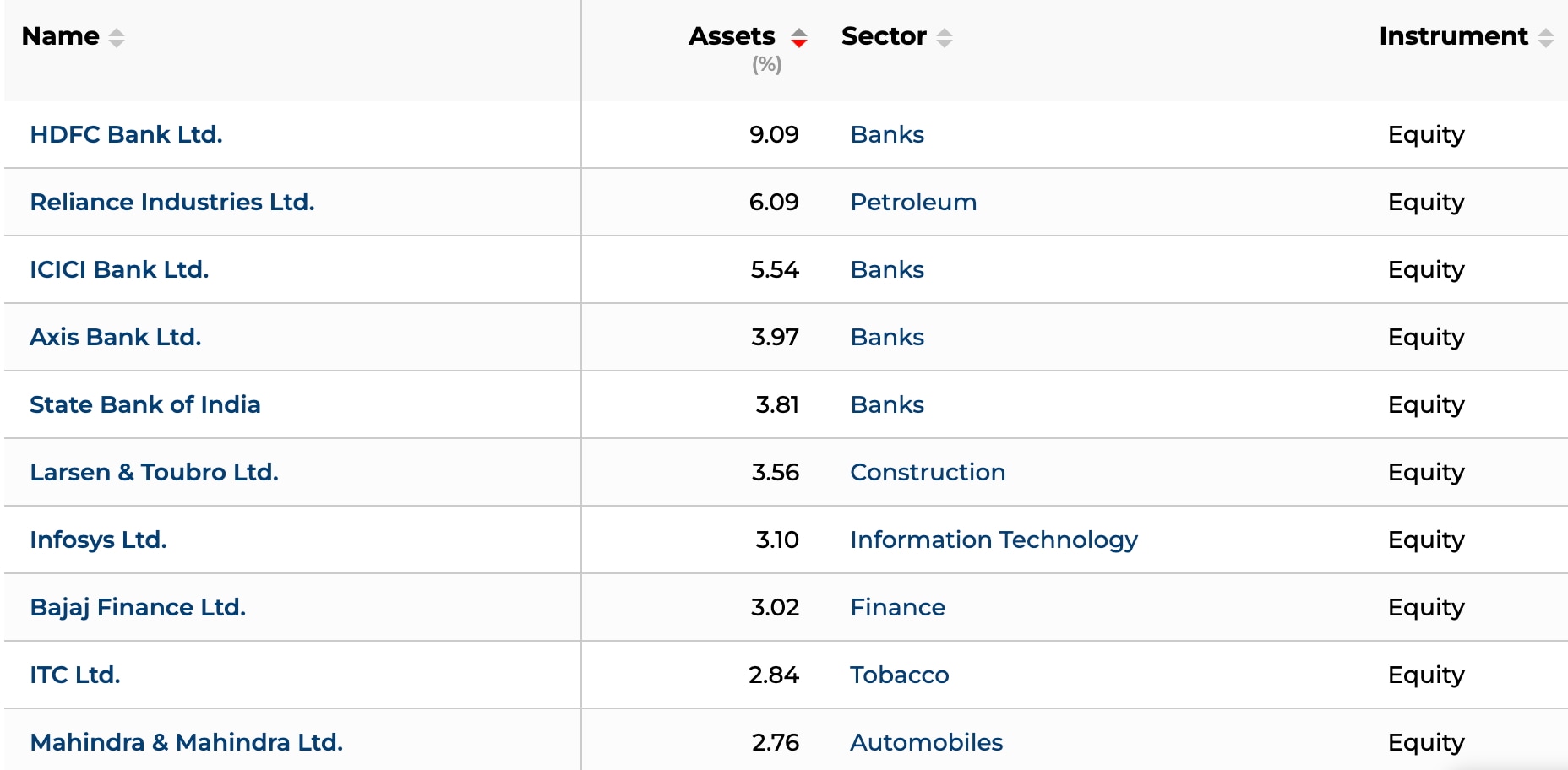
Source: Fund Factsheet
The strategy has helped it excel in identifying long-term winners and enabled it to deliver superior returns over the long run.
The Returns (as of 12 January 2026):
Since inception = 16.5% CAGR, outperformed the BSE 100 – TRI
5 years = 19.5% CAGR
7 years = 16.6%
The fund has fared well not just on returns, but also on the risk-adjusted returns (evaluated over the last 3-year period, as of 12 January 2026):
Standard Deviation 11.3%, lower than the category average of 12.8%
Sharpe Ratio = 1.17, higher than the category average of 0.76.
#3: HDFC Large Cap Fund
This fund was launched in October 1996 as the HDFC Top 200 Fund. However, after the mutual fund categorisation norms came into force, it was rechristened and renamed HDFC Top 100 Fund.
And from January 2025, it was renamed HDFC Large Cap Fund to better reflect the investment strategies.
The fund currently manages assets worth Rs 40,604 crore as per the December 2025 portfolio.
It follows the ‘Growth at a Reasonable Price’ (GARP) approach for stock selection. The fund typically holds 45-50 stocks in its portfolio. Currently, it is holding 49 stocks, predominantly largecaps, in line with its investment mandate.
Top Holdings of HDFC Large Cap Fund
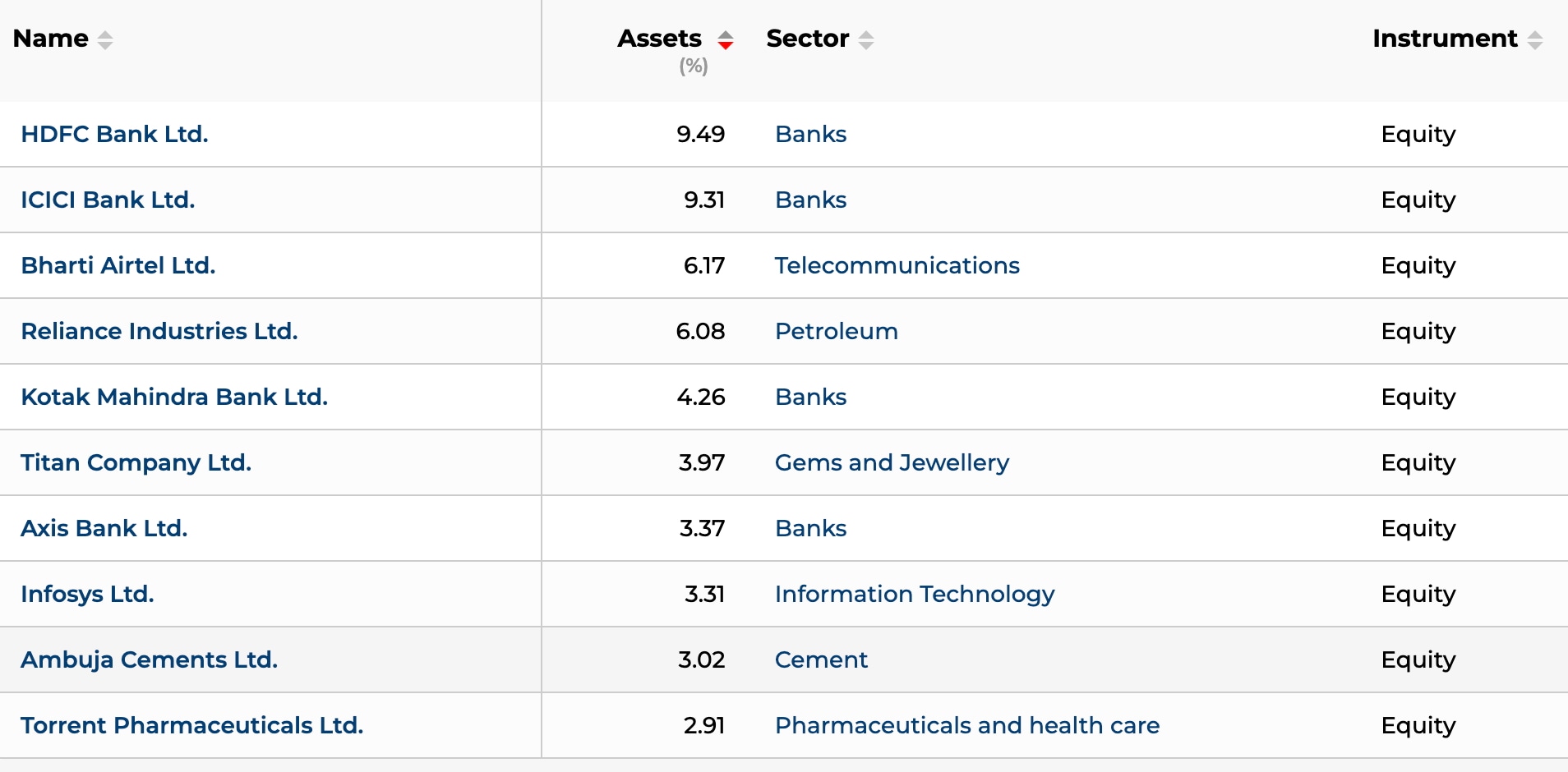
Source: Fund Factsheet
It has followed a high conviction approach for its portfolio.
The Returns (as of 12 January 2026):
Since inception = 14.1% CAGR, outperformed the Nifty 100 – TRI
5 years = 16.6% CAGR
7 years = 14.8%
The fund has fared well not just on returns, but also on the risk-adjusted returns (evaluated over the last 3-year period, as of 12 January 2026):
Standard Deviation = 11.2%, lower than the category average of 12.8%
Sharpe Ratio = 0.90, higher than the category average.
Final Word
Position your mutual fund portfolio strategically and thoughtfully, considering the risks in play, your personal risk profile, the financial goal you are addressing, and the time in hand to achieve those goals rather than only chasing returns.
Doing so shall help you not only yield decent returns but also manage the risks.
To mitigate the volatility, you could consider making staggered lump sum investments, or even better, taking the SIP route, which can help you with rupee-cost averaging while you endeavour to compound wealth.
Happy investing!
Note: We have relied on data from www.valueresearchonline.com, www.financialexpress.com, and the factsheets published by the respective fund houses throughout this article. Only in cases where the data was not available, have we used an alternate, but widely used and accepted source of information.
Disclaimer:
Disclaimer: The above content is for informational purposes only. Mutual Fund investments are subject to market risks. Please consult your financial advisor before investing.
Rounaq Neroy has over 20 years of experience in the financial markets and investments. He is a close observer of the Indian economy and writes deeply on the capital markets, mutual funds, stocks, precious metals, asset allocation, wealth management, and investment strategy. His editorials provide interesting, actionable investment ideas to guide readers in the journey of wealth creation and make wise decisions. Rounaq was the Head of Content at PersonalFN (Quantum Information Services Pvt. Ltd.), which also owns Equitymaster.com – India’s oldest and trusted equity research house.