Yeexin Richelle / Shutterstock.com
(Yeexin Richelle / Shutterstock.com)
Large-cap dividend stocks have dominated portfolios for years and for understandable reasons. Names like Johnson & Johnson (NYSE:JNJ), Procter & Gamble (NYSE:PG), and Coca-Cola (NYSE:KO) have all offered stability, brand recognition, and decades of dividend growth. Giving you a safe feeling, especially when the market turned against you, these giants held their ground even as smaller companies stumbled.
Quick Read
-
Mid-caps trade at 14-16x earnings versus 20-22x for large caps while delivering 2-3% higher annual dividend growth rates.
-
Mid-caps maintain lower payout ratios around 30% compared to 65% for large caps, enabling faster dividend increases without cash flow strain.
-
Dividend income growing at 8% annually doubles in 9 years versus 14 years at 5% growth.
If you’re someone interested in looking for new avenues of investing, the good news is that the landscape is changing in 2026, as large-cap dividend stocks are now bumping up against limitations that mid-cap names are not facing. This includes slower earnings growth, elevated valuations from years of popularity, and dividend growth rates that have started to slow down as payout ratios are approaching their ceilings.
The mid-cap players, or those companies valued between $2 billion and $20 billion, are now offering investors something a little harder to find. In other words, looking in this direction might help you find names with reasonable valuations, faster earnings growth, and dividend increases that are outpacing the large-caps.
The Valuation Gap Has Widened
Years of capital have continued to flow into the largest dividend players, and it has pushed valuations to levels that are now compressing future returns. The S&P 500’s dividend aristocrats trade at premiums that would have seemed excessive a decade ago. Investors have paid up for perceived safety, bidding prices higher while dividend growth rates moderated. The result is starting yields that look acceptable, but total return prospects have diminished.
Mid-cap dividend stocks haven’t even attracted the same crowded trade. Many institutional investors focus on large caps for liquidity reasons, which leaves mid-caps relatively underowned. This creates opportunities for individual investors who are willing to look beyond the Coca-Colas of the world. A mid-cap industrial company growing earnings at 12% annually with a 2.5% yield and room to expand its payout ratio offers a fundamentally different return profile than a mega-cap consumer staple growing earnings at 4% with a 3% yield and a payout ratio already above 60%.
The valuation gap matters more as interest rates have normalized. When Treasury bills yield nothing, investors accept lower earnings yields from dividend stocks. Mid-caps trading at 14-16x earnings offer more compelling spreads over Treasuries than large caps trading at 20-22x all while offering better downside protection.
Dividend Growth Favors the Middle
If there is any big takeaway here, it’s that the most significant advantage mid-cap names hold isn’t their current yields, it’s their dividend growth trajectory. Large-cap dividend aristocrats have built reputations on decades of consecutive increases, but the pace of this growth has slowed. A company that has raised its dividend 10% annually in the early 2000s might now be delivering only 4-5% increases.
Mid-cap dividend growers are now sitting at earlier stages of this curve, and the payout ratios tend to be lower, leaving more room for faster dividend increases without straining cash flow. A mid-cap with a 30% payout ratio can double its dividend while still holding onto earnings for growth. A large cap with a 65% payout ratio faces a much more challenging tradeoff environment.
The numbers support this argument as mid-cap dividend ETFs have delivered growth rates around 2-3% higher than large-cap counterparts over the recent years. This gap compounds powerfully over a retirement time horizon, and a retiree whose dividend income grows at 8% annually doubles their income in 9 years. At 5% growth, the same doubling takes 14 years, so anyone counting on dividend growth to offset inflation and maintain purchasing power, this difference shapes long-term outcomes in a major way.
Less Concentration, More Opportunity
Large-cap dividend indexes have grown increasingly concentrated as a handful of mega-cap names, including those in financial, healthcare, and consumer staple sectors, are dominating the weightings. When these sectors struggle, and they will, the entire large-cap universe feels it.
Mid-cap dividend stocks spread across a broader opportunity set, like industrials, regional banks, specialty retailers, technology companies, and energy firms, all featuring prominently. This sector diversity provides exposure to economic tailwinds that might bypass the defensive sectors dominating large-cap dividend indexes. A strengthening manufacturing economy lifts mid-cap industrials while regional economic growth benefits mid-cap banks. Technology adoption drives mid-cap software companies that have already begun returning capital to shareholders.
This breadth also creates more room for active selection as the large-cap dividend space has been picked through time and time again. Mid-cap dividend payers are receiving less attention, so a well-run mid-cap industrial growing dividends at 12% annually might trade at the same multiples as a large-cap peer growing at 6%, simply because fewer investors have found it.
Building Mid-Caps Into a Dividend Portfolio
The practical question right now is one of implementation, as replacing a large-cap dividend portfolio with mid-caps wholesale would introduce volatility most retirees don’t want. Mid-caps move more than large caps during market stress, something that the world saw in 2022 as mid-caps were hit harder than the mega-caps.
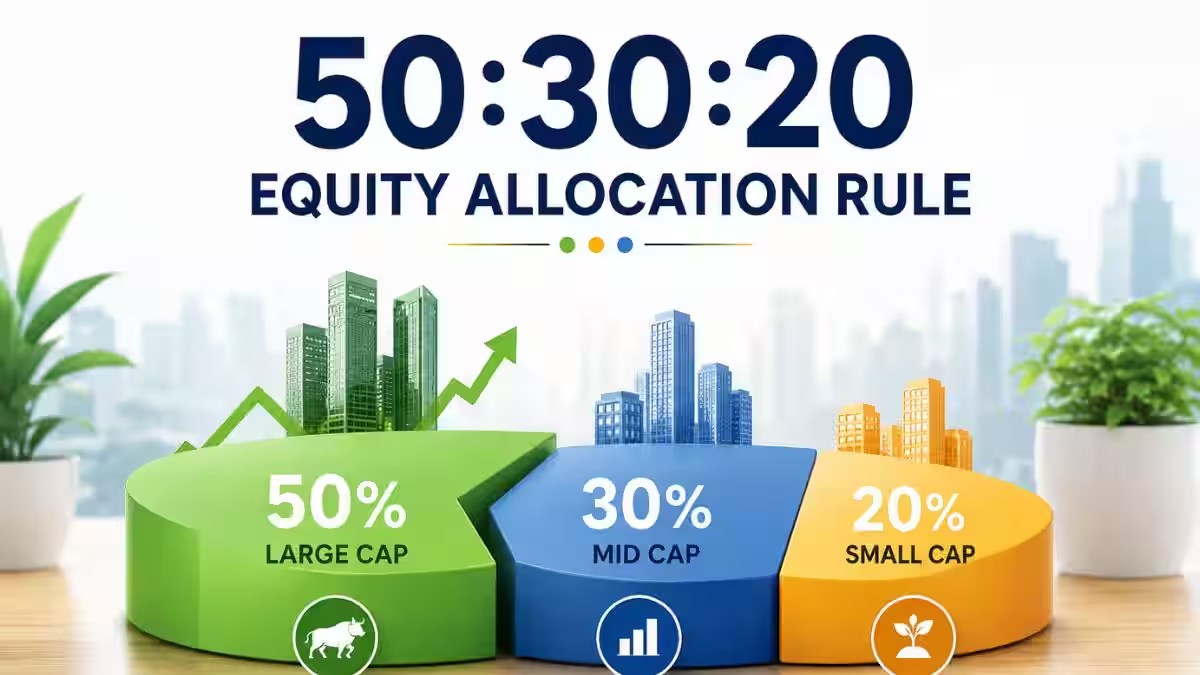
The better approach is to treat mid-cap dividend exposure as a growth engine within a broader portfolio. A retiree might want to maintain 60% of dividend holdings in large-caps for stability and allocate 40% to mid-cap growers for even more dividend growth, creating an ideal blend of income security and growth.
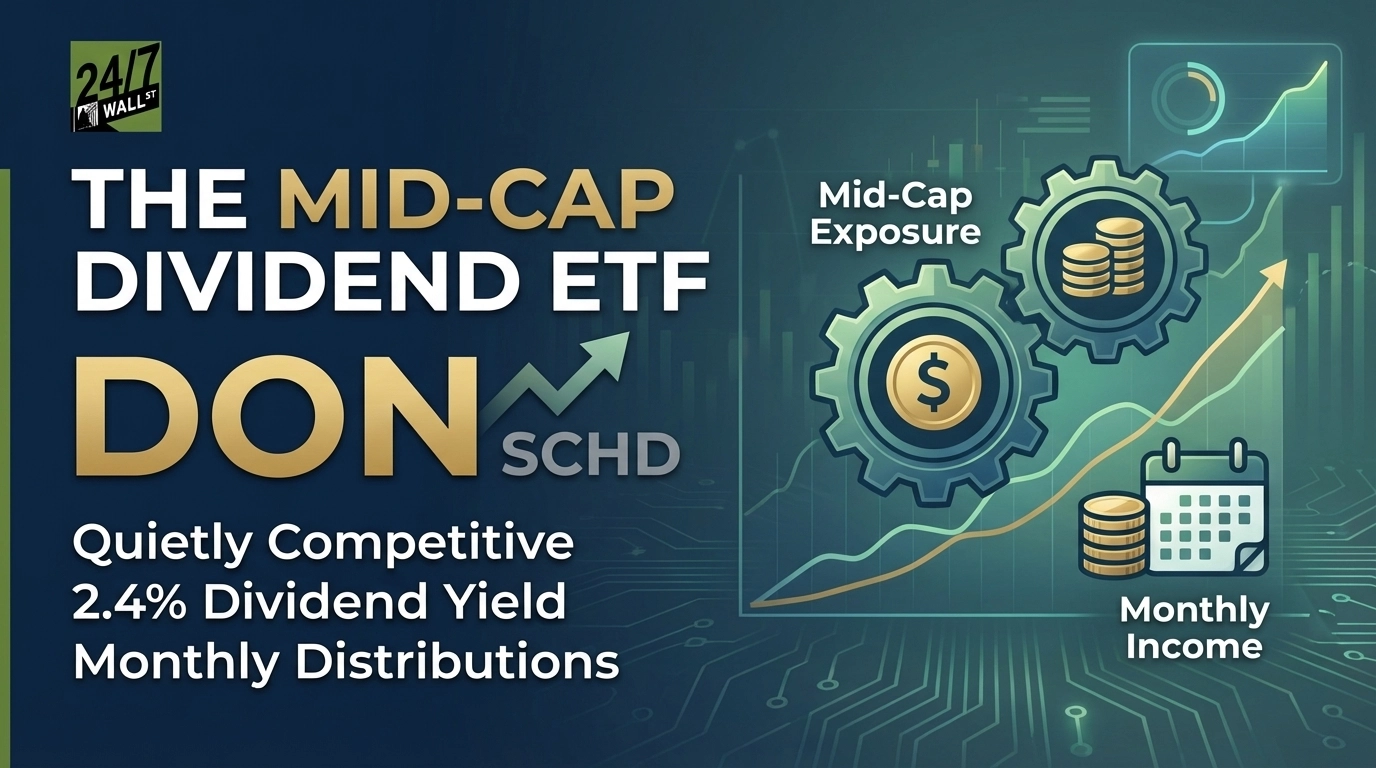
ETFs are also well worth considering as mid-cap dividend-focused funds screen for companies with consistent payout histories, reasonable payout ratios, and the financial strength to sustain distributions. These funds provide instant diversification across dozens of holdings, eliminating the single-stock risk that makes individual mid-cap selection dangerous for concentrated portfolios. This is shown with the John Hancock Multifactor ETF (NYSE:JHMM), which doesn’t have a single position exceeding 1% of assets, all while its 18.96% payout ratio leaves plenty of room for growth alongwith dividend increases of 5.52%.
The mid-cap dividend edge might not even last forever as market dynamics shift, but in 2026, the combination of better valuations, faster dividend growth, and broader diversification creates a compelling case for rebalancing a portfolio toward the middle of the market cap spectrum.
It’s Time To Rethink Passive Investing
For more than a decade, the investing advice aimed at everyday Americans followed a familiar script: automate everything, keep costs low, and don’t touch a thing. And increasingly, investors are realizing that being completely hands-off also means being completely disengaged.
That realization hits like a lightning bolt when you realize not just how much better your returns could be, but that there are amazing offers like one app where new self-directed investing accounts funded with as little as $50 can receive stock worth up to $1,000.
Take back your investing and start earning real returns, your way.